
Roof Inspection in Mahwah, NJ
Mahwah's Mountain Weather Doesn't Forgive a Weak Roof
Hear from Our Customers
Certified Roof Inspector in Mahwah, NJ
Most homeowners don’t find out their roof has a problem until water shows up inside. By then, what started as a minor flashing gap or a few cracked shingles has turned into damaged decking, stained ceilings, and a repair bill that’s a lot harder to swallow. A professional roof inspection in Mahwah catches those issues before they reach that point.
Mahwah’s position as the northernmost township in Bergen County means your roof is dealing with conditions that towns further south simply don’t face at the same intensity. The Ramapo Mountains drive heavier snowfall accumulations here, and the repeated freeze-thaw cycling through winter is one of the most damaging forces a roofing system faces. Ice dams form when heat escapes through the roof, melts snow at the ridge, and that water refreezes at the cold eaves — backing up under shingles and into your home. It’s a pattern that shows up regularly in wooded neighborhoods like Fardale and Darlington, and it’s exactly the kind of thing we find before it becomes a structural issue.
Beyond winter, Mahwah’s heavily treed character means valleys and gutters collect debris faster than most Bergen County towns. Leaves and organic buildup trap moisture against the roof surface, accelerating deterioration in ways that aren’t visible from the ground. After a thorough inspection, you’ll have a clear, honest picture of what’s holding up, what needs attention soon, and what can wait — so you can make a real decision, not a panicked one.
Licensed Roof Inspector in Mahwah, NJ
We’ve been inspecting and repairing roofs across Mahwah and Bergen County for over ten years. Our team is fully licensed as a New Jersey Home Improvement Contractor, carries general liability and workers’ compensation insurance, and holds certifications from major shingle manufacturers — credentials that fewer than 3% of roofing contractors in the country earn. Those certifications aren’t just wall decorations. They determine whether your roof qualifies for enhanced manufacturer warranty coverage, which matters a lot when you’re protecting a home worth upward of $600,000 in a market like Mahwah.
We’re family-operated, which means the people doing the work are the same people whose name is attached to every job. From the historic homes in Cragmere Park to newer construction in the Fardale section, we’ve seen the full range of Mahwah’s housing stock and understand what each era of construction brings in terms of materials, vulnerabilities, and what a proper inspection actually requires. Every inspection is free, every estimate is honest, and if your roof is in good shape, that’s exactly what you’ll be told.

Roof Damage Inspection in Mahwah, NJ
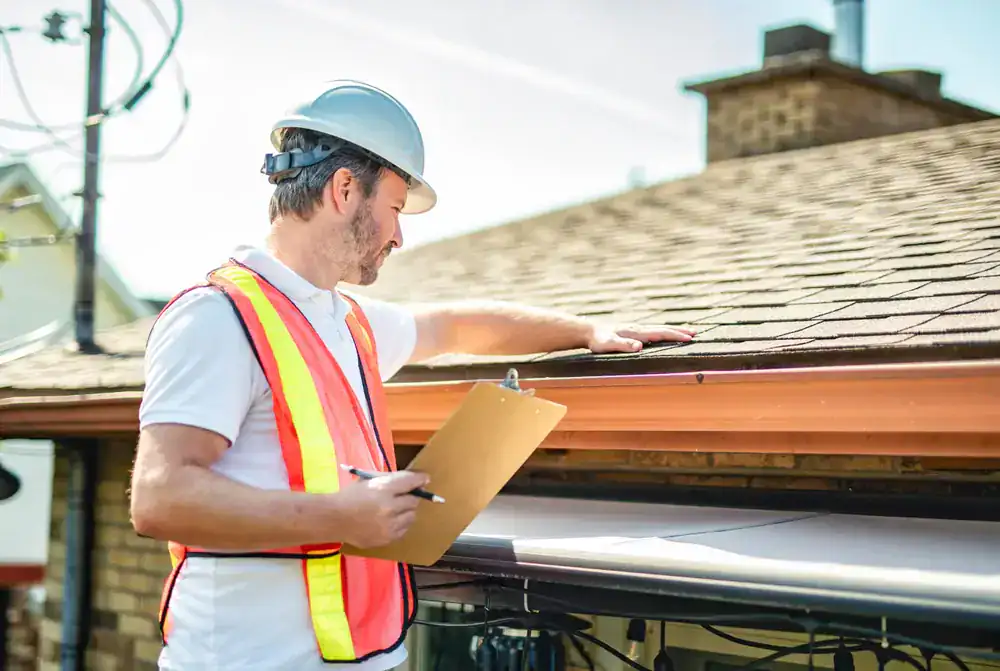
When you schedule a free roof inspection in Mahwah with us, the process is straightforward from the first call. You pick a time, we show up when we say we will, and the assessment begins with a full exterior walkthrough before anything goes on the roof.
The inspection covers every component of the roofing system — shingles, flashing, ridge caps, vents, pipe boots, valleys, and the gutters and fascia along the roofline. In Mahwah specifically, we pay close attention to signs of ice dam damage along the eaves, debris accumulation in roof valleys from the surrounding tree canopy, and any wind-related shingle displacement from the nor’easters and severe thunderstorms Bergen County sees regularly. These aren’t generic checklist items — they’re the specific failure patterns that show up on Mahwah roofs, and knowing where to look makes a real difference in what gets caught.
After the inspection, you get a clear verbal and written breakdown of findings. If work is needed, you’ll receive a transparent estimate with no pressure and no urgency tactics. If Mahwah Township permits are required for the scope of work — and for a full replacement, they typically are — that process is explained clearly so there are no surprises with the municipality. You leave the conversation with real information, not a sales pitch.
Ready to get started?
Roof Inspection Company in Mahwah, NJ
Because we handle roofing, gutters, and siding together, a roof inspection in Mahwah doesn’t stop at the shingles. The gutters get assessed too — and in a township as wooded as Mahwah, that matters. Debris-loaded gutters pull away from the fascia under the weight of wet leaves and ice, and that detachment creates a water intrusion point right at the roofline. Catching it during the roof inspection means one visit covers the full picture instead of three separate contractor calls.
The inspection is also built to support whatever comes next. If you’re dealing with a potential insurance claim after a storm, the documented findings from our licensed roof inspection team in Mahwah carry weight with adjusters in a way that a homeowner’s photos simply don’t. If you’re preparing to sell a home in Mahwah’s competitive Bergen County market, a clean inspection report is a concrete asset. And if you’re in one of the township’s many condominium communities — Apple Ridge, Darlington Ridge, Ramapo Brae, or any of the others — HOA maintenance documentation often requires exactly this kind of professional assessment.
The inspection is free. The estimate, if needed, is transparent and itemized. And the findings are honest — including when the honest answer is that your roof has several solid years left and doesn’t need anything right now.

How do I know if my Mahwah roof has ice dam damage after winter?
Ice dam damage isn’t always obvious from inside the house, and that’s what makes it easy to miss until it’s already caused real harm. The most visible interior signs are water stains on ceilings near exterior walls, peeling paint around window frames, or damp insulation in the attic — but none of those show up immediately. The damage often sits quietly for months before it becomes visible.
From the exterior, signs include shingles that are lifting or curling near the eaves, rust staining around flashing, or granule loss concentrated along the lower edge of the roof where ice repeatedly forms and melts. Mahwah’s wooded neighborhoods — particularly in Fardale and Darlington — are especially prone to this because mature tree canopy slows snow melt unevenly, creating the temperature differential that drives ice dam formation in the first place. A professional roof inspection in Mahwah after any significant winter season is the only reliable way to know what’s actually happening at the eave line, because most of the real damage is happening under the surface, not on top of it.
Does Mahwah Township require a permit for roof replacement or repairs?
For a full roof replacement in Mahwah, yes — a permit is required under New Jersey’s Uniform Construction Code, which Mahwah Township enforces through its Construction Office at 475 Corporate Drive. The state distinguishes between “ordinary maintenance,” which doesn’t require a permit, and “minor work” or full replacement, which does. The township’s own guidance explicitly warns homeowners not to assume work is permit-exempt just because a contractor or neighbor says it is.
This matters for a few reasons. Work done without the proper permits can result in violations, penalties, or complications when you go to sell the home. It can also affect your insurance coverage if a claim arises from work that wasn’t properly permitted and inspected. We understand exactly where the line falls for Mahwah’s specific requirements and will walk you through what your scope of work requires before anything starts. You won’t be left guessing about the municipality’s requirements or caught off guard by a violation notice after the fact.
What does a roof inspection in Mahwah, NJ actually include?
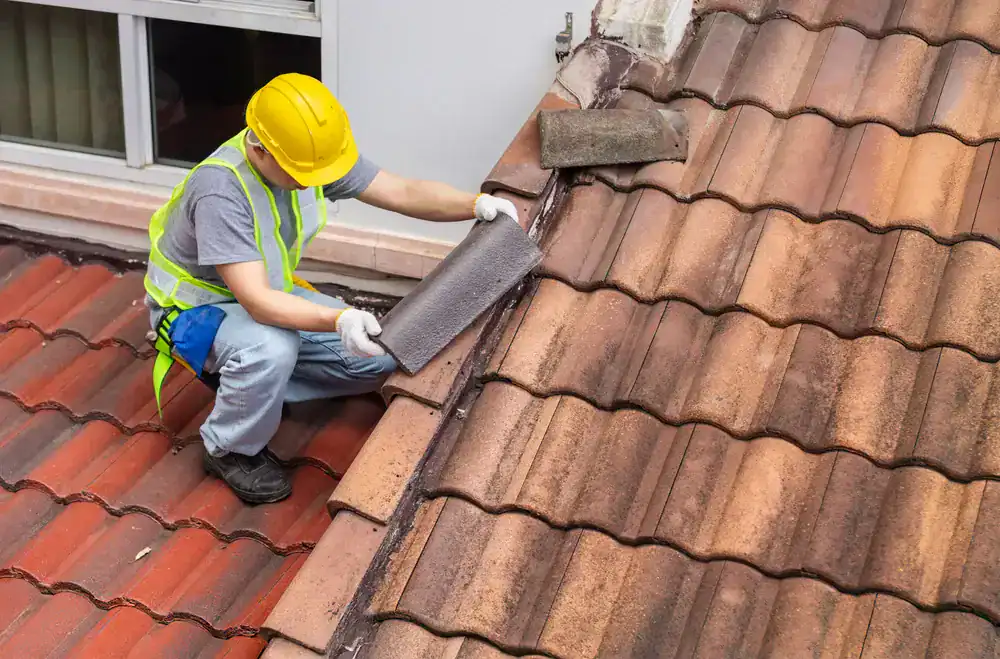
A thorough roof inspection covers every component of the roofing system, not just a visual scan of the shingles from the driveway. That means the inspector is physically assessing the condition of flashing around chimneys, skylights, and vents; checking ridge caps and pipe boots for cracking or separation; evaluating the condition of valleys where debris and moisture concentrate; and looking at the gutters and fascia for signs of detachment or water damage along the roofline.
In Mahwah specifically, we look for the specific damage patterns that Bergen County’s climate and the township’s wooded terrain produce — ice dam evidence along the eaves, wind-related shingle displacement from nor’easters, and debris accumulation in valleys from the surrounding tree canopy. The inspection also includes an attic assessment where accessible, because ventilation problems and moisture buildup in the attic are often the root cause of premature shingle failure and ice dam formation. At the end, you get a clear summary of what was found, what it means, and what — if anything — needs to happen next.
How often should I schedule a roof inspection for my home in Mahwah?
The general industry recommendation is a professional inspection every one to two years, but Mahwah’s specific conditions make the case for staying closer to the annual end of that range. The township’s northernmost Bergen County position means it consistently receives heavier snowfall and more intense freeze-thaw cycling than towns further south and east. Each winter season puts meaningful stress on shingles, flashing, and ridge components, and that cumulative wear builds faster than most homeowners expect.
Beyond the annual rhythm, there are specific trigger events that should prompt an inspection regardless of when the last one occurred. Any significant nor’easter, a severe thunderstorm with documented high winds, or a hail event warrants a post-storm roof inspection in Mahwah to document any damage before it progresses. The same applies after a large tree limb comes down near or on the roof — even a glancing impact can crack shingles or displace flashing in ways that aren’t visible until water finds its way in. Catching storm damage quickly also matters for insurance purposes, since delayed reporting can complicate a claim.
Can a roof inspection help with a homeowner's insurance claim in Mahwah?
Yes, and it’s one of the most practical reasons to get a professional inspection done promptly after any significant weather event. Mahwah has documented flood watches, flash flooding events tied to the Saddle River, and recurring severe weather advisories — the kind of events that regularly produce legitimate roof damage claims across Bergen County. When you file a claim, the insurance company sends their own adjuster, who is working from the insurer’s perspective. Having an independent inspection report from our licensed team in Mahwah gives you documentation from your side of the table.
A professional inspection report includes detailed findings, photographs, and a clear description of damage that an adjuster may overlook or undervalue — particularly for subtler damage like flashing separation, granule loss, or lifted shingles that don’t produce an immediate leak but represent real, compensable damage. The report from a certified roof inspector carries more weight with an insurance company than homeowner photos alone because it comes from a credentialed professional with documented experience. Getting that inspection done quickly after a storm also helps establish that the damage is event-related rather than pre-existing, which is often a point of contention in the claims process.
What's the difference between a certified roof inspector and a general contractor doing an inspection?
The difference comes down to training, credentials, and what they’re actually qualified to assess. A general contractor may be perfectly capable of doing basic home repairs, but a certified roof inspector has completed manufacturer-specific training programs, met ongoing licensing and insurance requirements, and been evaluated against industry standards that most general contractors never pursue. In New Jersey, all home improvement contractors are required to be registered with the Division of Consumer Affairs — but certification from a major shingle manufacturer like GAF goes well beyond that baseline registration.
For Mahwah homeowners, the certification distinction has a direct financial consequence. When a certified contractor performs or oversees roof work, the manufacturer’s warranty on the materials can be extended and enhanced to cover workmanship as well as product defects. An uncertified contractor doing the same installation may inadvertently void your manufacturer warranty without either party realizing it. On a home in Mahwah’s market — where median home values sit near $624,000 and a full roof replacement represents a significant investment — that warranty protection is a real, tangible benefit that comes specifically from working with a certified roof inspector and contractor, not just whoever is available and cheapest.