
Siding Installation in South Hackensack, NJ
South Hackensack Homes Deserve More Than a Quick Fix
Hear from Our Customers
Residential Siding Contractors in South Hackensack
New siding isn’t just about looks. It’s about what stops happening — the drafts you feel near windows in January, the heating bill that climbs every winter, the soft spot behind a panel you’ve been ignoring since last nor’easter. When the exterior envelope is solid, your home holds its temperature, sheds water the way it should, and stops giving moisture a place to hide.
South Hackensack’s housing stock is largely Cape Cods and post-war builds — homes that are now 40 to 70 years old in many cases. Siding on homes that age isn’t just worn. It’s often past the point where repairs make financial sense. And with the township sitting adjacent to the Hackensack River, ambient moisture here is higher than in most inland Bergen County communities. That combination — old materials plus elevated moisture exposure — is exactly what accelerates the kind of damage that gets expensive fast.
The right siding installation gives you a weatherproof barrier that’s built for this specific climate. Not a patch job. Not a coat of caulk over a bigger problem. A complete exterior system that protects the structure, improves energy efficiency, and holds up through whatever Bergen County throws at it next season.
Local Siding Company Serving South Hackensack, NJ
We’ve been working on Bergen County homes for close to ten years. Not as a franchise. Not as a call center with subcontractors. As a family-run exterior renovation company where the people responsible for the outcome are the same people you talk to from estimate to final walkthrough.
We’re fully licensed under New Jersey’s Home Improvement Contractor requirements — which matters more than it sounds. South Hackensack’s own Building Department requires NJ-licensed contractors for work on non-owner-occupied properties, and state law gives you legal recourse under the Consumer Fraud Act when you hire a registered contractor. That protection disappears the moment you hire someone who isn’t.
Beyond siding, we handle roofing and gutters — which means we understand how your exterior works as a complete system, not just the cladding on the surface. For homeowners near Philips Avenue or anywhere in South Hackensack’s residential core, that full-picture approach is what separates a real fix from one that creates the next problem.

Siding Installation Process in South Hackensack, NJ
It starts with a free inspection. We come out, look at what you’re actually dealing with — not just the surface, but what’s going on behind it. If there’s moisture damage in the sheathing, you’ll know before the project starts, not after. If repair is genuinely the right call instead of full replacement, that’s what you’ll hear. The inspection isn’t a sales visit. It’s an honest assessment.
From there, you get a written estimate that lays out exactly what’s included — removal of the old material, moisture barrier installation, new siding, trim work, and cleanup. That number doesn’t change when the job is done. South Hackensack homeowners have enough variables to manage without a contractor invoice that looks nothing like the quote.
Installation is scheduled around your timeline, with seasonal awareness built in. Bergen County’s freeze-thaw season typically starts in earnest by late November, and getting siding installed before the first hard freeze isn’t just convenient — it prevents one more winter of moisture infiltration through compromised panels. We work cleanly, respect the property, and leave the site the way we found it. When the job is finished, you do a walkthrough together. If something isn’t right, it gets addressed before anyone leaves.

Ready to get started?
Vinyl Siding Contractors in South Hackensack, NJ
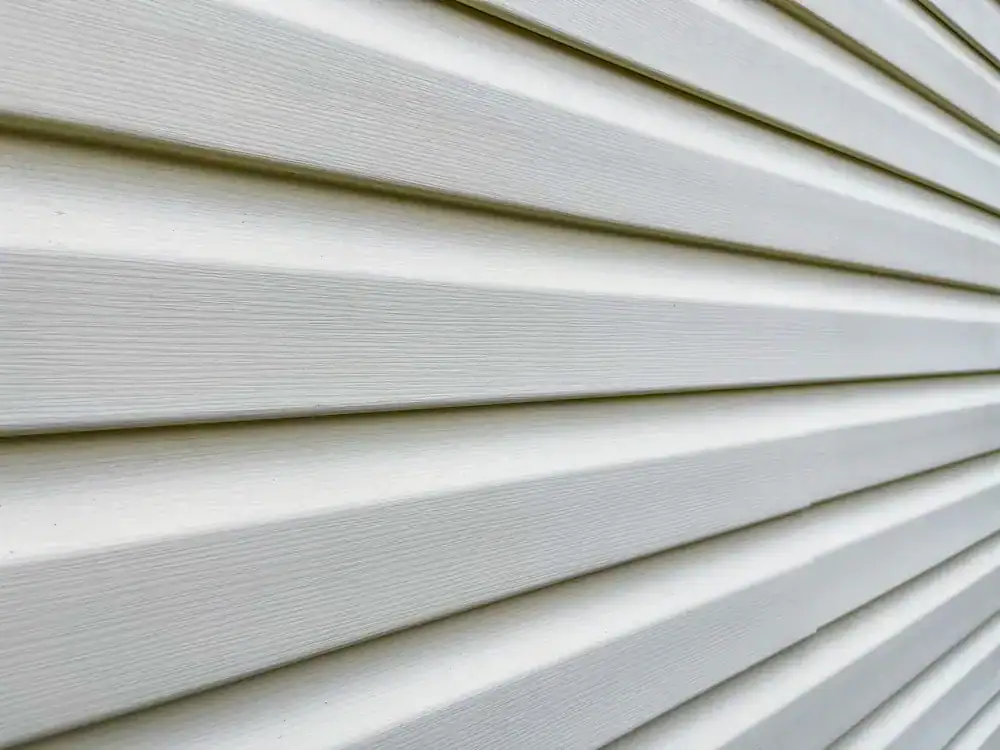
Most South Hackensack homeowners are choosing between vinyl and fiber cement — and both are solid options when they’re installed correctly. Vinyl is cost-effective, low-maintenance, and handles the humidity that comes with being this close to the Hackensack River and the Meadowlands. Fiber cement, particularly James Hardie products, offers a longer lifespan and better resistance to impact and moisture penetration — a real consideration for homes near I-80, where road spray and winter salt exposure add up over time.
What matters as much as the material is how it goes on. Vinyl installed without proper expansion gaps will buckle in summer and crack when temperatures drop below freezing. A moisture barrier that isn’t properly lapped and sealed will let water into the wall cavity quietly — and you won’t know until there’s rot in the sheathing. We install to manufacturer specifications, which is also the only way to keep the full product warranty intact. Certifications from major manufacturers aren’t just credentials — they’re what stands between you and a voided warranty.
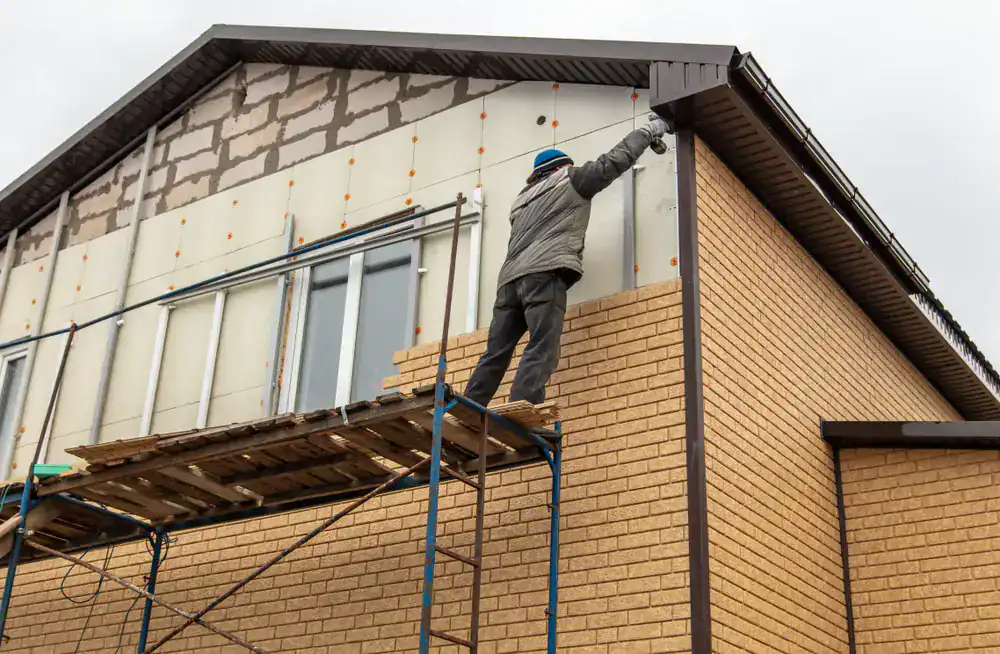
The work covers the full scope: old siding removal, moisture barrier installation, new siding and trim, and complete site cleanup. No subcontracting the parts that matter. No shortcuts on the details that protect your investment for the next 20 to 30 years.

Do I need a permit for siding installation in South Hackensack, NJ?
It depends on the scope of the work. Under New Jersey’s Uniform Construction Code, replacing siding on a one- or two-family home with the same material is generally considered ordinary maintenance and doesn’t require a permit. But once you’re doing a full replacement — especially if it involves installing new housewrap, touching the structural sheathing, or changing materials — a permit may be required depending on how South Hackensack’s Building Department classifies the scope.
There’s also a specific exception worth knowing: installation of polypropylene siding always requires a permit in New Jersey, regardless of how limited the work is. A licensed contractor familiar with South Hackensack’s requirements at 227 Philips Avenue will know exactly what applies to your project and can handle the permit process on your behalf. You shouldn’t have to figure that out on your own.
How much does siding installation typically cost in South Hackensack?
For a whole-home siding replacement in South Hackensack, most homeowners are looking at somewhere between $8,000 and $20,000 depending on the size of the home, the material chosen, and whether there’s any underlying damage — like moisture-compromised sheathing — that needs to be addressed before the new siding goes on. Vinyl tends to sit at the lower end of that range. Fiber cement, which holds up better in the high-moisture environment that South Hackensack properties near the Hackensack River experience, typically costs more upfront but lasts significantly longer.
The best way to get an accurate number is through a free, written estimate based on your specific home. That’s not a vague ballpark — it’s a line-by-line breakdown of what’s included so you know exactly what you’re committing to before any work begins.
What are the signs that my South Hackensack home needs new siding?
The most obvious signs are visible — cracked or warped panels, fading that’s uneven across the surface, sections that have pulled away from the wall or from each other. But some of the more serious indicators are less visible. If you’re noticing higher heating or cooling bills without a clear explanation, if there are soft spots when you press against the wall near a window or corner, or if you’re seeing moisture stains or mold on interior walls that back up against an exterior surface, those are signs that the siding has already allowed water into the wall cavity.
For Cape Cod homes in South Hackensack — which are common in the residential neighborhoods here — the areas around dormers, roof-wall intersections, and second-floor knee walls are particularly vulnerable. These are spots where flashing and siding have to work together correctly, and where age and freeze-thaw cycling tend to create the first failures. A free inspection will tell you definitively what’s happening and whether repair or full replacement is the right call.
How long does a siding installation project take to complete?
For a typical single-family home in South Hackensack, a full siding replacement usually takes between two and five days depending on the size of the home, the material being installed, and whether any underlying repairs are needed once the old siding comes off. Fiber cement takes a bit longer to install than vinyl because of the weight and cutting requirements, but neither is a multi-week project under normal circumstances.
Weather is a real factor in Bergen County, particularly in the fall and early winter when nor’easters can move through with little warning. Scheduling your project earlier in the season — September or October rather than November — gives you more flexibility if a weather delay pushes the timeline by a day or two. We’ll give you a realistic schedule upfront and communicate clearly if anything changes, so you’re not left waiting and wondering.
What siding material works best for Bergen County's climate and winters?
Both vinyl and fiber cement perform well in Bergen County, but they perform differently. Vinyl is lighter, easier to install, and handles moisture well when it’s properly installed with adequate expansion gaps — which matter a lot here, where summer humidity and winter cold create significant thermal movement in the panels. The main vulnerability with vinyl is impact resistance and brittleness in extreme cold, which is worth considering for homes near I-80 where road debris is a factor.
Fiber cement — James Hardie being the most widely used brand — is denser, more impact-resistant, and holds up better in the kind of sustained moisture exposure that South Hackensack properties near the Hackensack River and the Meadowlands tend to see. It also holds paint longer and doesn’t warp or crack the way older wood-based materials do. For homeowners planning to stay in the home long-term, fiber cement often makes more financial sense over a 20 to 30-year horizon.
Is USA Home Remodeling licensed to do siding work in South Hackensack, NJ?
Yes — and in South Hackensack specifically, that matters. The township’s Building Department requires that all contractors performing home improvement work on non-owner-occupied properties be licensed in the State of New Jersey. Beyond that local requirement, New Jersey’s Consumer Fraud Act requires all home improvement contractors to be registered with the NJ Division of Consumer Affairs as a Home Improvement Contractor. If you hire someone who isn’t registered, you lose the legal protections that registration provides — including recourse under the Consumer Fraud Act if something goes wrong.
We’re fully licensed, HIC-registered, and carry both general liability and workers’ compensation insurance. That’s not a checkbox — it’s the baseline protection that every South Hackensack homeowner deserves when they’re making a $10,000 to $20,000 decision about their home. You can ask for proof of insurance and registration before any work begins, and we’ll have no hesitation providing it.