
Siding Installation in Ramsey, NJ
Ramsey Winters Are Hard on Siding. Here's What Actually Holds Up.
Hear from Our Customers
Siding Contractors in Bergen County, NJ
Ramsey sits at the base of the Ramapo Mountains, and that geography matters more than most homeowners realize. The elevation means more snow accumulation, harder freeze-thaw cycling, and wind-driven rain that finds every gap in aging siding. If your home was built between 1950 and 1985 — which describes a large portion of Ramsey’s housing stock — there’s a real chance the original cladding has been quietly losing ground for years.
New siding doesn’t just change how your home looks. It changes how it performs. Properly installed panels with a fresh moisture barrier stop water from working its way into your sheathing and wall framing — damage that’s invisible until it’s expensive. For a Ramsey home worth close to $870,000, that protection isn’t optional. It’s the whole point.
You also get the energy performance back. Aging or failing siding creates thermal gaps that drive up heating bills every winter. Insulated vinyl siding, in particular, adds a foam backer that reduces heat loss through the wall studs — something Ramsey homeowners feel immediately when the temperature drops and the Ramapos start funneling cold air south.
Local Siding Company Serving Ramsey, NJ
We’ve been working on homes across Ramsey and northern Bergen County for close to ten years. That’s not a long time by some measures, but in this industry — where plenty of operators take a deposit and disappear — a decade of sustained work, real reviews, and repeat referrals means something. The homes near Ramsey’s Main Street corridor, out toward Franklin Lakes, and up into the Mahwah border area are the kind of projects that built our reputation.
The work we do is exterior renovation — roofing, siding, gutters — handled by a team that’s licensed, insured, and certified by the manufacturers whose products we install. That last part matters more than it sounds. Manufacturer certification is how your warranty actually gets activated. Without it, you’re covered on paper but not in practice.
What you get with us is a contractor who shows up, explains the work clearly, prices it honestly, and does what we said we’d do.

Residential Siding Contractors in Ramsey, NJ
It starts with a free inspection. Before anything is quoted or scheduled, our team takes a real look at your home’s exterior — checking for moisture damage behind existing panels, evaluating the condition of the housewrap and sheathing, and identifying whether you’re dealing with localized damage or a system that’s run its course. If repair is the honest answer, that’s what you’ll hear. If full replacement makes more sense, you’ll understand exactly why before a single panel comes off.
From there, you get a written estimate that breaks down materials, labor, removal, disposal, and any substrate repairs that need to happen before new siding goes on. In Ramsey, that estimate also accounts for the borough’s building permit process — siding replacement requires a permit through the Building and Construction Department on North Central Avenue, and we handle that as part of the project, not as an afterthought.
Installation follows manufacturer specifications exactly — proper expansion gaps, correct fastening, full housewrap coverage, and flashing at every window, door, and roof-wall intersection. These aren’t extras. In a climate that throws nor’easters and hard freezes at your home every winter, they’re what separates a 30-year installation from one that starts failing in five.

Ready to get started?
Vinyl Siding Contractors in Ramsey, NJ
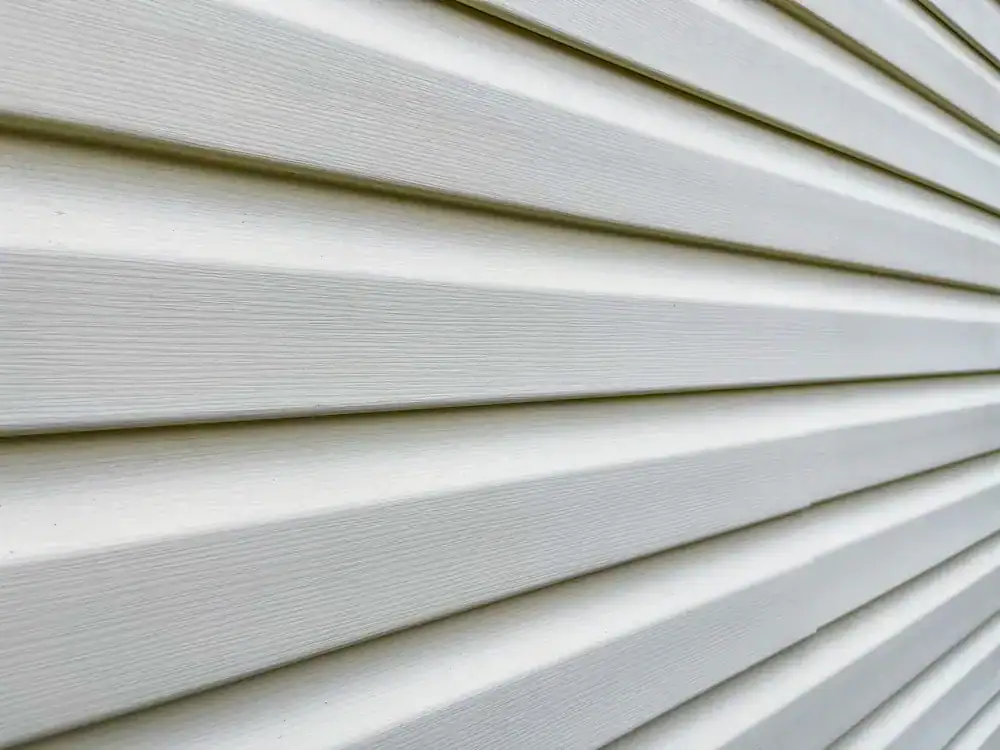
Not every siding material performs the same way in northern Bergen County, and the choice matters more here than it would in a milder climate. Vinyl siding remains the most common choice for Ramsey’s Colonial and Cape Cod homes — it holds color well, handles temperature swings without warping when installed correctly, and comes in insulated versions that meaningfully improve wall-level energy performance. For homeowners who want the look of wood without the maintenance burden, engineered wood and fiber cement options like James Hardie offer strong durability and a high-end finish that holds up to the region’s weather cycles.
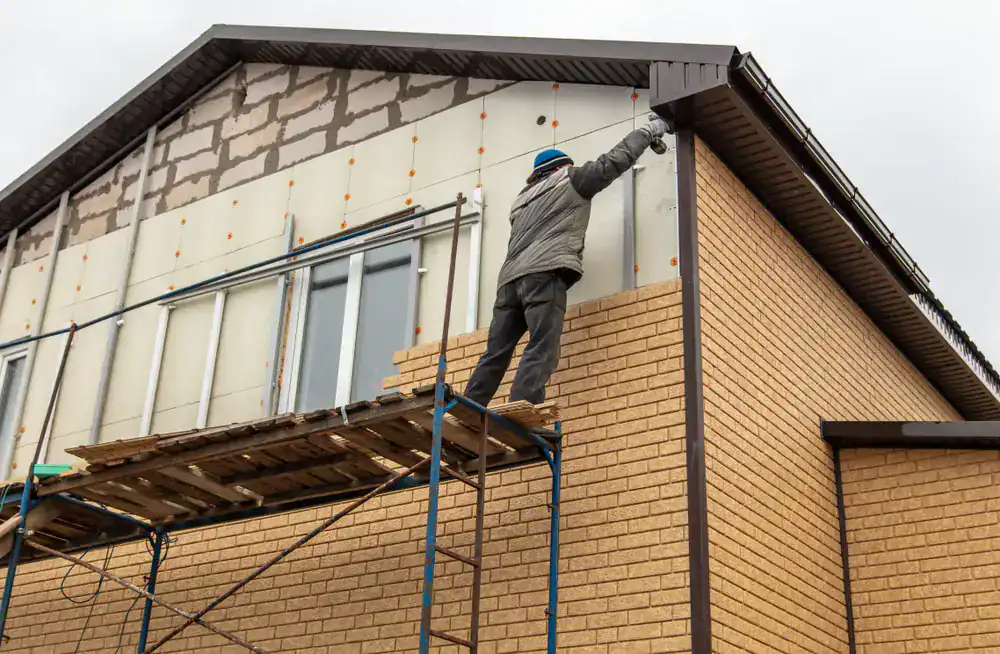
What’s included in every siding installation we do goes beyond the panels themselves. Full removal of existing siding, inspection and repair of any damaged sheathing, installation of a continuous moisture barrier, proper flashing at all penetrations and transitions, and clean disposal of all removed materials — that’s the baseline. The final walkthrough isn’t a formality. It’s a chance for you to see the finished work up close and confirm everything was done to the standard you were quoted.
Ramsey homeowners investing in a home worth close to $870,000 deserve to know exactly what they’re getting before the crew arrives. That’s why the estimate is written, itemized, and agreed upon before any work begins — no moving targets, no surprises on the final invoice.

Do I need a building permit for siding replacement in Ramsey, NJ?
Yes — siding replacement in Ramsey requires a building permit through the borough’s Building and Construction Department, located at 33 North Central Avenue. This isn’t just a bureaucratic requirement. The permit process triggers a code inspection that independently verifies the installation meets New Jersey’s building standards, which is a layer of protection that benefits you as the homeowner.
Skipping the permit creates real problems down the line. When you sell your Ramsey home, unpermitted exterior work has to be disclosed — and it can delay or derail a transaction in a competitive market like ours. A reputable contractor pulls the permit as a standard part of the project. If a contractor discourages you from permitting the work, that’s worth paying attention to.
How do I know if my siding needs to be repaired or fully replaced?
The honest answer is that it depends on what’s actually happening behind the panels — and you can’t always tell from the outside. Localized cracking, a few warped sections, or minor fading in one area can often be addressed with targeted repair. But when moisture has gotten behind the panels and compromised the housewrap or sheathing, or when the damage is spread across multiple elevations, repair becomes a short-term fix on a long-term problem.
For Ramsey homes built in the 1950s through 1980s, the more common scenario is a system that’s simply run its course. Forty to sixty years of freeze-thaw cycling, nor’easters, and summer UV exposure adds up. A free inspection will tell you which situation you’re actually in — and a contractor worth hiring will give you a straight answer even if repair is the less profitable option.
What siding material holds up best in northern Bergen County winters?
For most Ramsey homes, insulated vinyl siding is the most practical choice — it handles freeze-thaw cycling without cracking when installed with proper expansion gaps, resists moisture, and the foam backer adds meaningful thermal resistance that standard vinyl doesn’t provide. In a borough that sits at the base of the Ramapo Mountains and sees above-average snowfall compared to flatter parts of Bergen County, that energy performance difference is real and shows up in your heating bills.
Fiber cement siding — James Hardie being the most recognized brand — is a strong option for homeowners who want a more architectural look or are working with a higher-end budget. It’s denser, more impact-resistant, and holds paint exceptionally well. The tradeoff is higher material and labor cost, and it requires a certified installer to activate the full warranty. Both materials are solid choices for this climate — the right one depends on your home’s style, your budget, and what you’re optimizing for.
What does siding installation actually cost in Ramsey, NJ?
For a typical Ramsey single-family home, a full siding replacement generally runs somewhere between $12,000 and $22,000 depending on the size of the home, the material you choose, the condition of the substrate underneath, and whether any sheathing repairs are needed before new panels go on. Insulated vinyl tends to sit in the middle of that range. Fiber cement typically runs higher due to material cost and the additional labor involved in cutting and installing it correctly.
What affects the final number most is what’s found during the inspection. A home with sound sheathing and intact housewrap is a more straightforward project than one where moisture has gotten behind the existing panels and caused damage that needs to be addressed before anything new goes on. That’s why the written estimate comes after the inspection — not before. You deserve a number that reflects your actual home, not a generic ballpark designed to win the bid.
How long does a siding installation take for a typical Ramsey home?
Most single-family siding installations in Ramsey take between three and seven days from start to finish, depending on the size of the home, the material being installed, and whether any substrate repairs are needed mid-project. Fiber cement takes longer than vinyl due to the cutting and fastening requirements. Homes with complex rooflines, multiple dormers, or significant trim work also add time.
Timing within the year matters too. Spring and fall are the peak seasons for exterior work in Bergen County — we book out four to eight weeks in advance during those windows. If you’re planning a project before winter or want it done before listing your home, getting the inspection scheduled early gives you the most flexibility. Summer is generally a reliable installation window as well. Winter installations are possible but require extra care with vinyl panels, which become brittle in freezing temperatures and need to be handled accordingly.
How do I find a trustworthy siding contractor in Ramsey, NJ without getting burned?
Start with the basics that actually filter out bad actors. In New Jersey, every contractor performing home improvement work is required to carry a Home Improvement Contractor registration number issued by the NJ Division of Consumer Affairs. Ask for it before you agree to anything. If a contractor can’t or won’t provide it, move on — hiring an unregistered contractor removes your legal recourse under the Consumer Fraud Act if something goes wrong.
Beyond licensing, ask for proof of general liability insurance and workers’ compensation coverage. These protect you, not the contractor. Then look at reviews — not just the star rating, but the substance of what people say. Ramsey is a community where word travels about local contractors, and a contractor’s track record in the northern Bergen County area is usually visible in the detail of their reviews. Get at least two written estimates, compare what’s actually included in each one, and be skeptical of any number that’s significantly lower than the others without a clear explanation. Low bids that win the job and inflate the invoice are one of the most common complaints in this industry.