
Siding Installation in Midland Park, NJ
Midland Park Homes Deserve More Than a Fresh Coat of Paint
Hear from Our Customers
Residential Siding Contractors in Bergen County
Most homeowners on Prospect Street or over in the Northside aren’t thinking about siding until something goes wrong — a warped panel, a soft spot behind the wall, or a heating bill that doesn’t make sense for a house that size. By the time those signs show up, the siding has usually been failing quietly for years. New siding doesn’t just fix the surface. It closes the gaps that Bergen County’s freeze-thaw cycles have been prying open every winter, and it gives your home a thermal layer it probably hasn’t had in decades.
Midland Park’s tree-lined streets are one of the things that make this borough feel like home — but those mature trees drop branches, trap moisture against your walls, and create conditions that accelerate siding deterioration faster than most homeowners realize. With the right material installed correctly, you stop reacting to problems and start getting ahead of them.
And if you’re thinking about the long game — resale value, curb appeal, protecting what you’ve built — fresh siding consistently ranks among the highest-return exterior upgrades you can make. In a market where median home values are pushing $750,000, that’s not a minor detail.
Local Siding Company Serving Midland Park, NJ
We’ve been working on exterior renovations across Bergen County for close to ten years. That’s not a corporate timeline — it’s a decade of showing up to homes in Midland Park, Waldwick, and Wyckoff, doing the work right, and building a reputation through reviews instead of ad spend.
We started with roofing, and that foundation matters more than it sounds. Understanding how moisture moves through an exterior envelope — from the ridge cap down to the siding seams — is what separates a contractor who installs panels from one who actually protects your home. That systems-level thinking comes through on every siding job we do.
You’ll get a written estimate before anything starts, a licensed and insured crew that knows Midland Park’s building requirements, and a team that treats your property like it’s worth something — because it is.

Siding Installation Process for Midland Park Homeowners
It starts with a free inspection. A lot of Midland Park homeowners aren’t sure whether they need a full replacement or targeted repairs — especially on homes built in the 1950s and 60s where the substrate condition isn’t always visible from the outside. The inspection gives you a clear, honest answer before any money changes hands.
From there, you’ll get a written estimate that breaks down material, labor, removal of existing siding, disposal, and any substrate repairs needed. No line items added after the fact. Midland Park’s Building Department requires a permit for any siding project covering more than 25% of the total siding area — which means virtually every full replacement needs one. We handle that permit process on your behalf, so you’re not chasing paperwork or risking issues down the road at resale.
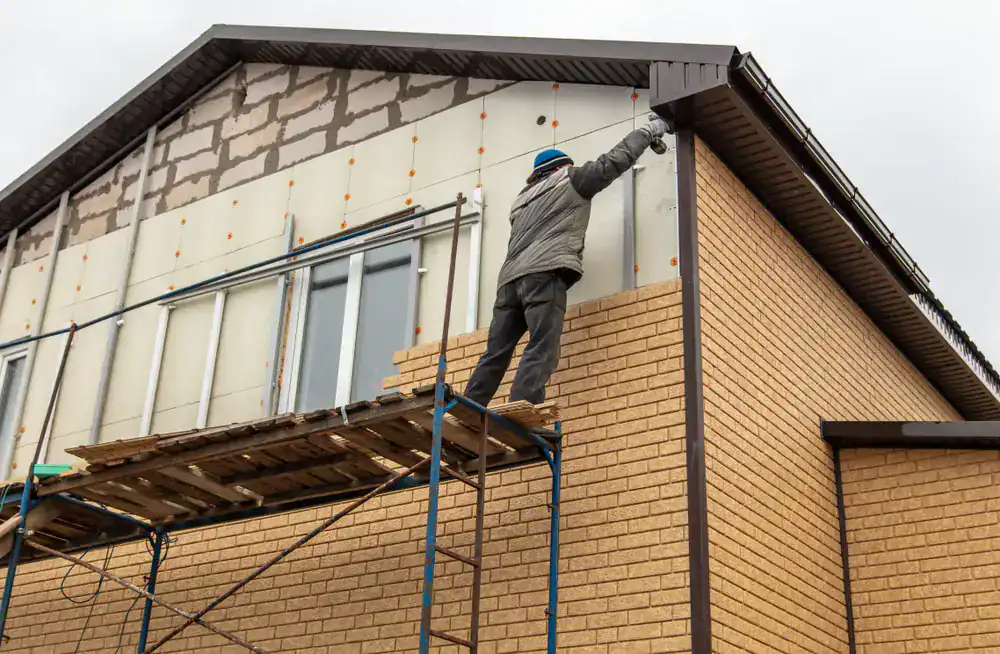
Installation is scheduled around your timeline, and our crew works clean. In a borough this compact — where neighbors are close and a good portion of residents are home during the day — that matters. Daily cleanup, careful handling around landscaping, and a final walkthrough before we leave are standard, not optional.

Ready to get started?
Vinyl Siding Contractors in Midland Park, NJ
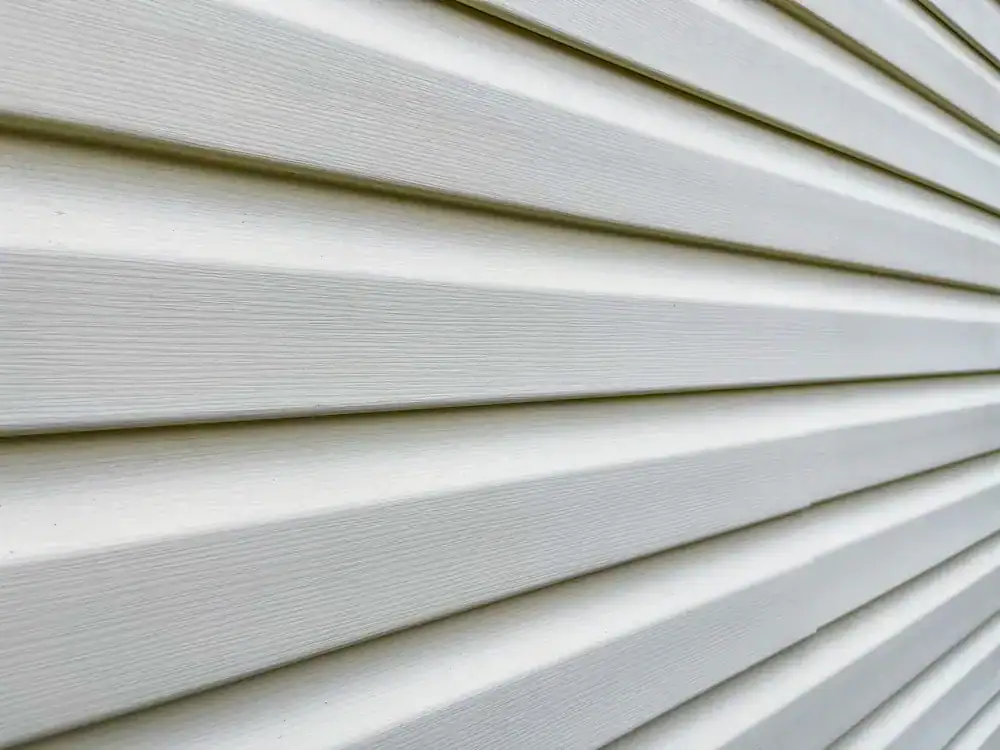
Vinyl siding is the most common choice in Midland Park — and for good reason. It holds up well in Bergen County’s climate, requires minimal maintenance, and comes in enough profiles and colors to suit the mid-century colonials and ranches that make up most of the borough’s housing stock. Insulated vinyl, which incorporates a foam backer behind the panel, is worth a serious look if energy costs are part of the conversation — it reduces thermal bridging through wall studs in a way that standard vinyl simply doesn’t.
Fiber cement siding — James Hardie being the most recognized brand — is the right answer for homeowners who want the look of wood without the rot, the fire resistance that wood can’t offer, and a lifespan that regularly exceeds 30 years in Northeast climates. It’s a heavier investment upfront, but on a home that’s already 60 or 70 years old and isn’t going anywhere, the math tends to work out.
Whatever direction makes sense for your home, the recommendation you get will be based on your specific structure, substrate condition, and priorities — not on what’s easiest to install or highest-margin to sell. That’s the only way this works long-term for either of us.

Do I need a permit for siding replacement in Midland Park, NJ?
Yes — in most cases. Midland Park’s Building Department has a specific threshold: if the siding work covers more than 25% of your home’s total siding area, a permit is required. For a full replacement, that threshold is crossed by definition, so a permit is part of the job. This isn’t a technicality to work around — it’s a protection for you. Unpermitted siding work can create real complications when you go to sell your home, and in a borough where the Building Department at 280 Godwin Avenue actively enforces these requirements, skipping the permit is a risk that isn’t worth taking.
When you work with us, we handle this process as a standard part of every project. The permit gets pulled, the inspection gets scheduled, and you end up with documentation that shows the work was done correctly and legally. That paper trail matters.
How do I know if my siding needs full replacement or just repairs?
This is one of the most common questions homeowners in Midland Park ask — and it’s a fair one, especially on homes built in the 1940s, 50s, and 60s where the original siding may have been replaced once already and the current material is now 20 to 40 years old. The honest answer is that you can’t always tell from the outside. Cracking, fading, and warped panels are visible signs, but moisture damage behind the wall, deteriorated housewrap, and substrate rot often don’t show up until a contractor gets a closer look.
That’s exactly what the free inspection is for. We assess the full picture — not just the surface — and give you a straight answer about whether targeted repairs will hold or whether full replacement is the smarter investment at this stage. There’s no obligation attached to that assessment. You’ll leave with a clear understanding of what your siding actually needs.
What siding material holds up best in Bergen County's winters?
Bergen County winters are hard on siding in a specific way — it’s not just the cold, it’s the repeated freeze-thaw cycles that do the real damage. Water finds its way into small gaps or failing seams, freezes, expands, and forces those gaps wider. Over years, that process compounds. The material that handles this best depends on your priorities, but vinyl siding — particularly insulated vinyl — performs well in this climate because it doesn’t absorb moisture and flexes without cracking under normal temperature swings.
Fiber cement siding is the more durable long-term option. It doesn’t expand and contract as dramatically as vinyl in extreme cold, it’s resistant to moisture intrusion, and it holds paint significantly longer than wood. For a Midland Park home that’s already been through 50 or 60 Northeast winters, fiber cement is often the last siding replacement you’ll need to make. The upfront cost is higher, but the maintenance cost over the next 30 years is considerably lower.
How long does siding installation typically take on a Midland Park home?
For most single-family homes in Midland Park — the colonials, ranches, and split-levels that make up the majority of the borough’s housing stock — a full siding replacement typically runs between three and five days of active installation time. That estimate assumes standard conditions. If the inspection reveals substrate damage, rot, or moisture intrusion behind the existing panels, those repairs add time before new siding can go on. That’s not a surprise you want to find out about mid-project, which is why a thorough pre-installation inspection matters.
Permitting adds some lead time on the front end, so factoring in a few weeks from the estimate to the first day of installation is a realistic expectation. Bergen County contractors book out four to eight weeks during peak season — spring and early fall — so if you’re targeting a specific window, earlier scheduling works in your favor. A written timeline is part of the process from the start.
What does siding installation cost for a home in Midland Park, NJ?
Pricing for a full siding replacement in Midland Park typically ranges from $8,000 to $20,000 for a standard single-family home, depending on the size of the home, the material selected, and the condition of the substrate underneath the existing siding. Vinyl siding sits at the lower end of that range. Fiber cement — James Hardie and comparable brands — runs higher due to material cost and the additional labor involved in installation.
What affects the final number more than most homeowners expect is substrate condition. On a home built in 1950 that has had the same siding for 30 years, there’s a reasonable chance some of the sheathing underneath has taken on moisture damage. Addressing that before new panels go on is not optional — it’s what makes the new siding last. A detailed written estimate will break all of this out line by line before any work begins, so you know exactly what you’re paying for and why.
How do I find a trustworthy siding contractor in Midland Park versus just the cheapest one?
In a borough as tight-knit as Midland Park, reputation matters. A contractor who does poor work on one street gets noticed on the next one. Asking neighbors, checking Google reviews from Midland Park homeowners specifically, and looking for a track record of completed projects in the area will tell you more than any advertisement.
Beyond that, there are a few concrete things to verify before signing anything. New Jersey requires all home improvement contractors to be registered with the NJ Division of Consumer Affairs under the HIC registration program. An unregistered contractor isn’t just a risk — hiring one is a violation of the Consumer Fraud Act and leaves you with no legal recourse if something goes wrong. Ask for the registration number, ask to see proof of general liability and workers’ compensation insurance, and ask for a written estimate that specifies every line item. A contractor who hesitates on any of those three things is telling you something important before the work even starts.