
Siding Installation in Hasbrouck Heights, NJ
Bergen County Winters Don't Forgive Aging Siding
Hear from Our Customers
Siding Contractors in Hasbrouck Heights, NJ
A lot of homes in Hasbrouck Heights were built between the 1920s and 1960s. That’s not a problem — it’s just reality. But it does mean that a significant share of the siding on those homes has been through decades of Bergen County winters, repeated freeze-thaw cycles, and nor’easters that push wind-driven rain into every gap and seam. When that siding starts to fail, it doesn’t just look bad — it lets moisture into the wall system, and that’s where real damage starts.
New siding changes that equation. You get a sealed, properly flashed exterior that keeps water out, reduces drafts, and holds up through the kind of weather this area actually delivers. For a home valued in the $630,000–$750,000 range, that’s not a cosmetic upgrade — it’s protecting a serious investment from the inside out.
There’s also a curb appeal factor that matters here. Hasbrouck Heights homes have been selling fast — median days on market has been sitting around 19 days — and exterior condition plays a direct role in what buyers see and what they offer. Whether you’re staying or eventually selling, new siding is one of the few exterior improvements that pays you back.
Local Siding Company Serving Hasbrouck Heights, NJ
We’ve been working on New Jersey homes for about ten years. Our business started with roofing — and that background matters more than it might seem. A contractor who understands how a roof manages water, how flashing works, and how the full exterior envelope is supposed to perform brings a different level of attention to siding work than someone who only installs panels.
That experience covers homes all across Bergen County, including the older housing stock that makes up most of Hasbrouck Heights — the Foursquares, the Cape Cods, the bungalows that line the residential streets between Route 17 and Route 46. These homes have specific needs, and the approach has to match. We’re fully licensed under New Jersey’s Home Improvement Contractor requirements and hold manufacturer certifications that keep your warranty intact.
What you won’t get is a crew that shows up without accountability. Our communication is straightforward, our pricing is written and fixed, and the estimate is free.

Residential Siding Contractors in Hasbrouck Heights, NJ
It starts with a free inspection. Before anything is quoted or scheduled, we look at what’s actually there — the condition of your current siding, the substrate underneath, the flashing at your roofline and around windows, and any areas where moisture may have already started working its way in. On a home built in the 1940s or 1950s, that assessment can surface issues that would turn into expensive problems if they got covered over by new panels.
From there, you get a written estimate that breaks down exactly what’s included — materials, removal and disposal of the old siding, moisture barrier installation, trim work, and labor. No line items that appear later. No change orders that show up mid-project. One number, clearly explained, before work begins.
One thing worth knowing: Hasbrouck Heights does not require a permit for siding replacement. The borough’s Construction and Code Enforcement office has explicitly removed that requirement, which means there’s no waiting on approvals or scheduling inspections. Once the estimate is signed, the timeline moves quickly. Installation is clean, the site is left in order, and the work is backed by both manufacturer warranties and our own workmanship standards.

Ready to get started?
Vinyl Siding Contractors in Hasbrouck Heights, NJ
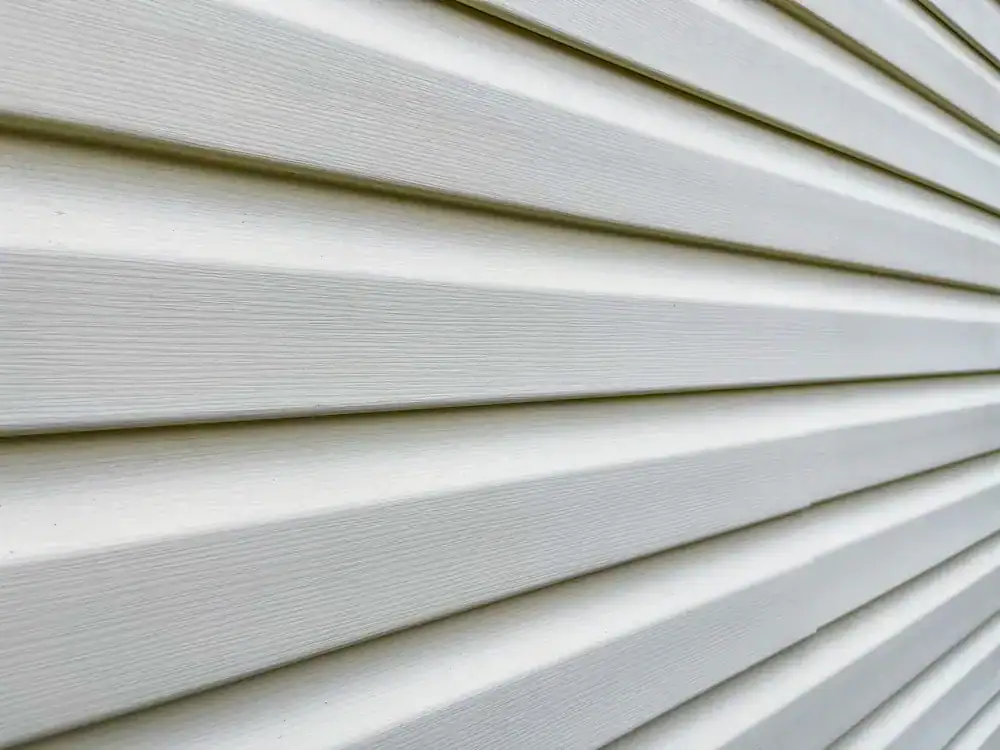
Not every siding material performs the same way in Bergen County. Vinyl is the most common choice — it’s low maintenance, holds color well, and handles temperature swings without warping when it’s installed with the right expansion gaps. Insulated vinyl adds a layer of thermal performance that older homes in Hasbrouck Heights can genuinely benefit from, especially those with minimal wall insulation. Fiber cement is the heavier-duty option — it’s dimensionally stable, fire-resistant, and holds paint for 15 to 20 years with proper maintenance. Engineered wood sits between the two, offering a more natural look with better moisture resistance than traditional wood.
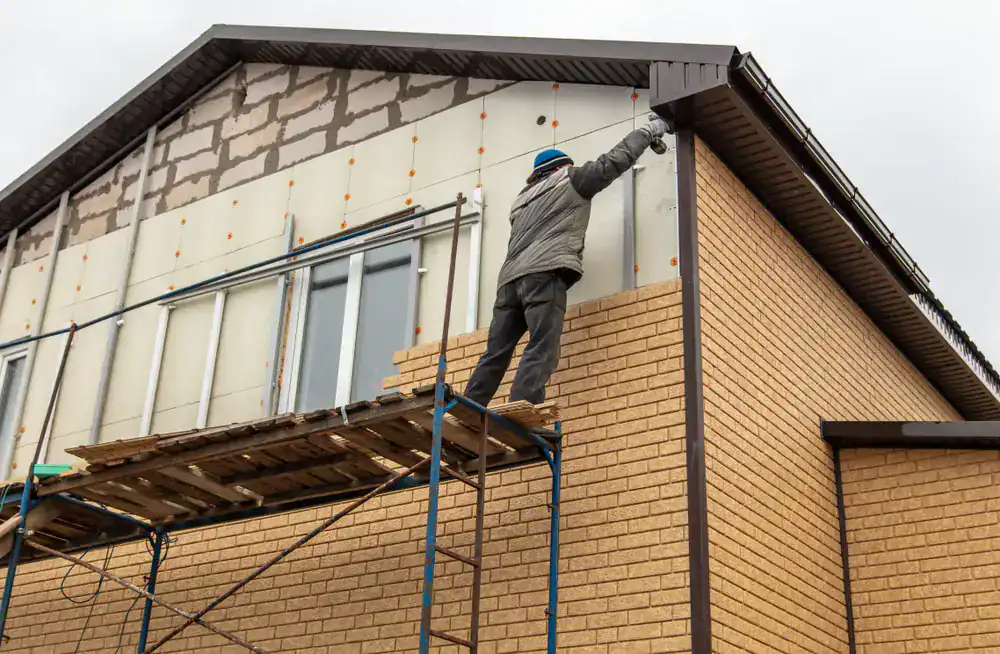
What matters as much as the material is what happens before the panels go on. The moisture barrier — the housewrap or building paper behind the siding — is what actually keeps water out of your wall system. On older homes, that layer is often missing, degraded, or was never installed correctly to begin with. Every siding installation we perform includes a proper moisture management layer, correctly lapped and sealed, before a single panel is fastened.
Trim, corners, J-channel, and all penetration points are flashed and finished to manufacturer spec. That’s not extra — it’s what makes the warranty valid and what keeps the installation performing the way it should through Bergen County winters for years to come.

Do I need a permit for siding replacement in Hasbrouck Heights, NJ?
No — and that’s genuinely useful to know before you start planning. The Hasbrouck Heights Borough Construction and Code Enforcement office has explicitly stated that permits are no longer required for siding replacement. That removes one of the most common friction points in exterior renovation projects: waiting on permit approvals, scheduling inspections, and absorbing the associated fees and delays.
What doesn’t change is the contractor requirement. New Jersey law still requires any contractor performing home improvement work to be registered as a Home Improvement Contractor (HIC) with the NJ Division of Consumer Affairs. That registration is what gives you legal protection under the Consumer Fraud Act if something goes wrong. We’re fully registered and licensed, so that box is covered. You get the streamlined process that Hasbrouck Heights allows, with none of the risk that comes from hiring someone who isn’t properly credentialed.
What siding material holds up best through New Jersey winters?
For most Bergen County homes, insulated vinyl or fiber cement are the two strongest performers in this climate. Standard vinyl is fine, but it can become brittle in extreme cold — which matters in a region that regularly sees temperatures drop well below freezing between December and February. Insulated vinyl has a foam backing that reduces that brittleness, adds thermal performance, and gives the panel a slightly more solid feel. For older homes in Hasbrouck Heights that may have minimal wall insulation, that thermal layer makes a real difference in comfort and energy efficiency.
Fiber cement is the most durable option outright. It doesn’t expand and contract with temperature swings the way vinyl does, it won’t rot, and it holds paint for 15 to 20 years. The trade-off is cost and installation complexity — it’s heavier and requires a more experienced crew. Engineered wood is a solid middle ground if you want a natural appearance without the maintenance demands of real wood. The right call depends on your home’s age, your budget, and how long you plan to stay — all things worth walking through during a free estimate.
How do I know if my siding needs to be replaced or just repaired?
The honest answer is that it depends on what’s underneath. Surface cracks, fading, or a few warped panels don’t automatically mean full replacement — targeted repairs can make sense if the damage is isolated and the substrate behind the siding is still in good shape. But if moisture has already gotten into the wall system, you’re dealing with a different problem. Wet sheathing, soft spots, or mold behind the panels means the damage goes deeper than the cladding itself, and patching the surface won’t fix it.
In Hasbrouck Heights, where a significant portion of the housing stock is 60 to 80 years old, it’s common to find that the original moisture barrier — or what’s left of it — has broken down over time. That’s not visible from the outside. A proper inspection looks at the full picture: panel condition, substrate integrity, flashing at windows and the roofline, and any areas where water may have been tracking in. That’s exactly what the free inspection covers before any quote is written, so you’re making a decision based on what’s actually there.
How long does siding installation take on a typical Hasbrouck Heights home?
For a standard single-family home — the kind of Cape Cod, colonial, or bungalow that makes up most of the residential stock in Hasbrouck Heights — a full siding replacement typically takes between two and five days depending on the size of the home, the material being installed, and what we find once the old siding comes off. Fiber cement takes longer than vinyl because of the weight and the cutting process. If substrate repairs are needed, that adds time as well.
Weather is a real factor in Bergen County. Vinyl installation in very cold temperatures requires extra care because the material is more prone to cracking when it’s handled cold. Most installations run smoothest in spring through early fall, though fiber cement and engineered wood can be installed in cooler conditions with proper technique. If you’re planning around a specific timeline — a home sale, a renovation project, or just wanting it done before winter — the estimate conversation is the right time to map that out. Since Hasbrouck Heights doesn’t require a permit for siding replacement, there’s no approval wait built into the schedule.
What does siding installation cost for a home in Hasbrouck Heights, NJ?
For a typical single-family home in Hasbrouck Heights, siding replacement generally runs somewhere between $8,000 and $20,000 depending on the size of the home, the material selected, and the condition of what’s underneath the existing cladding. Vinyl sits at the lower end of that range. Fiber cement and engineered wood push toward the higher end. If substrate repairs, additional moisture barrier work, or extensive trim replacement are needed — which is not uncommon on homes built before 1970 — that affects the final number.
What you should be cautious of is an estimate that comes in significantly below the range without a clear explanation of what’s excluded. In a market where Bergen County labor and material costs are what they are, a number that seems too good usually means something is being left out — often the moisture barrier, proper flashing, or disposal of the old material. Our written estimate breaks every line item out so you can see exactly what you’re getting and make a real comparison. The estimate itself is free and comes with no obligation.
Why does it matter that we also do roofing?
It matters because siding and roofing aren’t separate systems — they’re connected. The way water moves off a roof, through the fascia, and down the wall affects how siding performs over time. A contractor who only installs siding may not be looking at the flashing where your roof meets the wall, or the condition of the soffit and fascia above the top course of panels. Those are the spots where water finds its way in, and they’re easy to miss if your only frame of reference is the cladding itself.
In Hasbrouck Heights, where a large share of homes are 60 to 80 years old and many have never had a comprehensive exterior assessment, that integrated perspective can catch problems before they become expensive. When we’re on your home for a siding inspection, we’re also looking at the full exterior envelope — not because it’s a sales opportunity, but because it’s the only way to give you an honest picture of what your home actually needs. That’s the practical value of working with a contractor whose primary expertise is the whole exterior system, not just one piece of it.