
Roofer in Hasbrouck Heights, NJ
Bergen County Winters Don't Forgive an Aging Roof
Hear from Our Customers
Local Roofing Company in Hasbrouck Heights
A roof that’s been properly inspected, repaired, or replaced doesn’t just stop leaking — it stops costing you money in ways you don’t always see coming. No more water stains creeping down your ceiling after a heavy storm. No more wondering whether that soft spot near the chimney is something serious. You just know it’s handled.
For homeowners in Hasbrouck Heights, that peace of mind carries real weight. With over 63% of the borough’s housing stock built between the 1940s and 1960s, a lot of these roofs are at or past the end of their service life. The freeze-thaw cycles Bergen County delivers every winter — water getting under compromised shingles, freezing, expanding, thawing, and doing it again — accelerate that deterioration faster than most homeowners realize until there’s visible damage inside the house.
And in a borough this dense, where homes sit close together, a clean, professional roofing job does something else too. It protects the value of a home that’s worth well over half a million dollars in today’s market — and it signals that the property is cared for. That matters whether you’re staying for another twenty years or thinking about selling.
Roofing Company Serving Hasbrouck Heights, NJ
We’re a family-owned exterior renovation contractor with over a decade of experience working on North Jersey homes — including the mid-century housing stock that makes up most of Hasbrouck Heights. We hold NJ Home Improvement Contractor License #13VH10605800, which you can verify directly through the NJ Division of Consumer Affairs. That’s not a throwaway detail — it’s the difference between a contractor who’s accountable and one who disappears after the job.
We also carry certifications from major shingle manufacturers, which unlocks enhanced system warranties that most local roofers simply aren’t authorized to offer. For a homeowner on a quiet street off Route 17 or Williams Avenue in Hasbrouck Heights, that kind of warranty isn’t just paperwork — it’s a transferable asset that follows the home.
And for the roughly one in four Hasbrouck Heights residents who speak Spanish as their primary language, we offer fully bilingual service. Every estimate, every inspection, every conversation — in the language that works best for you.
Emergency Roof Repair Process in Hasbrouck Heights
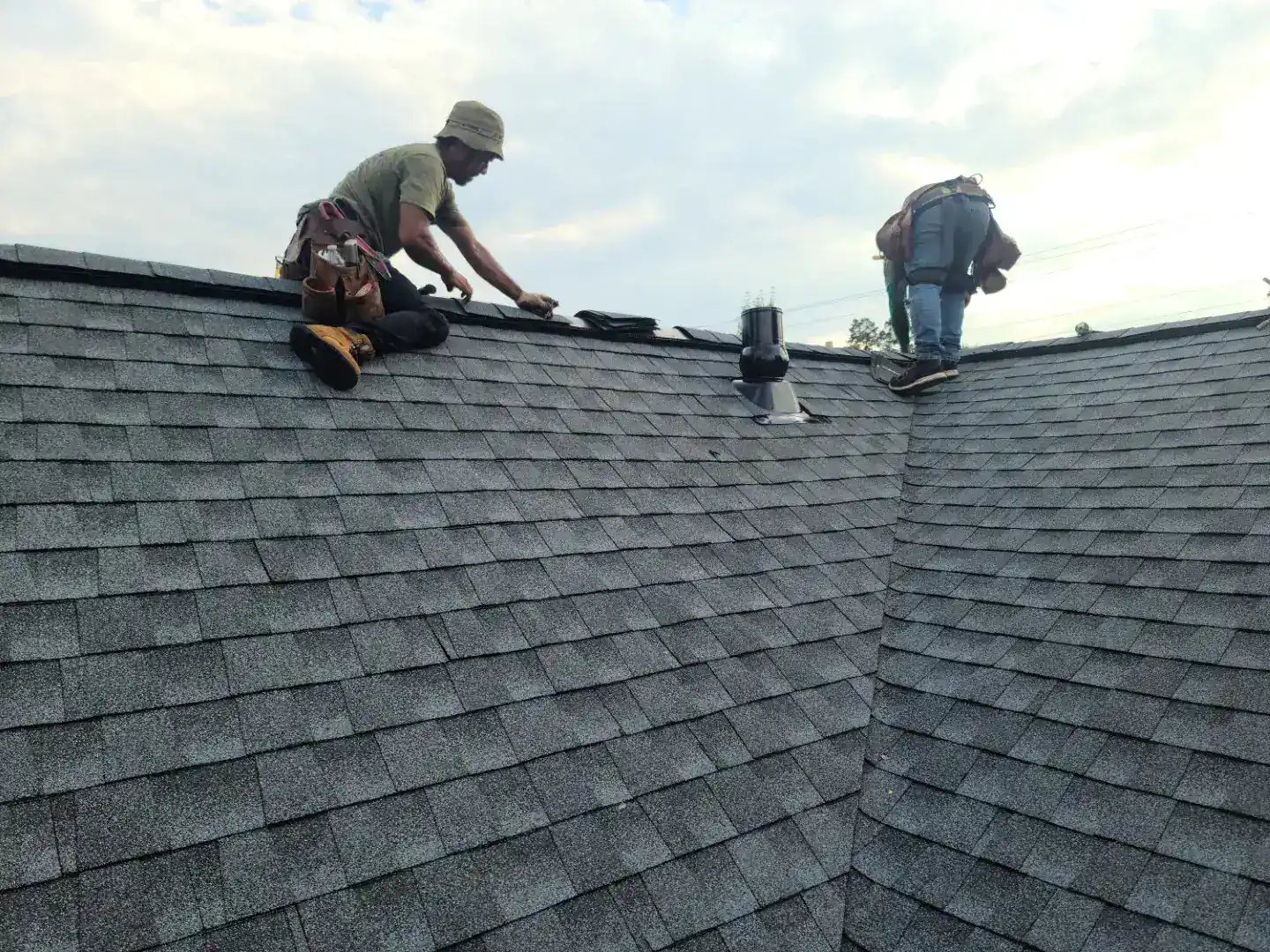
It starts with a free inspection — not a sales visit dressed up as one. We walk the exterior, check the attic, review drainage and flashing points, and document everything with photos. You get that report regardless of what you decide to do next. No obligation, nothing to sign, no pressure to move forward on the spot. A lot of homeowners in Hasbrouck Heights use that inspection just to understand what they’re actually dealing with before making any decisions.
If work is needed, you get a detailed, itemized estimate before anything starts. The number you approve is the number you pay — no mid-project surprises, no scope creep without your explicit sign-off. One thing worth knowing if you’re planning ahead: the Borough of Hasbrouck Heights does not require a permit for roofing or siding work, which means your project can be scheduled and started without waiting on municipal approval. If a dumpster needs to go in the street rather than the driveway, there’s a simple $250 borough permit for that — we handle it.
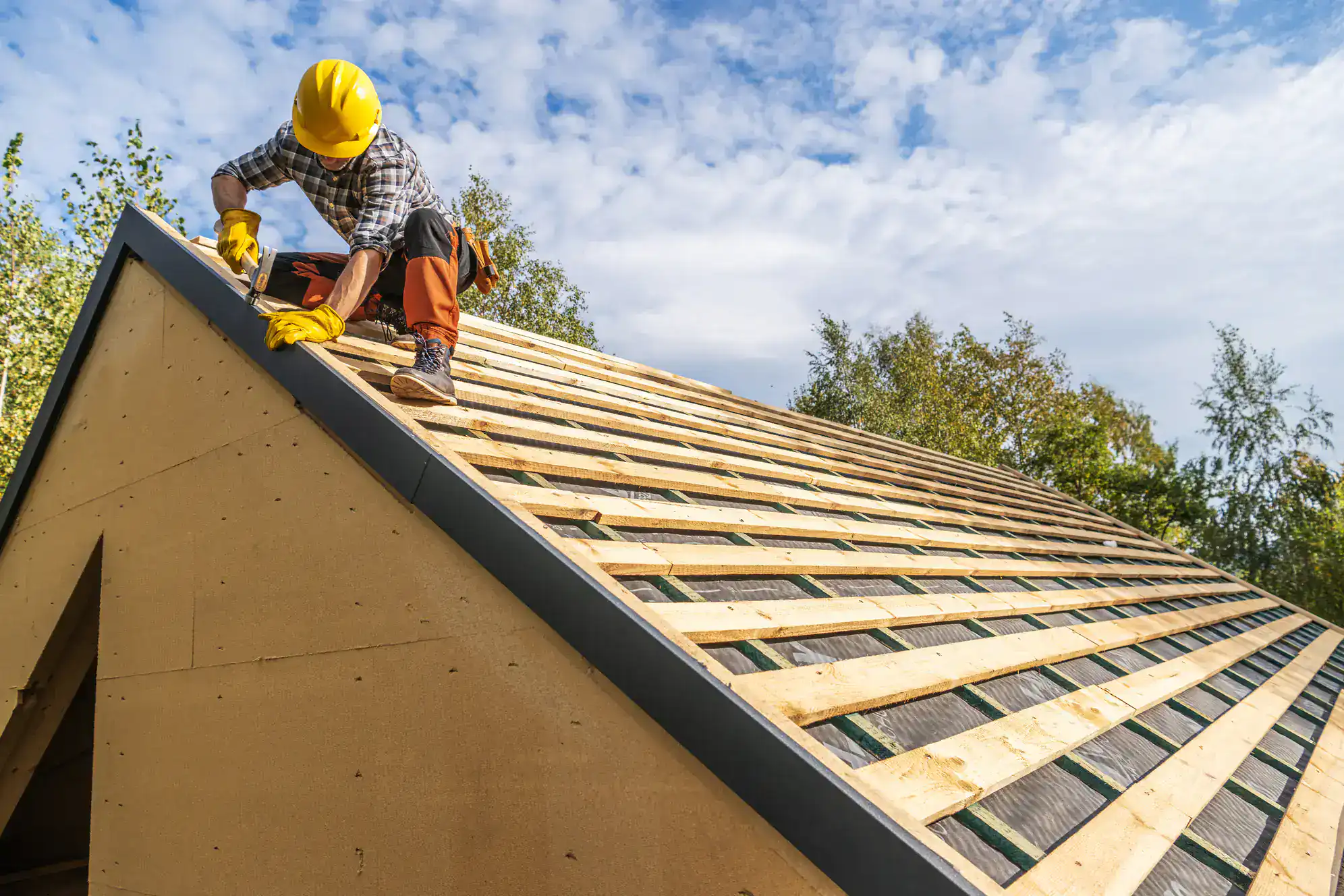
For emergency situations — a storm tears off shingles, a branch punches through, a leak appears at midnight — our 24/7 emergency line means you’re not leaving a voicemail and hoping someone calls back by morning. Someone answers, and the response is real.
Ready to get started?
Affordable Roofers in Hasbrouck Heights, NJ
We offer a full range of roofing services for Hasbrouck Heights homeowners, covering what homes this age typically need. That includes roof inspections, repairs, full replacements, flat roofing systems, TPO, and EPDM — along with gutters and siding when those are part of the picture. Most homes in this borough weren’t built with modern ventilation standards or current ice and water shield requirements, so our installation process accounts for what’s actually there, not just what a generic spec sheet calls for.
Our manufacturer certifications matter here in a specific way. Bergen County nor’easters are documented events — sustained winds above 50 mph, gusts exceeding 60, and the kind of wind-driven rain that finds every weak point in an aging roofing system. A manufacturer-certified installation means the system is installed to the standard required for the enhanced warranty to apply. That warranty can run 30 to 50 years and transfers to the next owner if you sell — which, given that detached homes in Hasbrouck Heights average over $641,000, is a real financial consideration.
Pricing is upfront and transparent. Our beat-or-match guarantee means that if you get a comparable written quote from another licensed, insured contractor for the same scope and materials, we’ll beat or match it. You shouldn’t have to choose between quality and a fair price — and here, you don’t.
Do I need a permit for roofing work in Hasbrouck Heights, NJ?
No — and that’s actually one of the more homeowner-friendly policies in Bergen County. The Borough of Hasbrouck Heights has officially eliminated the permit requirement for roofing and siding work, which is confirmed on the borough’s Construction & Code Enforcement page. That means no permit fees added to your project cost and no waiting on municipal approval before work can begin.
The one exception involves dumpster placement. If the dumpster needs to sit in the street rather than your driveway, the borough requires a permit for that — it costs $250, covers up to seven days, and is obtained through the Building Department at 320 Boulevard. Lights are required on the dumpster at night. If the dumpster fits in your driveway, no permit is needed at all. Either way, the logistics are straightforward and handled as part of the project.
How do I know if my roof needs a repair or a full replacement?
That’s the right question to ask before you spend anything, and the honest answer is that it depends on what’s actually happening up there — not just what’s visible from the ground. A granule-covered driveway or a dark streak on the ceiling tells you something is wrong, but it doesn’t tell you whether a targeted repair will hold or whether the system has degraded to the point where repairs are just delaying the inevitable.
Our free inspection is specifically designed to answer this question with evidence. We check the exterior surface, the attic for signs of moisture infiltration or inadequate ventilation, drainage patterns, and every flashing point — chimney, valleys, pipe boots, edges. You get photos of what was found. If a repair is genuinely all that’s needed, that’s what you’ll be told. If the roof has reached the end of its serviceable life — which is a real possibility for a home built in the 1950s that hasn’t been re-roofed recently — you’ll understand exactly why, with documentation to back it up.
What causes ice dams, and are Hasbrouck Heights homes at risk?
Ice dams form when heat escaping through the roof melts snow at the peak, and that water runs down and refreezes at the cold eaves — eventually forcing water back up under the shingles and into the house. It’s a ventilation and insulation problem as much as it is a roofing problem, and it’s particularly common in homes built before modern attic insulation standards were established.
Given that the median construction year for homes in Hasbrouck Heights is 1954 — and that over 20% of the borough’s housing stock was built before 1939 — ice dam risk here is real and not theoretical. Bergen County winters deliver the exact freeze-thaw cycling that makes this worse: temperatures drop, snow accumulates, temperatures rise slightly, water moves, temperatures drop again. A properly installed roofing system includes ice and water shield in the first three feet from the eave, which is required under New Jersey’s Uniform Construction Code and is a standard part of any replacement we perform. If your current roof doesn’t have it, that’s worth knowing.
How long does a roof typically last on an older home in Hasbrouck Heights?
A standard asphalt shingle roof lasts roughly 20 to 30 years under normal conditions. For a home built in the 1950s that was re-roofed sometime in the 1990s, that second roof is now 30-plus years old — right at or past the end of its expected service life. Homes that haven’t been re-roofed since original construction are in a different category entirely.
What shortens that lifespan in Bergen County specifically is the weather cycle. Nor’easters with documented gusts above 60 mph strip granules from aging shingles and lift flashing at the most vulnerable points. Freeze-thaw cycling works on any crack or compromised seal until it becomes a failure point. Homes on or near the Route 17 corridor in Hasbrouck Heights also face open-corridor wind patterns that can accelerate shingle wear on the exposed faces of the roof. The bottom line is that if your home was built in the 1940s through 1960s and you haven’t had a professional inspection recently, you don’t actually know what condition your roof is in — and a free inspection is the fastest way to find out.
What does a manufacturer-certified roofing installation actually mean for me?
It means the contractor installing your roof has met specific training, quality, and compliance standards set by the manufacturer — and as a result, is authorized to register your installation under an enhanced warranty program that uncertified contractors cannot access. Those warranties can extend to 30 or even 50 years and cover both materials and workmanship in ways that a standard contractor warranty does not.
For a homeowner in Hasbrouck Heights, where detached homes average over $641,000, the practical value of that warranty is twofold. First, it gives you real coverage if something goes wrong — not just a contractor’s phone number that may or may not still be active in five years. Second, it’s transferable to the next buyer if you sell, which means it shows up in home inspections as a documented asset rather than a question mark. Only about 2 to 3 percent of roofing contractors in the U.S. hold top-tier manufacturer certifications. It’s not a common credential, and it’s worth asking any roofer you’re considering whether they actually have it.
How quickly can I get emergency roof repair in Hasbrouck Heights after a storm?
Our 24/7 emergency line means you can reach someone the same night the damage happens — not the next business day. When a Bergen County nor’easter moves through Hasbrouck Heights with 50 to 60 mph winds and you’ve got shingles in the yard or water coming in through the ceiling, the first step is getting the roof stabilized with emergency tarping to stop the damage from spreading. That’s what our emergency response covers: getting someone there, assessing what happened, and protecting the interior of your home until a full repair or replacement can be scheduled.
Bergen County storm events create surge demand for local roofers, and contractors without real emergency capacity will tell you they’ll get there when they can. In a dense borough like Hasbrouck Heights — where homes are close together and a compromised roof can mean water damage spreading fast — waiting isn’t a neutral option. Real 24/7 availability is the difference between a manageable repair and a much larger problem by morning.
Other Services we provide in Hasbrouck Heights