
Siding Installation in Demarest, NJ
Demarest Homes Deserve More Than a Quick Re-Side
Hear from Our Customers
Siding Contractors in Bergen County, NJ
New siding doesn’t just change how your home looks — it changes how it performs. Properly installed siding keeps moisture out, holds up through freeze-thaw cycles, and cuts down on the energy loss that older cladding quietly causes year after year. For a home in Demarest, that’s not a minor upgrade. It’s a meaningful one.
Demarest winters are demanding. The Eastern Bergen County climate brings heavy snow, freezing fog, and temperature swings that crack brittle vinyl and push moisture behind failing panels before you ever notice it from the street. When we install siding correctly — with the right materials, proper fastening for thermal movement, and a solid moisture barrier underneath — those conditions stop being a threat.
In a community where homes routinely sell above $1 million and buyers are paying close attention to every exterior detail, new siding is also one of the highest-return improvements you can make before listing. Even if you’re not selling, it’s the difference between a home that reflects the investment you’ve made in Demarest and one that’s quietly falling behind.
Local Siding Company Serving Demarest, NJ
We’ve been working on exterior renovations across Bergen County for close to ten years. That’s not a decade of showing up and getting by — it’s a decade of learning what actually works on homes in this specific part of New Jersey, in this specific climate, under this specific kind of scrutiny from homeowners who know quality when they see it.
The Northern Valley cluster — Demarest, Closter, Haworth, Cresskill — is a tight-knit area where reputation matters. Homeowners here ask questions, check references, and hold contractors to a high standard. That’s exactly the environment that shaped how we operate: transparent pricing from the start, clear communication throughout, and workmanship that holds up long after the crew has left.
We’re fully licensed under New Jersey’s Home Improvement Contractor requirements and carry the certifications and insurance that protect you — not just the business. Free estimates, no surprise charges, and a track record built on real reviews from real Demarest homeowners.

Residential Siding Contractors in Demarest, NJ
It starts with a free inspection and estimate. One of our team members comes out to your Demarest home, takes a close look at your existing siding, checks what’s happening underneath, and gives you a written number — not a ballpark, a real number. If there’s substrate damage or moisture issues hiding behind aging cladding, you’ll know before any work begins, not after.
From there, material selection happens with your input. We work with standard vinyl, insulated vinyl for better thermal performance, or fiber cement like James Hardie for homes that warrant a premium product. The goal is matching the right material to your home’s architecture and your long-term priorities. In Demarest, where the housing stock ranges from mid-century cottages near County Road to larger colonials on the East Hill, that conversation looks different for every home.
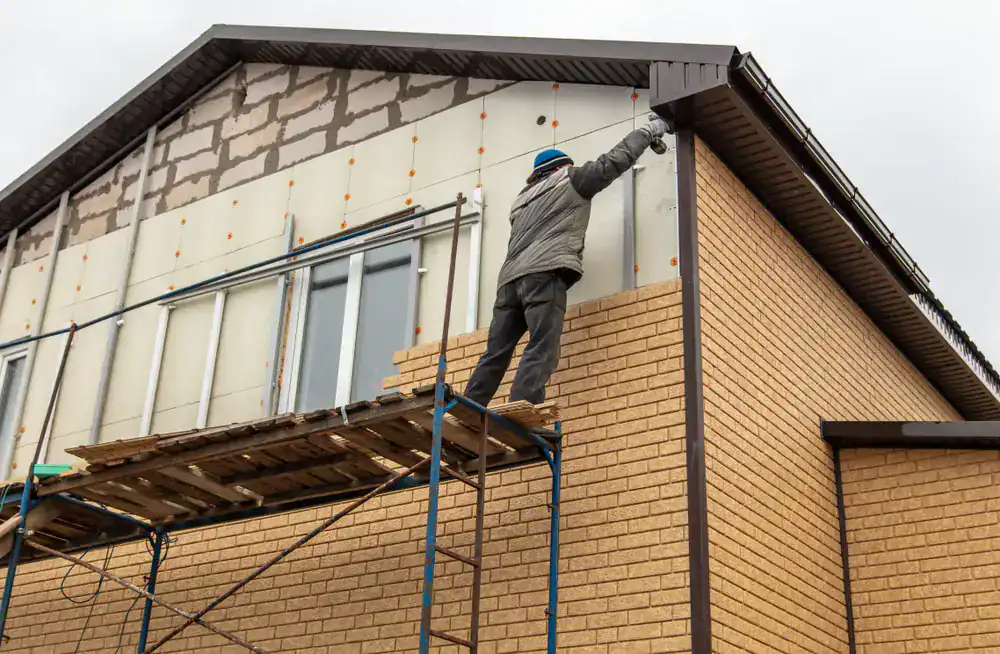
Once the project is underway, we handle removal of the old siding, proper installation of the moisture barrier, and full reinstallation with the trim and accessories that complete the job cleanly. Demarest Borough requires building permits for exterior alterations under Chapter 84 of the municipal code — we handle that process as part of the project, not pass it off to you to figure out. When the work is done, we walk through it together before anything is signed off.

Ready to get started?
Vinyl Siding Contractors in Demarest, NJ
Not every home in Demarest needs the same solution. The mid-century cottages and brick two-stories that make up a good portion of the borough’s older housing stock have different needs than a custom colonial or a French colonial estate in the higher price ranges. The material conversation starts there — with your home, not with whatever’s easiest to install.
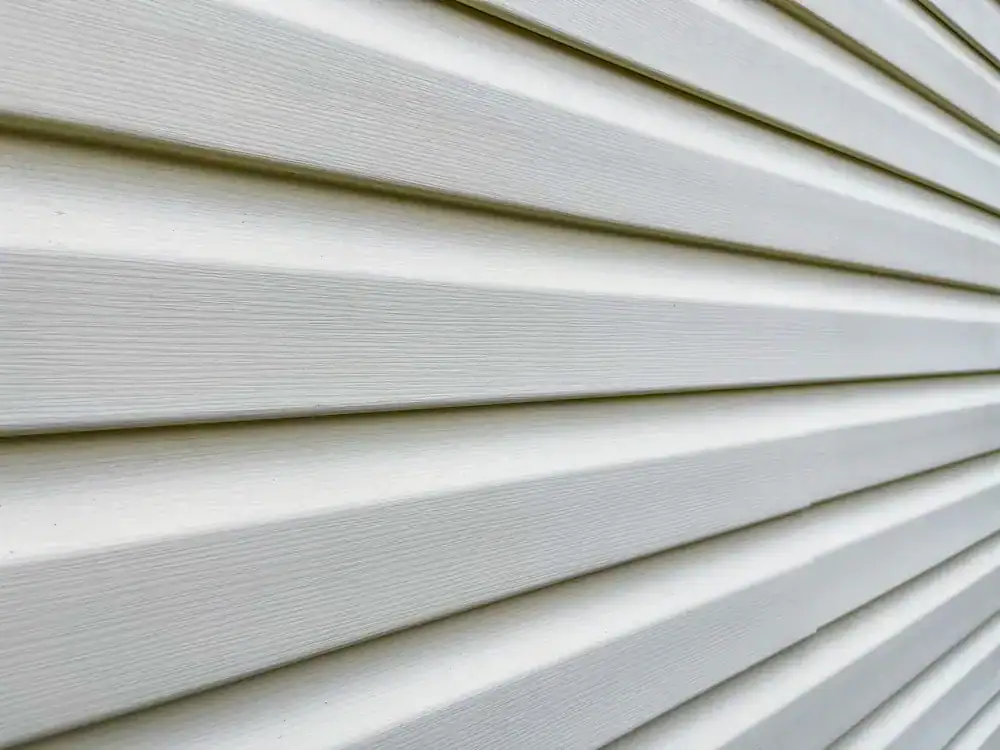
Vinyl siding remains the most practical choice for many homeowners: low maintenance, solid performance, and a wide range of profiles and colors. Insulated vinyl adds a layer of thermal backing that meaningfully improves energy efficiency — relevant in a climate that runs the full range from Bergen County winters to humid summers. For homes where aesthetics and durability both need to be at the top of the list, fiber cement — particularly James Hardie products — offers a premium finish with a lifespan and fire resistance that standard vinyl can’t match.
Every installation we do includes proper moisture barrier work underneath, full removal and disposal of the existing cladding, and trim and accessory installation that finishes the exterior cleanly. Manufacturer warranties apply where applicable, and our workmanship is backed by our own guarantee. If you’re in Demarest and want to understand which option actually makes sense for your specific home, that’s exactly what the free estimate conversation is for.

Do I need a permit for siding replacement in Demarest, NJ?
Yes, in most cases you do. Demarest Borough enforces the New Jersey Uniform Construction Code under Chapter 84 of the municipal code, and full siding removal and replacement is generally classified as an exterior alteration — which requires a building permit through the borough’s Construction Official. This isn’t unique to Demarest, but it’s something homeowners here sometimes overlook when getting quotes from contractors who don’t mention it.
The permit process matters for a few reasons. First, it ensures the work is inspected and meets code — which protects your home’s value and your ability to sell without complications down the road. Second, if a contractor skips the permit and something goes wrong, you may be on the hook for bringing the work up to code at your own expense. We handle the permit coordination as part of the project so you’re not left navigating borough hall on your own.
How long does new siding typically last on a Bergen County home?
The honest answer depends on the material and how it was installed. Standard vinyl siding, when properly installed, typically lasts 20 to 40 years. The wide range comes down to product quality, installation method, and how well it holds up under local conditions — and in Bergen County, those conditions are demanding. Freeze-thaw cycles through a New Jersey winter put real stress on exterior cladding. Panels that weren’t fastened with enough room for thermal expansion will buckle. Vinyl that was installed in cold weather without accounting for brittleness can crack under impact.
Fiber cement siding — James Hardie being the most widely recognized brand — can last 50 years or more with proper maintenance, and it holds up significantly better under moisture and temperature swings than vinyl. Insulated vinyl falls somewhere in between, with the added benefit of improved energy performance. If your Demarest home is approaching the 25-to-30-year mark on its current siding, it’s worth having someone take a look — not necessarily to replace it immediately, but to understand what you’re actually working with.
What's the difference between vinyl and fiber cement siding for a Demarest home?
Vinyl is lighter, less expensive upfront, and requires almost no maintenance beyond occasional cleaning. It comes in a wide range of colors and profiles, and for most homes it does exactly what it’s supposed to do. The trade-off is that it has a lower tolerance for impact damage, can fade over time in sun-exposed locations, and doesn’t offer the same visual weight or architectural presence that a higher-end home might call for.
Fiber cement — and James Hardie specifically — is denser, more durable, and more resistant to moisture, fire, and impact. It can be painted any color and holds paint significantly longer than wood. For the larger colonials and custom homes that make up a good portion of Demarest’s higher-value housing stock, fiber cement tends to be the better long-term fit — both aesthetically and from a performance standpoint. It costs more upfront, but on a home worth $1.5 million or more, the gap between a vinyl installation and a fiber cement installation is a small percentage of the overall asset. The free estimate conversation is a good place to work through which one actually makes sense for your specific situation.
How do I know if my siding needs to be repaired or fully replaced?
A few things point pretty clearly toward full replacement: widespread warping or buckling across multiple panels, visible moisture damage or rot in the substrate underneath, fading that’s gone past the point of being addressed by cleaning, or siding that’s simply reached the end of its useful life after 25 to 35 years. Isolated damage — a few cracked panels from storm impact, a section that took a hit — is often repairable without replacing the whole exterior.
The tricky part is that some of the most significant damage isn’t visible from the outside. Moisture that’s been getting behind failing panels for years can cause serious substrate damage that only shows up during removal. That’s one reason the free inspection matters — it gives you an honest read on what’s actually going on, not just what’s visible from the driveway. In Demarest, where nor’easters and heavy snow seasons are the norm, homes that haven’t had their siding evaluated in a decade or more are worth a closer look regardless of how things appear on the surface.
What time of year is best to schedule siding installation in Demarest, NJ?
Spring through early fall is generally the best window for siding installation in this part of Bergen County. Late April through October gives you stable temperatures, manageable humidity, and the kind of working conditions that make for a clean, well-executed installation. Vinyl siding in particular becomes brittle in extreme cold, which makes mid-winter installation riskier from a material handling standpoint — though it can be done carefully when necessary.
The practical reality in Demarest and the surrounding Northern Valley area is that quality contractors book up quickly once spring hits. Homeowners who want work done in May or June are often scheduling in March or April. If you’ve been thinking about replacing your siding, getting the estimate done early gives you the most flexibility on timing — and it costs nothing to find out where you stand. Fall is also a viable window, and some homeowners prefer to get the work done before the first nor’easter of the season rather than heading into another winter with siding that’s already showing wear.
How do I find a legitimate, licensed siding contractor in Demarest, NJ?
New Jersey requires all home improvement contractors to be registered with the NJ Division of Consumer Affairs under the Home Improvement Contractor program. That registration isn’t optional — it’s the law — and hiring someone who isn’t registered leaves you without the legal protections of the NJ Consumer Fraud Act if something goes wrong. You can verify a contractor’s registration status directly on the Division of Consumer Affairs website before you sign anything.
Beyond registration, you want to confirm general liability insurance and workers’ compensation coverage. In a community like Demarest, where properties are high-value and mature landscaping is the norm, the question of what happens if something gets damaged during the project is a real one. A legitimate contractor carries the coverage and can show you proof without hesitation. After that, look at reviews — not the ones on the contractor’s own website, but independent Google reviews from homeowners in Bergen County communities you recognize. A track record of real feedback from real neighbors in the Northern Valley area tells you more than any marketing claim.