
Gutter Installation in Demarest, NJ
Demarest Homes Deserve More Than a Generic Gutter Job
Hear from Our Customers
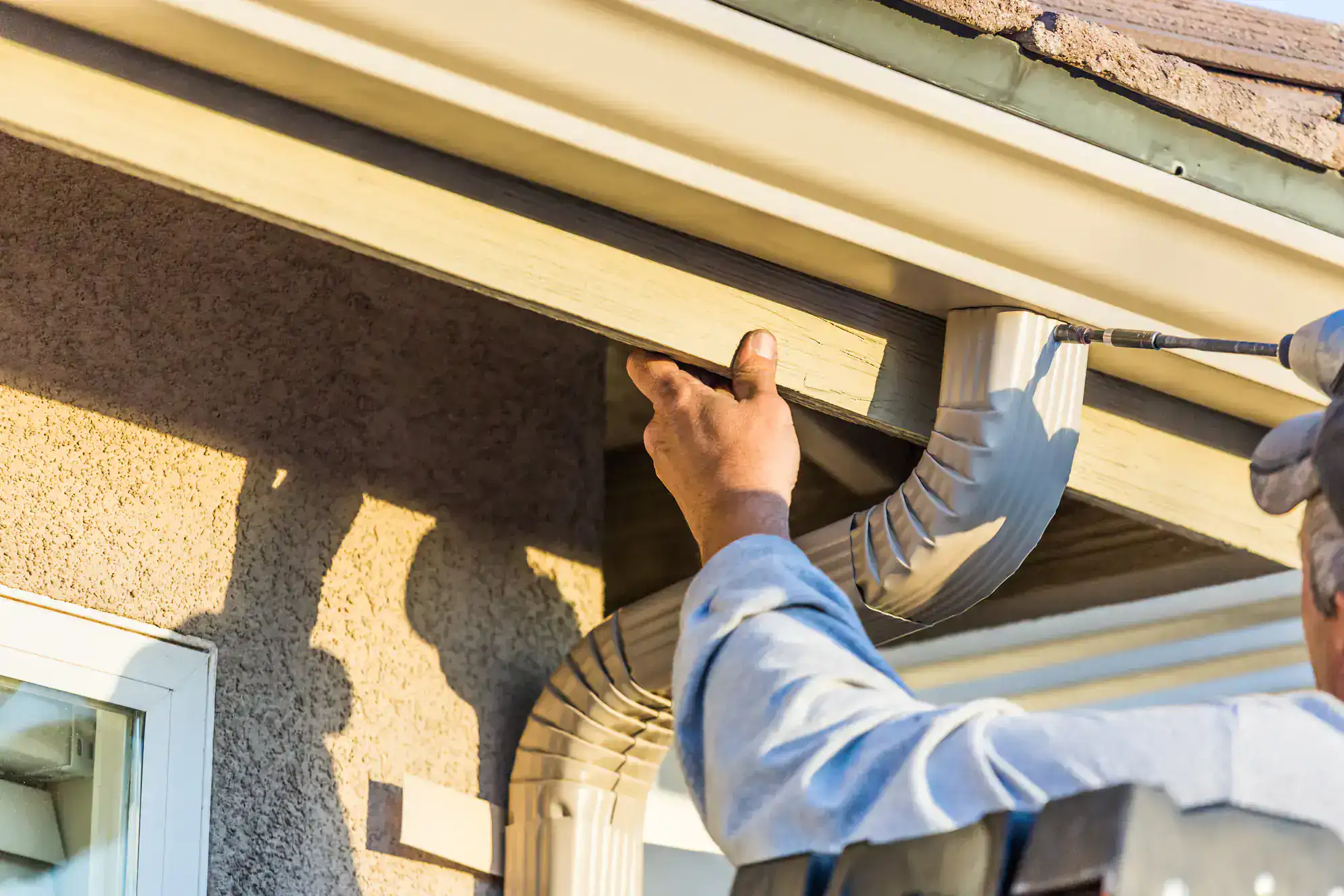
Rain Gutter Installation Demarest, NJ
Demarest gets close to 48 inches of rain a year — well above the national average — and that’s before you factor in the nor’easters and the summer microbursts that dump inches in under an hour. When your gutters are undersized, improperly sloped, or pulling away from the fascia, that water doesn’t disappear. It finds your foundation, your basement, and your landscaping instead. A correctly installed seamless system keeps it moving where it’s supposed to go.
The tree canopy in Demarest is one of the things that makes the borough what it is — those Maples, Oaks, and Pines lining the streets are part of why people choose to live here. They’re also one of the biggest reasons gutters fail early. Leaves, seeds, and debris accumulate fast, hold moisture against your fascia boards, and accelerate rot in a way that’s easy to miss until the damage is already done. Getting the right system installed — sized correctly, sloped correctly, with the right guard options for your specific tree coverage — is the difference between a gutter that lasts and one that becomes a recurring problem.
For the older Colonial and Dutch Colonial homes throughout Demarest, many of which still have original 4-inch gutters, this isn’t a cosmetic upgrade. It’s a practical one. Upgrading to a 5- or 6-inch seamless aluminum system means your gutters can actually handle the volume your roof is sending their way — especially on a larger home with a complex roofline.
Gutter Contractors in Demarest, NJ
We are a licensed New Jersey Home Improvement Contractor (License #13VH10605800) with over a decade of hands-on experience working on homes across Bergen County — including Demarest, Closter, Cresskill, and Tenafly. Our company started in roofing, and that background shapes how we evaluate every gutter job. When our technician walks your roofline, they’re not just looking at the gutters — they’re looking at the whole exterior picture.
That means checking fascia condition before a single bracket goes in, assessing how your roof’s drainage load distributes across each run, and making sure downspouts are positioned to move water away from your foundation — not just where they’re easiest to install. Our growth has come from referrals and repeat customers in Demarest and the surrounding communities, not paid leads. That only happens when the work holds up and people feel like they were treated fairly.
You get a free inspection, a written estimate, and a contractor who carries manufacturer certifications that back up the installation with real warranty coverage — not just a handshake promise.
Home Gutter Installation Demarest, NJ
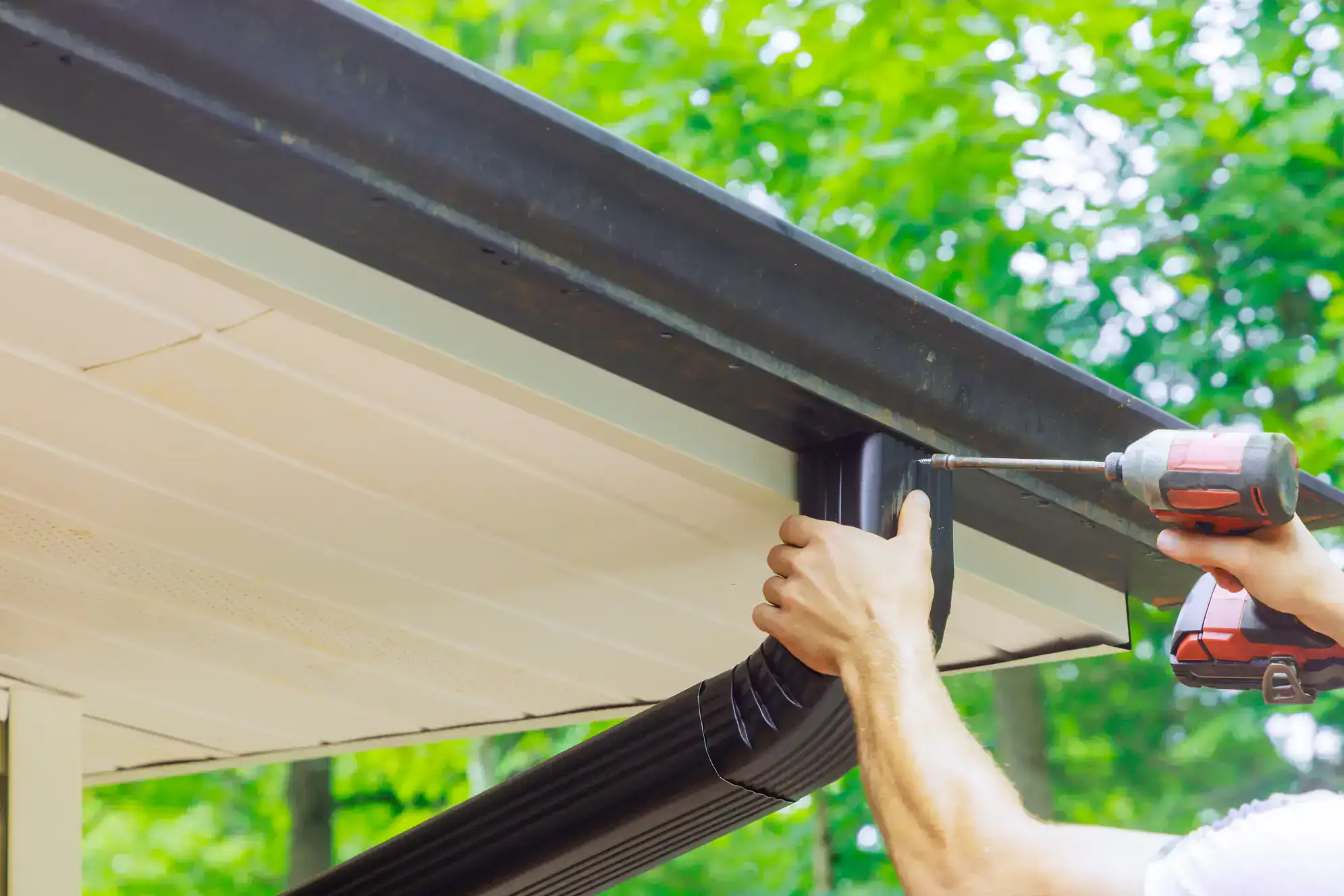
It starts with a free inspection. Our technician comes out, walks the full perimeter of your home, and assesses the current gutter system — or the absence of one. On Demarest’s older properties, that inspection almost always includes a close look at the fascia boards, because original wood fascia on Colonial-era homes is a common failure point that gets missed when contractors skip the diagnostic step. If there’s deterioration that needs to be addressed before new gutters go in, you’ll hear about it upfront — not after the job is done.
From there, you get a written estimate that breaks down what’s being done and what it costs. No vague “materials and labor” line items. If the scope is straightforward, most installations move quickly from estimate to scheduled date. Gutters are custom-fabricated on-site in seamless runs cut to your exact roofline measurements — which eliminates the joints and seams where sectional systems tend to fail first, especially after Bergen County’s freeze-thaw winters work on them season after season.
Once the system is installed, every run gets checked for proper slope — approximately a quarter inch per 10 feet toward the downspout — and every downspout discharge point gets confirmed for correct clearance from the foundation. In a borough where homes sit on gently rolling terrain and basements are a real concern, that last step isn’t optional. It’s the whole point.
Ready to get started?
Roof Gutter Installation Demarest, NJ
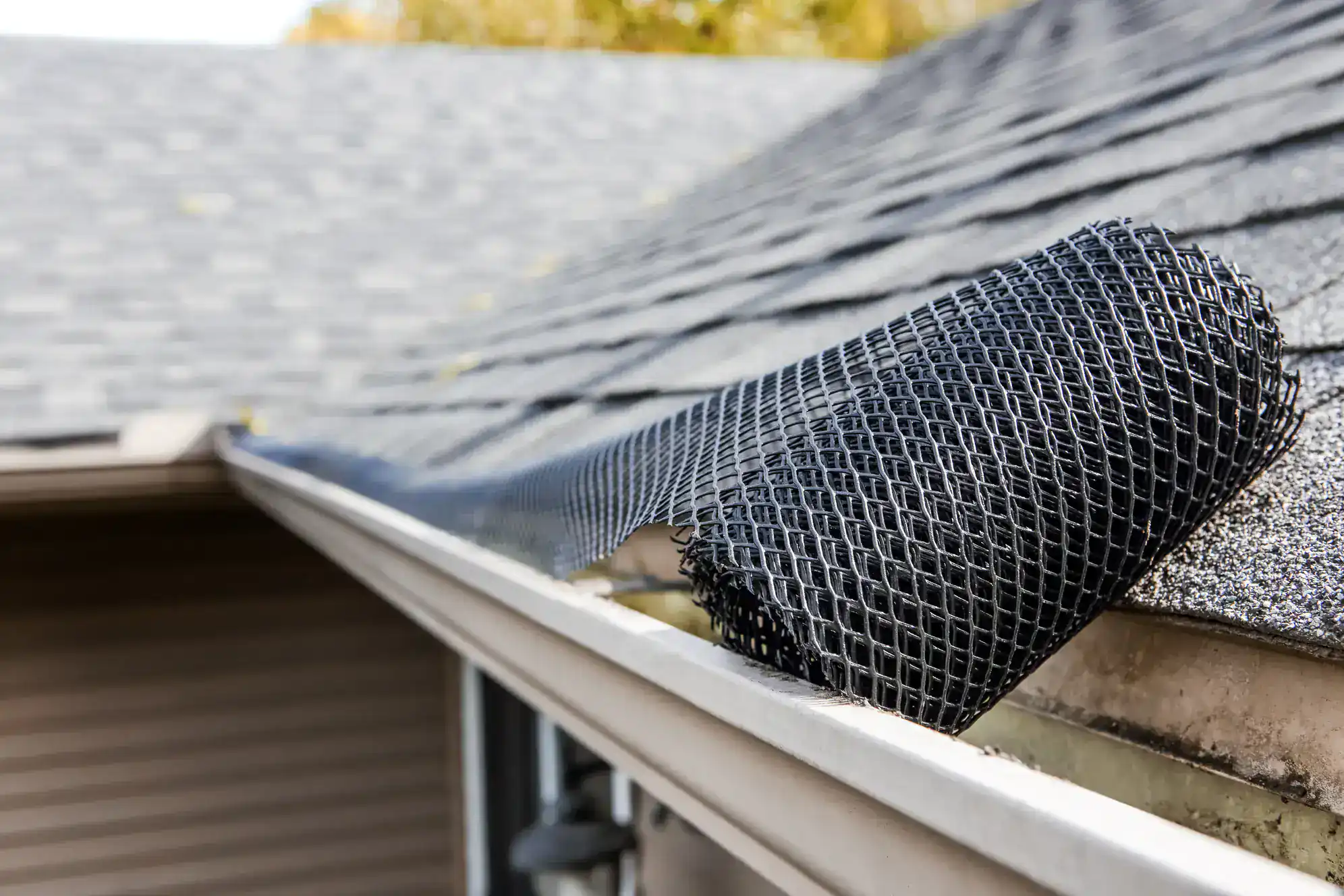
Every gutter installation in Demarest starts with a real assessment — not a quick glance from the driveway. The inspection covers your existing gutter profile and sizing, fascia board condition, roof drainage load, and downspout placement relative to your foundation and landscaping. For homes near the Demarest Nature Center corridor or on the borough’s more heavily wooded streets, that assessment includes a specific conversation about debris load and whether gutter guards make sense for your situation.
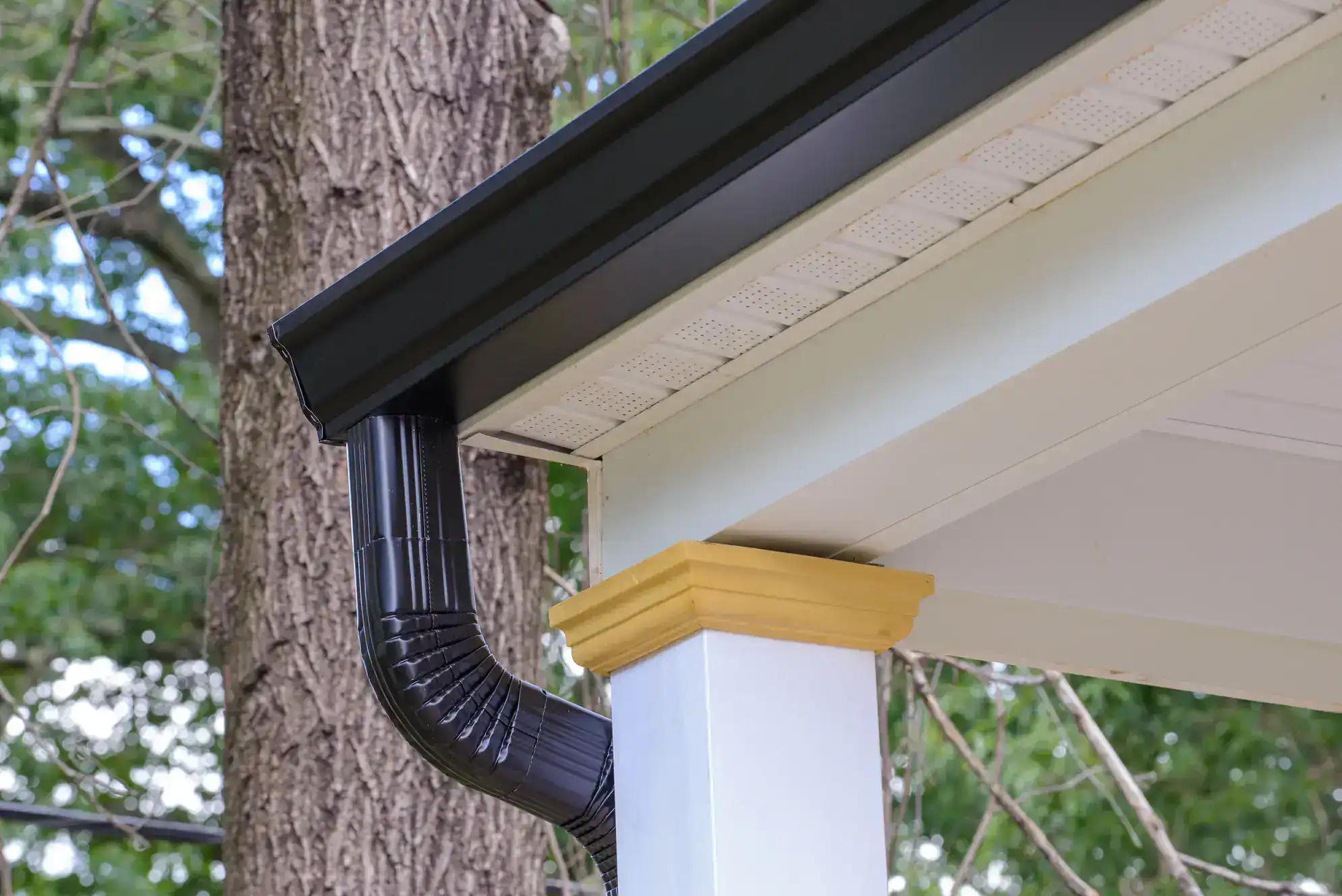
Gutters are fabricated on-site in seamless aluminum runs — 5-inch or 6-inch profiles depending on your roof’s actual water volume — with hidden hanger systems that hold up to ice expansion and heavy snow load far better than the old spike-and-ferrule hardware still found on many older Bergen County homes. Downspouts are sized to match, extended appropriately from the foundation, and secured properly so they don’t pull away under winter stress.
Because our primary expertise is roofing, the gutter installation also comes with an eye on the broader exterior system. If there’s a roofing issue directing unusual water volume toward a particular gutter run, or if the siding near the fascia line is showing early moisture signs, you’ll hear about it. Gutter installation in NJ doesn’t require a separate building permit as a standalone project, but all work is performed under NJ HIC License #13VH10605800 — verifiable through the NJ Division of Consumer Affairs.
How do I know if my Demarest home needs new gutters or just a cleaning?
This is one of the most common questions, and the honest answer is that cleaning and replacement are often confused because the symptoms look similar at first — overflow during rain, water staining on the siding, pooling near the foundation. But the cause matters. If gutters are clogged, a cleaning solves it. If they’re pulling away from the fascia, sagging in the middle, showing visible rust or holes, or were installed as original 4-inch sectional gutters on a home that’s been here for decades, cleaning won’t fix the underlying problem.
On older Colonial and Dutch Colonial homes throughout Demarest, the more common issue is a combination of both: gutters that are undersized for the roof area and debris-clogged on top of that. A free inspection will tell you which situation you’re actually in — and a contractor who’s being straight with you will tell you when cleaning is enough rather than pushing for a full replacement you don’t need.
What size gutters do I need for a larger home in Demarest, NJ?
Sizing depends on your roof’s square footage, pitch, and the volume of water it channels during a heavy rain event. For most standard residential homes, 5-inch gutters are the baseline. But many of Demarest’s larger Colonial and Dutch Colonial properties — especially those with multi-gable rooflines, dormer windows, or significant roof area — need 6-inch gutters to handle the actual water volume during the kind of sustained rainfall Bergen County sees regularly.
The original 4-inch gutters on many of Demarest’s older homes were installed to a different standard, and they were never adequate for the larger roof areas on those properties. Upgrading to a properly sized seamless system isn’t about aesthetics — it’s about making sure your gutters can actually do their job when 2 inches of rain falls in an afternoon, which happens in Demarest more than once a season. Correct sizing gets determined during the inspection, not assumed from a standard template.
Do I need a permit to replace gutters on my home in Demarest, NJ?
In New Jersey, gutter replacement as a standalone project generally does not require a separate building permit — it falls under routine home improvement rather than structural construction. That said, all contractors performing home improvement work in Demarest are legally required to hold a valid NJ Home Improvement Contractor registration issued by the NJ Division of Consumer Affairs. This isn’t a formality — it’s a legal requirement, and it’s the first thing to verify before signing any contract.
Where things can get more involved is when gutter replacement also uncovers rotted or deteriorated fascia boards that need to be replaced before new gutters can be properly mounted. Depending on the scope of that additional work, it may warrant a check with Demarest’s Building Department at 201-768-0167. A contractor who inspects the fascia condition before installation — and is upfront about what they find — protects you from that kind of unexpected regulatory exposure down the line.
How does Bergen County's weather affect how long gutters last in Demarest?
Bergen County’s climate is harder on gutters than most homeowners realize. You’re dealing with roughly 48 inches of annual rainfall, about 24 inches of snow, and — most importantly — repeated freeze-thaw cycles throughout January and February where temperatures swing above and below freezing multiple times in a single week. That expansion and contraction is what destroys sectional gutter systems over time. The seams crack, the joints separate, and water starts finding its way behind the fascia instead of through the downspout.
Seamless aluminum gutters hold up significantly better under these conditions because there are no joints to fail. But even seamless systems need to be installed with the right fastener hardware — hidden hangers rated for freeze-thaw stress, not the spike-and-ferrule systems still found on many older Demarest homes. Installed correctly, a seamless aluminum system in Bergen County should last 20 years or more. Installed with outdated hardware or without proper slope, you’ll be back to the same problem in five.
Can storm damage to my gutters be covered by homeowner's insurance in NJ?
It can be, and it’s more common than most homeowners expect. Wind damage, hail, falling branches, and ice expansion damage are all events that standard homeowner’s insurance policies in New Jersey typically cover — as long as the damage is documented properly and attributed to a specific storm event rather than general wear and deferred maintenance. Bergen County sees enough nor’easters, summer microbursts, and ice events that storm-related gutter damage is a legitimate and fairly regular claim scenario.
The part that trips people up is documentation. Insurance adjusters need specific evidence — photos, a contractor’s written assessment, and a clear connection between the storm event and the damage. We work directly with adjusters, document damage in a way that satisfies the claims process, and help make sure you’re not absorbing costs your policy should cover. If you’re unsure whether what you’re seeing qualifies, a free inspection is the right first step — it costs you nothing and gives you a clear picture of what you’re dealing with.
What's the real difference between seamless and sectional gutters for a Demarest home?
Sectional gutters come in pre-cut lengths that get joined together on-site with connectors and sealant. Every one of those joints is a future failure point — and in a climate like Bergen County’s, where freeze-thaw cycles, heavy leaf load, and significant annual rainfall all work on those seams season after season, failure tends to come sooner than most homeowners expect. Sectional systems were the standard for decades, which is why you’ll still find them on many of Demarest’s older homes — but they weren’t built for the rainfall intensity or the debris load that comes with living under a mature tree canopy.
Seamless gutters are custom-fabricated on-site in single continuous runs cut to your exact roofline measurements. There are no mid-run joints to crack, separate, or leak. For a home in Demarest — where the combination of heavy seasonal debris, above-average rainfall, and winter ice stress is the norm — seamless aluminum is the practical choice, not the premium upsell. The cost difference between sectional and seamless is modest. The difference in how long they hold up is not.