
Roofer in Tenafly, NJ
Palisades-Tested Roofing for Tenafly Homes That Can't Afford Shortcuts
Hear from Our Customers
Local Roofing Company in Tenafly, NJ
Tenafly sits on the Palisades ridge, and that elevation matters more than most homeowners realize. Roofs here take on more direct wind than communities sitting in the valley below — and when a nor’easter sweeps up the Hudson corridor, it’s the ridge cap, the flashing around your chimney, and the perimeter shingles that take the first hit. Getting those details right isn’t optional when you’re protecting a home worth well over a million dollars.
Beyond storm exposure, a lot of Tenafly’s housing stock is older — Victorians near Magnolia Avenue, Colonials and Tudors throughout the borough, mid-century builds that haven’t seen a full roof replacement in decades. These homes have masonry chimneys, complex rooflines, and in some cases, historic district designations that require specific material considerations. A roof inspection that actually accounts for those details gives you a real picture of where things stand — not a generic checklist.
When the job is done correctly, you stop worrying about what the next storm is going to reveal. You have documentation, a manufacturer-backed warranty, and the confidence that the work was done by a certified contractor whose license is publicly verifiable through the NJ Division of Consumer Affairs.
Roofing Company in Tenafly, NJ
We’ve been working in New Jersey’s roofing market for over a decade, and that experience shows up in the details — how we handle permit requirements, how we approach older homes with masonry chimneys, and how we communicate with homeowners from the first inspection through the final walkthrough. Our NJ Home Improvement Contractor License #13VH10605800 is publicly searchable. The manufacturer certifications that unlock enhanced system warranties are earned, not purchased.
We serve homeowners across Bergen County, including Tenafly and surrounding communities like Englewood, Cresskill, and Demarest. Whether your home is a newer custom build on East Hill or a Victorian near the Magnolia Avenue Historic District, the standard of work doesn’t change. Family-owned means the person responsible for the job is the same person whose name is on the business — and that accountability matters when you’re making a significant investment in your Tenafly home.
Roof Repair and Replacement in Tenafly, NJ
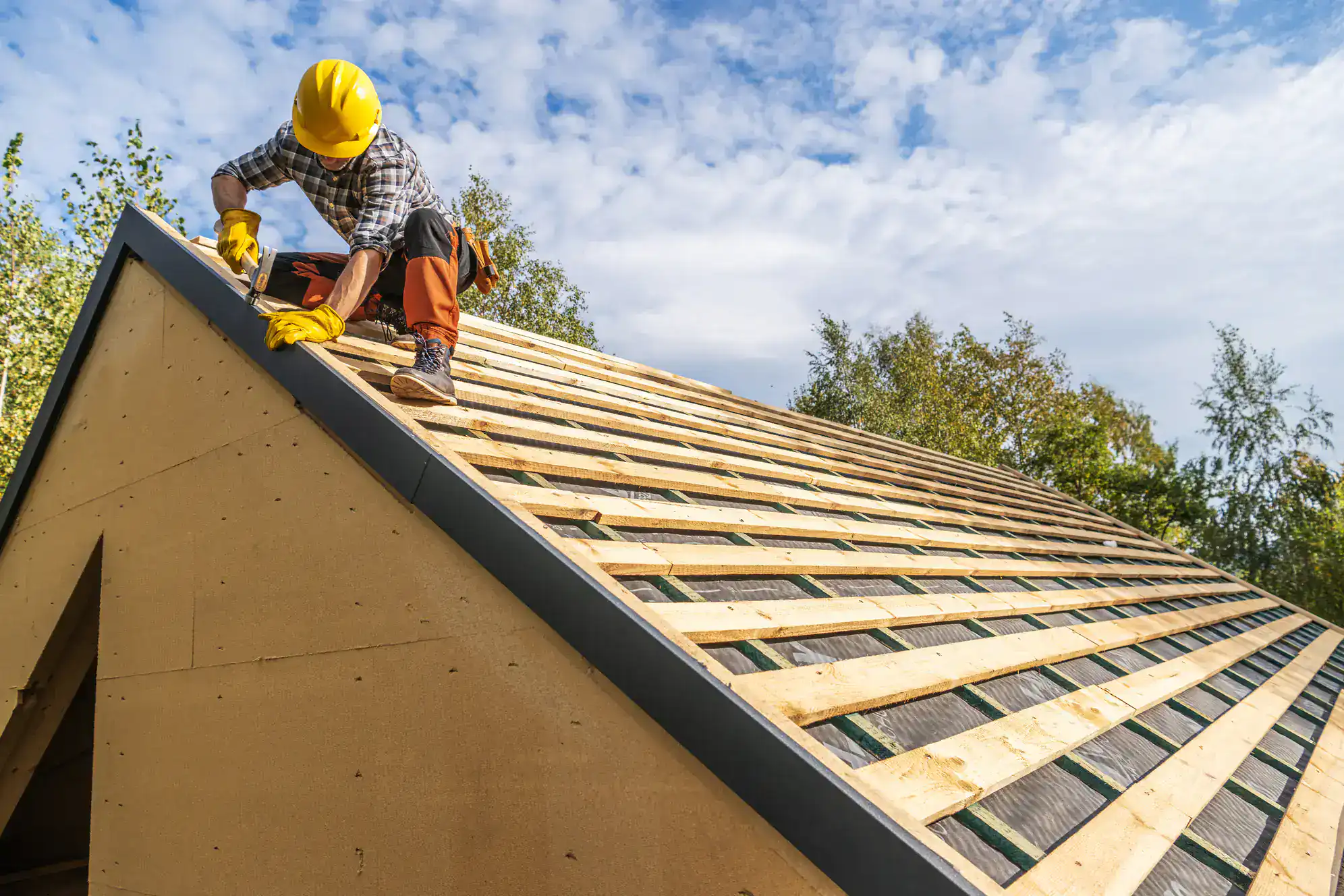
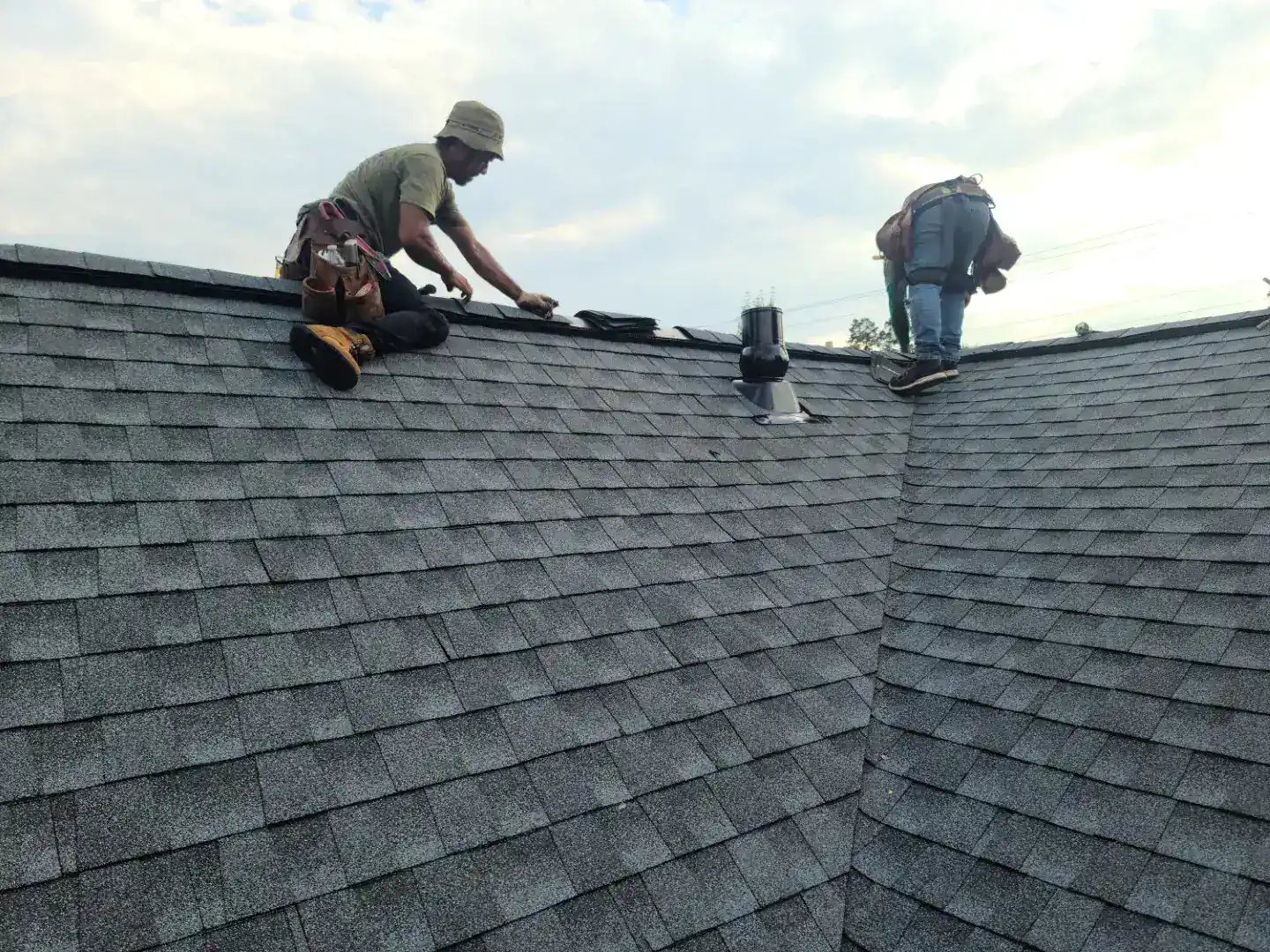
It starts with a free inspection. We go through the exterior, check the attic for ventilation and insulation issues that can lead to ice dams in Bergen County winters, assess flashing around chimneys and dormers, and document everything with photos. You get that report regardless of whether you move forward with any work. It’s yours to keep — useful for insurance purposes, future planning, or simply knowing where things stand.
If your home is in one of Tenafly’s historic districts — the Atwood area or along Magnolia Avenue — we’ll walk you through what that means for material selection before anything gets submitted for permits. The Borough’s Historic Preservation Commission requires a Certificate of Appropriateness for exterior changes to landmark properties, and we handle that process with you, not something you figure out on your own after the fact.
Once scope is agreed on, you get a written estimate that breaks down materials, labor, disposal, and warranty coverage — all upfront, before the crew arrives. Work is scheduled around your household. The job site gets cleaned before we leave. And if something comes up during the project that changes the scope, you hear about it before it changes the invoice.
Ready to get started?
Emergency Roof Repair in Tenafly, NJ
Tenafly’s mature tree canopy is one of the things that makes the borough feel the way it does — quiet streets, real shade, genuine character. It’s also one of the more consistent sources of roofing damage after a wind event. A single oak limb through a roof at 11pm doesn’t wait for business hours, which is why we offer 24/7 emergency availability. Emergency tarping, damage assessment, and insurance documentation support are available when you need them.
For planned work, our full service menu covers roof inspection, installation, repair, replacement, and flat roofing systems including TPO and EPDM for commercial or low-slope applications. We also handle siding and gutter services, which matters in a borough where clogged gutters from seasonal leaf fall can quietly cause fascia rot and water intrusion that compounds roofing issues over time. Addressing the full exterior in one contractor relationship is simpler and more effective than coordinating three separate companies.
Every installation we complete is backed by manufacturer certifications that unlock system-level warranties — the kind that transfer at resale and provide real long-term coverage. In a market where Tenafly home values have climbed significantly, that warranty is a tangible asset. It’s also something a non-certified contractor simply cannot offer you, regardless of what their estimate says.
Do I need a permit to replace my roof in Tenafly, NJ?
Yes. Roofing is a licensed trade under New Jersey’s Uniform Construction Code, and the Borough of Tenafly requires permits for roof replacement work. Any contractor performing this work in Tenafly must hold a valid NJ Home Improvement Contractor license — that’s a baseline requirement, not a differentiator. You can verify any contractor’s license through the NJ Division of Consumer Affairs website in under a minute.
If your home is located within one of Tenafly’s designated historic districts — including the Atwood Historic District near Engle Street and Serpentine Road, or the Magnolia Avenue Historic District — there’s an additional layer to navigate. The Borough’s Historic Preservation Commission requires a Certificate of Appropriateness before permits are issued for exterior changes on landmark properties. That process involves material review and HPC approval, and it affects what roofing products you can use. A contractor who isn’t aware of this requirement going in will create delays and headaches for you mid-project.
How much does a roof replacement typically cost in Tenafly, NJ?
For a standard single-family home in Tenafly, a full roof replacement typically runs somewhere between $12,000 and $22,000 depending on square footage, roofline complexity, material selection, and whether any underlying decking or flashing needs to be addressed. Homes on East Hill or in the historic neighborhoods — which tend to be larger, have more complex rooflines, and may include original masonry chimneys — often fall toward the higher end of that range.
The more important number is what you’re getting for that investment. A manufacturer-certified installation includes access to enhanced system warranties that can run 30 to 50 years — warranties that transfer to a new buyer if you sell. Given where Tenafly home values currently sit, that warranty is a real financial asset. What you want to avoid is a low-bid contractor who installs materials correctly but isn’t certified, which voids the manufacturer’s system warranty and leaves you with only a short-term labor guarantee.
What roofing problems are most common in Tenafly homes after a nor'easter?
The most common issues we see after a significant nor’easter in Tenafly are lifted or missing ridge cap shingles, failed flashing around chimneys and dormers, and wind-driven water intrusion at the eaves. Tenafly’s position on the Palisades ridge means roofs here get more direct wind exposure than communities sitting in the valley — there’s less topographic shielding from storms sweeping up the Hudson corridor. That’s a geographic reality that shows up in how these roofs wear over time.
The borough’s mature tree canopy adds another layer of risk. Fallen branches during high-wind events are one of the more common causes of immediate impact damage, and they can compromise a roof that was otherwise in solid condition. After any significant storm, a professional inspection with photos gives you documentation you can use for an insurance claim and a clear picture of what actually needs to be addressed.
How do I know if my older Tenafly home has an ice dam problem?
Ice dams form when heat escapes through an insufficiently insulated or ventilated attic, melts the snow sitting on the roof above, and that meltwater runs down to the eaves where it refreezes. The dam that builds up then forces subsequent meltwater up under the shingles, where it eventually finds its way into the attic and interior walls. The visible signs are usually icicles forming at the eaves, water stains on interior ceilings near exterior walls, or peeling paint near the roofline after a cold snap.
Tenafly’s older homes — particularly the Victorians and early 20th-century Colonials near the town center and in the historic districts — are more susceptible to this than newer construction because attic insulation and ventilation standards have changed significantly over the past century. The fix isn’t just patching the leak; it’s identifying whether the attic has adequate ventilation and insulation to prevent the heat loss that creates the condition in the first place. That’s part of what a thorough roof inspection should cover, and it’s something we look at specifically on older Bergen County homes.
What's the difference between a certified and non-certified roofing contractor?
Manufacturer certifications — from companies like GAF, CertainTeed, or Owens Corning — are earned through training, installation standards, and verified track records. They’re not something you buy or claim without meeting the manufacturer’s requirements. What they unlock is access to enhanced system warranties that go well beyond what a standard contractor warranty covers. These are warranties backed by the manufacturer, not just the contractor — and they can run 30 to 50 years on qualifying installations.
The practical difference for a Tenafly homeowner is significant. A non-certified contractor can install the same shingles, but the installation won’t qualify for the manufacturer’s system warranty. You’ll get a short-term labor warranty from the contractor, and if that contractor is out of business in five years, you have very little recourse. Given what homes in Tenafly are worth, the gap between a certified and non-certified installation isn’t a minor detail. It’s the difference between a roof that’s protected long-term and one that’s covered only on paper.
Why does USA Home Remodeling offer free roof inspections in Tenafly?
Tenafly homeowners tend to be busy — commuting to Manhattan, managing demanding schedules, running households around an active school community. The free inspection exists because the biggest barrier to getting a roof assessed isn’t the cost of the inspection — it’s the time and friction of committing to a contractor visit when you’re not sure anything is actually wrong. Removing that barrier means you get a clear, documented picture of your roof’s condition without any obligation to proceed with anything.
The inspection produces a photo report you keep regardless of what you decide. That’s useful whether you’re planning a replacement, considering an insurance claim after a storm, or simply want documentation before listing a home for sale in a market where Tenafly buyers and their inspectors will scrutinize every detail. It’s a straightforward way to start the conversation with real information on the table.