
Roofing Contractor in Tenafly, NJ
Tenafly Roofs Built for Palisades Weather and Seven-Figure Homes
Hear from Our Customers
Roof Repair and Replacement in Tenafly
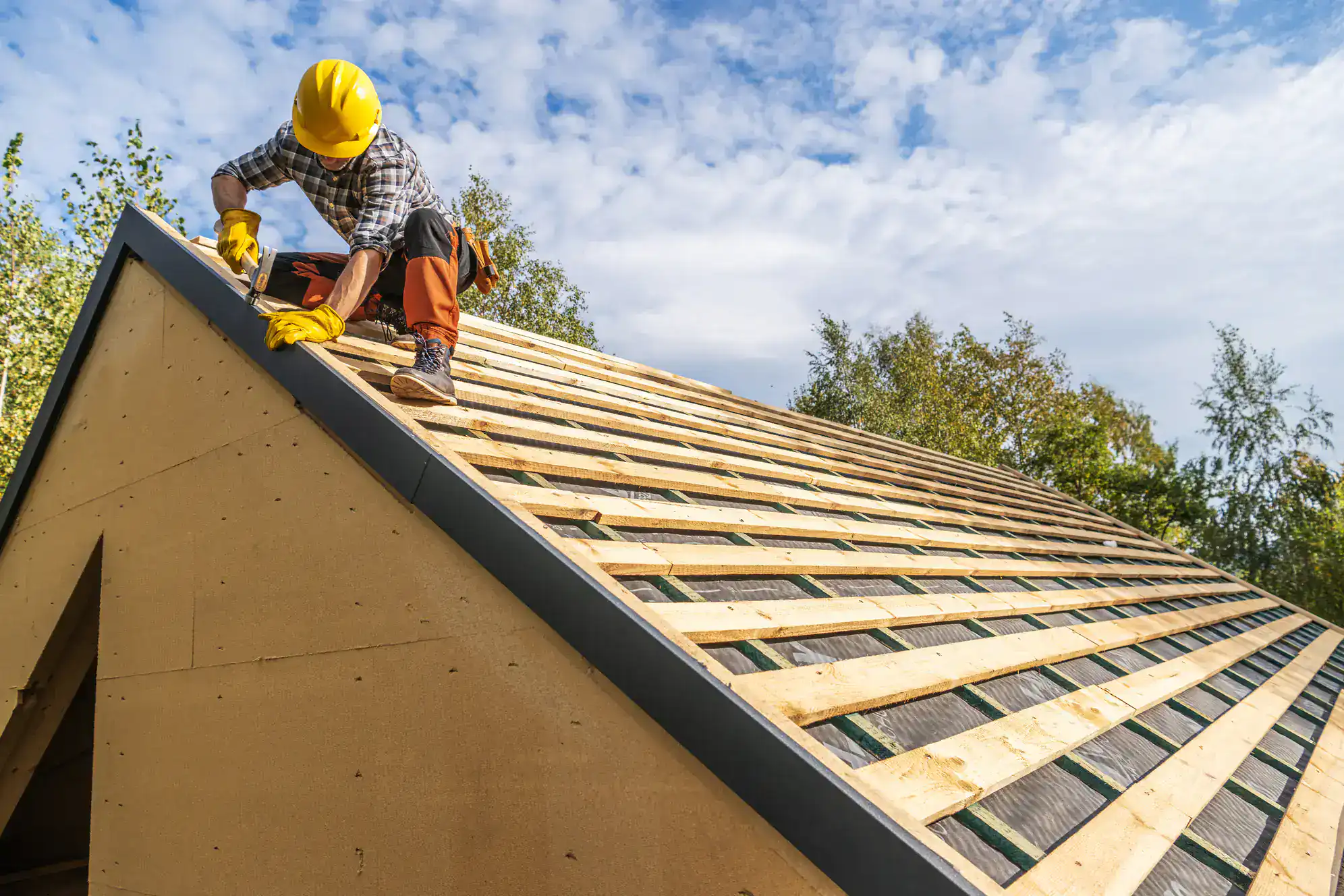
A roof that’s doing its job is invisible. You don’t think about it. You’re not finding stains on the ceiling after a nor’easter, you’re not watching ice build up at the eaves through a February freeze, and you’re not dreading what a home inspector might say when it’s time to sell. That’s what a properly installed and maintained roof actually gives you — the ability to stop thinking about it.
For homes on East Hill, where the Palisades elevation puts your roof directly in the path of Hudson River corridor winds, the stakes are higher than in most Bergen County neighborhoods. Wind-driven rain finds every weak flashing point, every aging valley, every improperly sealed penetration. The roofing system on an exposed East Hill property isn’t just keeping out rain — it’s holding its own against conditions that accelerate wear faster than most homeowners realize until water is already inside.
Tenafly’s housing stock also spans over a century of construction. A home built in the 1950s or 1960s and re-roofed in the 1990s is likely well past its service window. Catching that before it becomes a structural problem — before water intrusion leads to mold, rot, or damaged framing — is the difference between a manageable roofing project and a remediation nightmare. Getting a free inspection now costs you nothing. Waiting costs considerably more.
Local Roofers Serving Tenafly, NJ
We are a family-owned exterior contractor that has been working in New Jersey for over 17 years. That’s not a number pulled from a marketing sheet — it means we’ve been through enough Tenafly winters, enough nor’easters, and enough post-storm inspection calls to know exactly what roofs in this region face. We know the freeze-thaw patterns that hit East Hill properties harder than valley homes. We know what ice damming does to older Tenafly homes. We know the Tenafly Building Department’s permit process, including the borough-level contractor registration requirement that catches out-of-area companies off guard.
We handle roofing, gutters, and siding — which matters more than it sounds. When a gutter failure causes fascia rot that creeps into your roofline, you want one contractor who owns the whole picture, not two trades pointing fingers at each other. From East Hill colonials to valley-floor homes near the Tenafly Nature Center, we’ve worked across this borough and we stand behind what we install.
How Roof Replacement Works in Tenafly, NJ
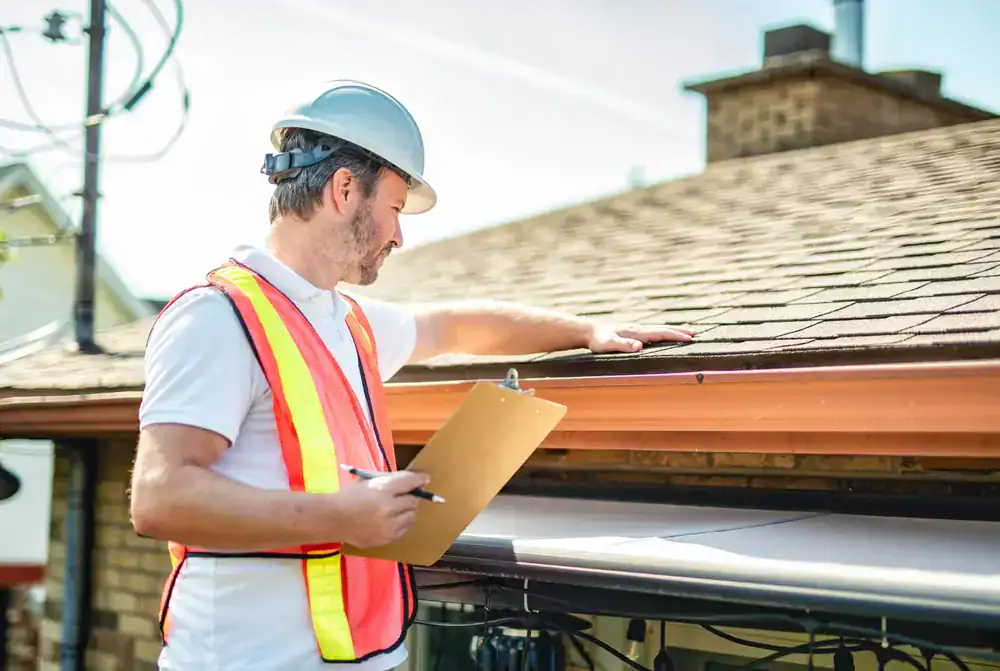
It starts with a free roof inspection. We come out, get on the roof, and give you an honest read on what’s there — not a sales pitch designed to push you toward a full replacement if a repair is the right answer. If we find a problem, we explain it clearly and tell you what your options are. If we don’t find anything urgent, we’ll tell you that too.
If work is needed, we handle the permitting. Roof replacements in Tenafly require a construction permit from the Tenafly Building Department, and all work must comply with the New Jersey Uniform Construction Code. We pull the permits, schedule the inspections, and make sure everything is documented — which matters when you eventually sell a home in a market where transactions routinely exceed seven figures. An unpermitted roof replacement can create real complications at closing, and that’s a headache you don’t need.
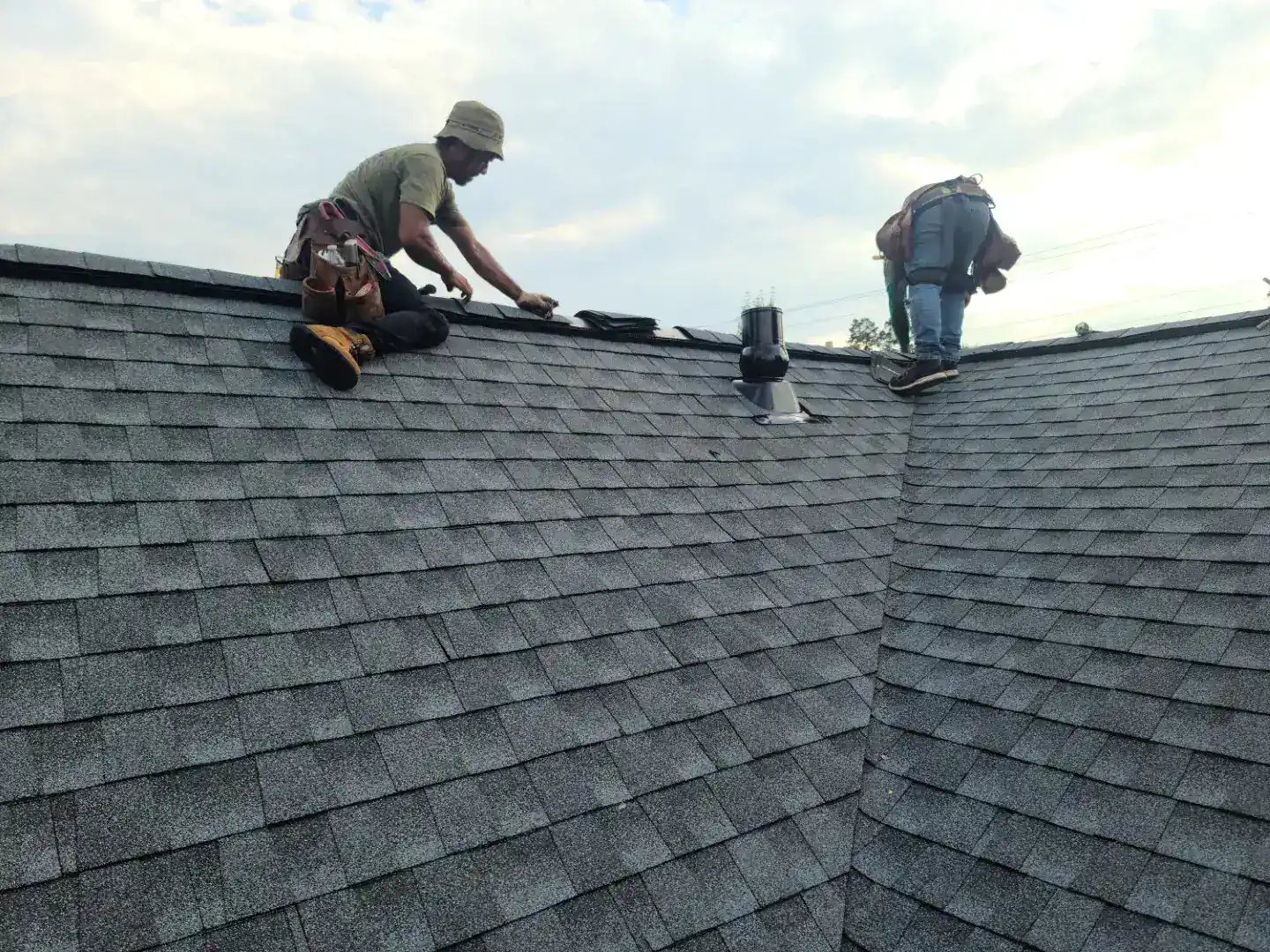
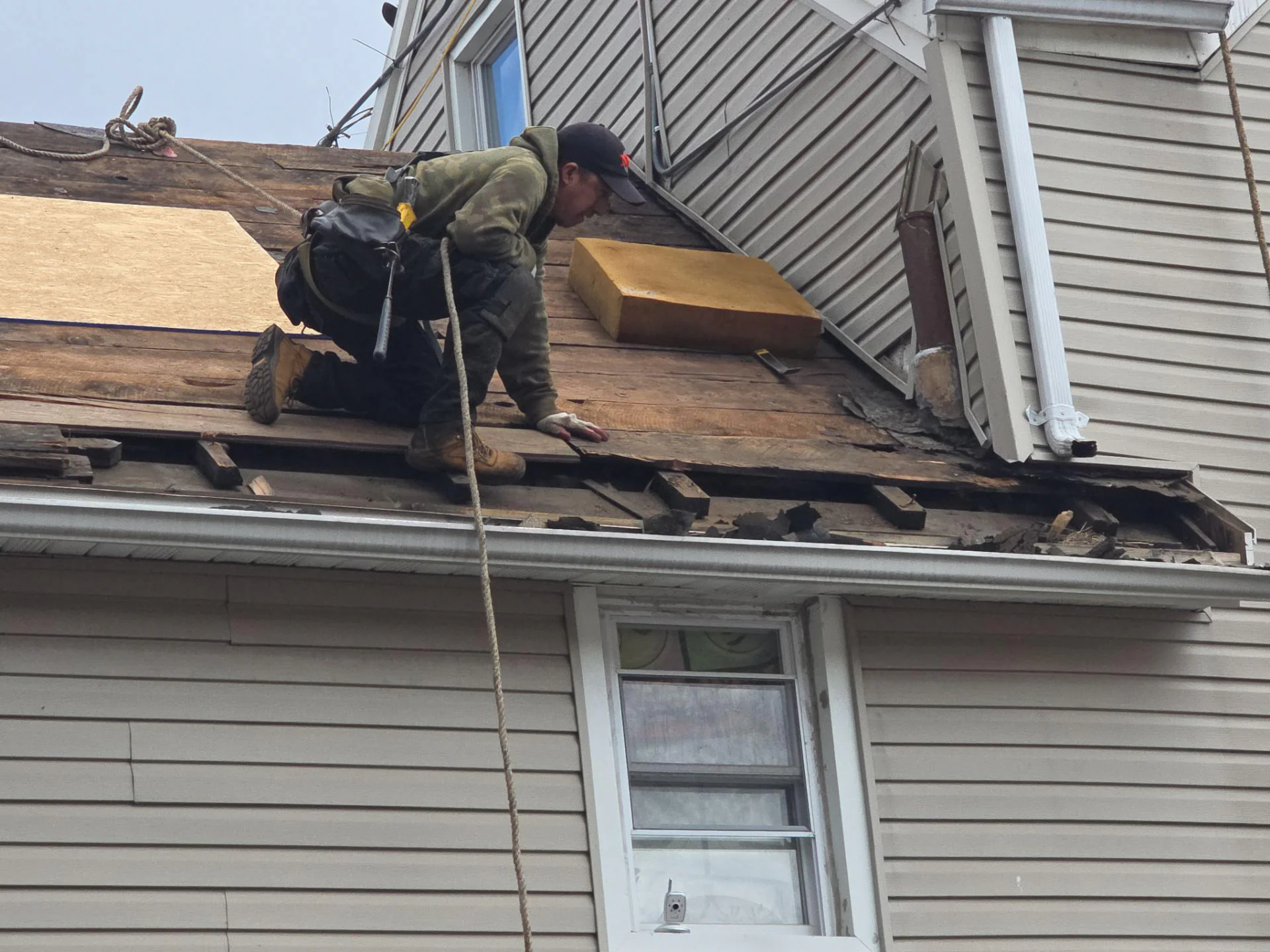
Once the project starts, we work efficiently and keep the job site clean. We remove the old roofing system down to the deck, inspect and repair any damaged sheathing, install the appropriate underlayment and ice-and-water shield (especially critical at the eaves and valleys for Tenafly’s winter conditions), and complete the installation with the shingle or roofing system you’ve selected. When we’re done, you’ll have a manufacturer-backed warranty and a roof that’s built to handle what Bergen County actually throws at it.
Ready to get started?
Roofing Services for Tenafly, NJ Homeowners
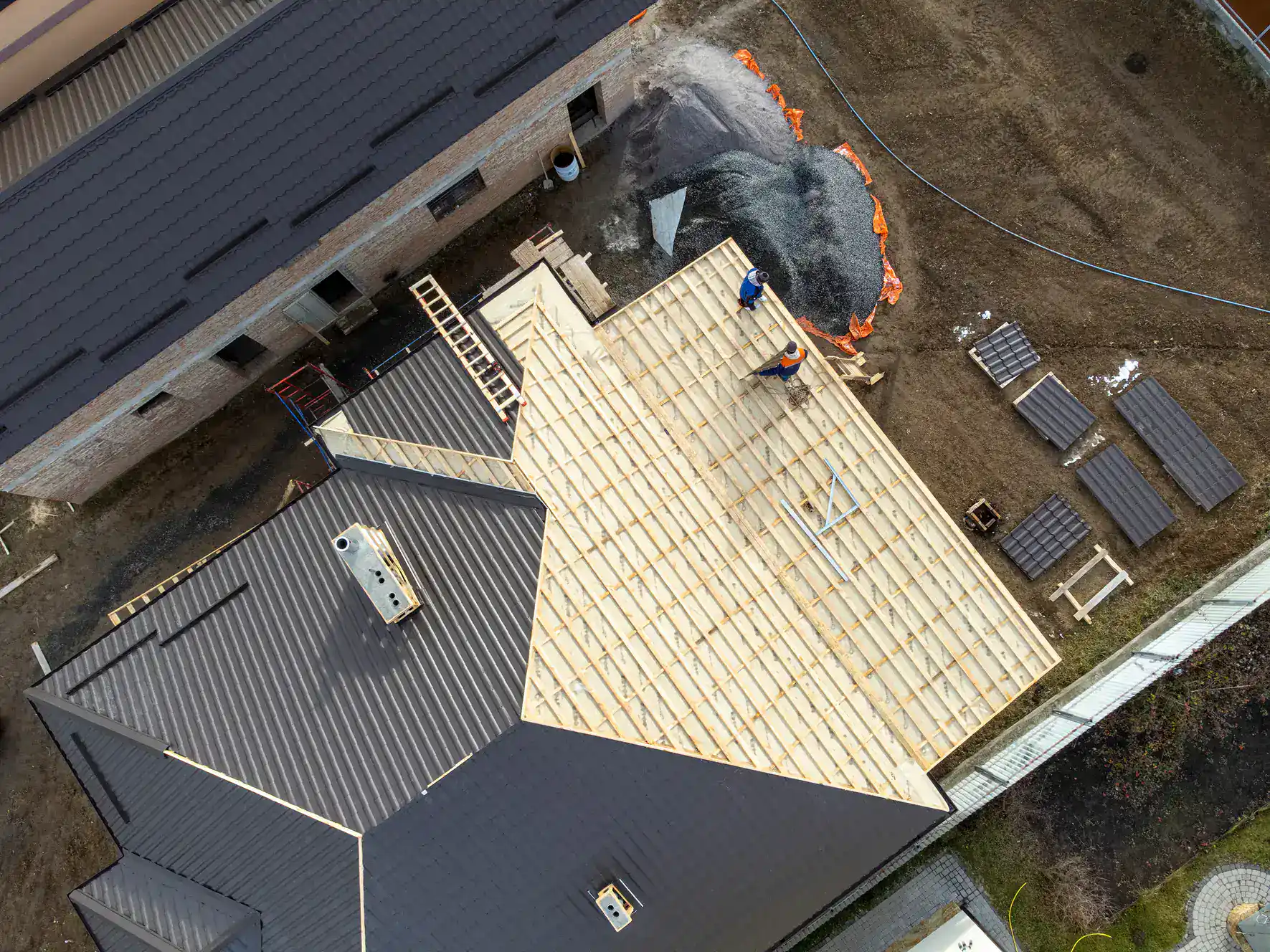
Full roof replacements are the most common call, but they’re not the only one. If you’ve got a handful of missing shingles after a summer storm, a flashing failure around a chimney, or a single persistent leak you haven’t been able to track down, those are problems worth fixing now — not problems to monitor until they get worse. We handle small roof repair in Tenafly with the same attention we bring to a full replacement, because a small problem in October can turn into a serious one by January.
For homeowners who want a roofing system built to last 40 to 70 years — and who are protecting a property worth well over a million dollars — metal roofing is worth a real conversation. Metal roofing contractors in Tenafly are not all equally equipped for the wind exposure and snow load demands of properties on the Palisades. We install metal roofing systems designed for Bergen County’s climate: the nor’easter snow loads, the thermal cycling of four full seasons, and the wind exposure that elevated properties face year-round.
We also hold certifications from major shingle manufacturers, which means the warranty coverage available to you through us goes beyond what a non-certified installer can offer. For a Tenafly homeowner making a $15,000 to $27,000 roofing investment, that extended manufacturer-backed warranty isn’t a footnote — it’s decades of additional protection on one of your home’s most critical systems. Gutters and siding round out our scope, so if your exterior needs attention beyond the roof, you’re not managing multiple contractors to get there.
Do I need a permit to replace my roof in Tenafly, NJ?
Yes — roof replacements in Tenafly require a construction permit from the Tenafly Building Department. All work must comply with the New Jersey Uniform Construction Code, which governs materials, installation methods, and structural requirements. A code official reviews the work and an inspection is required before the job is considered complete.
Beyond the state-level requirements, Tenafly also requires roofing contractors to register with the borough under Chapter 4 of its General Licensing ordinance — a local layer on top of the standard NJ Home Improvement Contractor registration that many out-of-area companies aren’t aware of. If a contractor tells you permits aren’t necessary or offers to skip them to save time, that’s a serious red flag. Unpermitted work can surface during a home sale and create real complications in a real estate market where Tenafly transactions regularly exceed seven figures. We handle all permitting as part of every project — it’s not optional, and we treat it that way.
How much does a roof replacement typically cost in Tenafly, NJ?
Most homeowners in the Tenafly area spend somewhere between $15,000 and $27,000 on a full roof replacement, with the average landing around $21,000. That range shifts based on the size and complexity of your roof, the materials you choose, and whether any underlying decking needs repair once the old roofing system is removed.
Tenafly homes tend to run larger than average — a higher proportion of four- and five-bedroom homes than 98% of communities in the country, which means larger roof surfaces and more complex geometries. Multiple dormers, steep pitches, chimneys, and valleys all add to the scope. A straightforward replacement on a modest ranch is a very different project than a full replacement on a 3,500-square-foot East Hill colonial. The best way to get a number that actually means something for your specific home is to start with a free inspection — you’ll know exactly what you’re working with before any money changes hands.
What are the signs that my Tenafly home's roof needs repair or replacement?
The most obvious sign is a water stain on your ceiling — but by the time that shows up, the leak has usually been working its way through your roof system for a while. Earlier warning signs include shingles that are curling, cracking, or missing granules (you’ll often see granule buildup in your gutters), flashing that’s pulling away from the chimney or skylights, and visible sagging in any section of the roof plane.
In Tenafly, ice damming is a specific issue worth knowing. When heat escapes through an under-insulated attic, it melts snow on the roof, which then refreezes at the cold eaves and creates a dam that forces water back up under the shingles. If you noticed ice buildup along your eaves last winter, that’s worth having someone look at — it’s often a sign of both a ventilation issue and a roofing vulnerability that will get worse before it gets better. A free inspection is the fastest way to know what you’re actually dealing with.
How do I know if a roofing contractor in Tenafly is actually licensed and legitimate?
In New Jersey, roofing contractors are required to hold a Home Improvement Contractor (HIC) registration with the NJ Division of Consumer Affairs. You can verify a contractor’s HIC number on the state’s public database. That’s the baseline. In Tenafly specifically, contractors are also required to register with the borough under its local licensing ordinance — so a contractor who is state-registered but not borough-registered is still operating out of compliance.
Beyond licensing, look for proof of commercial general liability insurance — Tenafly’s Borough Code sets a minimum of $1,000,000 per occurrence. Ask to see the certificate of insurance directly, not just a verbal confirmation. Manufacturer certifications are another layer worth asking about: a certified installer can offer extended warranty terms that a non-certified contractor simply cannot. Check recent Google reviews — not just the star rating, but the actual content. A contractor with 40 reviews from two years ago and nothing recent is a different story than one with consistent, current feedback from homeowners in Tenafly.
Is metal roofing a good option for homes in Tenafly, NJ?
For the right home and the right homeowner, metal roofing is one of the best long-term investments you can make. A properly installed metal roof lasts 40 to 70 years — roughly two to three times the lifespan of a standard asphalt shingle system — and it handles Bergen County’s weather demands exceptionally well. Metal roofing performs under heavy snow loads, sheds ice more effectively than shingles, and holds up against the wind exposure that elevated properties on the Palisades face in a way that asphalt systems can’t always match.
The upfront cost is higher than asphalt, but when you’re protecting a home valued well above a million dollars and you’re thinking in terms of decades rather than years, the math often works in metal’s favor. Energy efficiency is another factor — metal roofing reflects solar heat rather than absorbing it, which can reduce cooling costs during New Jersey summers. If you’re considering metal roofing in Tenafly, the conversation starts with understanding your roof’s pitch, geometry, and exposure — all things we assess during a free inspection before recommending anything.
What should I look for when hiring reputable roofing contractors in Tenafly, NJ?
Start with the basics: NJ HIC registration, borough-level contractor registration in Tenafly, and a current certificate of insurance with at least $1,000,000 in general liability coverage. Those aren’t negotiable. Look for a contractor who has been operating continuously in New Jersey long enough to have a real track record — not a company that appeared after the last major storm and will disappear just as quickly.
Manufacturer certifications matter more than most homeowners realize. A certified contractor has met documented quality and installation standards set by the shingle manufacturer, and that certification unlocks extended warranty terms — sometimes covering both materials and workmanship for decades — that a non-certified installer cannot offer you regardless of how confident they sound. In a community like Tenafly, where homes carry significant value and owners are making long-term decisions, that warranty difference is real money. Finally, read the reviews carefully. Look for recent feedback that speaks to communication, cleanliness, and follow-through — not just the finished product. A contractor who shows up on time, keeps the job site clean, and calls you back is doing the basics right, and in this industry, that still sets them apart.