
Roofing Contractor in Fairview, NJ
Fairview's Dense Housing Stock Deserves More Than a Generic Roofer
Hear from Our Customers
Local Roofers in Fairview, NJ
A roof that’s properly installed or repaired doesn’t just stop leaking — it stops the chain reaction. Water that gets under compromised shingles doesn’t stay in the attic. It works its way into framing, insulation, and eventually into the unit below yours. In Fairview, where duplexes make up more than 40% of the housing stock, one failing roof affects more than one household. That’s not a small problem.
Fairview’s position along the Hudson Palisades means your roof takes more wind-driven rain than most of Bergen County. Nor’easters track right up the Hudson River corridor, and the elevation exposure here is real. When flashing is seated correctly, when underlayment is properly layered, and when the system is built for that kind of weather, you’re not calling someone back in six months because a storm found the weak spot.
And if you own a multi-family property on Anderson Avenue or anywhere else in the 07022, getting this right the first time isn’t just about the building — it’s about your tenant, your rental income, and your liability. A contractor who understands multi-family roofing in Fairview specifically is worth the conversation.
Reputable Roofing Contractors in Fairview, NJ
We’ve been doing exterior work in Fairview and across New Jersey for over 17 years. Not as a franchise. Not as a storm chaser that rolls in after a weather event and disappears. As a family-owned business that grows through referrals and repeat customers — the kind of growth that only happens when the work holds up.
Our team is fully licensed, carries the required insurance, and holds certifications from major shingle manufacturers — which matters because those certifications unlock extended warranties that non-certified contractors simply cannot offer your home. When you’re protecting a property worth $700,000 or more in a borough like Fairview, that’s not a minor detail.
We handle roofing, gutters, and siding all in-house. That means no finger-pointing between contractors when something shows up at the edge where your roof meets your gutter — which is exactly where problems tend to start.
Roof Repair in Fairview, NJ
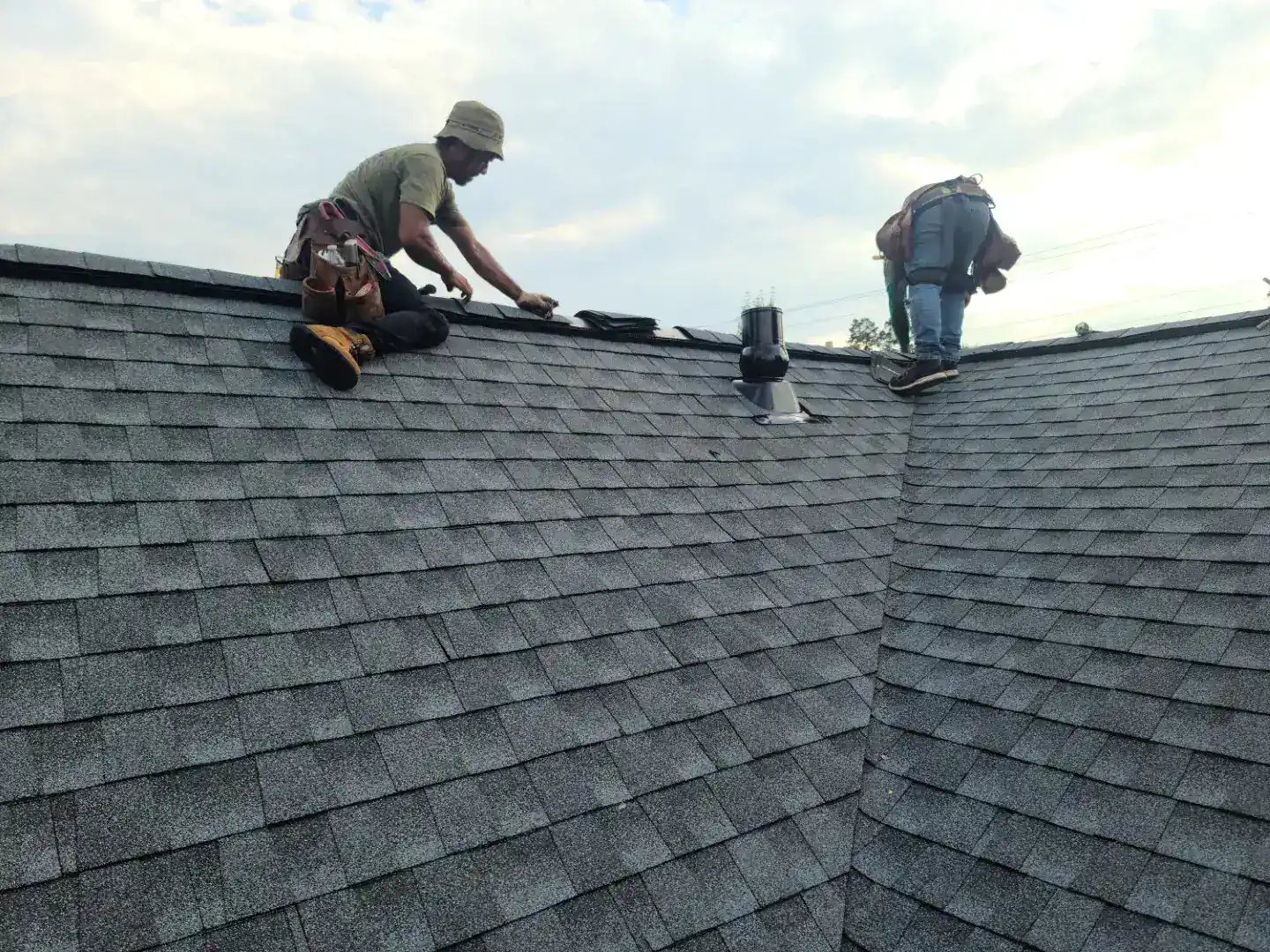
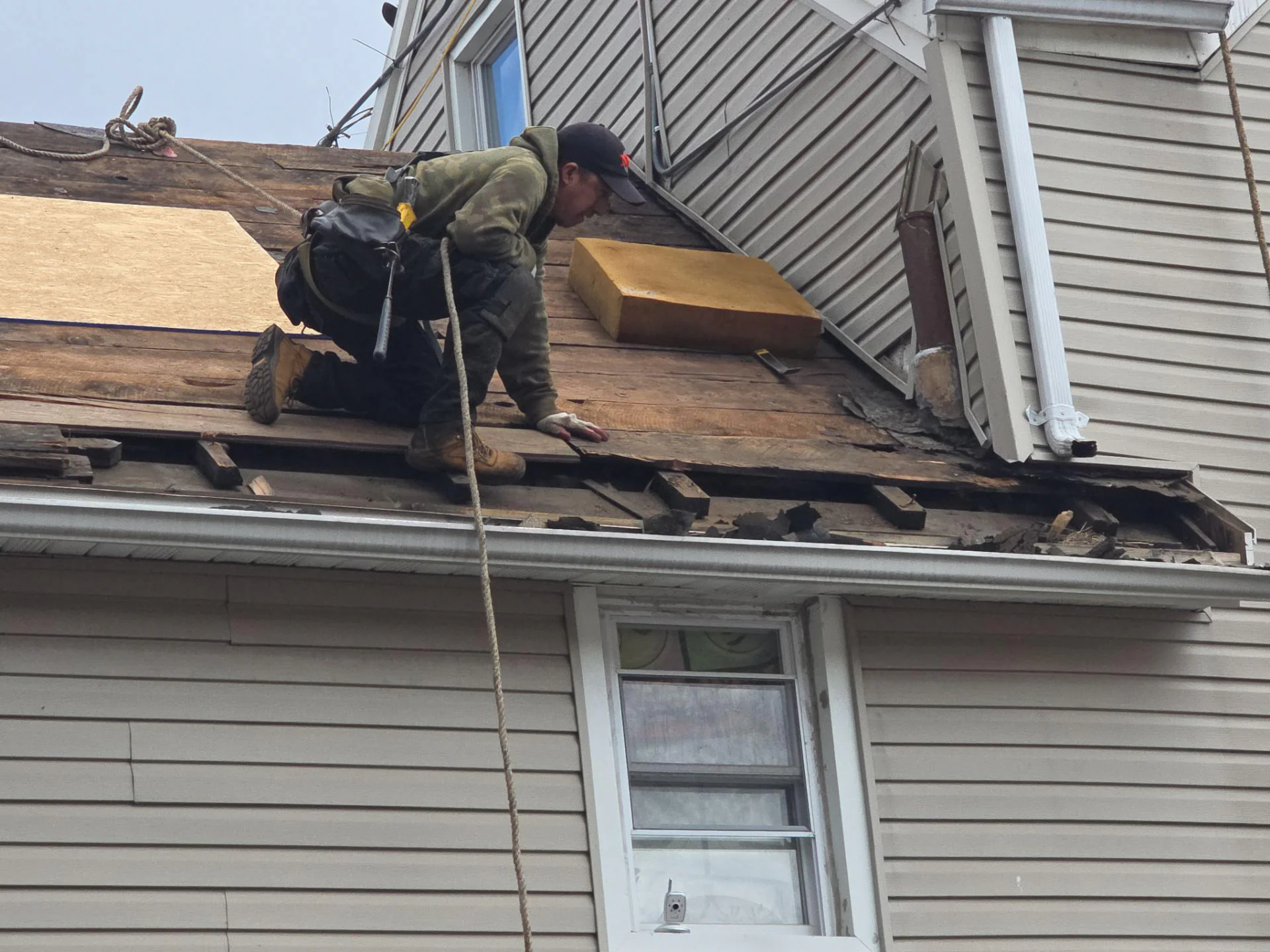
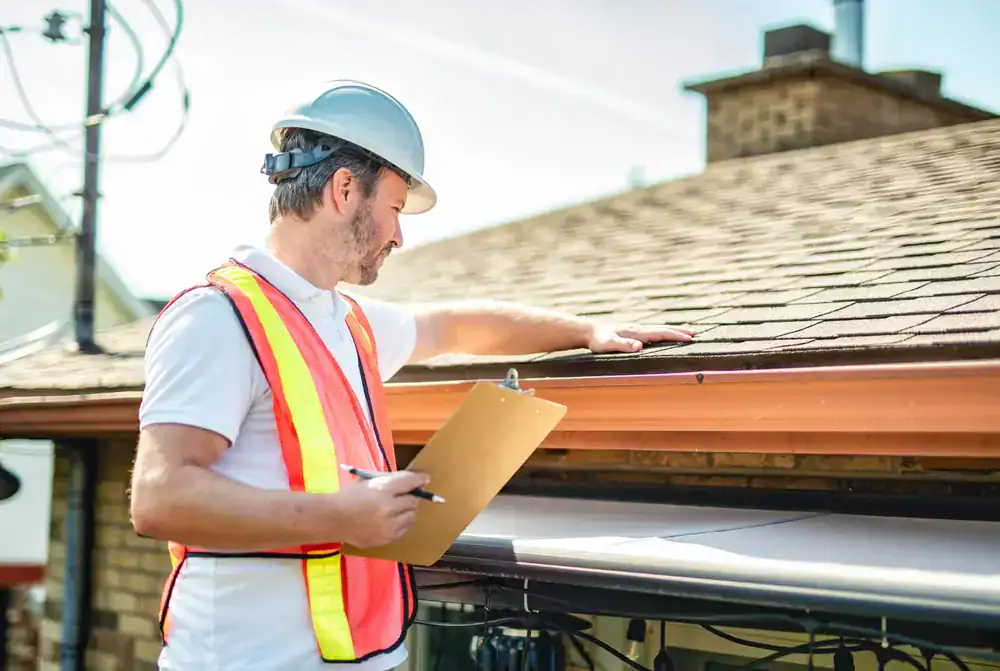
It starts with a free inspection — no charge, no obligation, no pressure to buy anything. We come out, get on the roof, and tell you what’s actually going on up there. If it’s three missing shingles and a resealed flashing, that’s what you’ll hear. If it’s more serious, you’ll know why, and you’ll get a written estimate that reflects the real scope of work.
Once you decide to move forward, we pull all required permits through Fairview’s Building Department before work begins. That step protects you — not just legally, but at resale and for insurance purposes. Contractors who skip permits are cutting a corner that you end up paying for later.
The work itself is scheduled around your life. A lot of Fairview homeowners are commuting into New York City and aren’t home during the day — that’s fine. Our crew shows up, does the work, and you’re kept informed throughout. When the job is done, cleanup is part of the process, not an afterthought. If a dumpster goes on the street, the permit for that gets handled too.
Spring and fall are the busiest seasons in Fairview — spring because winter reveals what broke, fall because nobody wants to head into a nor’easter with a compromised roof. If you’re thinking about getting an inspection, sooner is almost always better than later.
Ready to get started?
Metal Roofing Contractors in Fairview, NJ
Fairview’s housing stock isn’t uniform, and neither is the roofing work it requires. Older two-family and duplex buildings in the borough often have a combination of pitched shingle sections and flat or low-slope areas — and those flat sections need a completely different approach than standard asphalt shingles. We install TPO and EPDM membrane systems for flat roofing, which are the right materials for that application — not a workaround.
For homeowners looking at a longer-term investment, metal roofing is worth a real conversation. A properly installed metal roof lasts 40 to 70 years, requires minimal maintenance, and holds up against the freeze-thaw cycles and wind exposure that Fairview sees every winter. For a multi-family property you’re planning to hold for decades, the math on metal often makes more sense than replacing asphalt every 15 to 20 years.
Standard asphalt shingle replacements are the most common project, and our manufacturer certifications mean those jobs come with extended warranty coverage — on both materials and workmanship — that goes well beyond what an uncertified contractor can offer. Small roof repair contractors in Fairview are easy to find. Finding one who will give you an honest scope, pull the right permits, and stand behind the work with real warranty documentation is a different story.
Do I need a permit to replace my roof in Fairview, NJ?
Yes — a full roof replacement in Fairview requires a construction permit from the Fairview Building Department. The borough is explicit about this: their official guidance states that homeowners and contractors should always call before starting any work to confirm whether a permit is needed. Skipping this step creates real problems — not just during the job, but when you go to sell the property or file an insurance claim. An unpermitted roof replacement can complicate both.
We handle the permit process as part of every job. You don’t need to navigate the Building Department yourself or worry about whether the paperwork is in order. It’s handled before work begins, which means the job is documented, inspected, and legally protected from start to finish. If a dumpster is needed and it’s going on the street, that permit gets pulled too.
How do I know if my Fairview roof needs a full replacement or just a repair?
That’s exactly the right question to ask — and the honest answer is that it depends on the age of the roof, the extent of the damage, and where the problems are showing up. A few missing shingles after a storm is usually a repair. Widespread granule loss, multiple areas of lifted or cracked shingles, or water infiltration that’s been happening for a while often signals that a repair is just delaying the inevitable.
Our free inspection is designed to give you a straight answer on this. In a close-knit borough like Fairview, contractors who push replacement on every call don’t last long. The goal of the inspection is to tell you what you actually need, whether that’s a $400 repair or a full replacement. If a repair will buy you several more years of reliable performance, that’s what you’ll hear.
What causes ice damming on roofs in Fairview, and how do I prevent it?
Ice damming happens when heat escapes through the roof deck, melts snow near the ridge, and that meltwater refreezes at the cold eave overhang — forming a dam that forces water back up under the shingles. In Fairview, where nor’easters regularly drop significant snow and the Palisades ridge elevation adds to wind and cold exposure, ice damming is a recurring issue on older structures that don’t have adequate attic insulation or ventilation.
The fix isn’t just removing ice after it forms — it’s addressing the underlying cause. Proper attic insulation keeps the roof deck cold and uniform, which prevents the melt-refreeze cycle from starting. Ice and water shield underlayment installed at the eaves adds a secondary layer of protection if damming does occur. If you’ve had water show up at your ceiling near an exterior wall after a winter storm, that’s often ice damming at work, and it’s worth having someone look at the roof and attic together — not just the shingles.
How much does a roof replacement typically cost in Fairview, NJ?
For most residential properties in Fairview, a full asphalt shingle roof replacement runs somewhere between $15,000 and $27,000, with the average landing around $20,000 to $21,000. The range depends on the size and pitch of the roof, the number of layers being removed, the condition of the decking underneath, and the materials selected. Multi-family properties — which make up a large share of Fairview’s housing stock — often fall on the higher end of that range because of additional complexity and square footage.
Flat roofing sections, if present, are priced separately from the pitched areas and depend on the membrane system used. Metal roofing carries a higher upfront cost but a significantly longer lifespan. The best way to get an accurate number for your specific property is a free estimate — that’s not a vague range, it’s a written scope with actual pricing for your roof, your materials, and your project.
What should I look for when hiring small roof repair contractors in Fairview, NJ?
The first thing to verify is licensing. In New Jersey, any contractor performing home improvement work over $500 is required to hold a valid Home Improvement Contractor registration with the NJ Division of Consumer Affairs. Ask for the HIC number and verify it — it takes two minutes online and immediately separates legitimate contractors from those operating without legal standing. Full liability insurance and workers’ compensation coverage matter just as much, because an uninsured worker injured on your Fairview property is a liability that falls back on you as the homeowner.
Beyond the paperwork, look for contractors who give you a written estimate before any work begins, pull the required permits, and don’t pressure you toward a larger scope than what you actually need. In a dense community like Fairview, the contractors who cut corners don’t stay in business long. Reviews on Google, a verifiable local track record, and clear communication from the first call are all indicators that you’re dealing with someone accountable — not someone who takes a deposit and becomes difficult to reach.
Does USA Home Remodeling offer free roof inspections in Fairview, NJ?
Yes — we offer free inspections for Fairview homeowners with no charge and no obligation attached. This matters in a community where a lot of homeowners are managing multi-family properties on tight margins and can’t afford to spend $150 to $300 just to find out whether they have a problem worth addressing. The inspection removes that barrier completely.
What you get is an honest assessment of the roof’s current condition — what’s holding up, what isn’t, and what the realistic options are. If nothing needs immediate attention, you’ll hear that. If there’s a repair that should happen before winter or before the next round of nor’easters comes through, you’ll know the scope and the cost before anyone picks up a tool. Fairview homeowners with duplexes or two-family properties especially benefit from having both the pitched and flat sections evaluated together, since problems in one area often connect to problems in the other. Call to schedule, and the inspection gets set up from there.