
Gutter Installation in Fairview, NJ
Fairview's Older Homes Deserve Gutters That Actually Keep Up
Hear from Our Customers
Rain Gutter Installation in Fairview, NJ
Water goes where it’s supposed to — away from your foundation, away from your siding, and away from your neighbor’s property. In a borough as dense as Fairview, where homes sit close to property lines and shared alleyways are common, that last part matters more than most contractors think about. A downspout that drains toward your neighbor’s foundation isn’t just a nuisance — it’s a liability.
Fairview’s position on the Palisades ridge means stormwater doesn’t trickle off your roof — it moves fast. When gutters are undersized, clogged, or improperly sloped, that velocity becomes a problem in a hurry. You end up with erosion along the foundation, water pooling in the basement, and siding that starts rotting from the bottom up. These aren’t worst-case scenarios — they’re what happens when aging gutter systems on 1950s and 1960s homes finally can’t keep pace with modern storm intensity.
When the system is right, none of that is on your radar anymore. The gutters do their job quietly, Bergen County’s nor’easters and summer microbursts come and go, and your home stays dry. That’s the outcome — not a dramatic transformation, just a problem that stops costing you money.
Gutter Contractors in Fairview, NJ
We’ve been working on New Jersey homes for over a decade — the kind of older Bergen County housing stock that lines the streets between Bergen Boulevard and the Hackensack River valley. We know what a mid-century fascia board looks like when it’s been holding water for thirty years. We know what Fairview’s Building Department at 59 Anderson Avenue requires on permit applications. And we know that homeowners in Fairview aren’t looking to be sold — they’re looking for someone who’ll give them a straight answer.
Our NJ Home Improvement Contractor license (#13VH10605800) is current and publicly verifiable through the NJ Division of Consumer Affairs — because Fairview’s Construction Code Enforcement office actually checks. We also carry manufacturer certifications that back the materials we install with real warranty coverage, not just a contractor’s handshake.
We grew through referrals, not ad spend. In a community this tight, that’s the only growth model that holds up long-term.
Home Gutter Installation in Fairview, NJ
It starts with a free inspection. We look at your existing gutters, the fascia boards behind them, and the roofline above — because those three things work together, and a problem with any one of them affects the others. If your fascia is soft or rotted, new gutters won’t hold. We tell you that upfront, not after we’ve already started.
From there, you get a written estimate that breaks down what we’re proposing and why. No verbal quotes that change when the invoice comes. If we’re recommending replacement over repair, we’ll explain what we saw that led us there. If repair is the honest answer, that’s what we’ll say. Fairview homeowners maintaining older homes in a high-value property market deserve that kind of clarity — not a default recommendation toward the most expensive option.
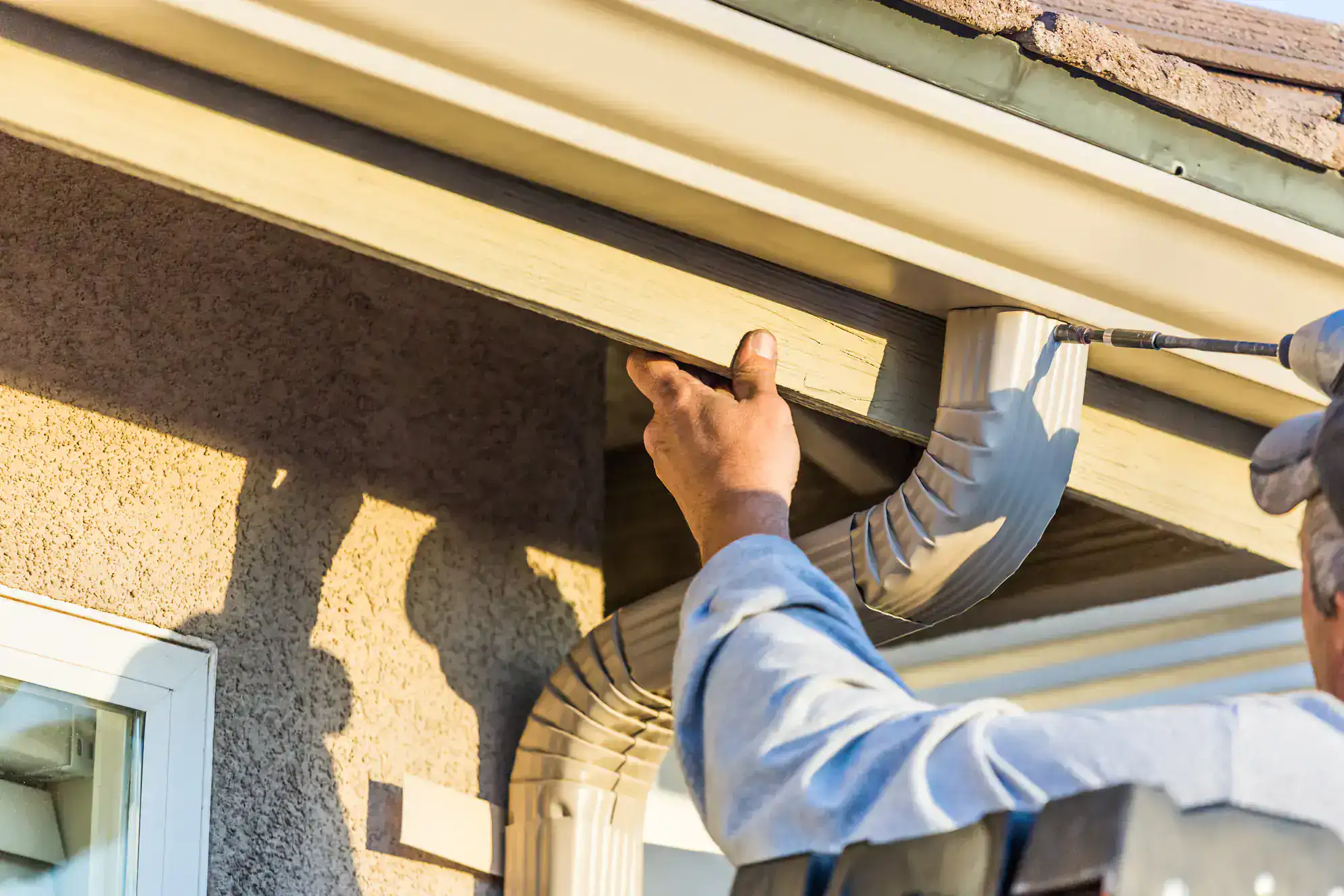
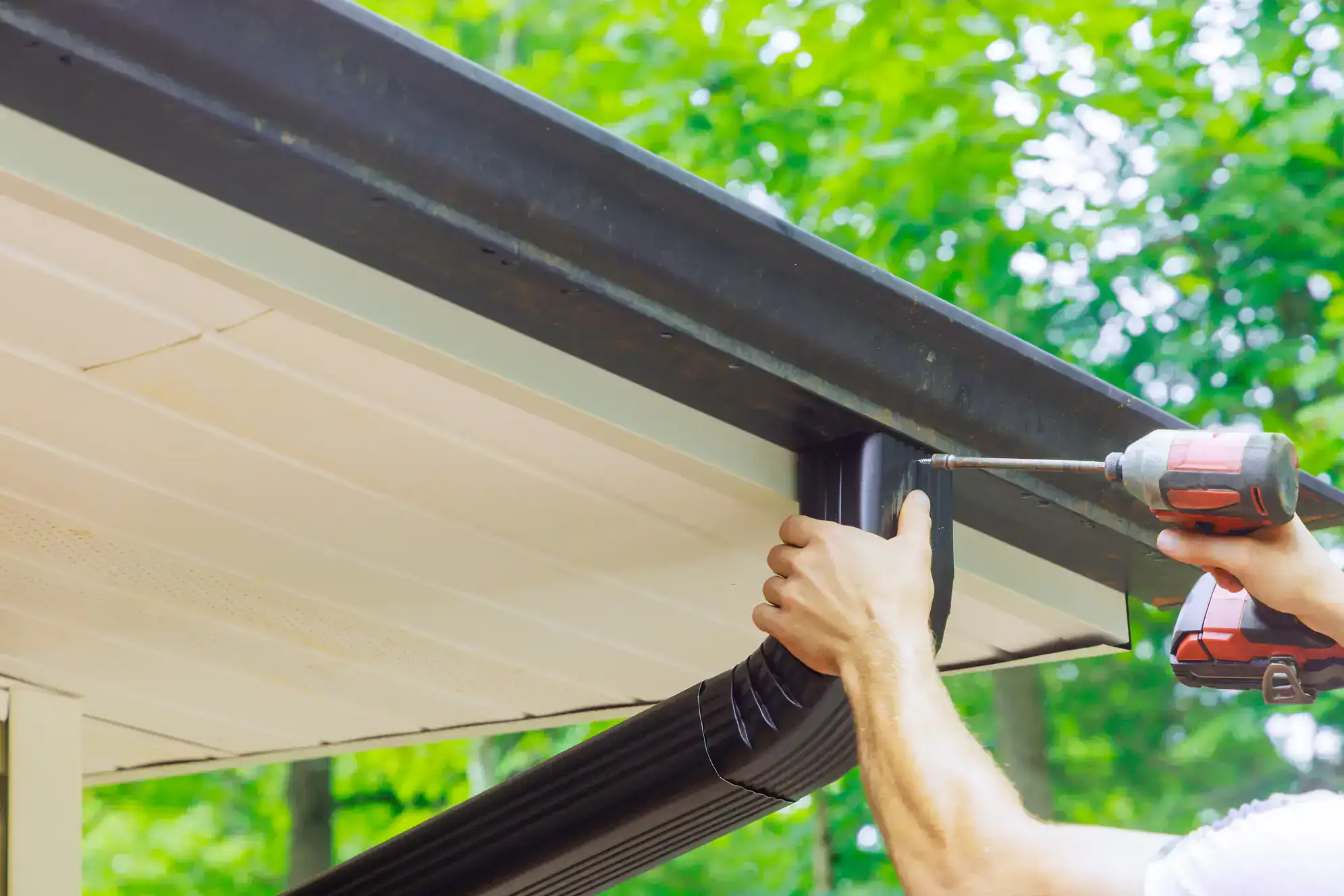
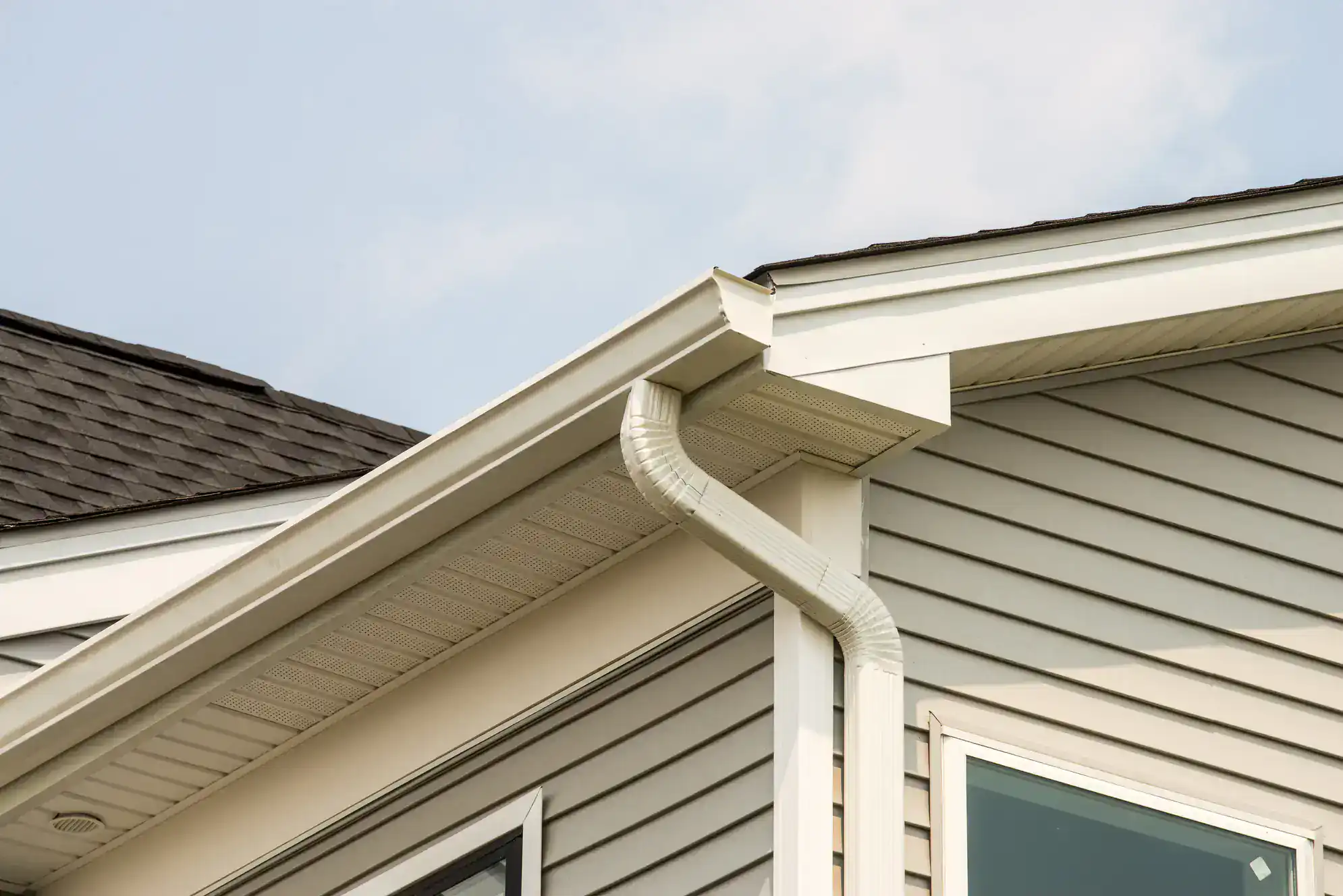
When the work begins, we fabricate seamless aluminum gutters on-site to fit your exact roofline measurements. We calculate slope before anything goes up — the industry standard is a quarter-inch of drop per ten feet of run — and we position downspouts with your lot configuration in mind. In a borough this dense, where lots are tight and neighbors are close, that placement decision matters. We also confirm permit requirements with the Fairview Building Department for your specific project scope before we start, so there are no compliance issues after the fact.
Ready to get started?
Roof Gutter Installation in Fairview, NJ
Gutter installation isn’t just about the gutters. Your roof determines how much water volume your gutters need to handle. Your fascia boards determine whether the gutters will hold under that load. And your siding determines what happens to water that misses the system entirely. We look at all three — because treating them as separate problems is how homeowners end up calling a second contractor six months later.
For Fairview homes, that integrated approach is especially relevant. The housing stock here is predominantly from the 1940s through the 1960s, and aging exterior systems on homes of that era rarely have just one issue. When we’re on your roof evaluating the gutter situation, we’re also noting what the surrounding exterior looks like — not to sell you more work, but because catching a failing fascia board before it becomes a structural repair is genuinely in your interest.
Every gutter installation we complete in Fairview includes on-site seamless fabrication, correct slope calculation, downspout placement and extension sized for your lot, and a full cleanup when we leave. If your project qualifies for a manufacturer-backed warranty on materials, we’ll walk you through what that covers. And if storm damage is involved, we can document the condition of your gutters and work directly with your insurance adjuster — a step most local gutter contractors skip entirely.
Do I need a permit for gutter installation in Fairview, NJ?
It depends on the scope of the work. Standard gutter replacement on an existing system typically doesn’t require a permit in Fairview. But if the project involves structural repairs — replacing rotted fascia boards, modifying how downspouts connect to the drainage system, or making changes that affect the structure of the home — a permit may be required by Fairview’s Building Department at 59 Anderson Avenue.
The safest approach is to confirm with the Construction Code Enforcement office before work begins, which is exactly what we do on every project. Fairview’s permit application process actively requires the Home Improvement Contractor Registration Number, so working with a licensed contractor isn’t optional — it’s the standard the borough enforces. Our NJ HIC license (#13VH10605800) is current and on file, which means there’s no delay on that front when permits are needed.
How do I know if my gutters need to be repaired or fully replaced?
The honest answer is that it depends on what’s actually failing — and that’s worth knowing before you spend money either way. Gutters that are pulling away from the fascia at isolated spots, have a small number of leaking seams, or are clogged but otherwise structurally intact can often be repaired effectively. Replacement makes more sense when the gutters are heavily corroded, consistently overflowing because they’re undersized for your roof’s water volume, or when the fascia boards behind them have deteriorated to the point where there’s nothing solid to anchor new hardware into.
For homes in Fairview built in the 1940s through 1960s, the fascia situation is often the deciding factor. Decades of moisture exposure — especially on the Palisades-slope terrain where water moves fast — can leave fascia boards that look fine from the ground but are soft and compromised behind the gutter. We check that during the free inspection, so you’re not guessing. We’ll tell you what we find and what we’d recommend — and we won’t push replacement if repair is the right call.
What size gutters does my Fairview home actually need?
Most homes in Fairview were originally fitted with 4-inch gutters, which was the standard at the time they were built. The problem is that those gutters were sized for the rainfall intensity of the mid-twentieth century — not the summer microbursts and sustained nor’easters that Bergen County sees today. A 4-inch gutter on a home with a steep roofline or a large roof surface area will overflow in a heavy storm, no matter how clean it is.
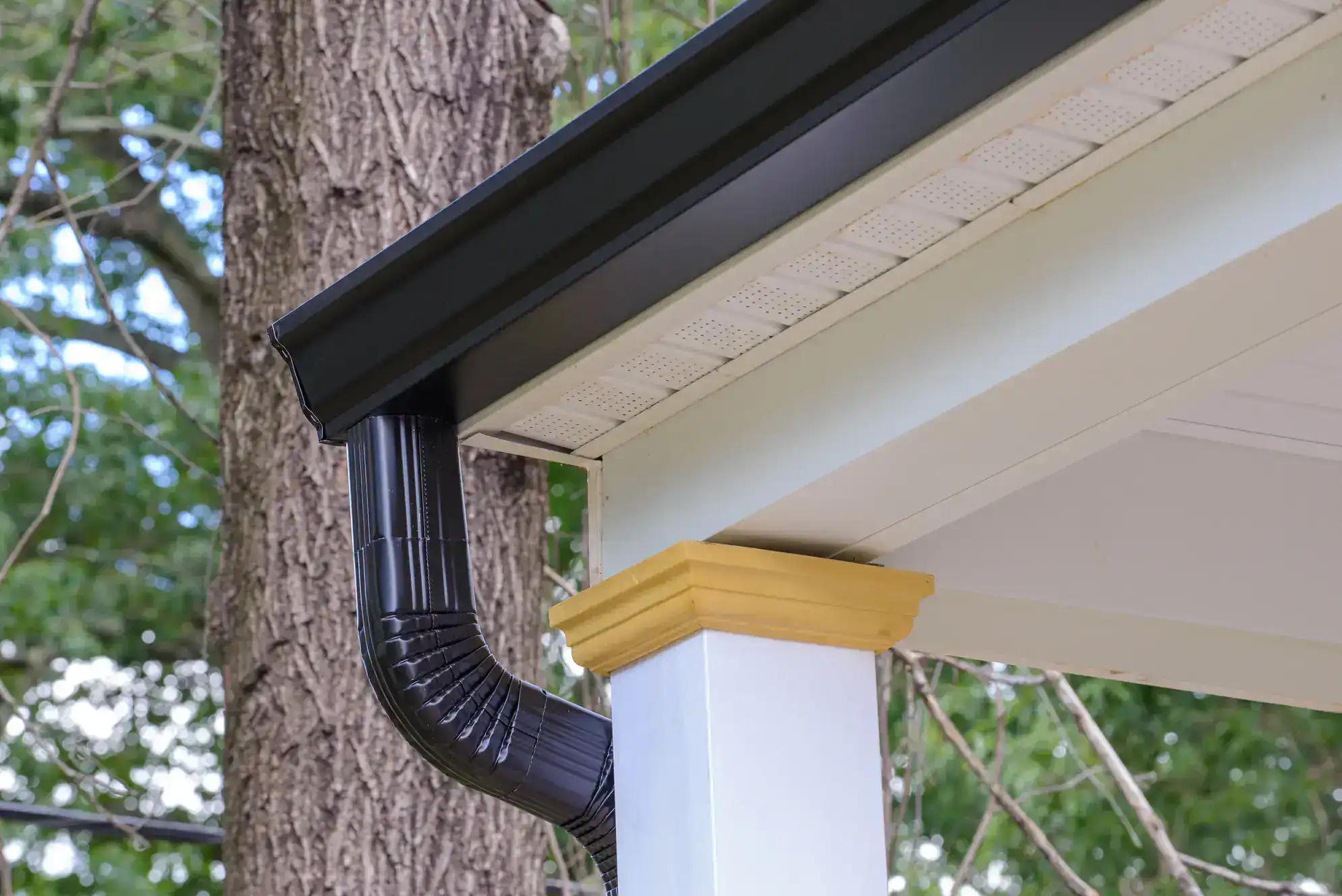
The current industry standard for residential installations is 5-inch K-style gutters, which handle significantly more water volume. On homes with larger roof pitches or high square footage, 6-inch gutters may be the better fit. We calculate the correct size based on your actual roof area, pitch, and the number of downspouts in the run — not a one-size recommendation. Fairview’s elevated Palisades terrain affects how fast water moves off the roof, so getting that calculation right matters more here than it would on a flat suburban lot.
How long does gutter installation take for a typical Fairview home?
For most single-family or two-family homes in Fairview, a full gutter installation takes one day. The timeline can extend if the project includes fascia repair, significant downspout rerouting, or if the home has a more complex roofline with multiple valleys and corners that require additional fabrication time.
Because we fabricate seamless gutters on-site rather than bringing pre-cut sections, the process is efficient — we cut each run to your exact measurements on the truck, which eliminates the fitting and adjustment time that sectional installations require. If permits are needed for your specific project scope, we account for that in the scheduling conversation upfront so there’s no delay once the work starts. For Fairview homeowners who commute to New York City and need to plan around a job day, we’ll give you a realistic window before you commit to anything.
When is the best time of year to schedule gutter installation in Fairview?
Practically speaking, gutter installation can be done year-round in Bergen County as long as temperatures are above freezing and conditions are safe for the crew to work. That said, there are two windows where scheduling makes the most sense for Fairview homeowners specifically.
The first is late summer or early fall — before the leaf drop that hits Fairview’s mature residential streets in October and November. Getting new gutters up before that debris season means they’re clean and properly functioning going into the first nor’easter of the year. The second is early spring, after the freeze-thaw cycle has done its damage and you can see clearly what made it through winter and what didn’t. The worst time to wait is mid-fall, when gutters are already clogged with leaves and the first hard freeze is weeks away — that’s when standing water turns to ice, expands, and accelerates damage to both the gutters and the fascia behind them.
Does homeowner's insurance cover gutter damage in Fairview, NJ?
It can — but it depends on how the damage happened. Homeowner’s insurance in New Jersey typically covers gutter damage that results from a sudden, covered event: a nor’easter, a summer microburst, wind, hail, or a falling tree branch. What it generally doesn’t cover is gradual deterioration — gutters that have simply aged past their useful life, or damage that built up slowly over time from deferred maintenance.
The key is documentation. If a storm event damaged your gutters, the condition needs to be recorded before anything is touched or removed — because insurers require evidence that the damage is storm-related, not pre-existing. We work directly with insurance adjusters on storm damage claims, document what we find before we start any work, and help you understand what your policy is likely to cover before you spend anything out of pocket. For Fairview homeowners dealing with damage after one of Bergen County’s more significant weather events, that process can make a real difference in what you end up paying.