
Roofing Contractor in Chestnut Ridge, NJ
When a Pascack Valley Winter Tests Your Roof, This Is Who You Call
Hear from Our Customers
Local Roofers in Chestnut Ridge, NJ
Most roofing problems in Chestnut Ridge don’t announce themselves. They show up as a water stain on your ceiling in February, or a musty smell in the attic after a nor’easter rolls through. By then, what started as a minor issue has already worked its way through your shingles, past your underlayment, and into the structure of a home you’ve invested heavily in.
The freeze-thaw cycles that hit northern Bergen County every winter are hard on roofs — especially ones that weren’t installed with proper ice-and-water shielding at the eaves and valleys. When snow accumulates on a roof and then partially melts and refreezes, it creates ice dams that force water backward under the shingles. That’s just winter on the Chestnut Ridge Road corridor, and it’s exactly the kind of thing a certified installer accounts for from the start.
Homes along Chestnut Ridge Road and throughout Montvale are high-value properties — many sitting well above $900,000. A roof that was installed without the right materials, the right ventilation design, or the permits required by New Jersey law isn’t just a maintenance problem. It’s a liability that can complicate a future sale, void your manufacturer warranty, and cost you far more than the money you saved going with the cheaper bid.
Reputable Roofing Contractors in Chestnut Ridge, NJ
We’ve been working on New Jersey homes for over 17 years, and we know the Chestnut Ridge and Montvale area intimately. That kind of track record doesn’t happen by accident — it’s built through honest assessments, clean installs, and showing up when something needs to be made right. The Chestnut Ridge market is exactly where that matters most. Homeowners here are sharp, they do their research, and they’ve seen enough contractors come and go to know the difference between someone who’s been around and someone who just showed up after the last storm.
We’re family-owned, fully licensed as a New Jersey Home Improvement Contractor, carry complete liability and workers’ compensation insurance, and hold certifications from major shingle manufacturers — which means the warranties available to you go well beyond what an uncertified contractor can offer. From the Pascack Hills community to the Chestnut Ridge Road corridor, our work speaks for itself.
Roof Repair in Chestnut Ridge, NJ
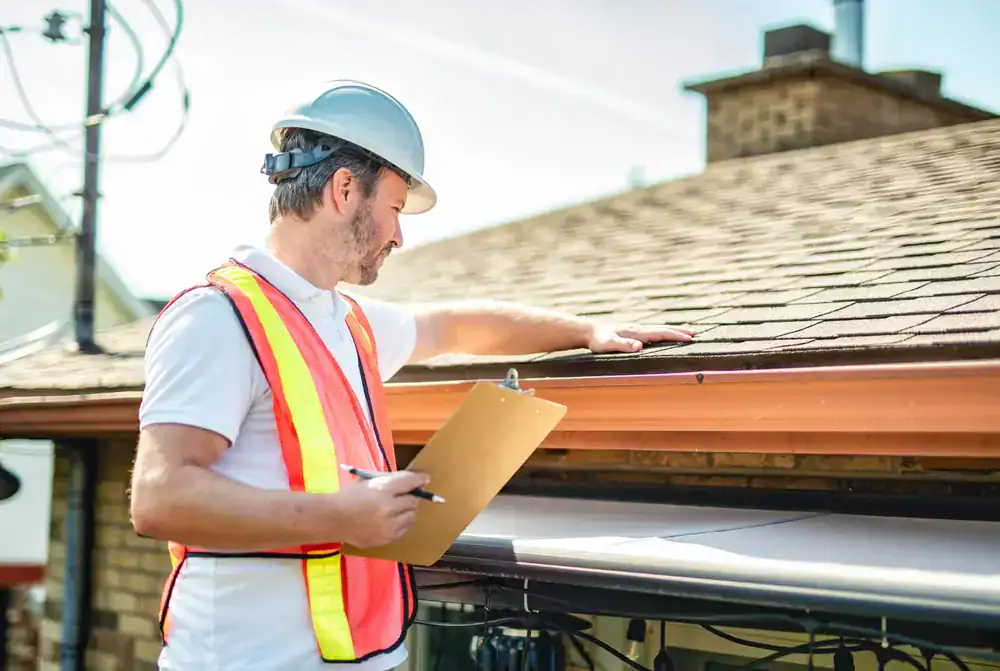
It starts with a free inspection — no charge, no obligation. A certified member of our team comes out to your Chestnut Ridge home, gets on the roof, and gives you an honest picture of what’s going on. If it needs a repair, you’ll know exactly what and why. If it needs a full replacement, that’ll be explained clearly too. And if it’s in decent shape with a few more years left, you’ll hear that instead of a sales pitch.
From there, you get a detailed, itemized estimate. No vague line items, no “we’ll know more once we start.” In New Jersey, a full roof replacement requires a building permit through Montvale Borough, and we handle that process — pulling the permit, scheduling the required inspections, and keeping everything above board. An unpermitted roof replacement can surface as a serious problem when you go to sell, and it’s not a corner worth cutting on a property of this value.
Once the project is underway, our crew works efficiently and respects the property. Most full replacements are completed within one to two days depending on scope. You’ll know the timeline before anyone picks up a hammer, and communication stays clear throughout. When the job is done, the site is cleaned up, the permit is closed out, and your new roof comes backed by the manufacturer warranty our certified installation unlocks.
Ready to get started?
Metal Roofing Contractors in Chestnut Ridge, NJ
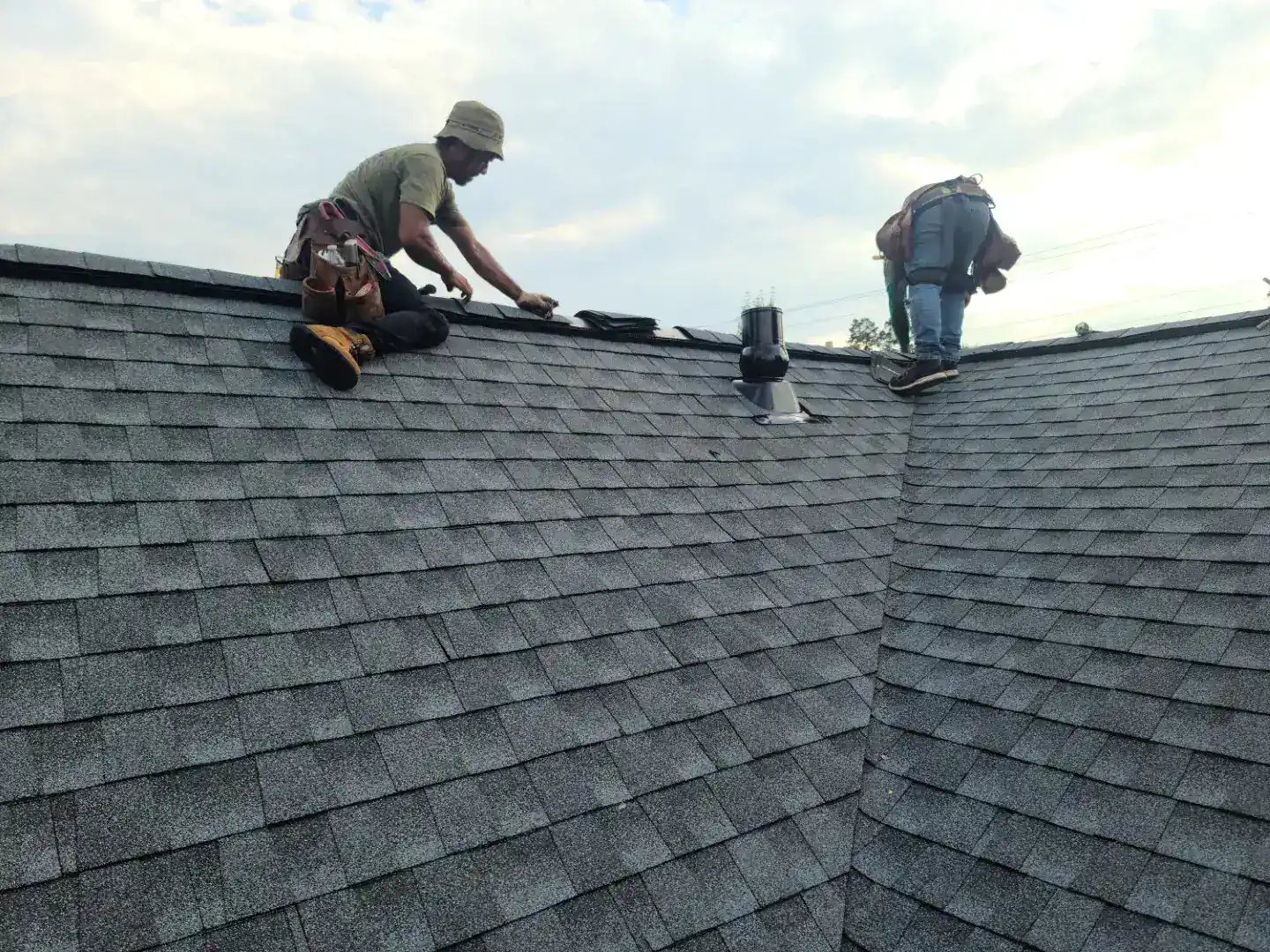
Not every call is a full replacement. We handle small roof repairs in Chestnut Ridge, NJ — missing or lifted shingles, failed flashing around chimneys and skylights, damaged valleys, minor leak points — with the same care and transparency as a larger project. A lot of Chestnut Ridge homeowners put off calling because they assume any roofing conversation leads straight to a $20,000 estimate. Sometimes it’s a $400 repair. The free inspection exists specifically to tell you which one you’re dealing with before you commit to anything.
For homeowners who are ready to replace, asphalt shingles remain the most common choice — and when installed correctly with proper ice-and-water shield and ventilation designed for Bergen County’s winters, they perform well for 25 to 30 years. But metal roofing is growing fast in this market, and for good reason. A standing seam or metal shingle roof lasts 40 to 70 years, sheds snow and ice more effectively than asphalt, and holds up to the wind loads that nor’easters regularly deliver to northern Bergen County. For a homeowner with a premium Chestnut Ridge property who’s thinking in decades rather than years, it’s worth a serious conversation.
We also handle gutters and siding, which means your entire exterior can be managed under one contractor. When a leak traces back to the junction of your roof and gutter system, there’s no finger-pointing between trades — one company owns the whole picture.
Do I really need a permit to replace my roof in Montvale, NJ?
Yes — and skipping it is one of the more costly mistakes a homeowner can make. In New Jersey, a full roof replacement requires a building permit through your local municipality, which in this case is Montvale Borough. The permit triggers an inspection that confirms the installation meets current building code requirements, including proper underlayment, ventilation, and flashing installation. That inspection exists to protect you, not just to generate paperwork.
Where this becomes a real problem is at the point of sale. If you sell your Chestnut Ridge home and a buyer’s inspector discovers the roof was replaced without a permit, it can delay or derail the transaction entirely. Lenders and title companies take unpermitted work seriously, and resolving it after the fact is expensive and stressful. We pull the required permits on every applicable project and manage the inspection process from start to finish — so your investment is protected on paper, not just on the roof.
How do I know if I need a full roof replacement or just a repair?
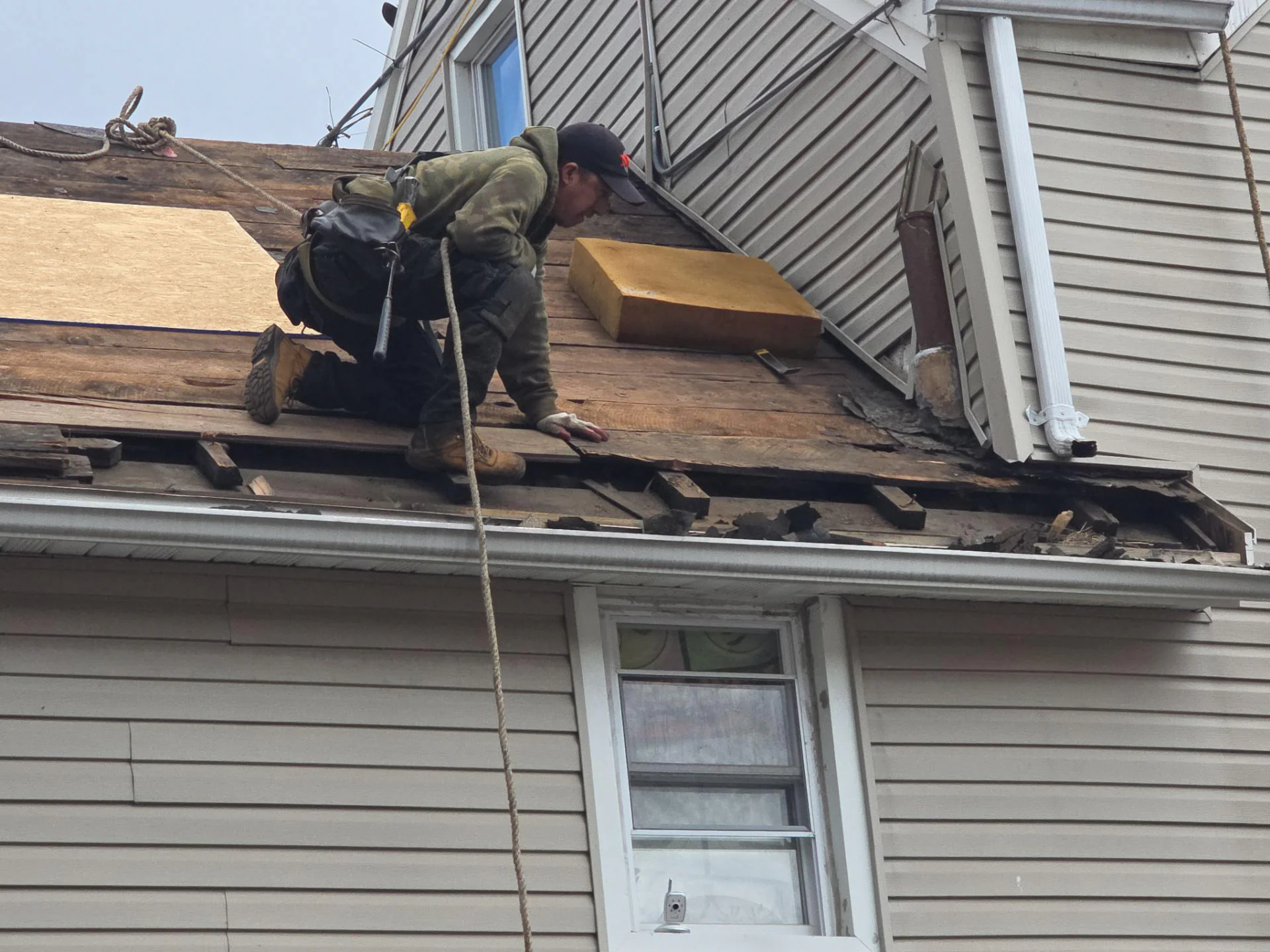
The honest answer is that you usually can’t tell from the ground, and neither can most homeowners who aren’t trained to read what a roof is actually showing them. A few missing shingles after a windstorm might be a straightforward repair. But if the underlying decking has started to rot, if the flashing around your chimney has been failing for a season or two, or if your roof is approaching 25 to 30 years old — which puts a lot of Chestnut Ridge homes squarely in replacement territory — a repair is often just delaying the inevitable.
That’s exactly why the free inspection matters. A trained eye can tell the difference between a roof that has years left and one that’s been quietly deteriorating under the surface. We’ll give you a straight answer after a thorough inspection — not a default recommendation to replace, and not a patch job that masks a bigger problem. You’ll know what you’re actually dealing with before any decision is made.
What causes ice dams, and how do I prevent them on my Chestnut Ridge home?
Ice dams form when heat escapes through your attic, warms the roof deck, and melts the snow sitting on top of it. That meltwater runs down toward the eaves, where the roof is colder because it extends beyond the heated living space — and it refreezes. Over time, that ice buildup creates a dam that forces water to back up under your shingles. Once water gets under the shingles, it can soak your insulation, rot the decking, and eventually show up as a stain on your ceiling or damage to your walls.
In northern Bergen County, this isn’t a rare event. The freeze-thaw cycles that hit the Chestnut Ridge Road corridor every winter create exactly the right conditions for ice dams to form on roofs that weren’t installed with adequate attic ventilation and ice-and-water shield protection at the eaves and valleys. The fix isn’t just a better shingle — it’s a properly designed system that addresses heat loss at the source. A quality installation accounts for this from the start, and an inspection can identify whether your current roof has the right protections in place.
Is metal roofing actually worth it for a home in Chestnut Ridge, NJ?
For the right homeowner, yes — and Chestnut Ridge is genuinely one of the better markets for it. Metal roofing lasts 40 to 70 years under normal conditions, which means a homeowner who installs a metal roof today is very likely installing the last roof they’ll ever need on that property. It sheds snow more effectively than asphalt, which reduces the ice dam risk that Bergen County winters create. It handles high wind loads better than most asphalt shingle systems. And it doesn’t degrade the way asphalt does under the repeated freeze-thaw cycles this area sees every year.
The upfront cost is higher — a metal roof typically runs more than a comparable asphalt installation. But on a Chestnut Ridge property valued at $900,000 or more, the math looks different than it does on a $300,000 house. You’re not just buying a roof — you’re buying a 50-year warranty, lower long-term maintenance costs, and a premium aesthetic that holds up over time. If you’re planning to stay in your home for the long haul, it’s worth including in the conversation during your free inspection.
How long does a roof replacement actually take from start to finish?
Most residential roof replacements in the Chestnut Ridge area are completed within one to two days of actual installation, depending on the size and complexity of the roof. A straightforward single-story home with a simple pitch can often be done in a full day. Larger homes, steeper pitches, or roofs with multiple valleys, dormers, and penetrations — which are common in the more architecturally detailed homes along Chestnut Ridge Road — will typically run two days.
What adds time to the overall project timeline is the permitting process, not the installation itself. In New Jersey, the permit application and approval through Montvale Borough needs to happen before work begins. We handle that process on your behalf, and the timeline is factored into your project schedule from the start. You’ll know your start date, your estimated completion, and what to expect at each stage before anyone shows up at your door. The goal is a clean, efficient job that respects your time and your property.
How do I find a reputable roofing contractor in Chestnut Ridge, NJ without getting burned?
Start with the basics that a lot of homeowners skip. Ask for the contractor’s New Jersey Home Improvement Contractor registration number — every legitimate contractor working in NJ is required to have one, and you can verify it through the NJ Division of Consumer Affairs website. Ask whether they carry liability insurance and workers’ compensation coverage. If a worker gets hurt on your property and the contractor isn’t insured, that liability can fall on you as the homeowner.
Beyond the credentials, look for longevity. The Chestnut Ridge and Montvale area sees its share of contractors who show up after a major storm and disappear before the warranty ever gets tested. A contractor who has been operating continuously in New Jersey for 17 or more years has a verifiable track record — you can check reviews, ask for references, and confirm they’ve been around long enough to honor what they promise. Also ask specifically whether they are manufacturer-certified, because that determines what kind of warranty they can actually put in writing. A certified contractor can offer extended coverage on both materials and workmanship that a non-certified contractor simply cannot access, and on a high-value Chestnut Ridge property, that difference is worth understanding before you sign anything.
Other Services we provide in Chestnut Ridge