
TPO vs. EPDM Roofing: Which Flat Roof Is Best for Elizabeth, NJ?
Summary:
If you’ve been quoted on a flat roof replacement and walked away more confused than when you started, you’re not alone. TPO and EPDM are the two most common flat roofing membranes in the country, and almost every contractor has a strong opinion about which one is better. The problem is, most of those opinions aren’t built around your specific situation — your building, your neighborhood, your Union County winters, or what’s actually sitting on your roof right now. This page cuts through the noise. We’ll compare both materials honestly, explain what Elizabeth’s climate means for each one, and help you figure out which makes more sense for your property.
TPO vs. EPDM Roofing: What's the Actual Difference?
The short version: EPDM is a synthetic rubber membrane that’s been installed on flat roofs across the Northeast for over 50 years. TPO is a thermoplastic membrane that came onto the market in the 1990s and has since become the most widely installed commercial flat roofing membrane in North America. They are not the same material, and they don’t behave the same way — even though some contractors lump them together under “rubber roofing.”
EPDM is typically black. It’s flexible, proven in cold climates, and relatively straightforward to repair. TPO is typically white. It reflects heat, uses heat-welded seams, and tends to cost slightly more upfront. Both can last decades when installed correctly. The material you choose matters, but — and this is worth saying clearly — the contractor who installs it matters even more.
How Do TPO and EPDM Perform in Elizabeth's Freeze-Thaw Cycles?
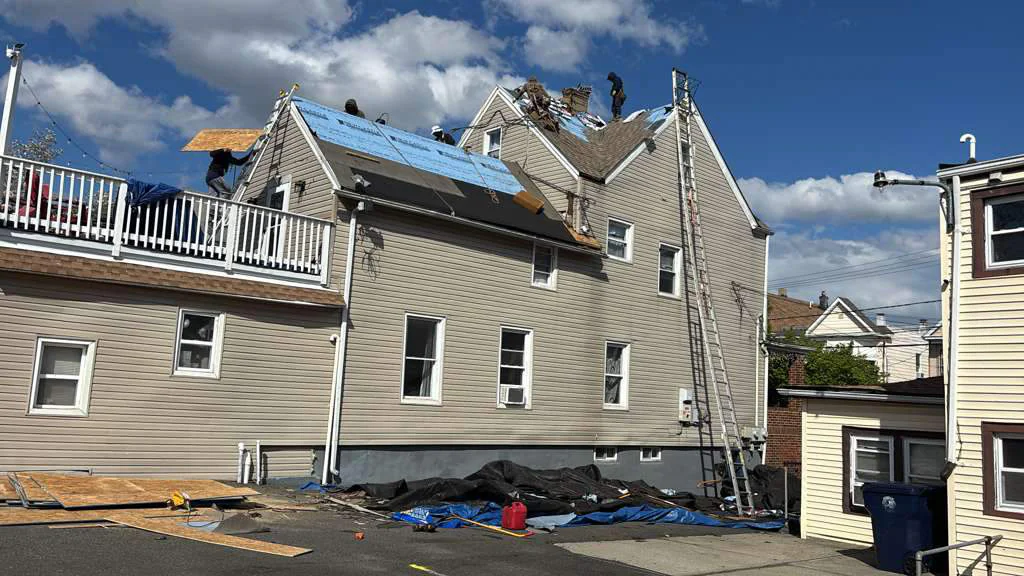
New Jersey is not Florida and it’s not Texas. Union County gets real winters — typically 8 to 12 freeze-thaw cycles per year. After the 2025–2026 season, which was the snowiest North Jersey had seen since 2013–2014, a lot of flat roofs across Elizabeth showed the wear. Seams separate. Membranes shrink. Flashing pulls away from parapet walls. These aren’t freak events — they’re what Elizabeth’s winters do to flat roofs over time.
EPDM handles cold-weather expansion and contraction well. The rubber compound flexes rather than cracks, which is why it’s held up in Northeastern climates for decades. A well-installed EPDM roof can last 25 to 30 years, and some installations have pushed past 40 years with proper maintenance. That track record is real, and it’s one reason EPDM remains a strong choice for residential flat roofs in Union County.
TPO has its own cold-weather advantage: heat-welded seams. Unlike EPDM’s adhesive-bonded seams, TPO seams are fused with heat, creating a bond that’s actually stronger than the membrane itself. That matters during nor’easter season, when wind-driven rain is looking for any gap to exploit. TPO’s lifespan runs 15 to 30 years depending on membrane thickness, installation quality, and maintenance — a wide range that comes down largely to how well the job was done in the first place.
The honest answer for Elizabeth’s mixed climate is that both materials can work well. What shifts the decision is your specific building: what it’s used for, whether the flat roof is over an occupied living space, and what your priorities are for the next 20-plus years.
White Roof vs. Black Roof: Why It Matters More in Elizabeth Than Suburban NJ
This is the angle most comparison pages skip, and it’s one that’s directly relevant to Elizabeth’s housing stock. Elizabeth is one of the densest urban environments in Union County. Dense urban areas run warmer than surrounding suburbs — a phenomenon called the urban heat island effect — and rooftop temperatures on black EPDM membranes can climb significantly above ambient air temperatures on a July afternoon.
If your flat roof sits over a bedroom, a living room, or a top-floor apartment, that heat transfer is real. Tenants feel it. Cooling bills reflect it. White TPO membranes reflect solar radiation rather than absorbing it, and that reflectivity can reduce cooling costs by 15 to 25 percent on roofs over occupied spaces. For a landlord managing a two-family home in Peterstown or a small commercial building along Route 1 & 9, that’s not a small number over the course of a summer — let alone a decade.
TPO also meets ENERGY STAR and Cool Roof Rating Council standards, which matters for commercial building owners who are managing energy costs across multiple units or looking at utility rebate programs.
EPDM’s black surface does absorb more heat in summer, which is a genuine trade-off. In colder months, that same heat absorption can actually be a minor benefit — but in Elizabeth’s urban environment, summer performance tends to be the bigger factor for flat roofs over occupied spaces. If your flat roof is over an unoccupied garage or a mechanical room, the heat reflectivity difference matters less. If it’s over someone’s living space, it matters quite a bit.
Want live answers?
Connect with a USA Home Remodeling LLC expert for fast, friendly support.
Flat Roof Replacement Cost in Elizabeth and Union County: What TPO and EPDM Actually Run
Pricing on flat roof replacements in Elizabeth and Union County varies more than most people expect, and the range can feel disorienting when you’re collecting quotes. For EPDM, installed costs in NJ generally run $5 to $9 per square foot. For TPO, expect $6 to $12 per square foot installed. On a 1,500 square foot flat roof, that puts EPDM in the $6,000 to $12,000 range and TPO at roughly $7,500 to $18,000 or more depending on system type and access conditions.
The $1 to $2 per square foot difference between materials is real, but it’s rarely the number that drives the final quote. What drives the final quote is membrane thickness, whether tear-off is required, insulation, flashing work, and job site access.
Why Elizabeth Flat Roof Projects Often Cost More Than Suburban Jobs
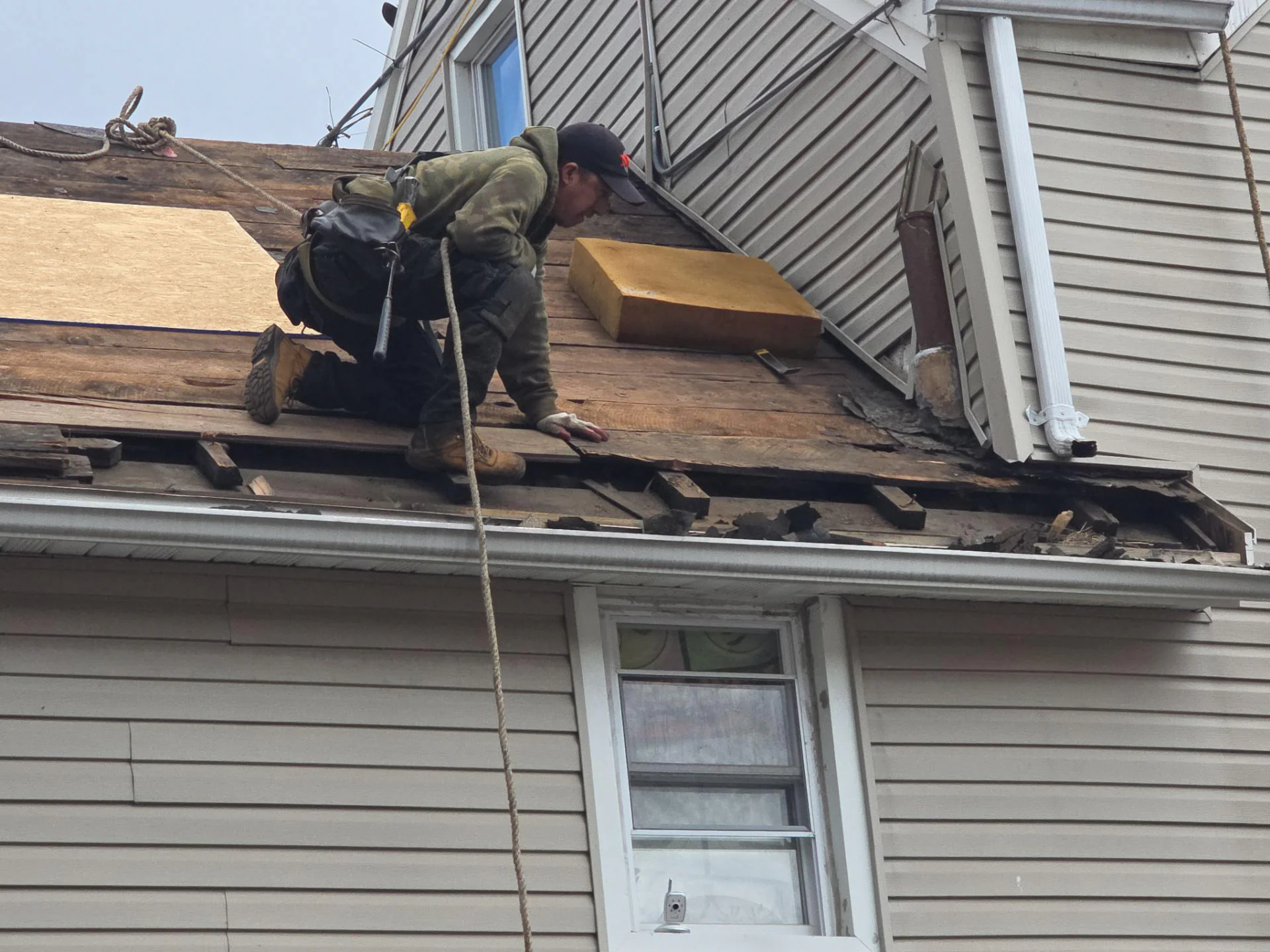
If you’ve gotten a flat roofing quote in Elizabeth and it came in higher than a friend paid for a similar-sized roof in a suburban town, there’s a straightforward reason for that: urban job sites cost more to work on. Dense neighborhoods with limited staging areas, street parking restrictions, and buildings that require material hoisting rather than simple ground-level loading add approximately $2.50 to $3.50 per square foot to project costs compared to a comparable suburban job.
We work in Elizabeth regularly and know what that looks like on the ground. A row house in Elmora with a rear addition roof and no alley access is a different job than a freestanding ranch in Westfield. That doesn’t mean the work costs more than it should — it means the quote needs to reflect the actual conditions of the project, not a generic per-square-foot number pulled from a national average.
Membrane thickness is another cost factor worth understanding. A 45 mil membrane is cheaper upfront; a 60 mil membrane adds roughly $500 to $1,500 to the project cost but can add 10 or more years to the roof’s lifespan. For Elizabeth’s climate — with its freeze-thaw cycles and nor’easters — we recommend a minimum of 60 mil for residential applications. For commercial buildings, 80 mil is the better baseline. The upcharge is modest relative to the longevity gain.
One more thing worth knowing: the NRCA has identified improper installation as the leading cause of commercial roof failure. A poorly installed TPO roof can fail in as few as 8 years. A well-installed EPDM roof can perform for 35 years or more. Installation quality determines roughly 70 percent of a flat roof’s lifespan performance. That’s not a number we invented — it’s a consistent finding across the industry, and it’s the reason the contractor’s credentials matter as much as the material spec.
TPO vs. EPDM: Seam Strength, Repairability, and What Happens in Year 12
Here’s a question most buyers don’t think to ask until they’re already in year 10 of ownership: if something goes wrong down the road, how hard is it to fix?
EPDM repairs are relatively straightforward. Adhesive patches, peel-and-stick seam tape, and compatible primers are widely available, and a trained roofer can address most EPDM failures without specialized equipment. That accessibility makes EPDM a practical choice for landlords and small commercial building owners who need cost-effective ongoing maintenance without scheduling around specialty equipment availability.
TPO repairs are a different story. Because TPO seams are heat-welded during installation, proper repairs also require heat-welding equipment and a trained operator. Done correctly, a TPO repair is extremely durable — the weld is as strong as the original seam. Done incorrectly, or patched with the wrong materials, it can fail quickly. The repairability difference isn’t a reason to avoid TPO, but it is a reason to make sure the contractor you hire for the original installation is someone you can call back for maintenance. A contractor who installs your TPO roof and then disappears is a bigger liability than the material itself.
For Elizabeth’s housing stock specifically — the row houses in Elmora, the two-family homes in Peterstown, the small commercial buildings along the Bayway — this repairability question is worth thinking through. Many of these properties are 60 to 100 years old, with flat roof sections on additions and rear structures that have already been patched multiple times. If you’re replacing one of those roofs now, you’re making a decision that will likely outlast your next two or three roof repairs. Choosing a material and a contractor you can work with long-term is part of that decision.
A quick reference for the side-by-side comparison: EPDM runs $5–$9 per square foot installed in Union County, carries a lifespan of 25–30-plus years, absorbs heat (black membrane), uses adhesive seams, and is easy to repair with standard materials. TPO runs $6–$12 per square foot installed, carries a lifespan of 15–30 years depending on installation quality and thickness, reflects heat (white membrane), uses heat-welded seams, and requires welding equipment for proper repairs. Neither material wins on every dimension — the right choice depends on your building, your budget, and what you’re optimizing for over the long term.
Not Sure What's on Your Flat Roof Right Now? Start There.
A lot of property owners in Elizabeth and Union County don’t actually know what membrane is on their flat roof. If you bought or inherited an older building, there’s a good chance the documentation doesn’t exist — and visually, it’s not always obvious whether you’re looking at aging EPDM, modified bitumen, or something else entirely. That’s not a bad starting point. It’s just the honest one.
Before any material decision makes sense, you need to know what you have, what condition it’s in, and whether repair or full replacement is actually the right call. If a repair is the right answer, that’s what we’ll tell you. We’re not in the business of recommending replacements when a targeted fix will do the job.
USA Home Remodeling is based in Elizabeth and has been working on flat roofs across Union County for over 17 years. We offer free inspections and free estimates — no pressure, no commitment, just a clear picture of what’s up there and what it needs. If you’re ready to get some answers, reach out and we’ll take it from there.