
Top 5 Reasons Seamless Gutter Installation is a Must-Have for NJ Homes in 2026
Summary:
Why Seamless Gutters Outperform Traditional Systems in New Jersey Weather
Traditional gutters are assembled from sections that connect every 10 to 20 feet. Every connection is a potential leak point. In a climate where we see over 45 inches of rain annually and temperatures that swing from below freezing to humid summers, those seams don’t hold up.
Seamless gutters are custom-formed on-site from a single piece of material. No joints along the main runs means no weak points where water escapes. That matters when you’re dealing with the kind of downpours that trigger flood watches across Union County.
The difference shows up fast. Traditional gutters start leaking at the seams within a few years. Debris catches in the joints. Water backs up. Before you know it, you’re dealing with overflow during every heavy rain.

How Seamless Gutter Installation Prevents Basement Flooding
Basement flooding isn’t just an inconvenience. It’s expensive, it’s stressful, and it happens more often than most people realize in Union County. When gutters overflow or leak, water pools around your foundation instead of being directed away from your home.
That pooled water doesn’t just sit there. It saturates the soil around your foundation, creating hydrostatic pressure that forces moisture through cracks, joints, and porous concrete. Once water finds a way into your basement, you’re looking at mold growth, damaged belongings, and structural issues that only get worse over time.
Clogged or damaged gutters are one of the biggest culprits behind basement leaks. When gutters can’t channel water properly, it runs down the sides of your home and collects exactly where you don’t want it. Seamless gutters eliminate the seams where debris typically builds up, which means better water flow and fewer clogs.
Here’s what actually happens during a heavy rainstorm. Water hits your roof and flows into the gutters. If those gutters have joints every few feet, debris catches at each connection point. Leaves, twigs, and shingle grit pile up. Water can’t flow freely, so it overflows. That overflow lands right next to your foundation.
With seamless gutters, water moves through a smooth, continuous channel. There are no joints to trap debris along the main runs. The system stays clearer, flows better, and directs water away from your home the way it’s supposed to. That’s the difference between a dry basement and one that smells like mildew every spring.
If you’ve dealt with basement flooding before, you know what it costs. Not just the cleanup, but the repairs, the lost items, the time spent dealing with it all. A properly installed seamless gutter system stops that water before it ever reaches your foundation. It’s not just about gutters—it’s about protecting everything below ground level.
The Real Cost of Foundation Damage from Failed Gutters
Foundation repairs in New Jersey can run 10 times the cost of a complete gutter installation. That’s not an exaggeration. When water consistently pools around your foundation, it doesn’t just create damp basements. It weakens the soil, creates cracks, and compromises the structural integrity of your entire home.
The process is gradual but relentless. Water seeps into the ground around your foundation. During winter, that water freezes and expands. The freeze-thaw cycle we experience in Union County—sometimes multiple times in a single week—puts tremendous pressure on foundation walls. Small cracks become larger ones. Hairline fractures turn into serious structural problems.
You might not notice it at first. Maybe you see a small crack in your basement wall. A little dampness after heavy rain. Water stains that seem minor. By the time the damage becomes obvious, you’re often looking at thousands of dollars in repairs.
Here’s what foundation damage actually looks like in real terms. Cracks in walls. Doors and windows that suddenly don’t close properly. Uneven floors. Water intrusion that creates mold and mildew. These aren’t cosmetic issues. They affect your home’s value, your family’s health, and your peace of mind.
Seamless gutters prevent this entire chain of events. They direct water away from your foundation consistently and reliably. No leaks at the seams means no water pooling where it shouldn’t. No water pooling means no soil saturation. No soil saturation means your foundation stays dry and stable.
The cost comparison is stark. A quality seamless gutter system for an average Union County home runs between $600 and $1,600. Foundation repair? You’re looking at $5,000 to $15,000 or more, depending on the extent of the damage. And that doesn’t include the secondary costs—mold remediation, interior repairs, lost belongings, and the disruption to your daily life.
When you frame it that way, seamless gutter installation isn’t an expense. It’s insurance. You’re protecting one of your biggest investments with a system that actually works in the weather conditions we face here. That’s not optional maintenance. That’s smart homeownership.
Want live answers?
Connect with a USA HOME REMODELING LLC expert for fast, friendly support.
How Long Do Seamless Gutters Last in New Jersey
Lifespan matters when you’re making an investment in your home. Traditional sectional gutters typically last 10 to 15 years before they need replacement. Seamless aluminum gutters? You’re looking at 25 to 30 years. Copper seamless gutters can last 50 to 100 years with proper maintenance.
That longevity comes from the design. Fewer seams means fewer failure points. No joints to separate, leak, or corrode over time. The continuous construction handles New Jersey’s weather extremes better than sectional systems ever could.
The math is simple. Install traditional gutters and you’ll likely replace them twice in 30 years. Install seamless gutters once and you’re done. The upfront cost is higher, but the long-term value is undeniable.
Seamless Gutters vs Regular Gutters Maintenance Requirements
Maintenance is where seamless gutters really prove their worth. Traditional gutters with seams require resealing every one to five years. Those joints deteriorate, separate, and leak. You’re either climbing a ladder to fix them yourself or paying someone else to do it regularly.
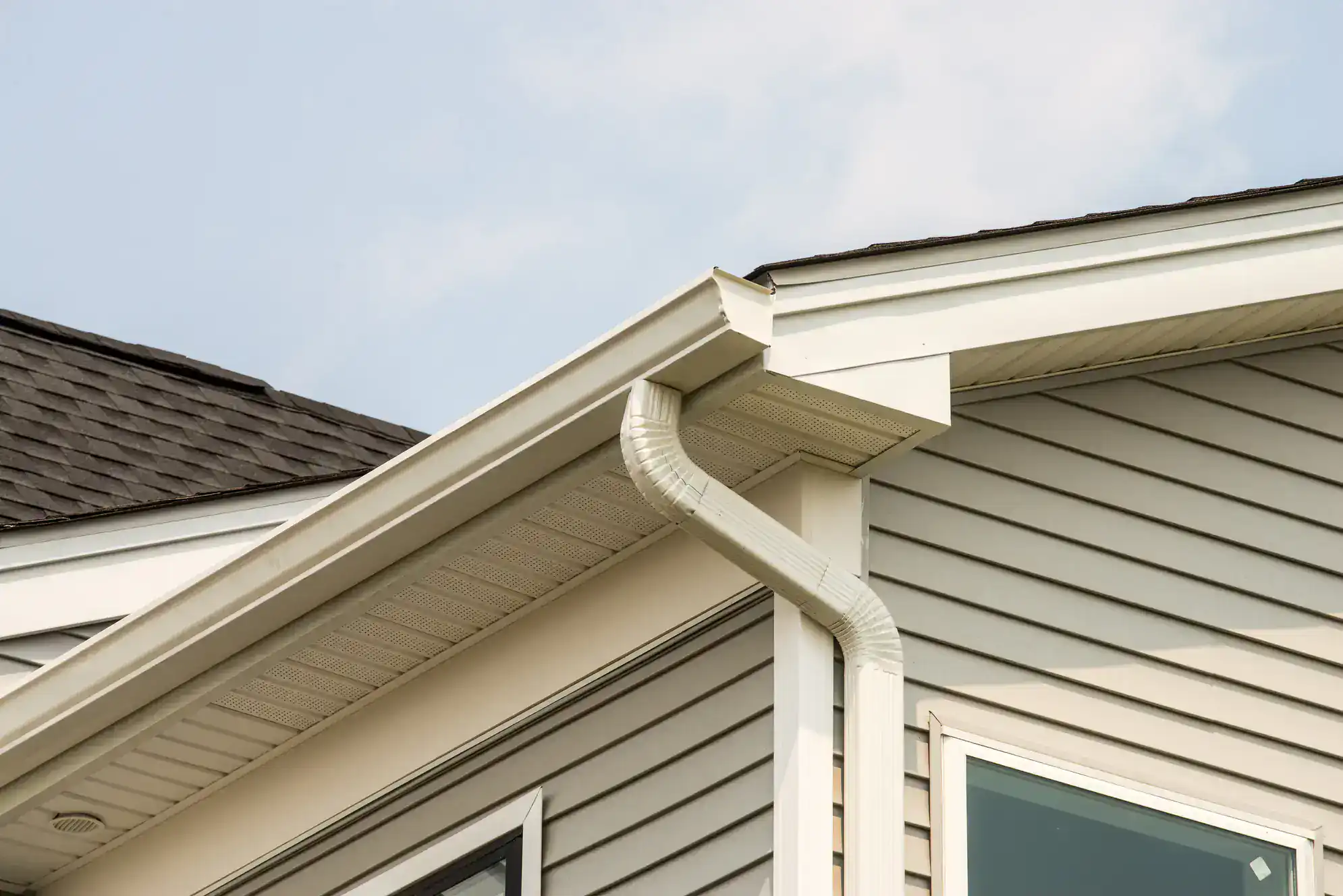
Seamless gutters don’t have that problem. The only joints are at corners and downspouts. That’s it. No mid-run connections to maintain, reseal, or worry about. The smooth interior surface also means debris flows through more easily instead of catching on joints and building up.
Here’s what that looks like in practical terms. With traditional gutters, you’re cleaning them three to four times a year if you have trees nearby. You’re checking seams for leaks. You’re resealing joints. You’re replacing sections that have pulled apart or corroded. It’s ongoing work that never really ends.
With seamless gutters, you’re typically cleaning once or twice a year. A quick inspection to make sure downspouts are clear and water is flowing properly. That’s about it. Add gutter guards and you can cut that maintenance even further.
The time savings add up. So does the money you’re not spending on repairs and resealing. But the real benefit is peace of mind. You’re not constantly worrying about whether your gutters are going to hold up during the next big storm. They’re designed to handle what New Jersey throws at them without requiring constant attention.
Let’s talk about what happens during fall in Union County. Leaves everywhere. Traditional gutters with seams catch those leaves at every joint. Water can’t flow. Gutters overflow. You’re up on a ladder pulling out soggy debris every few weeks. It’s miserable work, and it’s dangerous if you’re not comfortable with heights.
Seamless gutters still need cleaning, but the debris doesn’t build up in the same way. Water keeps flowing even when there’s some accumulation because there are no joints to create blockages. When you do clean them, it’s faster and easier because everything flows toward the downspouts instead of getting stuck mid-run.
The maintenance difference becomes even more apparent in winter. Traditional gutters with trapped debris are more prone to ice dams. Water can’t drain properly, so it freezes in place. That ice expands, damages the gutters, and can even back up under your shingles. Seamless gutters with proper slope and fewer blockage points handle winter weather better.
Protecting Your Fascia Boards with Proper Gutter Installation
Most homeowners don’t think about fascia boards until there’s a problem. Those horizontal boards running along your roofline do more than look nice. They support your entire gutter system. When gutters fail, fascia boards take the damage.
Water that escapes from leaking gutter seams runs down behind the gutters and soaks into the fascia. Wood fascia boards are particularly vulnerable. They rot, weaken, and eventually fail. When fascia fails, gutters pull away from your home. Then you’re looking at both gutter replacement and fascia repair—a much more expensive project.
Seamless gutters protect your fascia by keeping water where it belongs. No leaking seams means no water running down behind the gutters. No water infiltration means your fascia stays dry and solid. The gutters stay properly attached and functional for decades instead of years.
Think about what fascia damage actually costs. You’re not just replacing boards. You’re dealing with potential water damage to your roof structure, your soffits, and your attic. Mold growth becomes a concern. Pests find their way into the gaps created by rotting wood. What starts as a fascia problem quickly becomes a much larger issue.
Professional seamless gutter installation includes proper fascia inspection and preparation. The gutters are mounted securely to solid wood using hidden hangers that distribute weight evenly. This is especially important in New Jersey where heavy snow and ice can add 40 or more pounds per linear foot to your gutter system.
Proper installation also means correct slope. Gutters need to pitch toward downspouts at the right angle—not too steep, not too flat. Too flat and water pools in the gutters, adding weight and stress to the fascia. Too steep and water flows too fast, potentially overshooting downspouts during heavy rain. We know how to get that slope right for your specific roof configuration.
The fascia-gutter connection is critical for long-term performance. Seamless gutters installed by experienced contractors create a weather-tight system that protects both the gutters and the structure they’re attached to. That protection extends to your entire roofline, preventing the kind of water infiltration that leads to expensive repairs down the road.
When you invest in seamless gutter installation, you’re not just buying gutters. You’re protecting your fascia, your roof structure, and your home’s exterior from water damage. That’s the kind of comprehensive protection that makes sense in a climate as demanding as ours.
Making the Right Choice for Your Union County Home
Seamless gutter installation isn’t about having the fanciest system on the block. It’s about protection that actually works when New Jersey weather tests your home. It’s about avoiding basement floods, foundation cracks, and fascia damage. It’s about spending less time on ladders and more time enjoying your home.
The weather here demands better than traditional sectional gutters. Over 45 inches of annual rainfall. Freeze-thaw cycles that never seem to end. Spring storms that overwhelm inadequate drainage systems. Your home needs gutters that can handle all of it without constant maintenance and repairs.
If you’re ready to protect your Union County home with a gutter system built for the weather we actually face, we bring a decade of experience, professional installation, and the kind of transparent service that makes the process straightforward. Quality craftsmanship and clear communication from start to finish—that’s how we do it.