
The Best Energy-Efficient Siding Installation Options to Lower Your Utility Bills
Summary:
How Energy-Efficient Siding Actually Works
Standard siding does one job: it protects your home from weather. Energy-efficient siding does two: it protects and insulates.
The difference comes down to what’s happening behind the surface. Insulated siding includes a foam backing that covers your entire exterior wall in a continuous layer of thermal protection. This matters because about 25% of your wall space is made up of wooden studs that have zero insulation. Heat transfers right through them in a process called thermal bridging.
Think of it like wearing a jacket with gaps in the fabric. You might have insulation in some areas, but the cold still gets through where there’s nothing blocking it. Energy-efficient siding fills those gaps, wrapping your home in a complete thermal envelope that stops energy loss before it starts.
What Is R-Value and Why It Matters for Your Energy Bills
R-value measures how well a material resists heat flow. Higher numbers mean better insulation and lower energy bills.
Standard vinyl siding without insulation has an R-value of just 0.61. It’s basically doing nothing for your home’s thermal performance. Insulated vinyl siding, on the other hand, can achieve R-values between 2.0 and 4.0, depending on the thickness and quality of the foam backing.
That might not sound like a huge jump, but here’s what it means in practice. Studies show that homes with insulated siding can reduce heating and cooling costs by 10-20% annually. For Union County homeowners paying an average of $265 per month on electricity, that translates to $300-600 in yearly savings. Over the lifespan of your siding, you’re looking at thousands of dollars staying in your pocket instead of going to the utility company.
The R-value improvement also creates more consistent indoor temperatures. You’ll notice fewer drafts, fewer cold spots near exterior walls in winter, and less heat gain during summer. Your HVAC system won’t cycle on and off as frequently, which means it lasts longer and needs fewer repairs.
Here’s the thing about R-value that most people don’t realize: it’s not just about the insulation between your wall studs. Even if you have R-19 insulation in your wall cavities, thermal bridging through the studs themselves can drop your wall’s effective R-value significantly. Continuous exterior insulation from energy-efficient siding solves that problem by covering every square inch of your exterior, studs included.
When you’re comparing siding options, ask about the tested R-value. Insulated vinyl siding should have its R-value clearly marked on the packaging, tested according to industry standards. This isn’t marketing fluff, it’s a measurable performance characteristic that directly impacts your comfort and costs.
Understanding Thermal Bridging in Your Home's Walls
Thermal bridging is probably costing you money right now, and you might not even know it exists.
Here’s what’s happening: Your walls are framed with wooden studs, typically spaced 16 or 24 inches apart. Between those studs, you probably have fiberglass insulation. But the studs themselves, which make up roughly 25% of your wall’s surface area, conduct heat much more readily than insulation does. They create pathways for heat to move from your warm interior to the cold exterior in winter, or vice versa in summer.
It’s like having one entire wall of your home with no insulation at all. You’re paying to heat or cool that air, and it’s escaping through these thermal bridges before you get any benefit from it.
Energy-efficient siding with foam backing stops this energy loss by creating a continuous insulation layer on the outside of your home. The foam covers the studs completely, breaking the thermal bridge and preventing heat transfer through the framing. This is exactly what the U.S. Department of Energy recommends when they say that adding insulation under new siding is one of the most effective ways to improve your home’s thermal performance.
The impact shows up immediately. Homeowners report feeling the difference within days of installation. Rooms that used to be drafty feel comfortable. The furnace doesn’t run as often. Summer afternoons don’t turn the house into an oven.
This matters especially in Union County, where New Jersey’s humid summers and cold winters put constant stress on your home’s thermal envelope. Every degree you can keep stable inside means less work for your HVAC system and lower bills at the end of the month.
Installing energy-efficient siding during a replacement project is the perfect time to address thermal bridging. The old siding comes off, giving you direct access to the wall sheathing. A continuous layer of foam insulation goes on before the new siding, creating that unbroken thermal barrier your home needs. Trying to add this insulation later would mean tearing off perfectly good siding, which doubles your cost and makes no sense financially.
Want live answers?
Connect with a USA HOME REMODELING LLC expert for fast, friendly support.
Comparing the Best Energy-Efficient Siding Options
Not all siding materials perform the same when it comes to energy efficiency. Some barely make a dent in your utility bills. Others deliver measurable, consistent savings year after year.
Insulated vinyl siding consistently ranks as the top choice for energy-conscious homeowners. It combines affordability with real thermal performance, and it requires almost zero maintenance. You’ll never repaint it, and cleaning takes nothing more than a garden hose once or twice a year.
Fiber cement siding is another solid option, especially when paired with foam sheathing installed beneath it. On its own, fiber cement has a low R-value, but the combination creates excellent thermal resistance while giving you the durability and fire resistance fiber cement is known for.
Insulated Vinyl Siding Performance and Cost
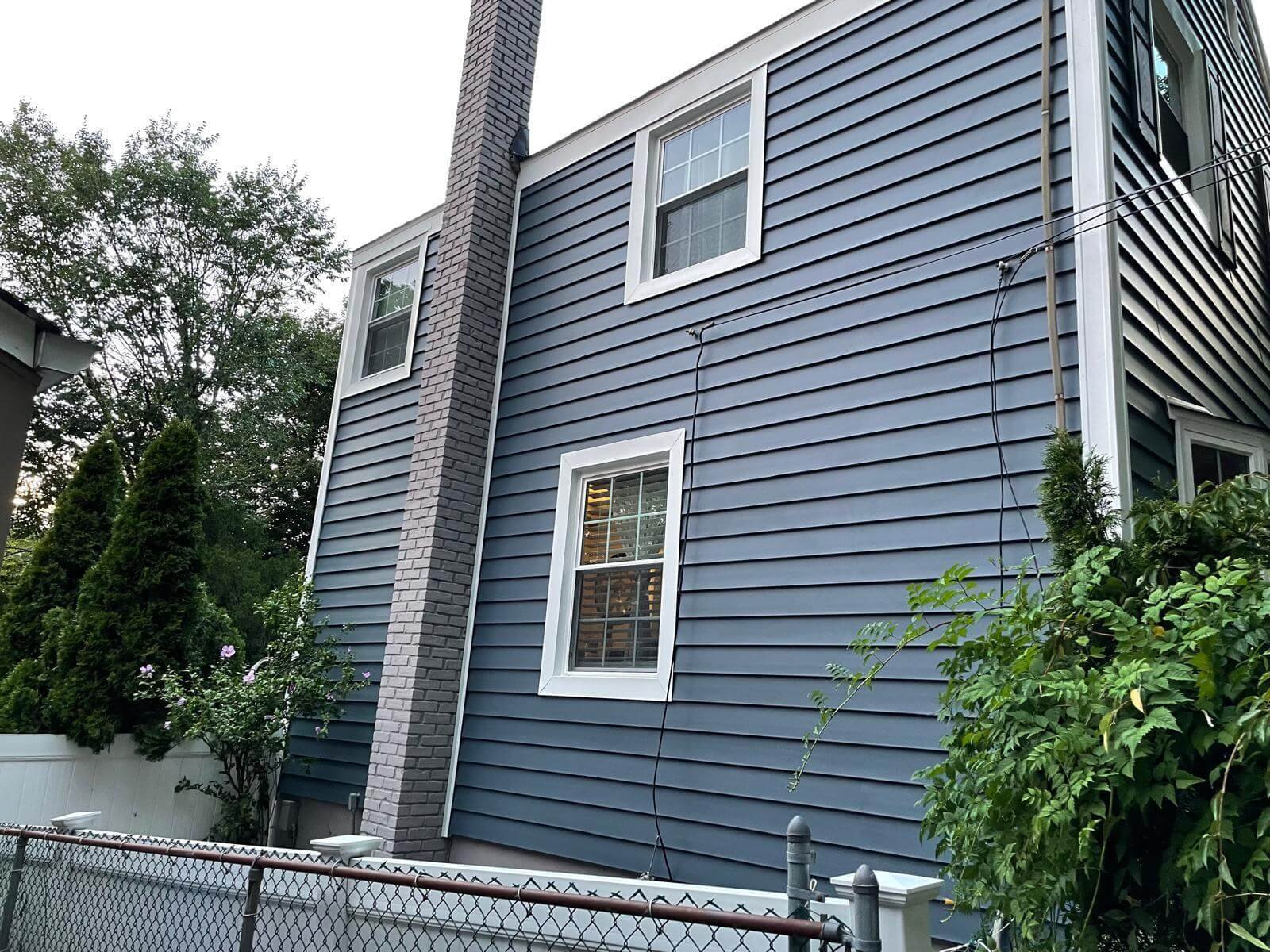
Insulated vinyl siding delivers the best balance of upfront cost, energy savings, and long-term value for most Union County homeowners.
The foam backing, typically made from expanded polystyrene, adds rigidity to the panels and significantly boosts thermal resistance. You’re looking at R-values between 2.0 and 4.0, depending on the product. That foam also makes the siding more impact-resistant. It holds up better against hail, windblown debris, and the occasional baseball from the neighbor’s yard.
Cost runs between $4 and $12 per square foot installed. For a typical home with about 1,750 square feet of exterior wall space, you’re looking at a project cost between $10,000 and $21,000. That’s higher than standard vinyl siding, which usually runs $2-7 per square foot, but the energy savings help offset that difference.
Here’s the math that matters: If you’re saving $300-600 annually on energy bills, the extra cost for insulated siding pays for itself within 5-10 years. After that, you’re pocketing those savings every single year for the life of the siding, which can easily last 20-30 years with minimal maintenance.
Insulated vinyl siding also offers noise reduction benefits that standard siding can’t match. The foam backing absorbs sound vibrations, cutting exterior noise by up to 40% according to testing. If you live near a busy street or have loud neighbors, that’s a quality-of-life improvement you’ll notice every day.
The foam doesn’t absorb moisture, which is critical in New Jersey’s humid climate. Water can’t get trapped behind your siding where it would cause rot or mold growth. Properly installed insulated vinyl siding actually helps your walls dry more effectively, keeping the structure healthier over time.
When you’re shopping for insulated vinyl siding, look for products with tested and certified R-values. The packaging should clearly state the thermal resistance, and reputable manufacturers stand behind their performance claims. Installation quality matters just as much as the product itself. Make sure your contractor understands proper techniques for maintaining the continuous insulation layer and sealing all joints and penetrations correctly.
Fiber Cement Siding with Added Insulation
Fiber cement siding on its own has an R-value of only 0.35-0.65, which doesn’t do much for energy efficiency. But pair it with rigid foam sheathing installed underneath, and you’ve got a high-performance system that excels in durability and thermal resistance.
This combination works especially well for homeowners who want the authentic look of wood siding without the maintenance headaches. Fiber cement can be textured and painted to mimic wood grain, cedar shakes, or smooth lap siding. It’s fire-resistant, won’t rot, and insects can’t damage it. In areas prone to severe weather, fiber cement holds up better than almost any other siding material.
The energy efficiency comes from adding a continuous layer of rigid foam insulation to your wall sheathing before the fiber cement goes on. This foam, typically 1-2 inches thick, creates the thermal barrier that stops heat transfer through the wall studs. You’re achieving the same thermal bridging solution as insulated vinyl siding, but with the added durability benefits of fiber cement.
Cost is higher. Fiber cement siding with added insulation typically runs $5-12 per square foot installed, and the material is heavier and more labor-intensive to work with. Installation takes longer and requires more skill. But if you’re planning to stay in your home long-term and want maximum durability along with energy efficiency, this combination delivers.
One thing to consider: fiber cement can be painted, which means you have maintenance requirements that vinyl siding doesn’t have. Most manufacturers offer pre-finished options with color that lasts 15+ years, but eventually you’ll need to repaint. That’s a trade-off some homeowners gladly make for the aesthetic and durability benefits.
The thermal performance of fiber cement with foam sheathing matches or exceeds insulated vinyl siding, especially if you use thicker foam boards. You can achieve R-values of 3-5 or higher with the right combination of materials. In Union County’s climate, where you’re dealing with temperature extremes in both summer and winter, that level of insulation makes a real difference in comfort and utility costs.
Professional installation is non-negotiable with fiber cement. The material is brittle and requires specific cutting tools, fastening techniques, and clearances from grade and roof lines. Improper installation voids warranties and can lead to moisture problems. Make sure your contractor has experience with fiber cement and understands how to integrate it with exterior foam insulation for optimal performance.
Making the Right Siding Choice for Your Union County Home
Energy-efficient siding installation isn’t just about picking a material. It’s about understanding what your home needs, what your budget allows, and what kind of return you’re looking for on your investment.
Insulated vinyl siding makes sense for most homeowners. It delivers proven energy savings, requires almost no maintenance, and costs significantly less than premium alternatives while still providing excellent thermal performance. Fiber cement with added insulation works well if you want maximum durability and don’t mind the higher upfront cost and occasional maintenance.
Either way, you’re making a smart investment. Siding replacement typically returns 70-80% of its cost when you sell your home, and the energy savings continue every single month you live there. In Union County, where utility costs run higher than most of the country, those savings add up faster than you might expect.
The key is working with a contractor who understands energy-efficient installation techniques and takes the time to do it right. We bring a decade of experience in exterior renovations to every project, with the manufacturer certifications and local knowledge that ensure your siding performs exactly as it should for years to come.