
Siding Installation in Woodcliff Lake, NJ
Woodcliff Lake Homes Deserve More Than a Cosmetic Fix
Hear from Our Customers
Residential Siding Contractors in Bergen County
Most homeowners in Woodcliff Lake don’t call about siding until something forces the issue — a nor’easter peels a panel back, moisture shows up behind the drywall, or the color has faded so far it’s pulling down the curb appeal on a street where homes trade above a million. By that point, you’re not just replacing siding. You’re dealing with whatever got in while the old stuff was failing.
When siding is installed correctly — right materials, right moisture barrier, right fastening — your home stops being vulnerable at its edges. Bergen County winters cycle through freeze and thaw from November through March, and every gap, every improperly seated panel, every skipped layer of housewrap is a place where water finds a way in. Good siding installation closes all of that off before it becomes a structural problem.
For homes in Woodcliff Lake specifically, there’s also the investment angle. With median home values well above $900,000 and many properties listing north of $1.3 million, your exterior isn’t just aesthetic — it’s financial. Failing or dated siding is a real deduction at the negotiating table. New siding done right protects that number.
Local Siding Company Serving Woodcliff Lake, NJ
We’ve been working on Bergen County homes for close to ten years. Not a franchise. Not a call center dispatching crews from three counties over. A family-run operation where the people doing the work are the same people whose reputation is on the line when it’s done.
We’ve worked throughout the Pascack Valley — Woodcliff Lake, Park Ridge, Hillsdale, Montvale — long enough to know the housing stock, the weather patterns, and what the Woodcliff Lake Building Department at 188 Pascack Road requires before work starts. That’s not something you pick up overnight. Many of the homes we’ve worked on in Woodcliff Lake were built between the 1960s and 1990s, which means we understand the specific challenges those properties face — outdated moisture barriers, substrate conditions that need careful assessment, and the freeze-thaw cycles that test every seam.
We hold NJ contractor licensing, carry full general liability and workers’ compensation insurance, and have manufacturer certifications that come with real installation standards attached. When you call for a free estimate, you’re getting a straight answer — not a lowball number designed to win the job and expand later.

Siding Installation Process in Woodcliff Lake, NJ
It starts with a free inspection. Before anything is quoted or scheduled, we look at what’s actually there — the existing siding, the condition of the substrate underneath, the housewrap, the flashing at windows, doors, and any roof-wall intersections. On older homes in Woodcliff Lake, many of which were built between the 1960s and 1990s, that inspection often turns up moisture damage or deteriorated sheathing that needs to be addressed before new panels go on. You’ll know about it upfront, not mid-project.
From there, you get a written estimate that breaks down materials, labor, and scope. No vague line items. If a building permit is required under the NJ Uniform Construction Code — which applies to exterior work in Woodcliff Lake — we handle that process. You don’t need to navigate the borough’s construction office on your own.
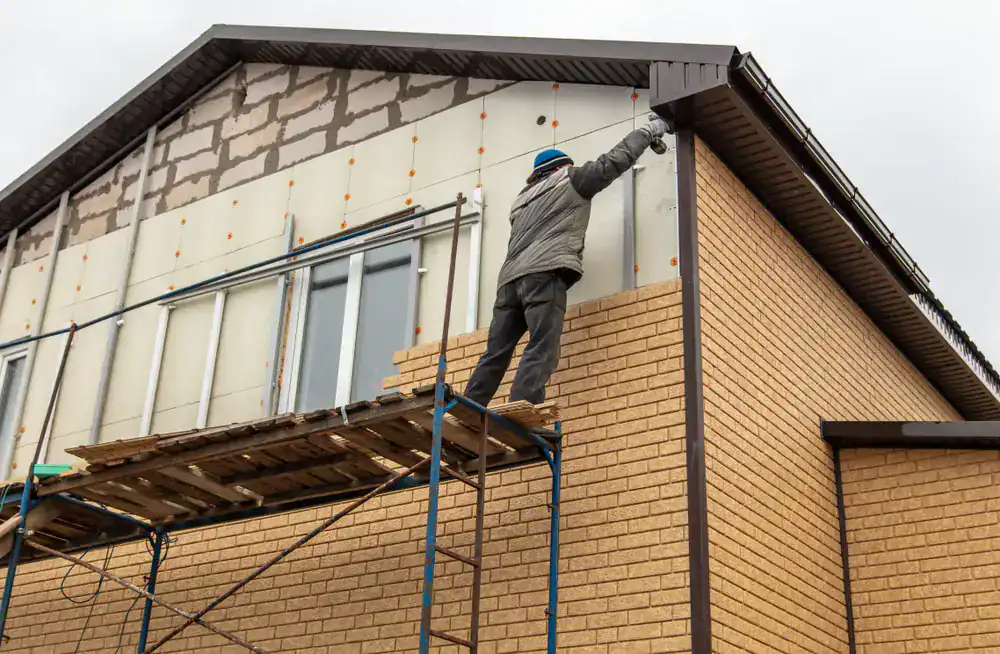
Installation itself is methodical: old siding comes off, substrate is assessed and repaired where needed, new housewrap goes on, and panels are installed to manufacturer specifications — which matters because that’s what keeps the full product warranty intact. We finish with a walkthrough so you can see exactly what was done and ask anything you want before we close out the job.

Ready to get started?
Vinyl Siding Contractors in Woodcliff Lake, NJ
Woodcliff Lake isn’t a one-size-fits-all market. The West Hill neighborhood has custom colonials on elevated lots that call for something different than a standard vinyl panel. Reservoir-adjacent properties deal with moisture exposure that makes material selection and proper installation technique genuinely important — not just a sales talking point.
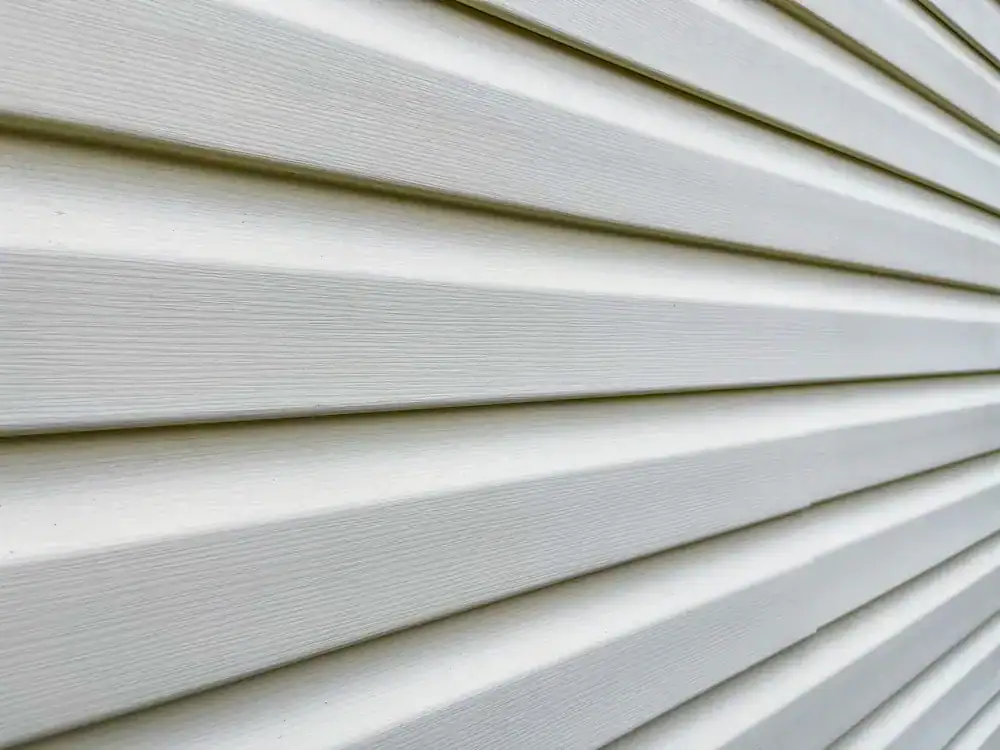
Vinyl siding remains the most common choice for Bergen County homeowners because it holds up well through freeze-thaw cycles, requires minimal maintenance, and comes in enough profiles and colors to complement almost any architectural style. Insulated vinyl adds another layer of thermal performance, which matters on larger homes where energy efficiency has a real dollar value. For homeowners who want the look of natural wood without the upkeep, fiber cement — James Hardie and similar products — is worth the conversation. It’s heavier, it requires more precise installation, and it costs more upfront, but it performs exceptionally in NJ’s climate and holds paint longer than most alternatives.
Whatever material fits your home and budget, the installation approach is the same: moisture barrier first, correct fastening for thermal expansion, properly flashed penetrations, and no shortcuts at the corners or trim lines where water most commonly finds its way in. That’s what separates siding that lasts twenty-plus years from siding that starts showing problems in three.

Do I need a permit for siding installation in Woodcliff Lake, NJ?
In many cases, yes. Siding replacement in Woodcliff Lake that involves altering the building envelope or exceeds certain project thresholds requires a building permit under the NJ Uniform Construction Code. The Woodcliff Lake Construction Department is located at 188 Pascack Road and handles permit issuance and code compliance for all exterior work in the borough.
The practical reason this matters: unpermitted work can create real complications when you go to sell your home. In a market where Woodcliff Lake properties regularly trade above $1 million, a buyer’s attorney or home inspector flagging unpermitted exterior work is not a minor inconvenience. A reputable contractor will know what’s required, pull the permit when it’s needed, and make sure the work passes inspection. That’s part of what you’re paying for when you hire someone with actual local experience.
How much does siding installation cost in Woodcliff Lake, NJ?
For a whole-home siding project on a typical Woodcliff Lake property — which tends to run larger than average, with complex rooflines, dormers, and more surface area than a standard suburban home — you’re generally looking at a range of $12,000 to $25,000 or more depending on material choice, home size, and what’s found underneath the existing siding during removal.
Vinyl siding sits at the lower end of that range. Fiber cement, like James Hardie, costs more for both materials and labor because it requires more precise handling and installation. If there’s substrate damage or deteriorated sheathing that needs repair before new panels go on — which is common on homes built in the 1960s through 1980s — that adds to the scope. The most useful thing you can do before comparing quotes is get a written, itemized estimate from each contractor so you’re comparing the same scope, not just the bottom line number.
How do Bergen County winters affect siding, and what should I look for?
Bergen County’s freeze-thaw cycle is one of the harder conditions for exterior cladding in the Northeast. From roughly November through March, temperatures repeatedly cross the freezing point — which means siding panels expand and contract on a regular basis. If panels were over-driven during installation, or if the wrong fasteners were used, that thermal movement has nowhere to go and you end up with buckling, cracking, or gaps that open up at the seams.
What to look for: panels that have visibly warped or pulled away from the wall, gaps at corner posts or around window and door trim, any soft spots or discoloration on interior walls near exterior surfaces, and siding that feels loose when you press against it. These are signs that moisture has likely already found a way in. The longer it sits, the more damage it does to the substrate underneath — which is why a free inspection before winter is worth doing rather than waiting until spring when the damage is already done.
What's the difference between vinyl siding and fiber cement for a NJ home?
Both materials hold up well in New Jersey’s climate, but they perform differently and suit different priorities. Vinyl is lighter, easier to install, lower in cost, and essentially maintenance-free — you wash it down occasionally and that’s about it. Quality insulated vinyl also adds a layer of thermal performance that matters on larger homes. The downside is that it can crack in extreme cold if it takes a hard impact, and cheaper profiles can look thin or hollow up close.
Fiber cement — James Hardie being the most recognized brand — is denser, more impact-resistant, and holds paint significantly longer than wood or vinyl alternatives. It looks more substantial on the home and tends to complement the architectural character of the kind of custom colonials and larger homes common in Woodcliff Lake. The tradeoff is cost and installation complexity: fiber cement requires more careful handling, heavier labor, and a contractor who knows how to work with it correctly. For a home valued at $1 million or more, the performance and aesthetic case for fiber cement is often worth the additional investment.
How long does siding installation take on a Woodcliff Lake home?
For a standard whole-home siding project on a single-family home in Woodcliff Lake, most installations run between three and seven business days depending on the size of the home, the material being installed, and what’s found during removal. Larger custom homes with multiple stories, dormers, or complex architectural details take longer than a simpler ranch or split-level.
Weather is always a factor in Bergen County. Vinyl installation in extreme cold — below about 40 degrees — requires extra care because the panels become more brittle and less forgiving. Fiber cement can be installed year-round with proper technique, but rain and high winds will pause exterior work regardless of material. The best window for siding projects in this area is typically April through October, with spring and early fall being peak booking seasons. If you’re planning a project for spring, getting your estimate and scheduling done in late winter puts you ahead of the rush.
How do I know if I should repair my siding or replace it entirely?
This is the right question to ask before committing to anything, and the honest answer is that it depends on what’s actually going on — which is why a proper inspection matters before any quote is given. Isolated panel damage from a branch or impact, a few cracked sections, or minor fading in one area can often be addressed with targeted repair. It’s less expensive and gets the job done if the rest of the siding is still structurally sound and performing well.
Where replacement makes more sense is when the damage is widespread, when the siding is approaching or past its expected lifespan, when there’s moisture infiltration behind multiple sections, or when the substrate — the sheathing underneath — has started to deteriorate. On homes built in the 1960s through 1980s, which represent a significant portion of Woodcliff Lake’s housing stock, original siding is often at or past the point where repair is just delaying the inevitable. A free inspection will tell you which category you’re in — and a contractor worth hiring will give you that assessment straight, not steer you toward replacement if repair is genuinely the right call.