
Siding Installation in Roselle, NJ
Roselle Homes Built to Last — Starting From the Outside
Hear from Our Customers
Residential Siding Contractors in Roselle, NJ
When siding is done correctly, you stop thinking about it. No more bubbling paint, no more soft spots around the window trim, no more wondering if that dark streak near the foundation is something worse. You get a home that holds its value — and in Roselle’s market where prices have climbed close to $485,000 and homes are moving in about 33 days, that matters more than it did five years ago.
For the older colonials, Cape Cods, and Craftsman bungalows that make up most of Roselle’s residential blocks, new siding also means better insulation, lower energy bills, and a cleaner exterior that reflects the investment you’ve already made in the property. These aren’t small wins. When your home is your biggest asset, protecting the shell of it is one of the most practical things you can do.
Roselle also carries real moisture exposure. About 20% of properties here face a risk of severe flooding over the next 30 years, and homes near Morses Creek deal with ground-level moisture that aging or improperly installed siding simply can’t manage. When siding is installed with the right housewrap, proper flashing, and sealed transitions — the way it should be — your exterior wall assembly actually does its job. That’s the difference between a cosmetic upgrade and a real fix.
Local Siding Company Serving Roselle, NJ
We’ve been working on Union County homes for close to ten years. That’s not a tagline — it means the crew coming to your Roselle home has seen what’s behind the siding on homes like yours. Early 20th century wood sheathing. Aluminum cladding installed over original siding in the 1960s. Substrate damage that only shows up once the old panels come off. Experience like that changes how a job gets done.
Being family-operated means the accountability runs all the way through. You’re not dealing with a rotating project manager from a regional franchise. The people responsible for your project are the same people you spoke to when you called. That matters in a borough like Roselle, where neighbors talk and reputation travels fast — especially in the neighborhoods near Warinanco Park and along the Westfield Avenue corridor.
We are fully licensed, insured, and registered with the NJ Division of Consumer Affairs. Free estimates, written pricing, and no surprise charges on the back end.

Vinyl Siding Contractors in Roselle, NJ
It starts with a free inspection. Before anything is quoted or ordered, we come out and look at what you actually have — the condition of your existing siding, what’s happening at the seams and trim, whether the substrate underneath is solid or compromised. For older Roselle homes, this step isn’t a formality. It’s where the real information lives.
From there, you get a written estimate that breaks down material, labor, removal of the existing siding, moisture barrier installation, and permit costs. Roselle requires a building permit for siding work through the Borough’s Building Department, and unpermitted work carries fines of $2,000 per violation per week — so this gets handled as part of the project, not left for you to figure out on your own. The permit application goes through the SDL Portal, inspections are scheduled on your timeline, and you don’t have to navigate Borough Hall.
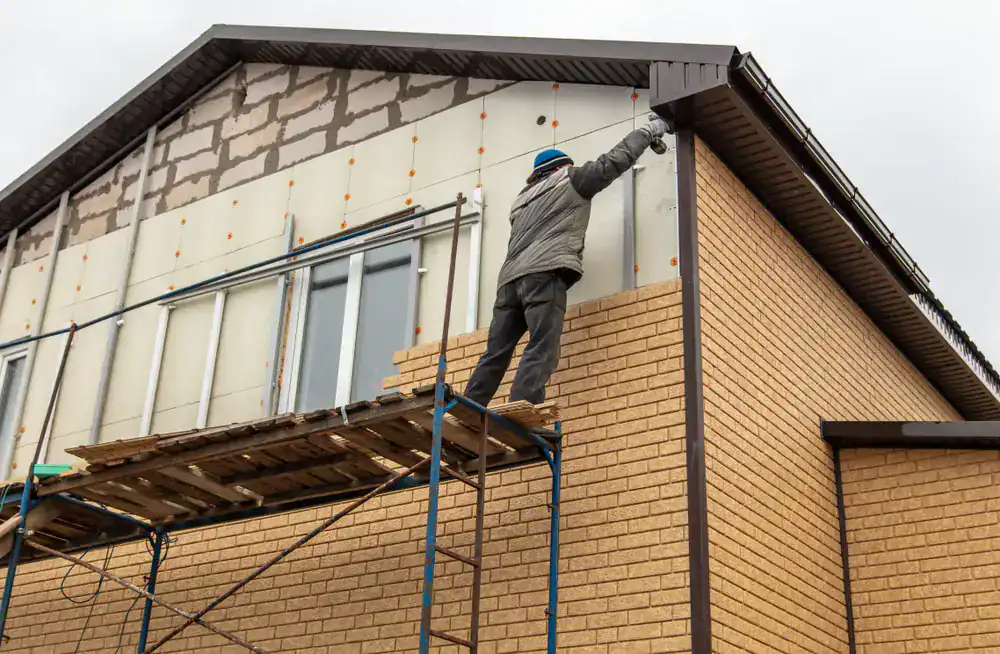
Once work begins, the process is straightforward: old siding comes off, substrate is assessed and repaired where needed, housewrap goes on, and new siding is installed with the correct fastening and expansion gaps for New Jersey’s freeze-thaw climate. The job site gets cleaned up completely before we leave. When it’s done, you’ll have documentation of the completed permit and any applicable manufacturer warranty — both of which matter when it comes time to sell.

Ready to get started?
Siding Installation Contractors in Union County, NJ
Siding installation isn’t just panels on a wall. What you’re really getting is a complete exterior wall system — and every component of that system matters. We install vinyl, fiber cement, and engineered wood siding depending on what fits your home’s style, your budget, and the specific conditions of your property. For Roselle’s early 20th century housing stock, that conversation starts with your home’s architecture and ends with a material recommendation that actually makes sense for it.
Every installation we complete includes removal and disposal of existing siding, a proper moisture barrier, correctly flashed window and door transitions, and sealed trim details at every penetration. These aren’t optional add-ons — they’re what separates a siding job that lasts 30 years from one that starts showing problems in five. For homes in lower-lying areas of Roselle, particularly those near Morses Creek, the moisture management layer is especially critical.
Because we also handle roofing and gutters, we can identify issues that a siding-only crew would walk right past — deteriorating fascia, aging gutters pulling away from the roofline, or roof-to-wall flashing that needs to be addressed before new siding goes on. On a 1940s Cape Cod in Roselle, those systems don’t exist in isolation. Getting one contractor who understands the full exterior picture means fewer surprises and a finished result that actually holds together.

Do I need a building permit for siding installation in Roselle, NJ?
Yes — siding installation in Roselle requires a building permit from the Borough of Roselle Building Department. This applies to both full replacements and new installations. The permit process runs through the SDL Portal at sdlportal.com, and inspections need to be scheduled at least 72 hours in advance. It’s not a complicated process, but it’s one that has to be done correctly.
Skipping the permit isn’t a minor oversight. Roselle enforces unpermitted work with fines of $2,000 per violation per week until permits are properly issued. Beyond the fines, unpermitted siding can create real problems when you go to sell — buyers’ attorneys pull permit histories, and work done without one can delay or derail a closing. We handle the permit application and inspection scheduling as part of every siding project, so you’re not left managing that piece on your own.
How much does siding installation typically cost for a Roselle home?
For a standard single-family home in Roselle — a colonial, Cape Cod, or split-level in the 1,500 to 2,500 square foot range — vinyl siding installation typically runs between $8,000 and $18,000 depending on the size of the home, the condition of the existing siding and substrate, and the material and profile you choose. Fiber cement and engineered wood options tend to run higher, generally in the $15,000 to $30,000 range for a full replacement, reflecting the material cost and the additional labor involved.
What affects the number most on Roselle’s older homes is what’s found underneath. A home built in the 1940s may have original wood sheathing that needs partial repair before new siding goes on — and that’s something you won’t know until the old panels come off. That’s exactly why a thorough inspection before quoting matters. We provide written estimates that account for what’s actually there, so the number you agree to upfront is the number you pay.
What siding material holds up best in New Jersey's climate?
For most Roselle homeowners, vinyl siding is the most practical choice — it handles New Jersey’s freeze-thaw cycles well, requires minimal maintenance, and comes in a wide range of profiles that work with the colonial and Cape Cod styles common in the borough. The key is correct installation: vinyl needs to be fastened with enough play to expand and contract with temperature swings. Nail it too tight and it buckles. That’s a workmanship issue, not a material issue, and it’s one of the most common callbacks in the industry.
Fiber cement — James Hardie being the most recognized brand — is a stronger option if you want something that holds paint better over time and offers more impact resistance. It’s heavier, costs more to install, and needs to be properly primed and painted, but it performs well in New Jersey’s humidity and doesn’t dent. For homes near Morses Creek or in lower-lying areas of Roselle with documented moisture exposure, fiber cement’s resistance to moisture absorption makes it worth the additional investment.
How do I know if my siding needs full replacement or just repairs in Roselle?
The honest answer is: you can’t always tell from the outside. Cracked or missing panels, visible fading, and peeling paint are obvious signs. But the more important question is what’s happening behind the siding — whether the moisture barrier has failed, whether the substrate is soft or rotting, and whether water has been getting in long enough to cause damage you can’t see from the street. That’s what a real inspection is for.
For Roselle’s older homes — particularly those built before 1960 — it’s common to find original wood sheathing that’s been covered by one or even two generations of siding. By the time the current siding starts showing problems, the layers underneath may have been trapping moisture for years. A free inspection from us will tell you what’s actually there, what condition it’s in, and whether targeted repairs make sense or whether a full replacement is the more cost-effective call. No pressure either way — just a straight answer.
How long does siding installation take on a typical Roselle home?
For a standard single-family home in Roselle, most siding installations are completed in two to four days once the job starts. Larger homes, homes with complex rooflines or multiple dormers, or projects where substrate repairs are needed can run five to seven days. The permit process adds some lead time on the front end — typically a week or two between application and approval through the Roselle Building Department — so factoring that in when you’re planning the project timeline is important.
Seasonally, spring and fall are the busiest booking windows for exterior work in Union County, and quality contractors fill up fast. If you’re thinking about siding for this year, getting an inspection and estimate scheduled early gives you more flexibility on timing. Winter installations are possible for most siding materials — vinyl requires more care in cold temperatures due to brittleness, but fiber cement and engineered wood can be installed year-round with proper technique. Scheduling in late fall or winter often means faster availability and more scheduling options.
Can new siding actually improve my home's value in Roselle's current market?
In Roselle’s current market — where median sale prices have climbed toward $485,000 and homes are selling in around 33 days — curb appeal carries real weight. Buyers making quick decisions in a competitive market respond to move-in-ready exteriors. New siding signals that the home has been maintained, reduces the buyer’s mental checklist of things to fix, and can be the difference between a full-price offer and a negotiated discount for deferred maintenance.
Nationally, siding replacement typically returns between 67% and 80% of its cost at resale — and that’s in average markets. In a borough where home values have appreciated as sharply as they have in Roselle over the past several years, the return on a well-executed exterior upgrade tends to be stronger. Beyond resale, there’s the practical side: new siding with proper insulation backing reduces energy costs, and for homeowners who aren’t planning to sell anytime soon, that’s a return you feel every month. Either way, the investment holds up.