
Roofer in Hackensack, NJ
Bergen County Winters Don't Forgive a Roof That's Overdue
Hear from Our Customers
Local Roofing Company in Hackensack, NJ
A roof that’s been properly replaced isn’t something you think about anymore. No more water stains creeping across the ceiling after a nor’easter. No more wondering whether this winter is the one that finally breaks through. You just live in your house without that low-level anxiety sitting in the back of your head every time the forecast calls for heavy rain.
For Hackensack homeowners specifically, that peace of mind is harder to come by than it sounds. The city sits in the Hudson River corridor, which means storm systems track directly through here — and they’re not gentle about it. Wind-driven rain, freeze-thaw cycles from October through March, and the elevated humidity near the Hackensack River all work together to accelerate wear on roofing systems that are already aging. Most of the single-family homes in Hackensack were built between the 1940s and 1960s. If the roof hasn’t been replaced since the 1990s, it’s not a question of whether it needs attention — it’s a question of how much damage has already been done quietly underneath.
There’s also a financial side to this that matters in Hackensack’s market. With median home values sitting above $538,000, a failing or unpermitted roof is a documented obstacle when it comes time to sell. Buyers in this market are thorough. Inspectors flag granule loss, improper flashing, and deferred repairs — and sellers end up negotiating from a weaker position because of it. Getting ahead of that is a decision that pays off.
Roofing Company in Hackensack, NJ
We are a family-owned exterior renovation contractor licensed in New Jersey — NJ HIC License #13VH10605800, publicly verifiable through the NJ Division of Consumer Affairs. That’s not a detail buried in fine print. It’s the baseline of what it means to operate professionally in this state, and it’s something a surprising number of contractors working in Bergen County can’t say.
Beyond the license, we hold manufacturer certifications from major shingle brands — certifications that unlock enhanced system warranties of up to 50 years that non-certified contractors simply cannot offer their customers. Fewer than 3% of roofing contractors in the country hold these credentials. When you hire a certified contractor, the warranty you receive is backed by the manufacturer, not just a handshake.
We’ve spent over a decade working on New Jersey homes — homes that look exactly like the ones lining Hackensack’s residential streets, from the older colonials near the Hackensack River to the mid-century capes throughout the Fairmount neighborhood. And because more than a third of Hackensack’s residents are Spanish-speaking, we offer fully bilingual service — so nothing important gets lost in translation.
Affordable Roofers in Hackensack, NJ
It starts with a free roof inspection — and this is a real assessment, not a sales visit with a clipboard. We evaluate the exterior condition of your shingles, flashing, ridge caps, and drainage, then check the attic for ventilation issues and signs of moisture intrusion. You receive a detailed photo report documenting everything found, and you keep that report regardless of what you decide to do next. No obligation. No pressure to move forward on the spot.
If you decide to proceed, you’ll receive a full itemized estimate before any work begins. Every line item is explained. There are no vague allowances or placeholder numbers that balloon later. In Hackensack, roof replacements require a building permit through the city’s Department of Building, Housing, and Land Use, consistent with the NJ Uniform Construction Code. We handle the permitting process as a standard part of every full replacement — not as an add-on, and not as something you have to figure out on your own. Unpermitted roofing work creates real problems at resale, and skipping that step is something unlicensed contractors do, not licensed ones.
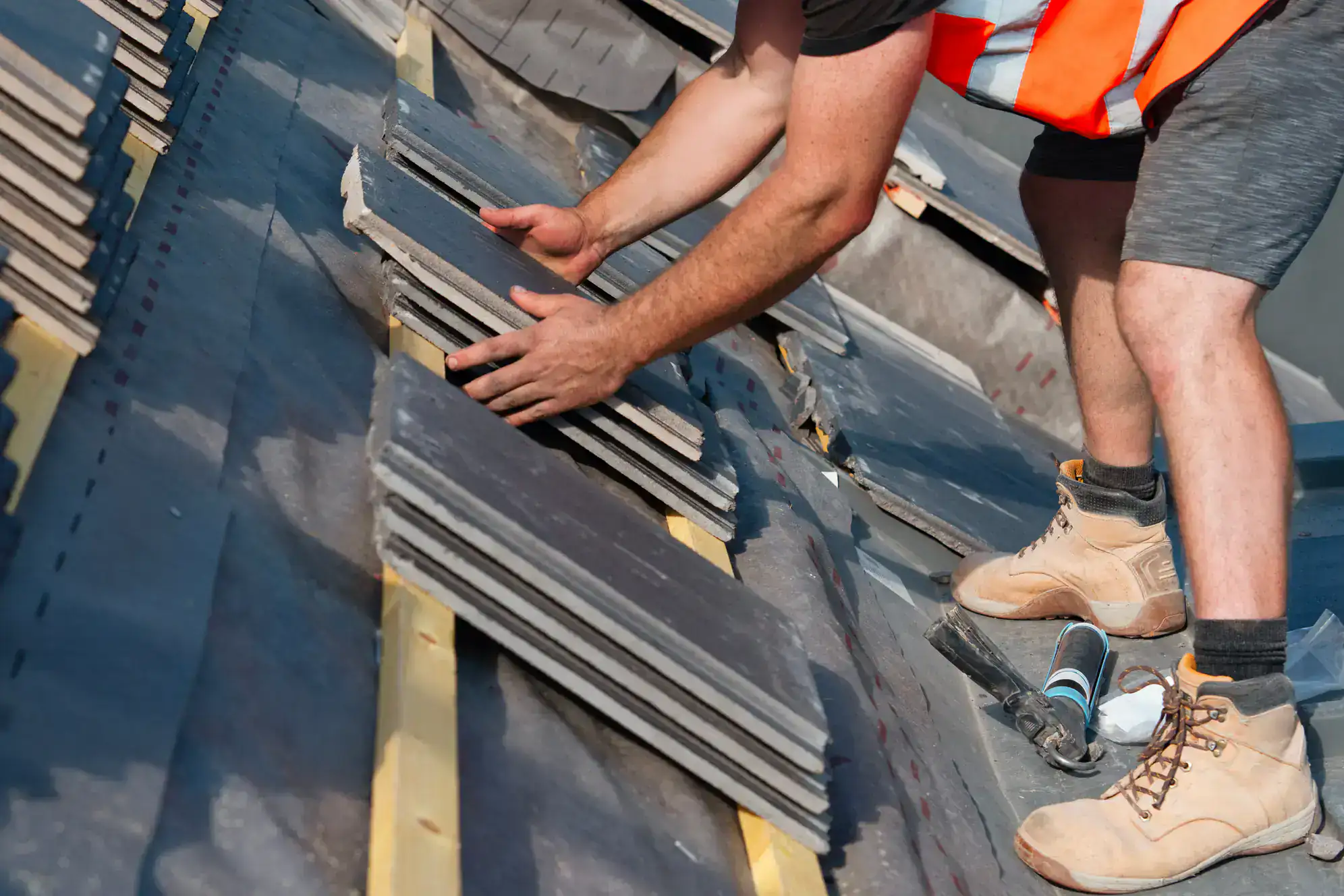
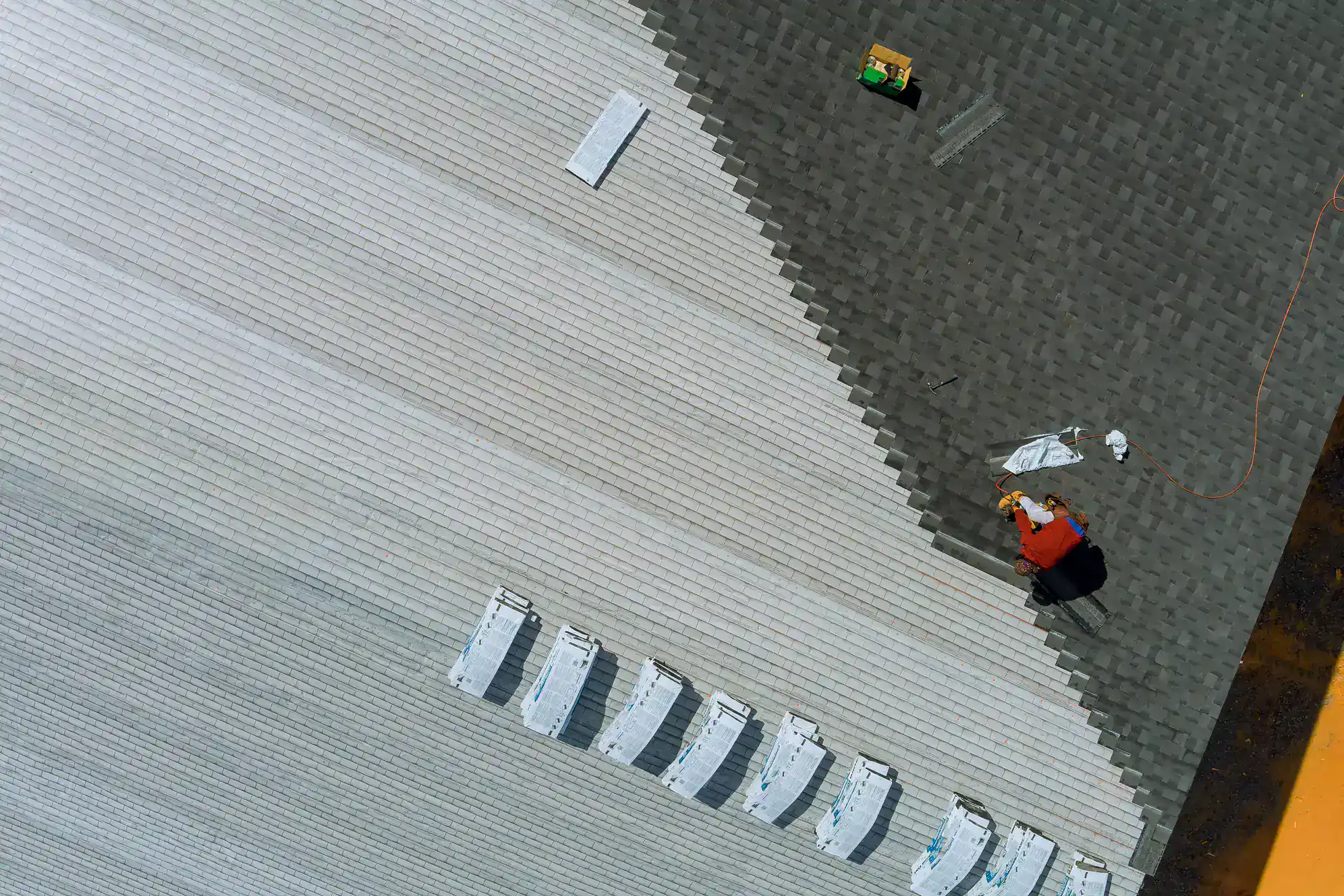
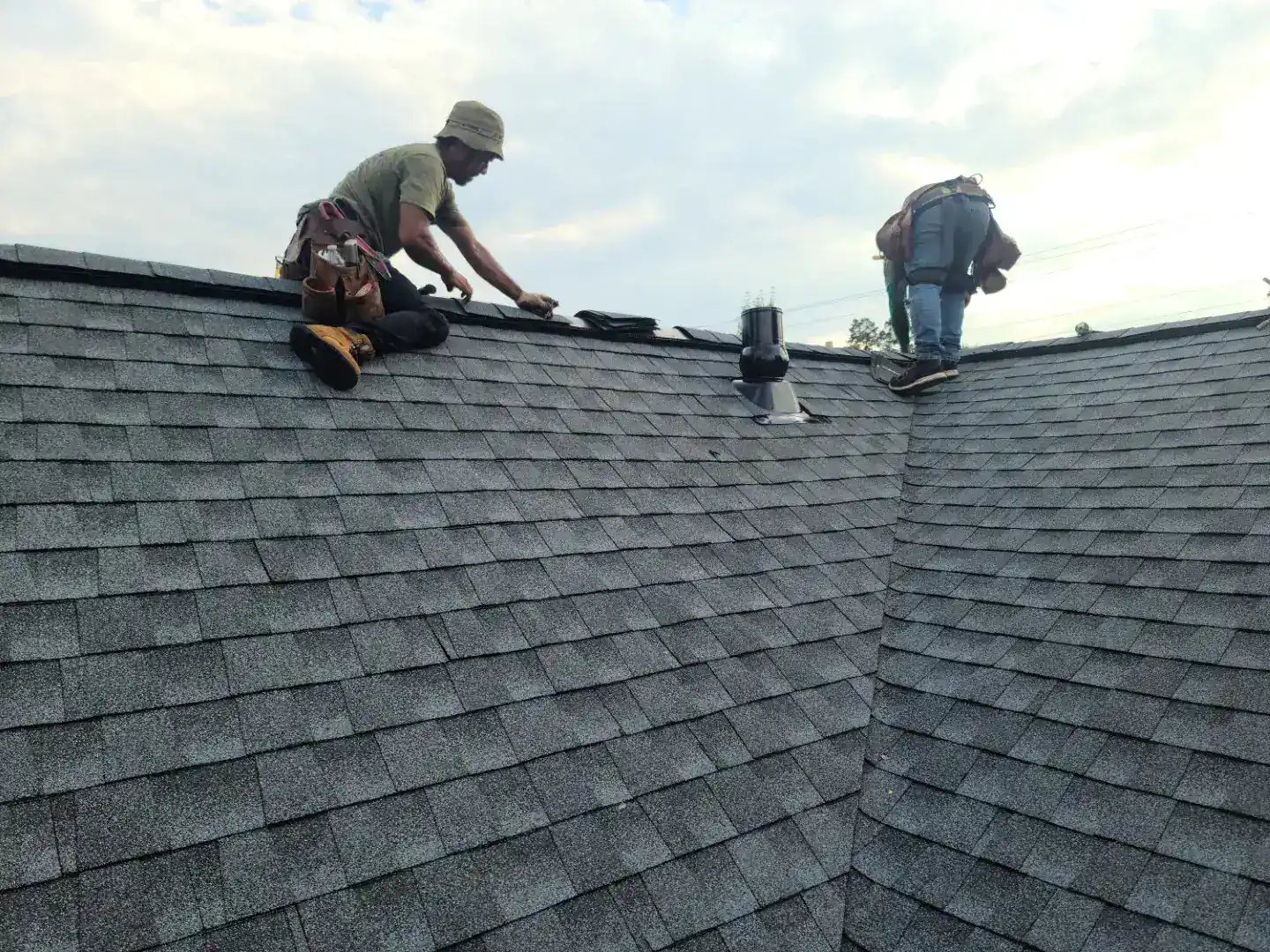
Once work begins, our crew handles material delivery, installation, and full site cleanup. When the job is done, a final walkthrough confirms everything meets manufacturer specifications — because that’s what keeps your warranty valid and your roof performing the way it should through whatever Bergen County throws at it next.
Ready to get started?
Emergency Roof Repair in Hackensack, NJ
We cover the full range of residential roofing — inspections, repairs, full replacements, flat roofing systems including TPO and EPDM, and 24/7 emergency response for storm damage. Siding and gutter services are also available, which matters in Hackensack because a roof that drains poorly into failing gutters is a problem that compounds quickly, especially on properties near the lower-lying areas along the Hackensack River.
For homes in Hackensack’s older residential sections — the pre-war colonials, the post-war capes, the two-family homes throughout the city’s established neighborhoods — roofing repairs often involve more than just shingles. Aging flashing around chimneys and dormers, deteriorated underlayment, and compromised ridge caps are common findings on homes of this era. The inspection process is designed to surface all of it, not just what’s visible from the curb.
If a storm causes immediate damage, our 24/7 emergency service means someone responds when you call — not the next business day. Emergency tarping, damage documentation for insurance submission, and a clear plan for permanent repair are all part of that response. For Hackensack homeowners navigating an insurance claim after a nor’easter or summer hail event, having a licensed contractor document the damage professionally makes a measurable difference in how that process goes. Free estimates are available on all services, and pricing is provided upfront in writing before any work begins.
Do I need a permit to replace my roof in Hackensack, NJ?
Yes — roof replacement in Hackensack requires a building permit filed with the city’s Department of Building, Housing, and Land Use, which administers construction permits and inspections under the NJ Uniform Construction Code. This applies to full replacements and, in many cases, significant repairs as well.
Skipping the permit might seem like a way to save time or money, but it creates real downstream problems. If you sell your home and a buyer’s inspector or attorney pulls permit history, an unpermitted roof becomes a negotiation point — or a deal-breaker. Insurance companies can also use unpermitted work as grounds to complicate a claim. We handle the permitting process as a standard part of every full replacement project in Hackensack, so you’re not left navigating municipal paperwork on your own.
How much does a roof replacement typically cost in Hackensack, NJ?
For a standard single-family home in Hackensack, a full roof replacement typically runs between $9,000 and $15,000, depending on the size of the roof, the pitch and complexity of the roofline, the materials selected, and whether any decking needs to be replaced. Homes in Hackensack’s older residential sections — particularly the pre-war and mid-century colonials — often have more complex rooflines with dormers, multiple valleys, and aging flashing that adds to the scope.
New Jersey’s labor costs and permit requirements push replacement pricing above the national average, so quotes that seem unusually low deserve scrutiny. A contractor who skips permits, uses non-certified labor, or cuts corners on underlayment and flashing will often come in cheaper — and the homeowner pays for it later through premature failure, voided warranties, or complications at resale. We provide full itemized estimates before any work begins, so you know exactly what you’re paying for and why.
What causes ice dams, and are Hackensack homes especially at risk?
Ice dams form when heat escaping from the living space warms the roof deck unevenly, melting snow that then refreezes at the colder eave line. That cycle of melting and refreezing forces water backward under shingles, where it can infiltrate the underlayment and eventually reach the interior of the home — often without any visible exterior warning until the damage is already done.
Hackensack’s position in the Hudson River corridor makes this more than a theoretical risk. The city experiences regular freeze-thaw cycles from October through March, and the elevated humidity near the Hackensack River means moisture levels in the air are already higher than in more inland Bergen County towns. Homes built in the 1940s through 1960s — which make up the majority of Hackensack’s single-family housing stock — were often built with minimal attic insulation and ventilation by today’s standards, which is exactly the condition that makes ice dam formation more likely. Proper attic ventilation assessment is part of every inspection we perform.
How do I know if my roof needs repair or a full replacement?
The honest answer is that it depends on the age of the roof, the extent of the damage, and what the underlying decking looks like once you get into it. A repair makes sense when the damage is isolated — a few failed shingles, a flashing joint that’s separated, a small area of granule loss. A replacement makes more sense when the roof is 20-plus years old, when granule loss is widespread, when there are multiple problem areas, or when the underlayment has been compromised.
For Hackensack homeowners, the math on this decision is worth thinking through carefully. If your home was built in the 1950s or 1960s and the roof was last replaced in the 1990s, you’re likely looking at a system that’s at or past the end of its useful life. Patching a roof in that condition often means spending money on repairs that delay the inevitable by a season or two — while the underlying deterioration continues. A free inspection from us gives you a clear, documented picture of what’s actually going on so you can make that call with real information, not guesswork.
Does homeowner's insurance cover roof damage in New Jersey?
Generally, yes — but the details matter. Most standard homeowner’s insurance policies in New Jersey cover roof damage caused by sudden events like storm wind, hail, or falling trees. What they typically don’t cover is damage that results from wear, age, or deferred maintenance. That distinction is important, because insurers will often send an adjuster who is looking specifically for evidence that the damage is age-related rather than event-related.
Having a licensed roofing contractor document the damage before you file — or as part of the filing process — makes a meaningful difference. A detailed photo report that ties specific damage to a specific storm event is far more useful to your claim than a general adjuster’s visit alone. Our free inspection includes documentation specifically suited for insurance submission, which has helped Bergen County homeowners navigate claims more effectively after nor’easters and summer hail events. The 24/7 emergency service also means damage can be documented immediately after a storm, while the evidence is clearest.
Why should I hire a manufacturer-certified roofer instead of a general contractor in Hackensack?
The certification itself isn’t just a credential — it’s the mechanism that unlocks a different class of warranty. When a roofing contractor holds top-tier certification from a manufacturer like GAF or Owens Corning, they can offer enhanced system warranties of up to 50 years that a non-certified contractor cannot provide, regardless of how long they’ve been in business. These warranties are issued by the manufacturer and are tied to the specific installation, which means they can transfer to a new buyer if you sell the home.
In Hackensack’s real estate market — where median home values exceed $538,000 and buyers are doing thorough due diligence — a transferable manufacturer warranty is a tangible asset, not a marketing footnote. Fewer than 3% of roofing contractors in the country hold these certifications, which means most general contractors working in Bergen County simply cannot offer this level of coverage. For a homeowner making a $10,000 to $15,000 decision on a roof, the difference between a standard workmanship warranty and a manufacturer-backed system warranty is worth understanding before you sign anything.