
Roofer in Alpine, NJ
Palisades-Grade Roofing for Homes Built to Last
Hear from Our Customers
Alpine, NJ Roofing Company Results
A roof that’s been properly installed and inspected stops being something you think about. No more checking the attic ceiling after a storm. No more wondering if that dark spot near the chimney flashing is getting worse. You just live in your home — which is exactly how it should be.
For homes in Alpine, that peace of mind carries real weight. The dense tree canopy along the Palisades means debris is constant, shade accelerates moss and lichen growth, and overhanging branches put pressure on roofing surfaces year-round. A roof that isn’t built for those conditions won’t hold up. One that is will protect your home through decades of Bergen County winters without asking much of you in return.
The other thing that changes is what your home is worth on paper. Manufacturer-certified roofing systems come with transferable warranties — the kind that show up in a disclosure packet when you sell and actually mean something to a buyer. For a property in Alpine, that’s not a minor detail. It’s documented protection on one of the most valuable assets in New Jersey.
Local Roofing Company in Alpine, NJ
We’ve been serving homeowners across Bergen County for over ten years, with deep roots in Alpine and the surrounding Palisades communities. We’re family-owned, fully licensed under NJ HIC License #13VH10605800, and certified by major shingle manufacturers — which means our customers get access to enhanced system warranties that most contractors simply can’t offer.
Our work covers roofing, gutters, and siding, but the approach is the same across every job: show up prepared, communicate clearly, and leave the property better than we found it. That matters everywhere, but it matters especially in Alpine, where homes off Route 9W and throughout Rio Vista sit on large wooded lots with long driveways and a lot of history behind them.
Reviews on Google and Trustpilot reflect what that approach looks like in practice. No surprise charges. No vague timelines. Just straightforward work done by people who understand what’s at stake when we’re working on a home of this caliber.
Roof Repair Process in Alpine, NJ
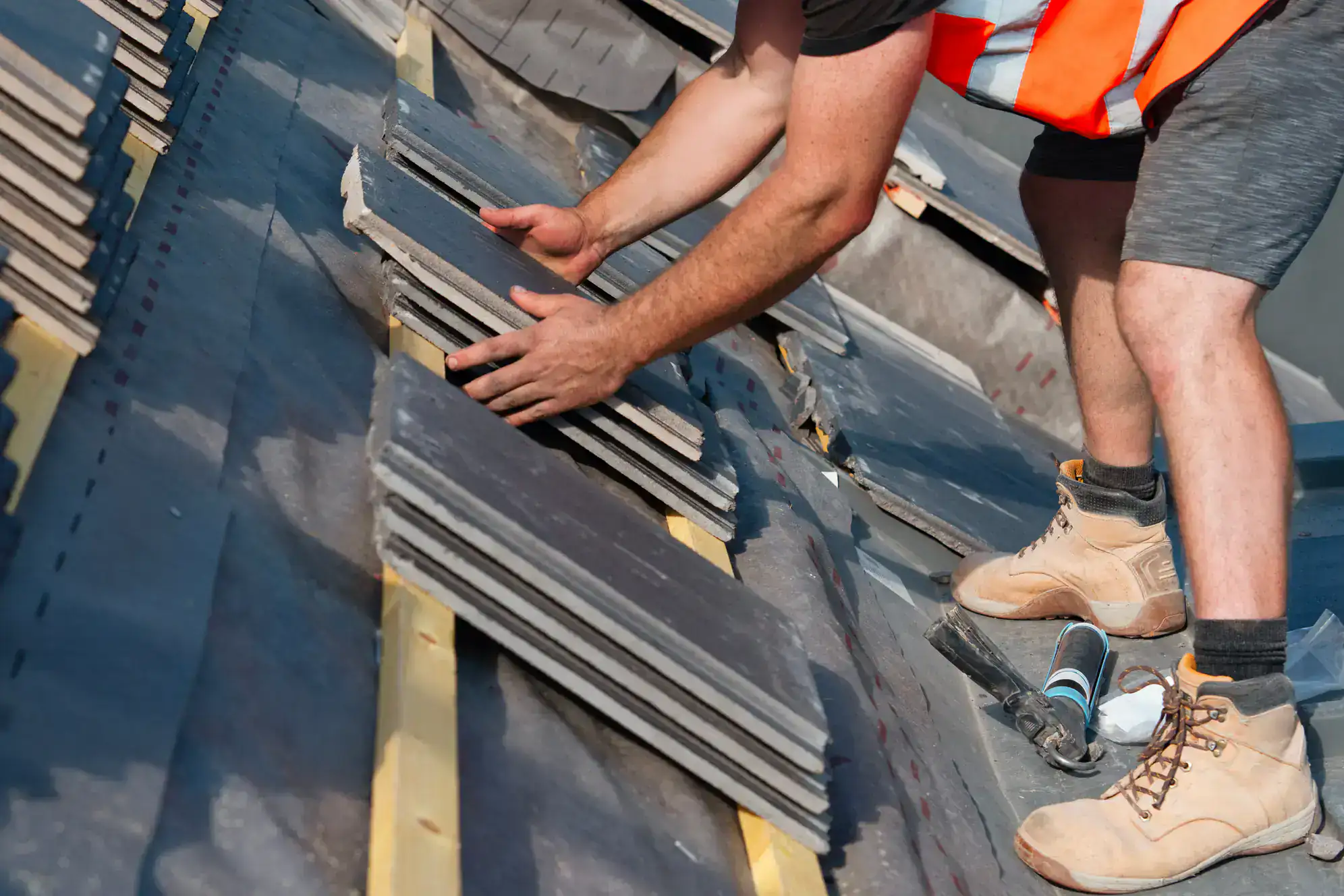
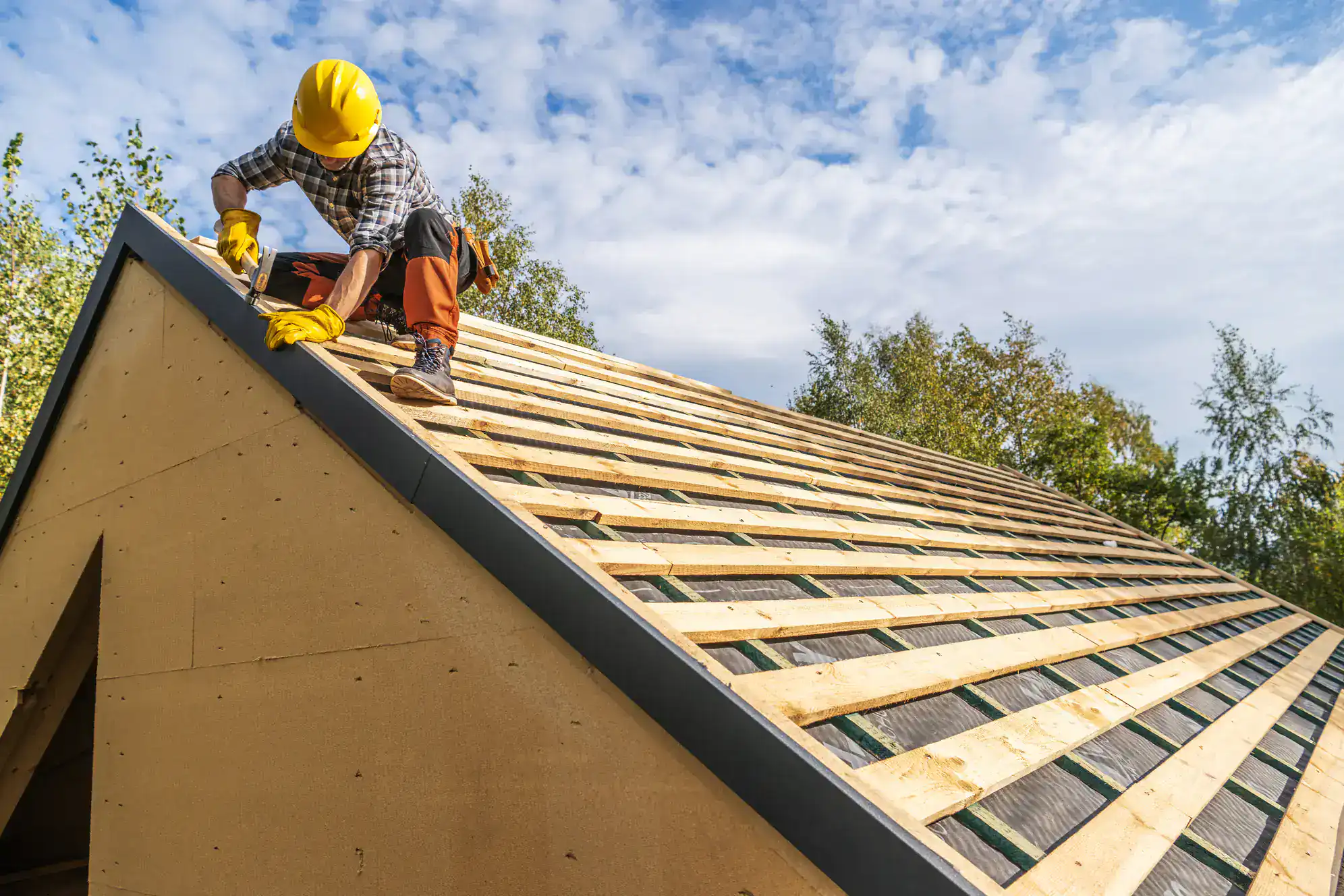
It starts with a free inspection. Our technician walks the full exterior, checks the attic for moisture, ventilation issues, or early signs of ice dam damage, and photographs everything we find. You get a detailed report with those photos — yours to keep, no strings attached, no obligation to book anything.
If you decide to move forward, you’ll receive a fully itemized written estimate before any work begins. Materials, scope, timeline, warranty terms — all of it in writing. Alpine Borough requires permits for roofing work under Chapter 97 of the Borough Code, and we handle that process as part of the project. You won’t need to chase paperwork or make calls to the Construction Code Enforcement Office yourself.
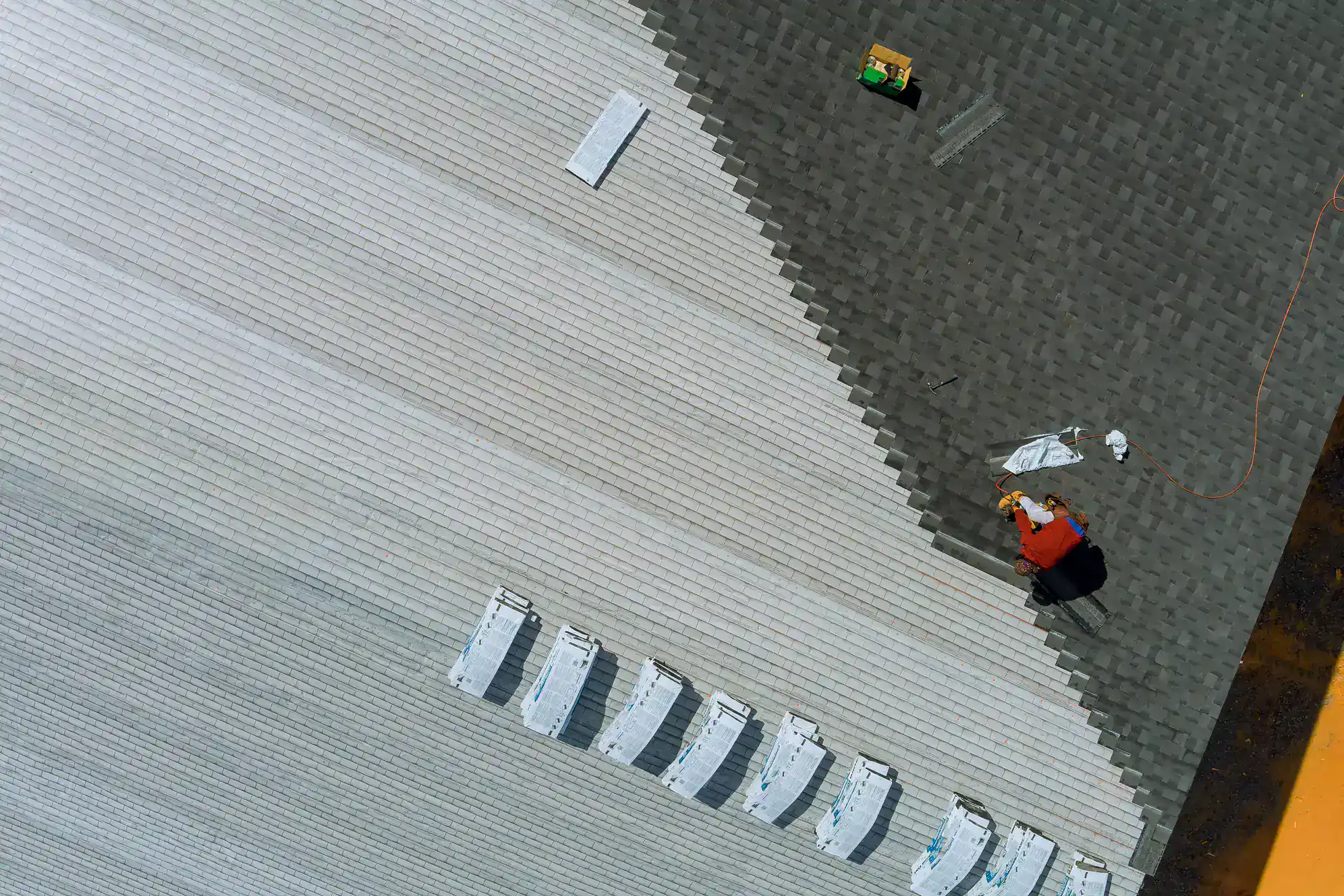
Once the job is underway, our crew works clean and communicates at every stage. Given the mature tree canopy and the scale of roofing systems common on Alpine estates, we set timelines realistically — not optimistically. When the work is done, the site is cleared, the warranty documentation is in your hands, and the job is closed out properly.
Ready to get started?
Emergency Roof Repair in Alpine, NJ
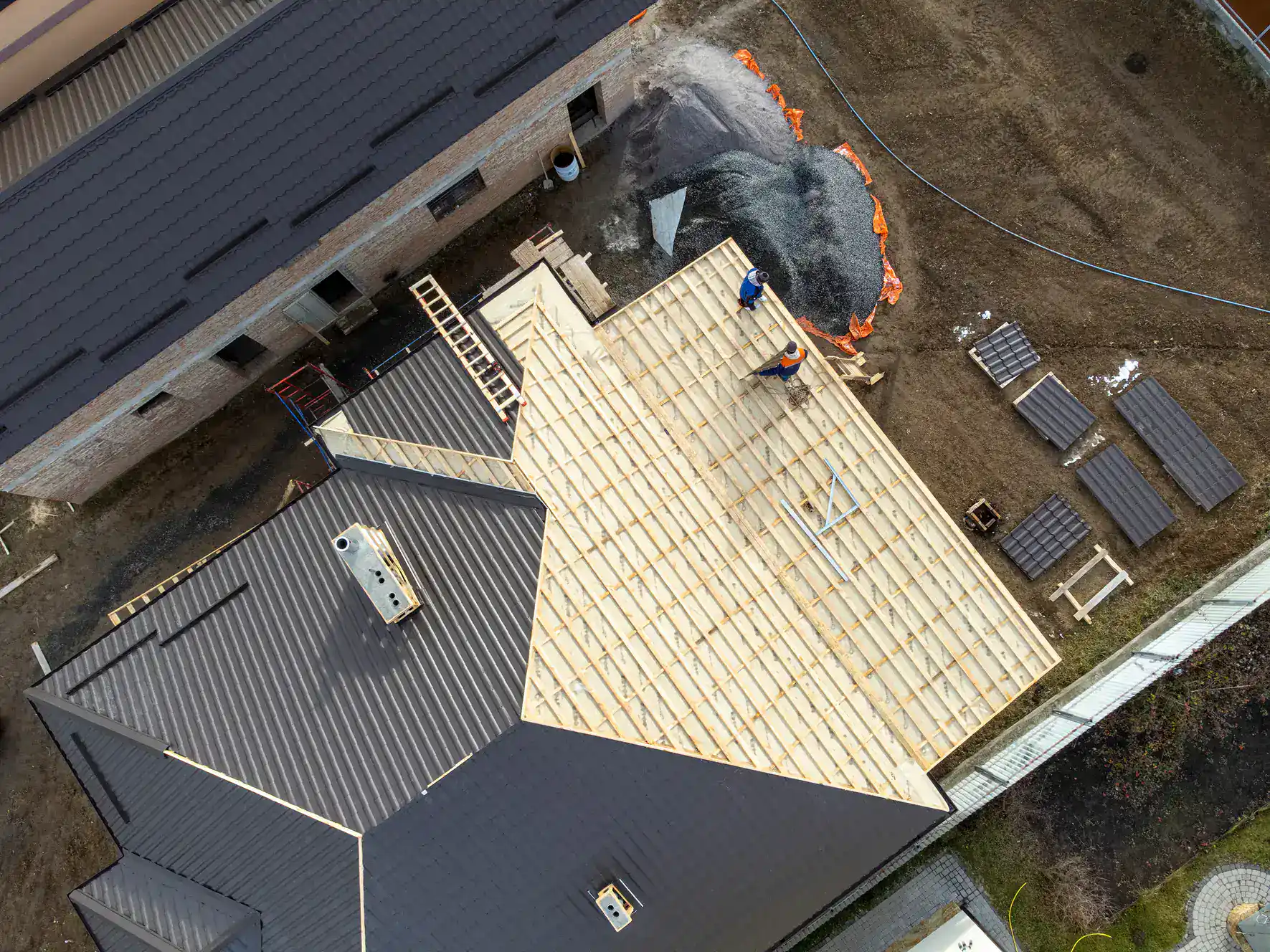
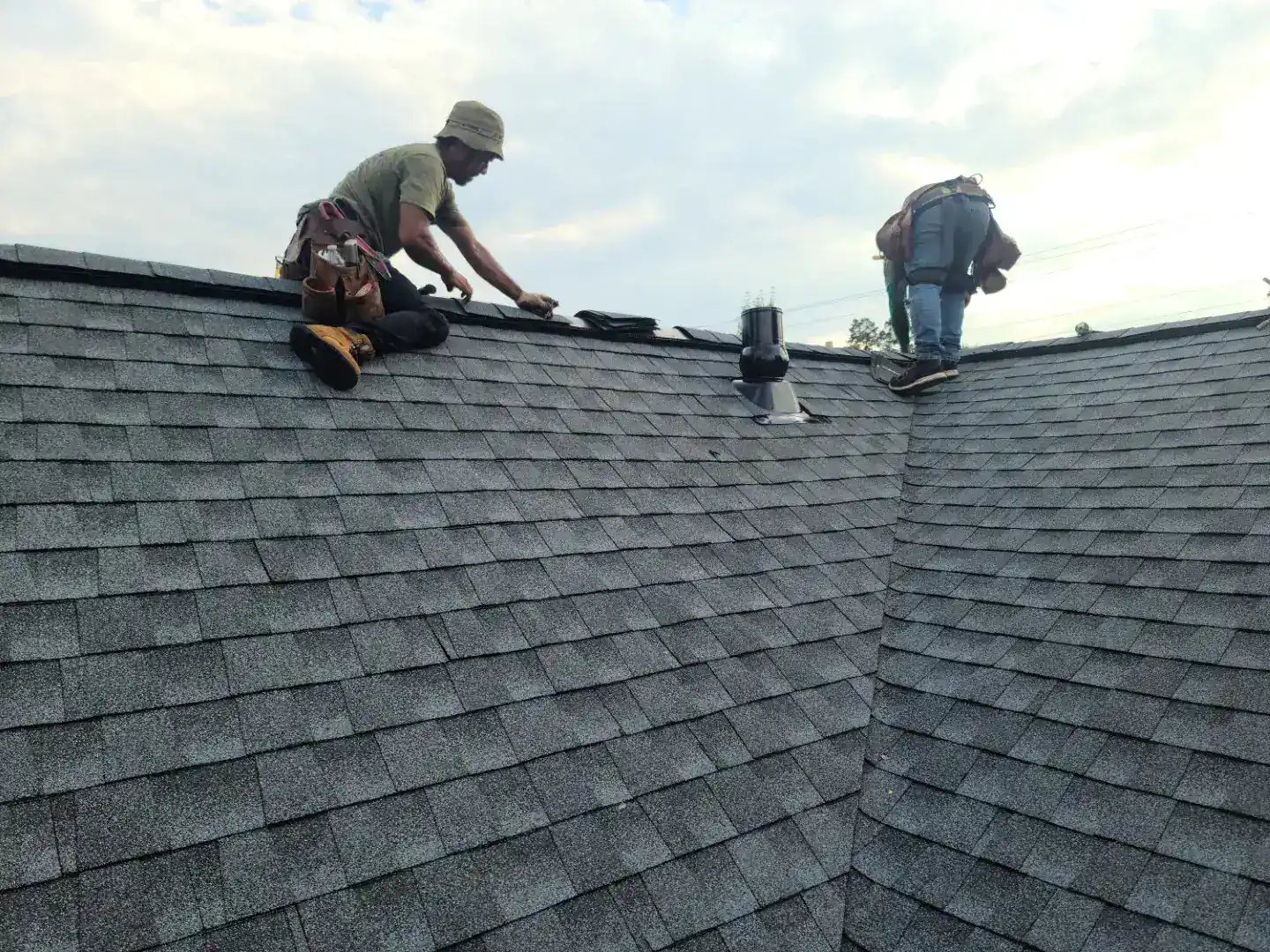
Roofing in Alpine isn’t one-size-fits-all. The homes here — many of them custom estates with multi-plane rooflines, dormers, steep pitches, and premium materials — require a different level of preparation than a standard suburban replacement job. We handle full roof replacements, targeted repairs, and emergency response for storm damage, with materials and methods matched to what the property actually needs.
Gutters are part of the picture too. The Palisades forest drops leaves, seeds, and debris into gutters at a rate that overwhelms a standard maintenance schedule, and blocked gutters in winter are one of the primary causes of ice dam formation in Bergen County. Gutter inspection, cleaning, and replacement are available alongside roofing work so you’re not managing two separate contractors for what is really one connected system.
For homeowners dealing with storm damage — whether from a nor’easter, a summer hail event, or a remnant tropical system — we offer emergency roof repair in Alpine, NJ with 24/7 response. That includes damage assessment, emergency tarping, and photo documentation formatted for insurance claims. If you’ve got a leak in a finished attic at 11pm, that’s not a Monday morning problem, and we won’t treat it like one.
Do I need a permit to replace my roof in Alpine, NJ?
Yes. Alpine Borough requires a building permit for roofing work under Chapter 97 of the Borough Code, which enforces the New Jersey Uniform Construction Code at the local level. The permit must be obtained before work begins — not after — and the fee is due at the time of application. Skipping this step isn’t just a code violation; it can void your manufacturer warranty and create liability issues if anything goes wrong during the project.
The good news is that a licensed contractor handles this for you. We manage the permit process as part of the job, so you’re not making calls to Alpine Borough’s Construction Code Enforcement Office or tracking down paperwork on your own. If you’re working with a contractor who isn’t pulling permits, that’s a red flag worth taking seriously — especially on a property of this value.
How do I know if my roof has ice dam damage after a Bergen County winter?
Ice dams form when heat escaping through the roof melts snow, which then refreezes at the cold eave line. Over the course of a single storm cycle, that process can force water under your shingles and into the roof deck, insulation, and eventually your interior ceilings — often without any visible sign until the damage is already significant. At Alpine’s elevation on the Palisades ridge, temperatures drop lower and ice formation is more severe than in valley communities like Tenafly or Englewood, which makes this a recurring issue for homeowners here.
Signs to look for include water stains on interior ceilings near exterior walls, peeling paint or bubbling drywall in upstairs rooms, and soft spots or discoloration on the roof deck visible during an attic inspection. If you noticed any of those after last winter and haven’t had a professional look at it yet, a free inspection is the right first step. The photo report you receive will document exactly what’s there — and what, if anything, needs to be addressed before the next season.
What roofing materials work best for a large luxury home in Alpine?
The right material depends on your roof’s specific geometry, pitch, and what’s already there. For the multi-plane, high-pitch rooflines common on Alpine estates, premium architectural shingles from manufacturers like GAF or CertainTeed are the most practical high-performance option — they’re designed for wind resistance, carry strong manufacturer warranties, and can be matched to a wide range of architectural styles. Slate, clay tile, and standing seam metal are also present on homes throughout Alpine and require contractors with specific installation experience to service correctly.
What matters most isn’t just the material — it’s the installation. A manufacturer-certified contractor installs to the specifications required to activate the enhanced system warranty, which can extend 30 to 50 years and transfers to a future buyer. For a home in Alpine, that warranty is a documented asset. A standard contractor warranty from an uncertified installer doesn’t carry the same weight, and it won’t appear in a disclosure packet the same way a manufacturer-backed document will.
How much does a roof replacement cost for a home in Alpine, NJ?
There’s no single number that applies to Alpine, because the homes here vary so widely in size, complexity, and material. A straightforward replacement on a simpler roofline with architectural shingles will land in a different range than a multi-plane estate roof with custom flashing details, dormers, and premium materials. Square footage on an Alpine estate can easily run three to five times that of a typical suburban home, which directly affects labor and material costs.
What you should expect from any reputable contractor is a fully itemized written estimate before any work begins. That means materials specified by manufacturer and product line, labor broken out by scope, permit costs included, and warranty terms documented. If an estimate you receive is vague or verbal, that’s a problem. We provide written estimates upfront — no surprise line items at the end, and no work starts until you’ve reviewed and approved everything in writing. A free inspection is the right starting point to get an accurate number for your specific property.
What should I do immediately after storm damage to your roof in Alpine?
The first priority is stopping any active water intrusion. If you have a visible breach — missing shingles, a damaged section from a fallen branch, or a flashing failure — emergency tarping can protect the interior while a proper repair is scheduled. Don’t wait on this. Water moving through a roof deck into finished attic space or interior ceilings causes damage that compounds quickly, and the cost of that secondary damage almost always exceeds the cost of the roof repair itself.
Once the immediate situation is stabilized, a documented inspection is your next step — both for your own records and for your insurance claim. Our storm damage assessment includes detailed photographs formatted specifically for insurer review. Bergen County nor’easters and summer hail events have caused documented damage to homes and historic structures throughout Alpine, and having a certified contractor produce that documentation makes the claims process significantly smoother. We offer emergency roof repair in Alpine, NJ around the clock — call as soon as the damage happens, not after the weekend.
How do I find a roofer in Alpine, NJ who's actually qualified for a home like mine?
Start with the basics: verify the NJ Home Improvement Contractor license through the Division of Consumer Affairs website. Any contractor performing roofing work in New Jersey valued over $500 is legally required to hold one. Our license number is #13VH10605800 — publicly searchable and verifiable in under a minute. If a contractor can’t provide that number, the conversation should end there.
Beyond licensing, look for manufacturer certifications. These aren’t handed out freely — they require demonstrated installation competency and are issued by manufacturers like GAF, CertainTeed, or Owens Corning to a small percentage of contractors nationally. The practical benefit for you is access to enhanced system warranties that uncertified contractors cannot activate. For a home in Alpine — where property values routinely exceed several million dollars and the roofing systems are often complex, large, and built with premium materials — working with a certified contractor isn’t about spending more. It’s about making sure the investment you’re protecting is actually protected. Ask for the certification documentation the same way you’d ask for proof of insurance. Any qualified contractor will have it ready.