
Roof Repair in New Brunswick, NJ
When the Raritan Rises, Your Roof Can't Be the Weak Link
Hear from Our Customers
Roof Leak Repair in New Brunswick, NJ
A roof issue in New Brunswick isn’t just a roofing problem — it’s a race against the next storm. When the Raritan overflows and Route 18 floods, the last thing you want is water finding its way in from above at the same time. A properly repaired roof is the first line of defense, and getting it handled before the next weather event is the difference between a repair bill and a full interior restoration.
Older homes in neighborhoods like the Buccleuch Park area and along the Easton Avenue corridor carry decades of wear — aging flashing, deteriorated underlayment, and shingles that have been through more freeze-thaw cycles than most people realize. Our targeted roof repair in New Brunswick, NJ addresses those specific failure points without pushing you into a full replacement you may not need yet. You get the honest picture, a clear scope of work, and repairs done right the first time.
The result is a roof that holds through whatever Central New Jersey throws at it next — and the peace of mind that comes from knowing you didn’t overpay or get oversold to get there.
Certified Roof Repair Contractor in New Brunswick, NJ
We’ve been repairing roofs across New Brunswick and Central New Jersey for over ten years. That’s ten years of nor’easters, summer hail events, and aging housing stock — the exact conditions that define roofing work in Middlesex County. We hold contractor licenses, carry full liability insurance and workers’ compensation, and are certified by major shingle manufacturers — credentials that unlock warranty coverage most contractors in this market simply can’t offer.
We’re family-operated, which means the people accountable for the quality of your project are the same ones you talk to from the first call through the final walkthrough. No handoffs to subcontracted crews you’ve never met. No disappearing after the deposit clears.
Reviews from real homeowners and property investors across New Brunswick and the surrounding area tell the story more honestly than any sales pitch could. If you want to know what working with us looks like, the reviews are there — and they’re earned, not manufactured.
Roof Repair Estimate in New Brunswick, NJ
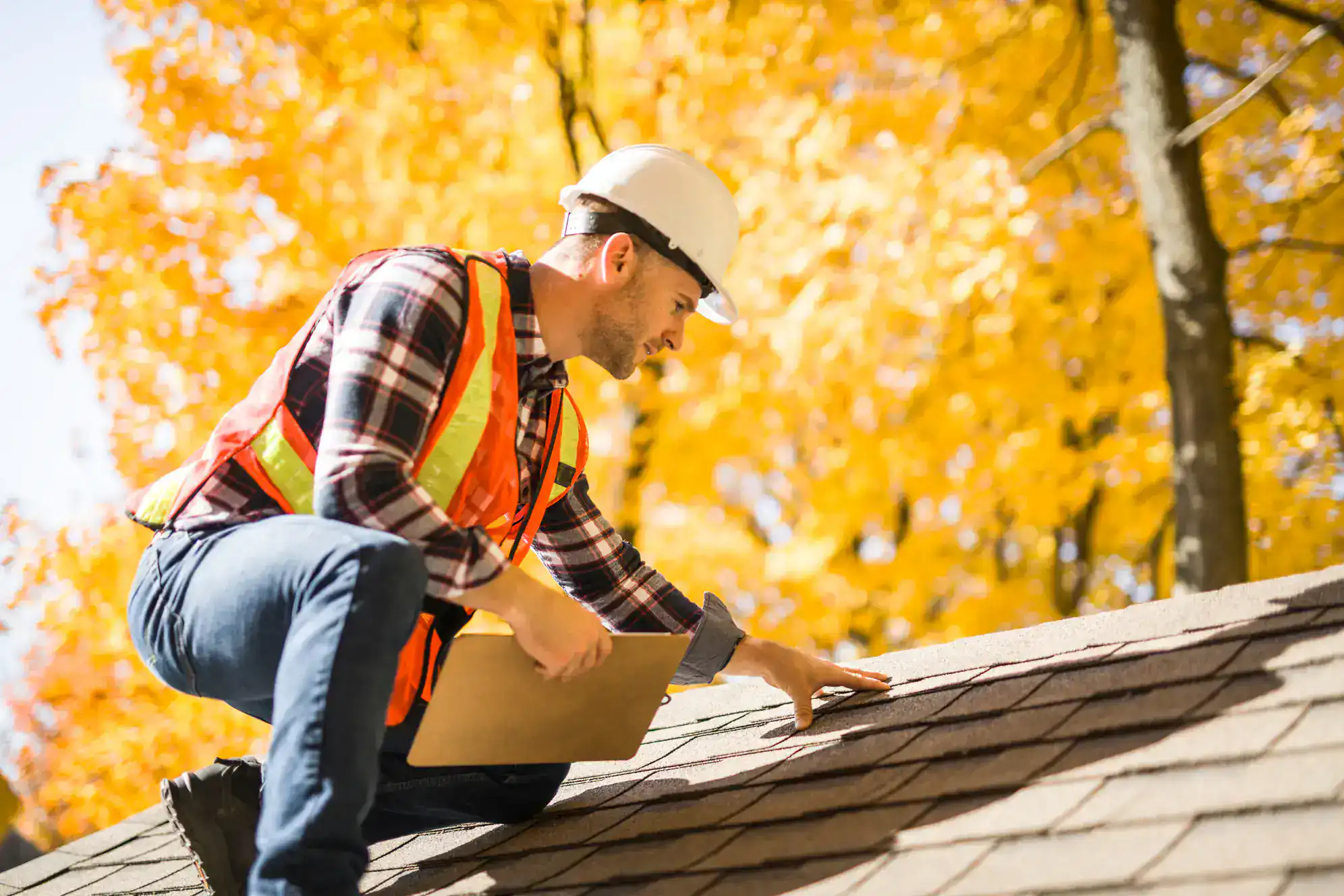
It starts with a free roof inspection. One of our trained professionals comes out, assesses the actual condition of your roof, and gives you an honest read — whether that’s a targeted shingle repair, a flashing fix, or a more involved structural issue. You don’t pay for that assessment, and there’s no obligation attached to it. For New Brunswick homeowners dealing with older housing stock, that first honest look is often the most valuable part of the whole process.
From there, you receive a written, itemized estimate. The scope is clear. The materials are specified. The price is fixed — meaning if the scope doesn’t change, the number on the estimate is the number on the invoice. No surprises. For landlords managing rental properties near the Rutgers campuses, that predictability matters as much as the repair itself.
Once you approve the work, we schedule the crew and the job gets done. New Brunswick’s building regulations require permits for certain project types — particularly on multi-family structures and larger scope work — and we handle that process so you don’t have to navigate it alone. After the work is complete, a thorough cleanup is part of the job, including a magnetic sweep for nails. You do a final walkthrough, confirm everything looks right, and that’s it.
Ready to get started?
Emergency Roof Repair in New Brunswick, NJ
Shingle roof repair in New Brunswick, NJ covers the most common call — wind-lifted, cracked, or hail-damaged shingles on the asphalt roofs that cover the majority of residential properties in the city. When shingles are replaced, the match matters. Mismatched patches on an older home in an established neighborhood are a visible sign of a contractor who cut corners. We source replacement shingles with attention to color, profile, and texture so the repair blends, not broadcasts.
Flat roof repair in New Brunswick, NJ is a more specific need here than in most surrounding suburbs. The city’s older urban building stock — row homes, mixed-use structures, additions, and garages — carries a meaningfully higher proportion of flat and low-slope roofs. These systems fail differently than pitched roofs, and they require contractors who understand TPO, EPDM, and modified bitumen membranes. Attempting a flat roof repair with the wrong material or technique doesn’t fix the problem — it delays it.
Roof storm damage repair in New Brunswick, NJ and emergency roof repair in New Brunswick, NJ round out the picture for homeowners dealing with active damage. When a storm has compromised the roof and water is getting in, the priority is stopping the damage cycle — tarping, emergency patching, and securing the structure while a permanent repair is scheduled. We also help document storm damage for insurance claims, which matters when nor’easters or hail damage triggers a homeowners policy in Middlesex County.
How much does roof repair in New Brunswick, NJ typically cost?
The range is wide because the scope of roof repair varies significantly. A minor shingle repair or small flashing fix on a residential property in New Brunswick might run $300 to $600. A more involved repair — damaged decking, multiple failed areas, or a flat roof membrane issue on an older row home — can reach $1,500 to $4,000 or more depending on what’s actually found once the work begins.
What matters most is getting an honest assessment before committing to anything. New Brunswick’s housing stock is older, and what looks like a surface-level shingle issue sometimes reveals deteriorated underlayment or aging decking underneath. The free inspection we provide is specifically designed to give you an accurate picture of what you’re actually dealing with — not a ballpark number pulled from a drive-by glance — so the estimate you receive reflects the real scope of work, not a lowball figure that grows at invoice.
Do I need a permit for roof repair or replacement in New Brunswick?
For straightforward like-for-like shingle replacement on a detached one- or two-family home, New Jersey’s Uniform Construction Code generally does not require a municipal permit. But that exemption has limits, and New Brunswick’s building environment is more complex than a typical suburban township.
If the project involves structural repairs, changes to the roof configuration, or work on a multi-family building or mixed-use structure — which are common in New Brunswick’s older urban neighborhoods — permits are typically required through the city’s Division of Building and Code Enforcement. Getting that wrong can create legal and financial exposure for the property owner, especially if the work is discovered during a sale or insurance claim. We know which projects trigger permit requirements in New Brunswick and handle the process as part of the job. You don’t need to figure that out on your own.
How do I know if I need a repair or a full roof replacement?
This is the question most New Brunswick homeowners are afraid to ask a contractor — because they’re worried the answer will always be “replacement.” The honest answer is that it depends on the age of the roof, the extent of the damage, and what the decking looks like underneath the surface.
If your roof is under 15 years old and the damage is isolated — a section of wind-lifted shingles, a failed flashing seal around a chimney or vent, a small area of water intrusion — targeted repair is usually the right call. If the roof is 25 or 30 years old, has multiple problem areas, and the granule loss on the shingles is significant, replacement is often the smarter long-term investment even if a repair would technically hold for another season or two. Many older homes in New Brunswick’s established neighborhoods fall into that second category, which is why the free inspection matters — you get an honest read on where your roof actually stands, not a sales pitch for the higher-ticket option.
What should I do if my roof is actively leaking during a storm in New Brunswick?
First, protect the interior. Move furniture, electronics, and valuables away from the affected area and place buckets or towels to catch active dripping. If water is pooling near electrical fixtures or panels, treat it as a safety issue and contact an electrician before anything else.
Once the immediate interior risk is managed, call for emergency roof repair in New Brunswick, NJ. We can deploy temporary protective measures — heavy-duty tarping and emergency patching — to stop the water intrusion while a permanent repair is scheduled. This is especially important in New Brunswick, where major storm events can bring compound risk: roof damage from above while the Raritan River’s flooding pattern pushes water toward low-lying properties from below. Letting an active roof leak run through a full storm cycle without intervention almost always escalates the damage from a repair-level issue to something that involves the decking, insulation, and interior structure. The faster the response, the smaller the final scope.
Does homeowners insurance cover roof storm damage repair in New Jersey?
Most standard homeowners insurance policies in New Jersey cover sudden storm damage from covered perils — wind, hail, and falling objects are typically included. What they don’t cover is damage resulting from neglect or gradual deterioration, which is why the documentation of how and when the damage occurred matters significantly.
After a nor’easter or summer hail event in Middlesex County, the difference between a covered claim and a denied one often comes down to how well the damage is documented. We help homeowners through that process — photographing damage in detail, providing written assessments that insurance adjusters accept, and ensuring the scope of repair work aligns with what the claim covers. If you’re dealing with storm damage and aren’t sure whether it qualifies for a claim, getting a professional inspection first gives you the documentation you need before the adjuster ever shows up.
How do Central New Jersey winters affect roofs in New Brunswick specifically?
The freeze-thaw cycle is the most underestimated threat to roofs in this area. When temperatures swing above and below freezing repeatedly through a New Brunswick winter — which is typical for Middlesex County — water works its way into small cracks and gaps in shingles and flashing, freezes, expands, and widens those gaps over time. After enough cycles, what started as a hairline crack becomes a visible failure point.
Ice dams are the other major winter issue, and they’re especially common on older New Brunswick homes with inadequate attic insulation. Warm air escaping through the roof deck melts snow, which runs down to the cold eaves and refreezes. That ice dam backs water under the shingles, and that’s when interior leaks develop — often in late February or March when homeowners assume the worst of winter is over. If you’re noticing water stains on ceilings or walls after a cold stretch, ice dam damage is a likely culprit, and it’s worth having it assessed before the next freeze cycle makes it worse.