
Roof Repair in East Rutherford, NJ
When the Meadowlands Weather Hits, Your East Rutherford Roof Shouldn't Be the Weak Link

Hear from Our Customers
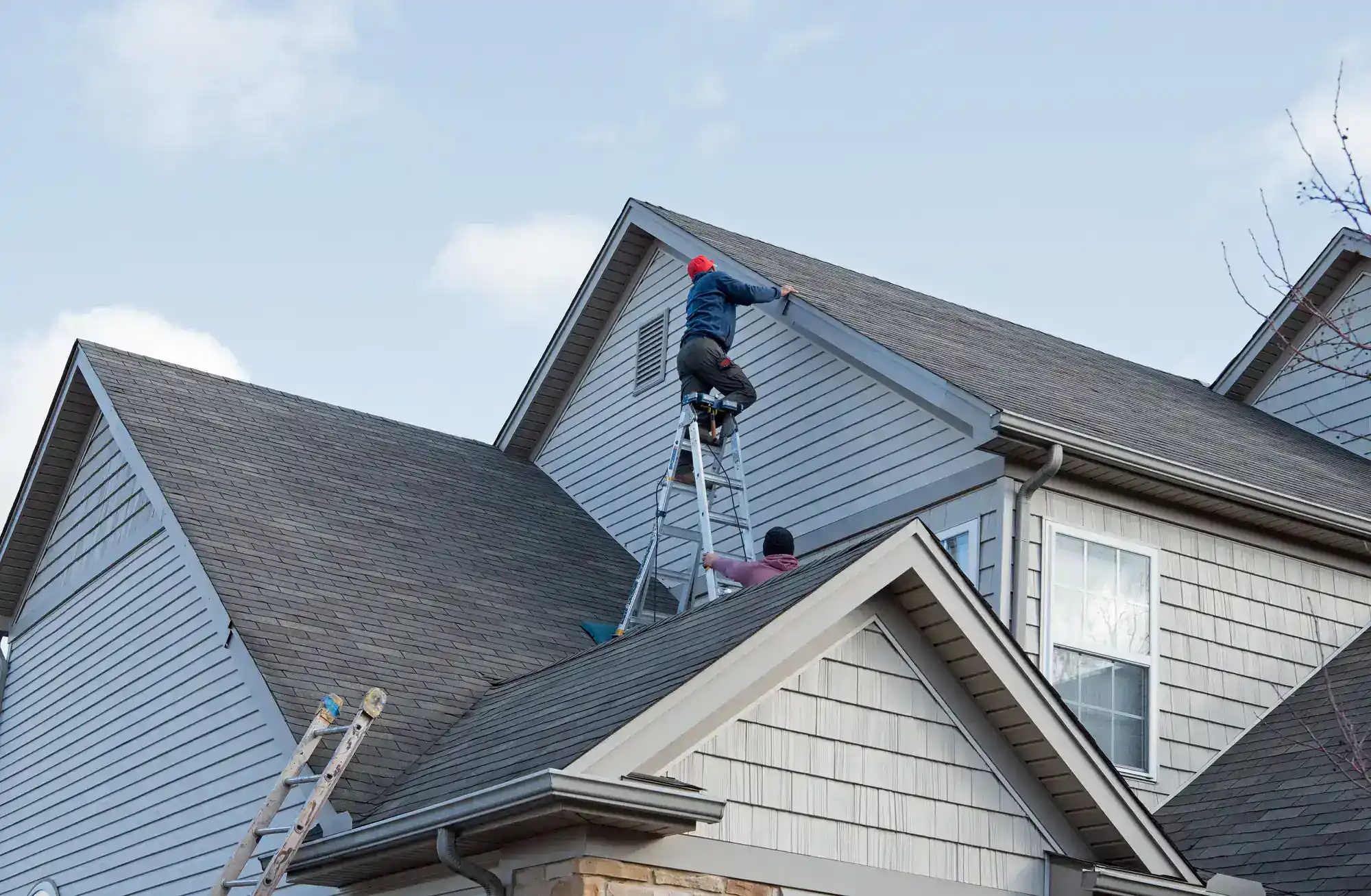
East Rutherford Roof Leak Repair
When your roof is leaking or visibly damaged, everything else in your home is at risk. Water doesn’t stay where it enters — it travels through decking, insulation, and framing before you ever see a stain on the ceiling. Getting ahead of it with a targeted repair is almost always faster, cheaper, and less disruptive than waiting until the damage forces a full replacement.
East Rutherford’s geography plays a real role here. The borough sits between the Passaic and Hackensack Rivers in low-lying Meadowlands terrain, which means wind exposure is higher than in most inland Bergen County towns. That wind stress accelerates shingle lifting, flashing displacement, and ridge cap wear — especially on homes in Carlton Hill and the Willow Wood Square area where a significant portion of the housing stock dates back to the 1940s and 1960s.
A lot of those roofs are on their second or third cycle, and they don’t always show obvious warning signs before a problem becomes urgent. A professional inspection gives you a clear picture of where things stand — not a sales pitch, just an honest answer about what needs attention now and what can wait.
Certified Roof Repair Contractor East Rutherford
We’ve been doing exterior work across Bergen County for over ten years, including the specific challenges that come with East Rutherford’s Meadowlands location. That’s ten years of nor’easters, summer hailstorms, and the kind of freeze-thaw cycles that quietly destroy flashings and sealants every winter. The team that shows up to your home is the same team that stands behind the work — no rotating subcontractors, no commissioned closers who disappear after the estimate.
We hold contractor licenses required under New Jersey law and carry manufacturer certifications from major shingle brands. That certification matters more than most homeowners realize — it means repairs and replacements qualify for enhanced manufacturer-backed warranty coverage that uncertified contractors simply cannot offer.
East Rutherford homeowners near the Meadowlands have specific needs, and we know them. From the aging multi-family housing stock off Paterson Plank Road to the flat-roof commercial buildings throughout the district, the work here isn’t one-size-fits-all — and our approach reflects that.

Roof Repair Process East Rutherford NJ
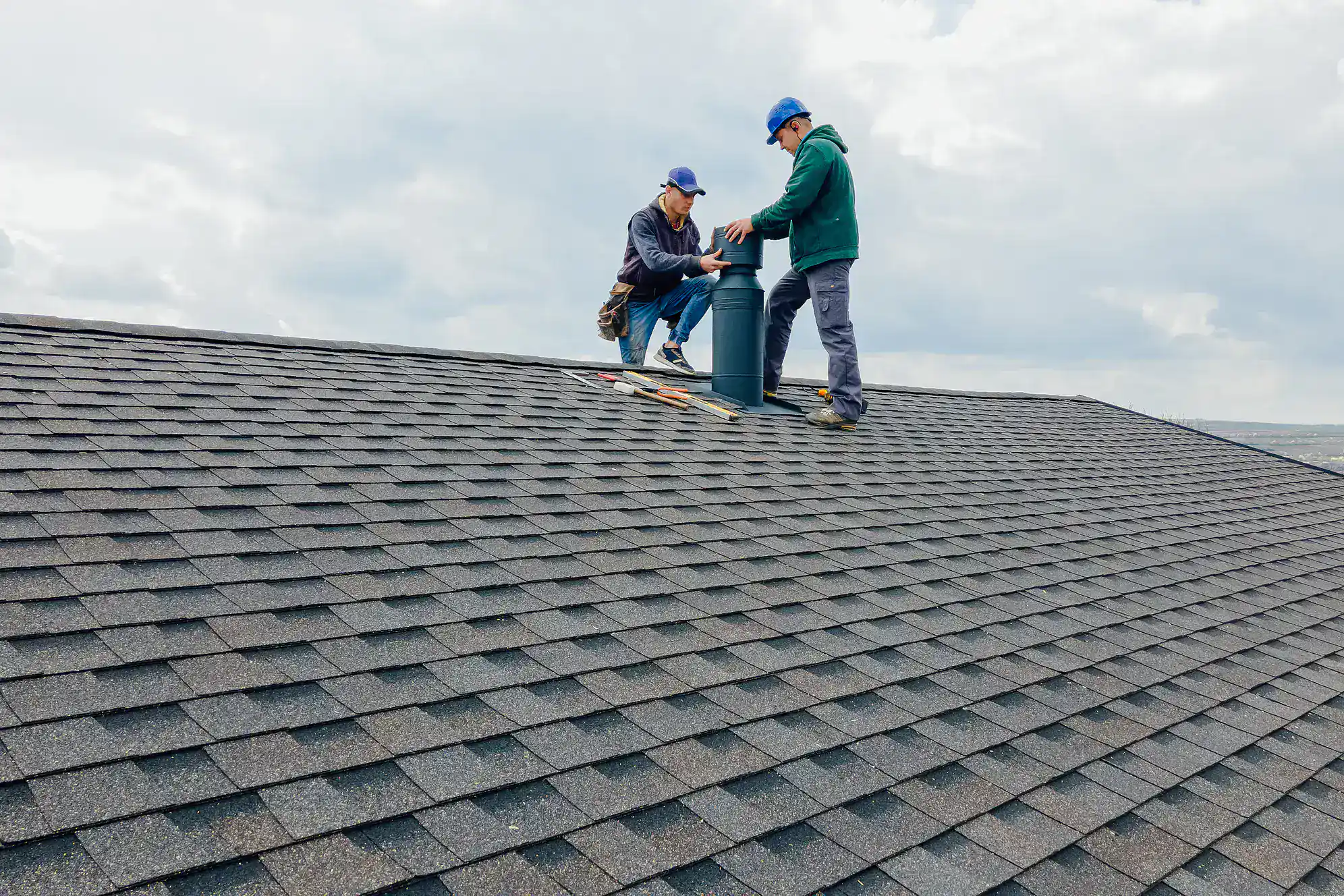
It starts with a free inspection. One of our technicians comes out, gets on the roof, and looks at what’s actually happening — not just what’s visible from the driveway. Shingle condition, flashing integrity, pipe boots, ridge caps, and any areas where water could be entering are all assessed. You get a clear, written explanation of what was found and what the repair involves before any commitment is made.
From there, you receive a written estimate that’s itemized and specific. The scope of work is defined, the materials are named, and the total cost is stated upfront. If the scope doesn’t change, the price doesn’t change. East Rutherford’s borough code requires permits for roof replacement work, and if your project falls under that threshold, we handle permit procurement as part of the process — so you’re not left navigating the Construction Office on your own.
Once the work is approved, repairs are scheduled and completed with the same crew that did the assessment. After the job is done, a magnetic nail sweep and full debris removal are standard — not an add-on. The job isn’t finished until the property is clean and you’ve had a chance to walk through the work.
Ready to get started?
Shingle and Flat Roof Repair East Rutherford
East Rutherford isn’t a one-roof-type town. Pitched shingle roofs on single-family homes, flat and low-slope sections on older multi-family buildings, and full commercial flat roof systems on the industrial properties throughout the Meadowlands District — the repair needs here are genuinely varied, and a contractor without experience across those systems will miss things.
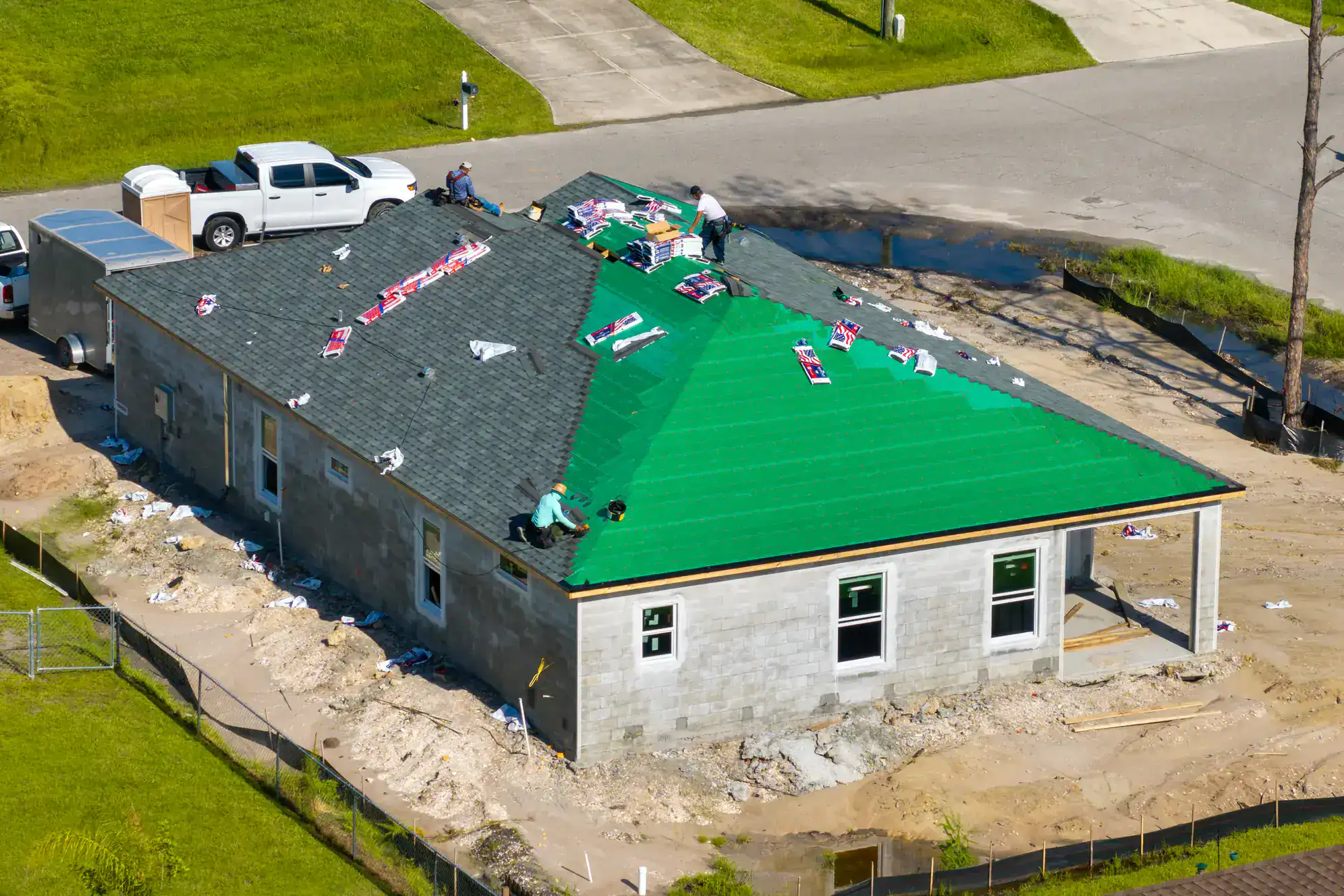
For shingle roof repair in East Rutherford, we address the specific damage patterns this area produces: wind-lifted tabs, cracked or missing ridge caps, failed pipe boot sealants, and ice dam damage along eave lines that forms every winter when temperatures cycle above and below freezing. Shingle matching is handled carefully — repaired sections are sourced to blend with the existing roof surface so the repair doesn’t announce itself from the street.
For flat roof repair in East Rutherford, the work covers TPO, EPDM, and modified bitumen systems common on the borough’s multi-family and commercial buildings. These systems fail differently than shingle roofs — seam separation, ponding water, and membrane punctures are the typical culprits — and they require a different diagnostic approach. We handle storm damage roof repair with insurance documentation support, which matters in a market where nor’easters and summer hail events regularly generate homeowners insurance claims. Emergency roof repair is available when an active leak can’t wait — we deploy temporary stabilization to stop water intrusion while permanent repairs are scheduled.
Does roof repair in East Rutherford, NJ require a permit from the borough?
It depends on the scope of the work. East Rutherford enforces the New Jersey Uniform Construction Code under Chapter 126 of the borough code, and roof replacement — meaning a significant portion of the roof surface is being redone — typically requires a permit issued through the borough’s Construction Office. Minor repairs like patching a few shingles, resealing a pipe boot, or replacing damaged flashing generally don’t require a permit, but the line between “repair” and “replacement” is determined by the extent of the work and how the local code interprets it.
The practical takeaway: if you’re getting a full replacement or a large-scale repair, permits need to be pulled. We handle this as part of the project — it’s not something you should have to manage on your own. Work done without required permits can create real problems when you go to sell the home or file an insurance claim, so it’s not a step worth skipping.
How do I know if I need roof repair or a full replacement?
This is the question most homeowners in East Rutherford are actually asking when they call, and the honest answer is: it depends on the age of the roof, the extent of the damage, and the condition of the underlying decking. A roof with isolated shingle damage, a failed flashing seal, or a single leak point is almost always a repair candidate. A roof that’s 25 or 30 years old, showing widespread granule loss, multiple leak points, or soft spots in the decking is more likely a replacement conversation.
Given that a significant share of East Rutherford’s housing stock was built between 1940 and 1969, a lot of roofs in the Carlton Hill and Willow Wood Square areas are at or past the point where repair becomes a short-term fix rather than a real solution. That’s exactly why the free inspection exists — to give you an honest answer based on what’s actually up there, not a recommendation based on what generates the larger job. If repair is the right call, that’s what you’ll hear.
What causes most roof leaks on homes in the East Rutherford area?
The most common sources of roof leaks in East Rutherford come down to a few recurring patterns. Flashing failure is at the top of the list — the metal or sealant that seals transitions around chimneys, skylights, vents, and pipe boots degrades over time, and once it goes, water has a direct path into the structure. Ice dams are a close second: when heat escapes through the roof in winter and melts snow that then refreezes at the colder eave overhang, the trapped water backs up under shingles and causes leaks that often don’t show up inside until well after the damage has started.
East Rutherford’s Meadowlands geography adds another layer. The open, low-lying terrain between the Passaic and Hackensack Rivers creates more wind exposure than most inland Bergen County towns experience, which accelerates shingle lifting and granule loss on the windward sides of roofs. Homes that have gone a few years without a professional inspection — especially those built in the mid-20th century — often have multiple small vulnerabilities that haven’t caused a visible leak yet but will after the next significant storm.
Will my homeowners insurance cover storm damage roof repair in East Rutherford, NJ?
Most standard homeowners insurance policies in New Jersey cover sudden, storm-related roof damage — wind damage, hail impact, falling debris — as long as the roof was in reasonable condition before the event and the damage wasn’t the result of long-term neglect. What insurance typically doesn’t cover is gradual deterioration, aging, or damage that existed before the policy was in force.
The claims process is where most homeowners run into trouble. Documenting damage in a way that satisfies an adjuster requires photos, written assessments, and a clear scope of what was damaged and what it costs to repair. East Rutherford gets hit regularly — nor’easters, summer thunderstorms rolling across the open Meadowlands, occasional hurricane remnants — and after a significant weather event, adjusters are handling a high volume of claims simultaneously. Having a contractor who can help document the damage thoroughly and communicate with your adjuster about the repair scope makes a real difference in how the claim resolves.
How long does a typical roof repair take to complete?
Most targeted roof repairs — replacing damaged shingles, resealing or replacing flashing, fixing a failed pipe boot — are completed in a single day, often in just a few hours. The timeline depends on the scope of the repair, the accessibility of the affected area, and whether any underlying decking damage needs to be addressed before new materials go down.
Flat roof repairs on East Rutherford’s multi-family and commercial buildings can take longer depending on the system type and the extent of membrane damage. TPO and EPDM repairs require proper surface preparation and curing time that shingle repairs don’t. Weather is also a factor — most roofing work requires dry conditions, and given East Rutherford’s storm frequency, scheduling sometimes needs to account for short weather windows. Emergency stabilization work, like deploying a temporary tarp after an active storm event, can happen same-day to stop water intrusion while the permanent repair is scheduled for appropriate conditions.
How much does roof repair in East Rutherford, NJ typically cost?
Roof repair costs in East Rutherford vary based on what’s actually wrong and how extensive the damage is. Minor repairs — resealing a pipe boot, replacing a handful of wind-damaged shingles, patching a small flashing failure — typically run in the range of $300 to $800. Mid-range repairs involving larger shingle sections, full flashing replacement around a chimney or skylight, or addressing ice dam damage along an eave line generally fall between $800 and $2,500. More extensive repairs that involve decking replacement or significant flat roof membrane work can run higher, depending on the square footage and system type involved.
What affects cost most in this market is the age and condition of the existing roof. On homes in the Carlton Hill area built in the 1950s and 1960s, it’s not uncommon to find secondary issues — deteriorated underlayment, soft decking, inadequate ventilation — that become visible once the surface repair work begins. A written, itemized estimate before any work starts is the only way to know exactly what you’re committing to. That estimate is free, and it won’t change unless the scope changes.