
Professional Roof Leak Companies vs DIY Fixes
Summary:
Water dripping through your ceiling. A stain spreading across the drywall. That bucket in the hallway you empty twice a day.
You’re staring at a roof leak, and the first question that hits is: can I fix this myself, or do I need to call someone?
It’s a fair question. Some leaks are small enough to patch temporarily. Others look simple on the surface but hide thousands of dollars in damage you can’t see from the ground. The difference between the two isn’t always obvious—and that’s exactly why over a third of DIY roof patches fail within the first year.
This isn’t about scaring you away from fixing things yourself. It’s about knowing when you’re solving the actual problem and when you’re just buying time before it gets worse. By the end of this, you’ll know what separates a quick fix from a professional repair, what roof leak experts actually do that DIY can’t replicate, and how to choose a roofer to fix leak damage the right way.
When DIY Roof Leak Fixes Actually Work
Let’s start with the truth: not every leak requires a contractor. If you’ve got a single missing shingle after a storm, the area is safely accessible, and the rest of your roof is in decent shape, a temporary patch can hold until you schedule a proper repair. That’s a reasonable short-term move.
The key word is temporary. A tarp, some roofing cement, or a replacement shingle can stop water from pouring in right now. But these fixes don’t address what caused the problem or whether damage has already spread beneath the surface.
Most homeowners assume the leak is directly above the drip. It’s not. Water enters at one point, travels along rafters or decking, and shows up somewhere completely different inside your home. You might patch the wrong spot entirely and think you’ve solved it—until the next rain.

Why Most DIY Roof Repairs Fail Within a Year
More than a third of DIY roof patches don’t make it through the first year. The reason isn’t that homeowners are careless. It’s that roof leaks are almost never what they appear to be.
You see a wet spot on the ceiling near the bathroom. You climb into the attic, spot some moisture on the decking, and assume the problem is right there. So you patch it from the inside or slap some sealant on the shingles above. The drip stops. Case closed.
Except water doesn’t move in straight lines. It follows the path of least resistance—down a rafter, across a joist, along a wire, through insulation. By the time it drips into your home, it might be ten feet away from where it actually entered. That’s why so many DIY fixes fail. You’re treating the symptom, not the source.
Then there’s the issue of hidden damage. A small leak you’ve been ignoring for weeks might have already soaked your decking, compromised your insulation, or started mold growth in the attic. You won’t see any of that from the ground. A patch won’t fix it. And the longer it sits, the more expensive the real repair becomes.
Professional roof leak experts don’t just look at the obvious spot. We trace the water back to its entry point, check the surrounding structure for rot or weakness, and make sure the repair actually stops the problem. That’s the difference between a fix that lasts and one that buys you a month before it fails again.
If your roof is older, if you’re seeing multiple leaks, or if the damaged area involves flashing, valleys, or anything near a chimney or vent, DIY isn’t going to cut it. Those are the situations where trying to save a few hundred dollars upfront can cost you thousands later.
The Real Cost of Getting It Wrong
Let’s talk numbers. A typical roof leak repair handled by a professional runs anywhere from $150 to $1,500, depending on the source and severity. A pipe boot replacement might be $200. A flashing repair could be $400. That’s the cost of fixing it right the first time.
Now here’s what happens when a leak gets ignored or patched incorrectly. Every week water sits in your roof structure, the damage spreads. A $300 flashing repair left alone for six months turns into a $2,000 decking replacement. Leave it longer, and you’re looking at mold remediation, ceiling repair, and structural work that can easily hit $5,000 or more.
There’s a documented case from 2024 where a homeowner in a nearby county noticed a small drip after a storm. They put a bucket under it and figured they’d deal with it later. Three days later, the ceiling collapsed. Water had saturated the drywall, compromised the beams, and spread mold through the HVAC system. Final bill: $67,000. The emergency tarping service that could have prevented it? $500.
That’s not a scare tactic. That’s what happens when water gets time to work. And the average homeowner spends $8,600 on roof repairs, with 75% of that cost coming from water damage that started small and escalated because it wasn’t caught early.
DIY fixes don’t account for this. You stop the drip, but you don’t inspect the decking. You don’t check for mold. You don’t verify that the surrounding structure is still sound. A professional does. That’s what you’re paying for—not just the patch, but the peace of mind that the problem is actually solved.
If you’re dealing with anything more than a single missing shingle on a roof that’s otherwise in good shape, the smart move is to call someone who knows what they’re looking for. The cost of getting it wrong is almost always higher than the cost of getting it right.
Want live answers?
Connect with a USA Home Remodeling LLC expert for fast, friendly support.
What Professional Roof Leak Companies Actually Do Differently
Professional roofers don’t just patch the visible problem. We diagnose it. That means finding the actual entry point, checking for secondary damage, and making sure the repair addresses the root cause—not just the symptom you can see from inside your house.
Water intrusion causes 40% of all building issues, and most of it hides behind what you can see. A roofer worth hiring will inspect your attic, trace the water path, check your decking for rot, and look for other weak points that could fail next. That’s not upselling. That’s doing the job right.
The other thing professionals bring is proper materials and installation. Manufacturers void warranties if the work isn’t done by a licensed contractor. That means if you patch your own roof and something fails, you’re paying for the replacement shingles out of pocket. A licensed roofer installs it correctly, and the warranty stays intact.
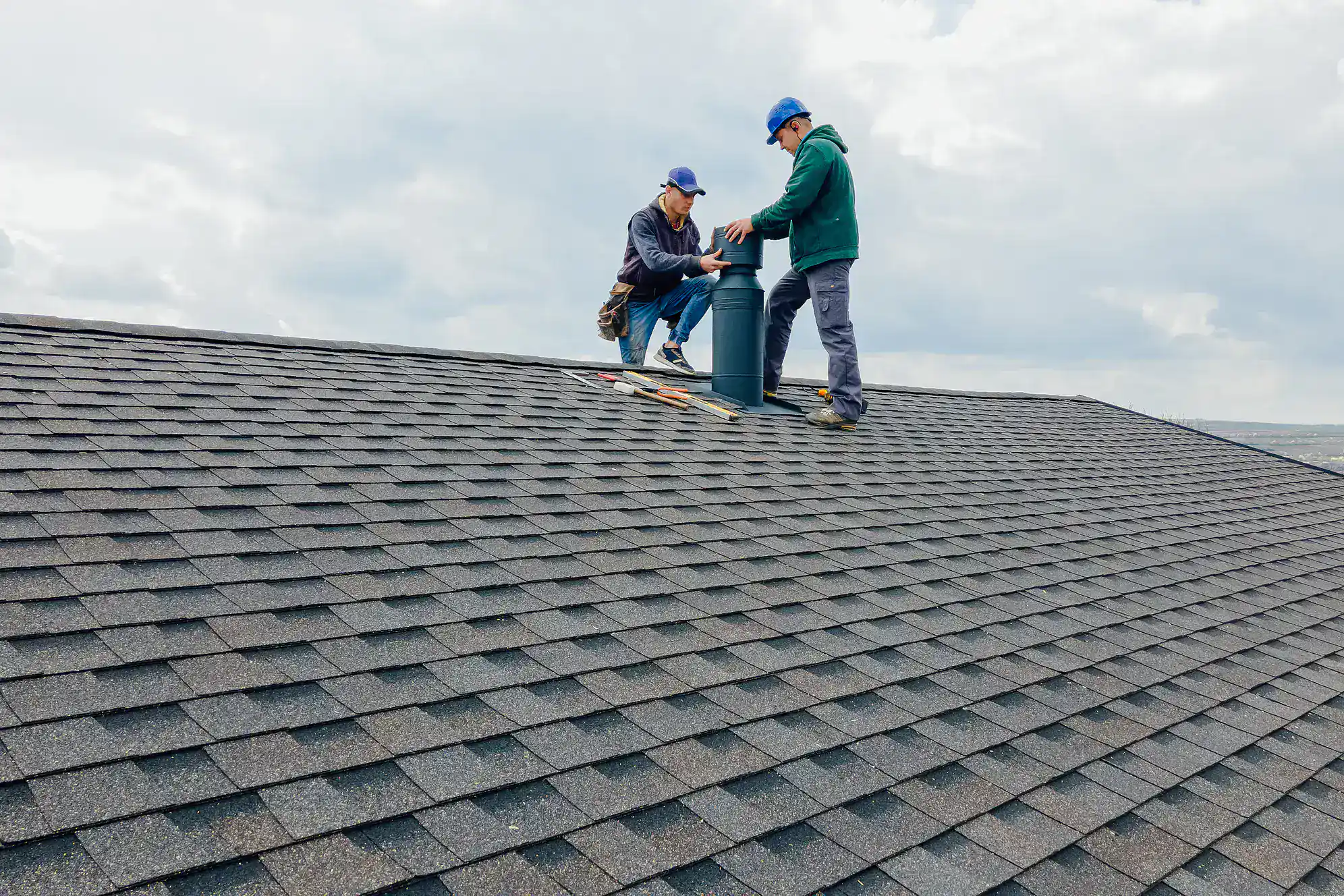
How Roof Leak Experts Find Problems You Can't See
Finding a leak isn’t as simple as looking for the wet spot. Professionals use tools and techniques that go beyond what most homeowners have access to. Thermal imaging cameras detect temperature differences that indicate moisture trapped in your roof. Moisture meters measure water content in materials you can’t see. These tools pinpoint the exact source of the leak, even when it’s hidden under layers of shingles, underlayment, and decking.
We also know where to look. Roof leaks rarely develop in open, uninterrupted sections of shingles. They happen at penetrations—vents, chimneys, skylights, valleys, and flashing. These are the spots where water finds a way in, and they’re also the hardest to repair correctly without experience.
A common example: vent pipe boots. Every plumbing vent that sticks up through your roof has a rubber seal around the base. Over time, that rubber cracks and pulls away from the pipe. Water runs straight down into your attic. From inside your house, it looks like the leak is coming from the bathroom ceiling. From the roof, the problem is a $30 part that takes 20 minutes to replace—if you know what you’re looking for.
Flashing is another frequent failure point. The metal strips that seal the joints around chimneys, walls, and roof transitions can rust, lift, or get installed incorrectly in the first place. Water gets behind them and travels horizontally before dripping into your home. A DIY patch won’t fix that. You need to remove the old flashing, inspect the substrate, and install new flashing that’s properly integrated with the shingles. That’s skilled work.
Roof leak experts also check for damage you didn’t know existed. A leak that’s been dripping for weeks might have rotted your decking, soaked your insulation, or started mold growth. If you patch the roof without addressing that, you’ve stopped the water but left the damage. A professional inspection catches it before it becomes a bigger problem.
This is especially important in Union County, where most homes are 50 to 120 years old. Older roofs have been patched, re-roofed, and modified over decades. Sometimes there are multiple layers of shingles hiding problems underneath. We know how to navigate that and make sure the repair actually holds.
What to Look for When Choosing a Roofer to Fix Leak Damage
Not all roofers are created equal. If you’re hiring someone to fix your leak, you need to know they’re qualified, insured, and accountable. That means verifying a few key things before anyone sets foot on your roof.
First, licensing. In New Jersey, roofing contractors are required to hold a valid state license, which they can only get by passing a written exam on building codes and industry standards. That license proves they know what they’re doing and that they’re legally allowed to work on your home. If a contractor can’t provide proof of their license, move on.
Second, insurance. A legitimate roofer carries both general liability and workers’ compensation insurance. General liability protects your property if something gets damaged during the job. Workers’ comp protects you if someone gets injured on your roof. Without these, you could be held financially responsible if something goes wrong. Always ask for proof of insurance and verify it with the carrier.
Third, warranties. A professional contractor should offer a workmanship warranty that covers their labor, separate from the manufacturer’s warranty on the materials. That means if the repair fails because of something they did wrong, they’ll come back and fix it at no cost to you. Get that in writing.
Fourth, references and reviews. A reputable roof leak company will have a track record you can verify. Check their Google reviews, ask for references from recent jobs, and look for complaints with the Better Business Bureau. If they’ve been in business for years and have consistently positive feedback, that’s a good sign. If they’re brand new, evasive about references, or have a history of unresolved complaints, that’s a red flag.
Fifth, transparent pricing. A good contractor will give you a written estimate that breaks down the cost of labor, materials, and any additional work that might be needed. They won’t pressure you to pay upfront, and they won’t surprise you with hidden fees halfway through the job. If the estimate seems too good to be true, it probably is.
Finally, local knowledge matters. A contractor who works in Union County regularly understands the building codes, the permit process, and the specific challenges that come with older homes in this area. We know which municipalities require permits for certain repairs and how to navigate inspections. That familiarity saves time and ensures the job is done to code.
When you’re evaluating contractors, don’t just go with the lowest bid. The cheapest option often cuts corners—using subpar materials, skipping steps, or hiring inexperienced crews. You want someone who’s going to do the job right, stand behind their work, and be around if something needs attention down the line.
Making the Right Call for Your Roof Leak Situation
Here’s the bottom line: some leaks are simple enough to patch temporarily, but most require professional diagnosis and repair to actually solve the problem. If you’re dealing with anything beyond a single missing shingle, if the leak is near flashing or penetrations, or if your roof is older than 15 years, calling a roof leak company is the smarter move.
You’re not just paying for the patch. You’re paying for accurate diagnosis, proper materials, skilled installation, and the peace of mind that the problem is actually fixed. You’re also protecting yourself from the hidden costs—rotted decking, mold, structural damage—that DIY repairs don’t catch.
If you’re in Union County, NJ and you’re facing a roof leak, we offer free inspections and transparent estimates. No pressure, no hidden fees—just an honest assessment of what your roof needs and what it’ll cost to fix it right.