
Hail Damage Roof Inspection Checklist for Union County, NJ Homeowners
Summary:
A storm rolls through. You walk outside, look up at your roof, and everything seems fine. No missing shingles. No visible holes. No water coming through the ceiling. So you move on.
That’s the moment most Union County homeowners get it wrong — not because they’re careless, but because hail damage doesn’t always look like damage. It hides. It weakens your roof quietly, over months, until the next storm or the first hard freeze finishes the job.
This guide gives you a practical checklist of what you can actually check from the ground, what a professional inspection covers that you can’t safely do yourself, and how to document everything in the right order before you touch your insurance claim.
What Hail Actually Does to a Roof (And Why It's Hard to See)
The most dangerous misconception about hail damage is that if your roof isn’t leaking, nothing’s wrong. In reality, hail damage often leaves the shingle physically in place while fracturing the fiberglass mat underneath — a condition called shingle bruising. The surface looks largely intact. The granules are still there, mostly. But the structural integrity of that shingle is compromised, and it’s no longer doing its job the way it was designed to.
Normal granule loss on an asphalt shingle runs at roughly 3% per year. A single hail event can accelerate that by 15 to 45 percent. That’s not a minor cosmetic issue — it’s years stripped off your roof’s remaining lifespan in one afternoon. And because the damage doesn’t create an immediate opening, it rarely triggers the sense of urgency it deserves.
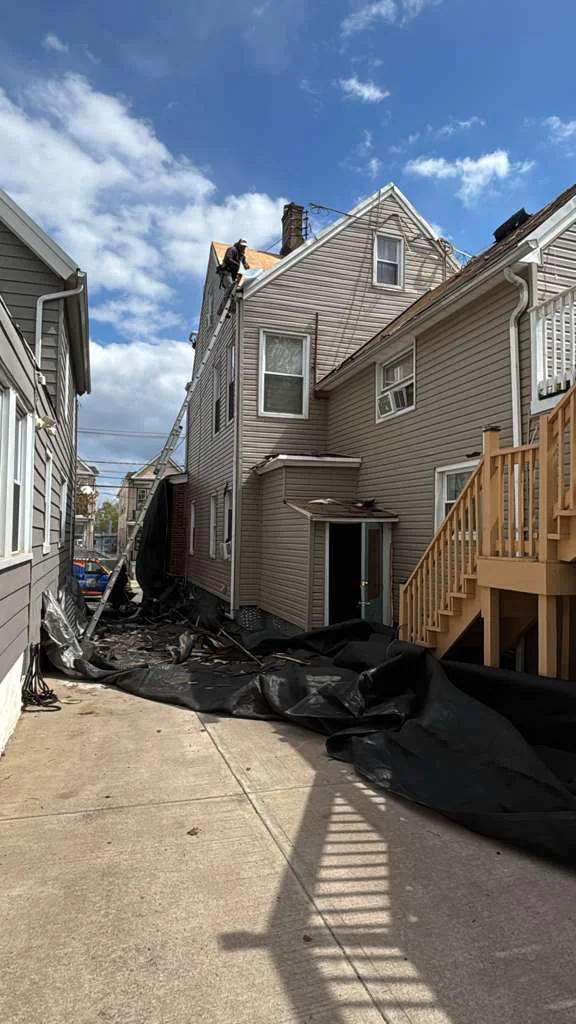
What You Can Check From the Ground After a Hail Storm
You don’t need to get on the roof to gather useful information. In fact, you shouldn’t — not without the right equipment and training. But there’s a meaningful amount you can observe safely from ground level, and doing it right after the storm matters for documentation purposes.
Start with your gutters and downspouts. After a significant hail event, you’ll often find granule accumulation at the gutter outlets — a dark, sandy residue that looks almost like coarse coffee grounds. That’s the protective coating being knocked off your shingles. One storm’s worth of granule loss in your gutters isn’t always cause for immediate replacement, but it’s a concrete, documentable sign that impact occurred.
Next, look at your downspouts and any exposed soft metal on the property — AC condenser fins, aluminum flashing around vents, metal window trim, and the gutters themselves. Hail leaves small, distinct dents on soft metal surfaces that are easy to photograph and nearly impossible to fake or dispute. If your condenser fins are dented and your downspouts show fresh impact marks, there’s a very strong likelihood your shingles absorbed the same storm. Insurance adjusters know this, and so do we.
Check your siding too, particularly if you have vinyl or aluminum. Hail hits don’t always crack vinyl, but they leave circular impact marks that are visible on closer inspection. If your siding shows hits and your roof doesn’t seem to, the roof almost certainly took damage as well — the siding is just easier to see from the ground.
Write down the date of the storm and take timestamped photos of everything you find. The NOAA Storm Events Database records hail size and location, and that data is what insurance adjusters use to verify storm events. Having your own documentation from the same day the storm hit puts you in a much stronger position when it’s time to file.
What Only a Professional Roof Inspection Can Tell You
Ground-level checks give you evidence. A professional inspection gives you answers. There’s a meaningful gap between the two, and it’s the gap that determines whether your insurance claim succeeds or gets underpaid.
A trained inspector on the roof is looking for things that are genuinely invisible from the street. Shingle bruising — those localized fractures in the fiberglass mat beneath the surface — can only be identified by touch and close visual inspection on the roof itself. A bruised shingle looks nearly normal from below. Up close, it has a soft spot, a subtle circular depression, and often a loss of granules in a roughly circular pattern that matches the shape of a hailstone impact. These are the hits that adjusters count and document using what’s called a test square — a defined section of the roof surface where impacts are systematically recorded and photographed.
Beyond the shingles themselves, a thorough inspection covers ridge caps, which take some of the hardest impacts on the roof; flashing around chimneys, skylights, and vents, where storm damage often accelerates existing vulnerabilities; and the attic interior, where moisture intrusion from compromised shingles may already be showing up as staining or soft decking before a visible leak appears in your living space.
This is also where the age and condition of your roof matters significantly. Union County has a lot of older housing stock — homes in Elizabeth, Linden, and Plainfield built between the 1920s and 1960s, many of which have roofs that are at or near the end of their natural lifespan. A roof with aged, granule-depleted shingles is far more vulnerable to hail impact than a newer roof, even from moderate-sized hail. Hail around one inch in diameter — roughly quarter-sized — can begin to damage asphalt shingles, and that threshold drops considerably on a roof that’s already worn.
We inspect the full system: shingles, ridge caps, flashing, gutters, downspouts, siding, and soft metal components. Not just the shingles. Because after a storm like the one that moved through Union County on July 3rd, 2025 — which produced documented quarter-sized hail in the Plainfield area — the damage rarely stops at the roof line.
Want live answers?
Connect with a USA Home Remodeling LLC expert for fast, friendly support.
How to Document Hail Damage for Your Insurance Claim (And Why the Order Matters)
Most homeowners get the sequence backwards. They call their insurance company first, wait for an adjuster, and only then think about getting a contractor involved. That approach puts you at a disadvantage before the process even starts.
The right sequence is: document first, get an independent contractor inspection and written report second, then contact your insurer. Our inspection report — with photos, impact counts, identified shingle products, and affected components — becomes your independent baseline. When the adjuster arrives, you’re not starting from zero. You have your own documentation to compare against theirs, and any discrepancies are much easier to address before a claim is settled than after.

Why You Should Get a Roof Inspection Before Filing Your Insurance Claim
Filing a claim before you have an independent inspection isn’t just putting the cart before the horse — it can genuinely limit your options. Once a claim is filed and an adjuster has submitted their findings, reopening it to add damage that was missed becomes a much heavier lift. Getting a contractor’s written report first means you walk into that conversation with documentation already in hand.
Our inspection reports are structured to support a claim. We document each affected slope of the roof separately, count and photograph individual hail impacts using a defined test area methodology, identify the shingle manufacturer and product, and note all secondary damage — gutters, downspouts, siding, and soft metals. That level of detail matters to adjusters, and it’s the standard we hold our inspections to.
There’s also a timing consideration that Union County homeowners often overlook. Most NJ homeowners insurance policies have a defined window for filing storm damage claims after the event. Waiting too long — even by a few weeks — can complicate or void your ability to claim. The storm on July 3rd, 2025 is already documented in the NWS record. If your home is in Union County and you haven’t had your roof checked since then, that window is still open, but it won’t stay open indefinitely.
Getting a roof inspection does not affect your insurance premium. Filing a claim may, depending on your policy, but having a contractor assess your roof and provide a written report is simply gathering information. There’s no downside to knowing what you’re working with before you decide how to proceed.
How to Tell the Difference Between a Legitimate Inspection and a Storm-Chaser Visit
After a major hail event in Union County, the contractors who show up at your door first are often the ones you should be most cautious about. Storm chasers — out-of-area roofing companies that follow severe weather events from market to market — move fast for a reason. The window between a storm and a homeowner’s decision is short, and pressure is their primary tool.
A legitimate inspection looks very different. No one knocks on your door the day after a storm demanding you sign anything. A real contractor comes out, gets on the roof, documents what they find, and gives you a written report — whether the news is good or bad. If there’s no damage, we tell you that. If there is damage, we explain what we found, show you the photos, and give you time to decide how you want to proceed. No assignment of benefits pressure. No “sign today or lose the deal.”
The simplest way to protect yourself is to verify the contractor’s license before anyone gets on your roof. New Jersey requires all home improvement contractors, including roofers, to hold an active HIC license from the NJ Division of Consumer Affairs. You can verify any contractor’s license status at njconsumeraffairs.gov — it takes about 30 seconds and tells you immediately whether the company you’re dealing with is legally operating in this state.
We hold an active NJ Home Improvement Contractor license, and we’ve been based in Elizabeth since the beginning. We’re not following a storm — we’re already here. That’s a meaningful distinction when you’re trying to figure out who to trust after a bad weather event, and it’s the kind of accountability that only a local company with 17 years in this market can actually offer.
Free Hail Damage Roof Inspections in Union County — No Obligation, No Pressure
If a storm has come through your neighborhood and you’re not sure what you’re dealing with, the answer isn’t to wait and see. Hail damage that goes unaddressed before winter arrives gets worse — freeze-thaw cycles widen the micro-cracks that hail opens, and what was a manageable repair in October can become a significant problem by March.
The checklist in this guide gives you a solid starting point. Check your gutters for granule accumulation, look at your downspouts and AC unit for fresh dents, photograph anything that looks off, and write down the storm date. Then call a licensed local contractor to get on the roof and give you a written assessment before you file anything with your insurer.
We offer free inspections with no strings attached — no cost, no pressure, and no obligation. We’re available 24/7 for emergency situations, and our standard inspections cover the full exterior: roof, gutters, siding, and soft metals. If there’s damage, we’ll document it properly. If there isn’t, we’ll tell you that too. Reach out to USA Home Remodeling and let’s find out exactly what you’re working with.