
Gutter Installation in Wallington, NJ
Wallington's River Borders Don't Forgive Bad Gutters
Hear from Our Customers
Rain Gutter Installation in Bergen County
Water stains on the siding. Pooling near the foundation. Gutters pulling away from the fascia after a hard rain. These aren’t minor annoyances — they’re early signs that your home is losing the fight against water. Once a proper system is in place, those problems stop compounding.
Wallington sits between the Passaic and Saddle Rivers, and that geography matters more than most homeowners realize. When a summer storm dumps two inches of rain in forty minutes — which happens here — or when a tropical storm remnant rolls through in October and the ground is already saturated, a gutter system that’s undersized or failing doesn’t just overflow. It directs water straight toward your foundation, into the soil that’s already at capacity. For homes in Wallington, that’s not a hypothetical. It’s happened enough times that most long-term residents have a story about it.
More than 22% of Wallington’s housing was built before 1939, and a large share of the rest dates to the 1940s and 1950s. Those homes were built with gutter systems sized for a different era of rainfall. What you’re dealing with today — in terms of storm intensity and frequency — is not what those systems were designed for. A properly installed seamless aluminum system, custom-fabricated to your roofline and sloped correctly toward the downspout, gives your home the drainage capacity it actually needs. Not what it had sixty years ago.
Gutter Installation Company in Wallington, NJ
We’re a licensed New Jersey exterior contractor — NJ Home Improvement Contractor License #13VH10605800 — with over a decade of work on homes across Bergen County and the surrounding region. We hold manufacturer certifications from major shingle manufacturers, carry full insurance, and are registered with the Better Business Bureau. These aren’t credentials that get handed out. They get earned and maintained.
We’re based in Elizabeth, NJ, which puts Wallington well within our core service area via Route 21 north — a straight shot through communities we’ve been working in for years. Our growth here has come from referrals, not paid leads. In a tight-knit borough like Wallington, where neighbors on the same block talk to each other and a contractor’s reputation travels fast, that distinction matters.
What you won’t get is a national franchise crew that’s never set foot in Bergen County. You’ll get a team that knows what Bergen County weather does to older homes, what the capes and two-families on Wallington’s blocks actually look like up close, and what it means to do the job right the first time.
Home Gutter Installation Wallington, NJ
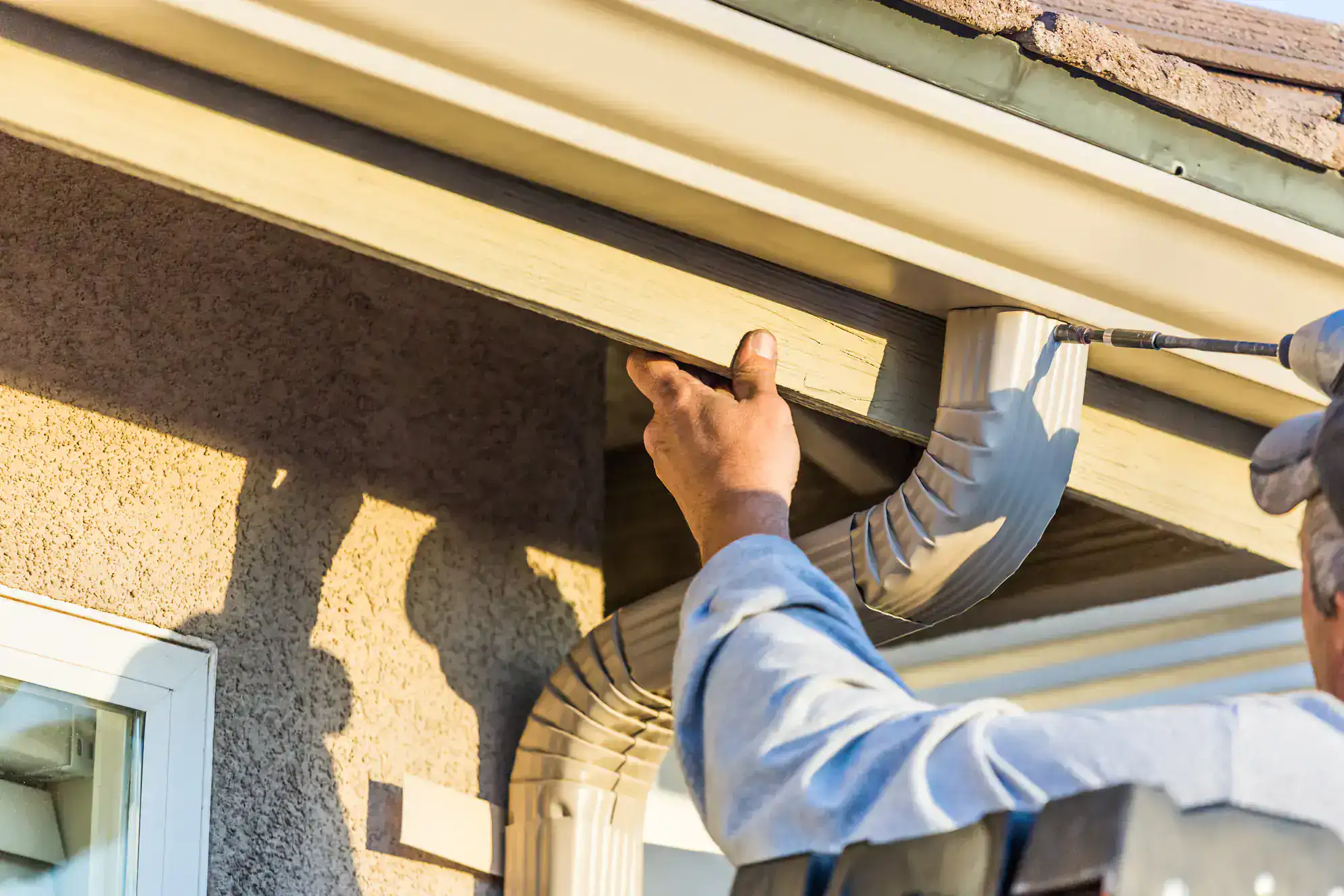
It starts with a free inspection. We come out to your Wallington property, get on a ladder, and look at what’s actually there — not just the gutters, but the fascia boards underneath them. On homes built in the 1940s and 1950s, which make up a significant portion of Wallington’s housing stock, fascia rot is common. It happens when gutters have been overflowing or improperly draining for years. Mounting new gutters on rotted fascia is a waste of your money, so if it’s there, you’ll know about it before anything gets installed.
After the inspection, you get a written estimate. The number in that estimate is the number you pay. If something unexpected comes up during installation — say, a downspout needs to be rerouted to drain away from the foundation rather than toward it — we call you before anything changes. No surprises on the invoice.
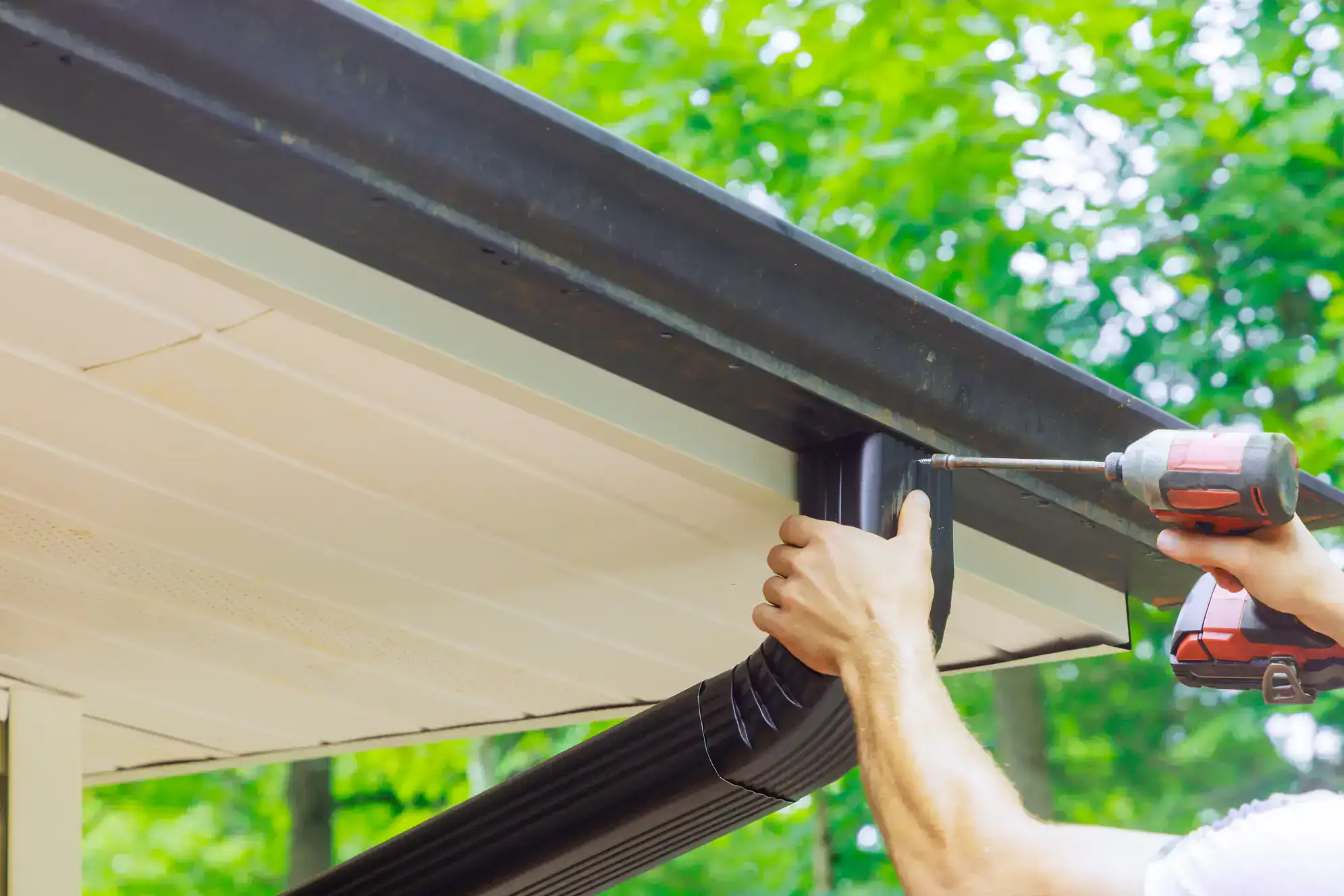
The gutters themselves are fabricated on-site. That means our equipment comes to your property and every run is cut to your exact roofline measurements. No pre-cut sections pieced together with seam joints — just continuous aluminum runs, properly sloped at the industry standard of one-quarter inch per ten feet toward the downspout. One important note for Wallington homeowners: gutter replacement in this borough does not require a building permit, confirmed by the borough’s own FAQ. That means no waiting for municipal approval. Once you’ve approved the estimate, the project moves forward on your schedule.
Ready to get started?
Roof Gutter Installation Wallington, NJ
Every gutter installation we do starts with a full assessment of your exterior system — not just the gutters in isolation. Rooflines, fascia condition, downspout sizing, and drainage direction all get evaluated before a single bracket goes up. This matters especially in Wallington, where nearly half the housing stock is duplexes and two-family homes. Those properties have larger, more complex rooflines than a standard single-family house, and they often require two complete gutter systems. If you’re an owner-operator renting out a unit, a gutter failure doesn’t just affect your living space — it affects your tenant and your income.
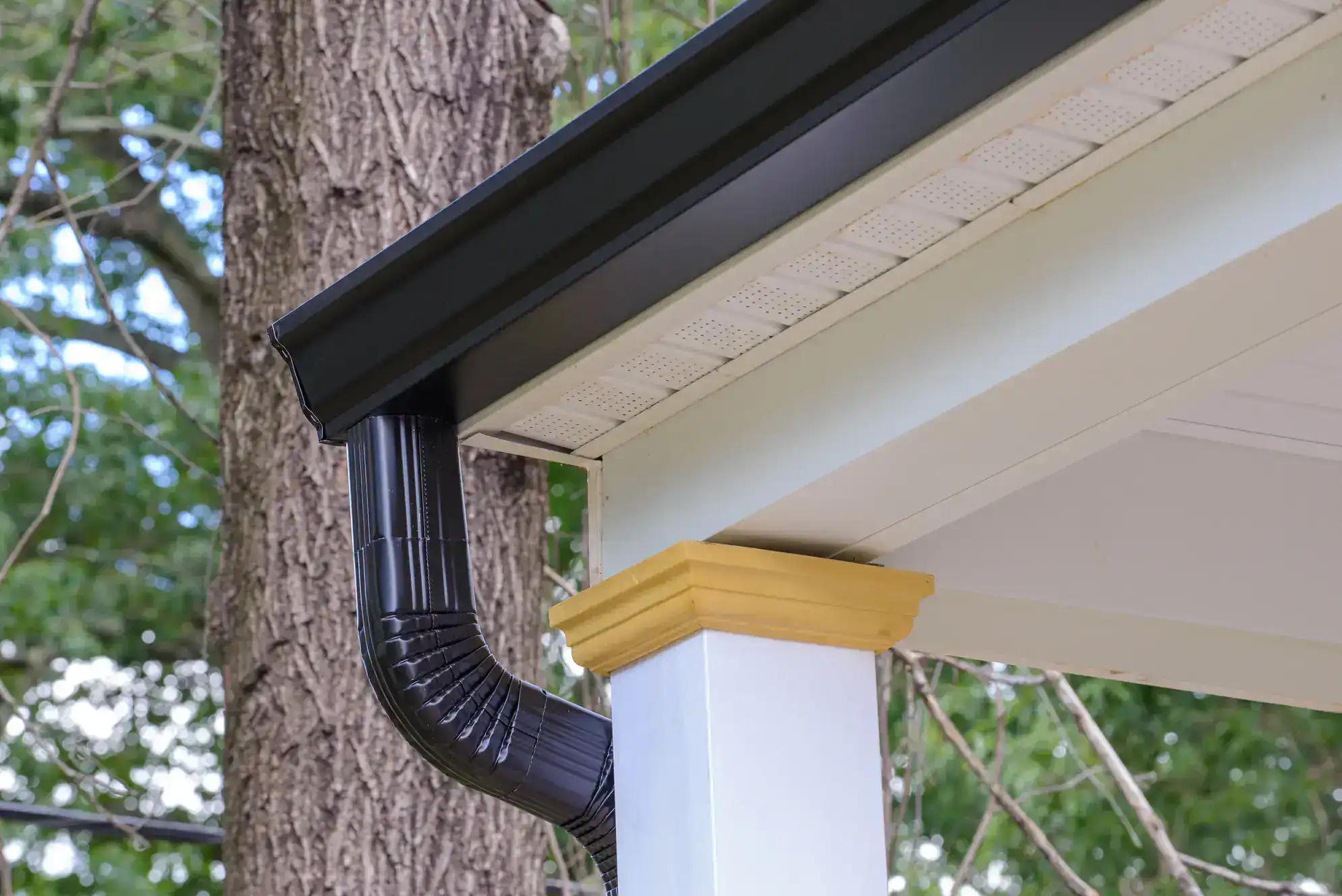
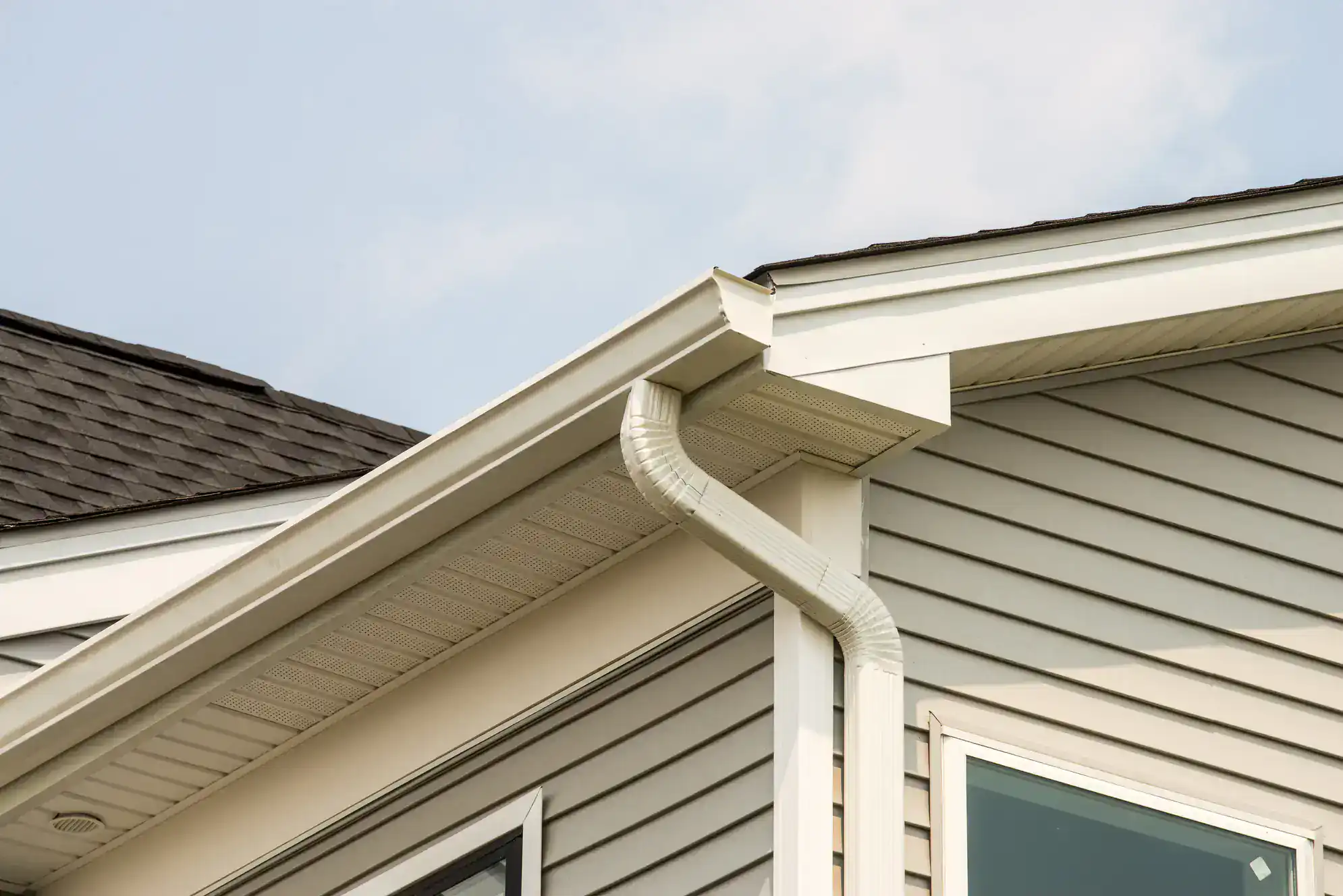
The seamless aluminum gutters we install are custom-fabricated on-site to match your roofline exactly. Downspouts are sized to handle your roof’s actual water volume and positioned to drain a minimum of six feet from the foundation — a critical detail for any home near Wallington’s river boundaries, where soil saturation during flood events can make even a small drainage error into a basement problem.
If your gutters were damaged by wind, ice, or storm conditions tied to a Passaic River event or a major nor’easter, your homeowner’s insurance may cover the replacement. We work directly with insurance adjusters — documenting the damage, submitting the claim, and working to get you the coverage you’re entitled to. Wallington’s Property Maintenance Code (Chapter 276, Article I) also requires gutters to be maintained in good repair, so if your system is failing, there’s both a practical and a compliance reason to address it.
Do I need a building permit to replace gutters in Wallington, NJ?
No — and this is confirmed directly from the Borough of Wallington’s official FAQ. Replacement of exterior rain gutters and leaders is specifically listed among the work items that do not require a building permit in Wallington. That means once you’ve approved an estimate, the project can be scheduled and completed without waiting on municipal approval. There’s no paperwork delay, no inspection scheduling, no waiting in line at the building department.
That said, Wallington’s Property Maintenance Code (Chapter 276, Article I) does require that all gutters, leaders, and downspouts be maintained in a state of good repair and adequate to carry water away from the building. So while you don’t need a permit to replace them, you are legally required to keep them functional. If your current system is failing — overflowing, pulling away from the fascia, or not draining properly — that’s not just a maintenance issue. It’s a code compliance issue.
What's the difference between seamless and sectional gutters for my home?
Sectional gutters are pre-cut pieces joined together on-site with seam connectors. Every one of those seams is a potential failure point — they expand and contract with temperature changes, they collect debris, and over time they separate and leak. For a home in Wallington that’s been dealing with Bergen County winters and freeze-thaw cycling for decades, seam failure is usually what causes gutters to start leaking mid-span rather than at the downspout.
Seamless gutters are fabricated in one continuous run from end to end, with no joints along the length. The only connection points are at the corners and downspouts, which are unavoidable. Because there are no mid-span seams, there’s nothing to separate, nothing to clog at a joint, and no gap for water to back up behind the gutter and saturate the fascia. For Wallington’s older housing stock — much of it built in the 1940s and 1950s with original or early-replacement sectional systems — switching to seamless is usually the most cost-effective long-term decision. You’re not patching a system that’s going to keep failing. You’re replacing it with one that’s built to last.
How do I know if my gutters need to be replaced or just repaired in Wallington?
The honest answer is that it depends on what’s actually failing. A single loose downspout bracket or a minor separation at one joint is a repair. But if you’re seeing multiple failure points — gutters pulling away from the fascia in more than one section, visible sagging, water staining along the siding in several places, or pooling near the foundation after every storm — that’s usually a sign the system is at or past the end of its service life.
For homes in Wallington built before the 1960s, there’s an additional factor to consider: the fascia boards. If gutters have been overflowing or improperly draining for years, the wood underneath them absorbs that moisture. Rotted fascia can’t hold gutter brackets securely, which means a repair to the gutters themselves won’t hold. Before recommending repair or replacement, a proper inspection looks at both the gutters and what they’re attached to. That’s the only way to give you an honest answer — and it’s the first thing that happens during a free inspection.
Can storm damage to my gutters in Wallington be covered by homeowner's insurance?
It can be, and it’s worth checking before you assume you’re paying out of pocket. Wallington has a documented history of storm events tied to the Passaic River — including Hurricane Irene in 2011, Tropical Storm Ida in 2021, and a pattern of spring and fall flood events going back decades. Wind, hail, falling debris, and ice damage from major storms are typically covered under the dwelling portion of a standard homeowner’s insurance policy, as long as the damage is sudden and accidental rather than the result of long-term neglect.
The key is documentation. Insurance adjusters need to see clear evidence of what caused the damage and what it affected. We work directly with adjusters — photographing the damage, identifying storm-related failure points versus pre-existing wear, and submitting the documentation needed to support your claim. Many Wallington homeowners either don’t know their gutters might be covered or don’t know how to navigate the claim process. If there’s any chance a recent storm event caused or contributed to the damage, it’s worth having the inspection done before you write off the cost as out-of-pocket.
How much does gutter installation typically cost for a home in Wallington, NJ?
For most single-family homes, seamless aluminum gutter installation runs between $2,800 and $5,200. The range exists because cost is driven by linear footage, the number of downspouts, roof complexity, and whether any fascia repair is needed before installation. For Wallington’s two-family homes and duplexes — which make up nearly half the borough’s housing stock — the scope is often larger than a standard single-family job, since you’re typically dealing with more roofline and more drainage points.
What you won’t get from us is a number that changes between the estimate and the invoice. The written estimate is the price. If something comes up during installation that affects the scope — say, a section of fascia needs to be replaced before the gutters can be mounted — we call you before any additional work is done. The goal is that you know exactly what you’re spending before the job starts, not after it’s finished. The free inspection is the starting point for that conversation, and there’s no obligation to move forward.
How long does a new gutter installation take on a Wallington home?
For most Wallington homes, the installation itself takes one day. The timeline from first call to completed job depends on the inspection, the estimate review, and scheduling — but the physical installation of a seamless aluminum gutter system on a single-family home or duplex is typically a same-day process once the project is scheduled.
A few factors can extend the timeline. If the inspection reveals rotted fascia that needs to be replaced before the gutters go up, that adds work — but it’s work that has to happen anyway, because new gutters on compromised fascia won’t hold. The good news specific to Wallington is that gutter replacement doesn’t require a building permit here, so there’s no permit waiting period built into the schedule. Once the estimate is approved, the job moves on your timeline. Given that Bergen County’s fall season — when Passaic River flood risk is highest and leaf load starts clogging older systems — tends to drive a surge in installation requests, earlier in the season is generally better if you’re planning a replacement before winter.