
Gutter Installation in Rockleigh, NJ
Estate Homes Here Don't Leave Room for Gutter Mistakes
Hear from Our Customers
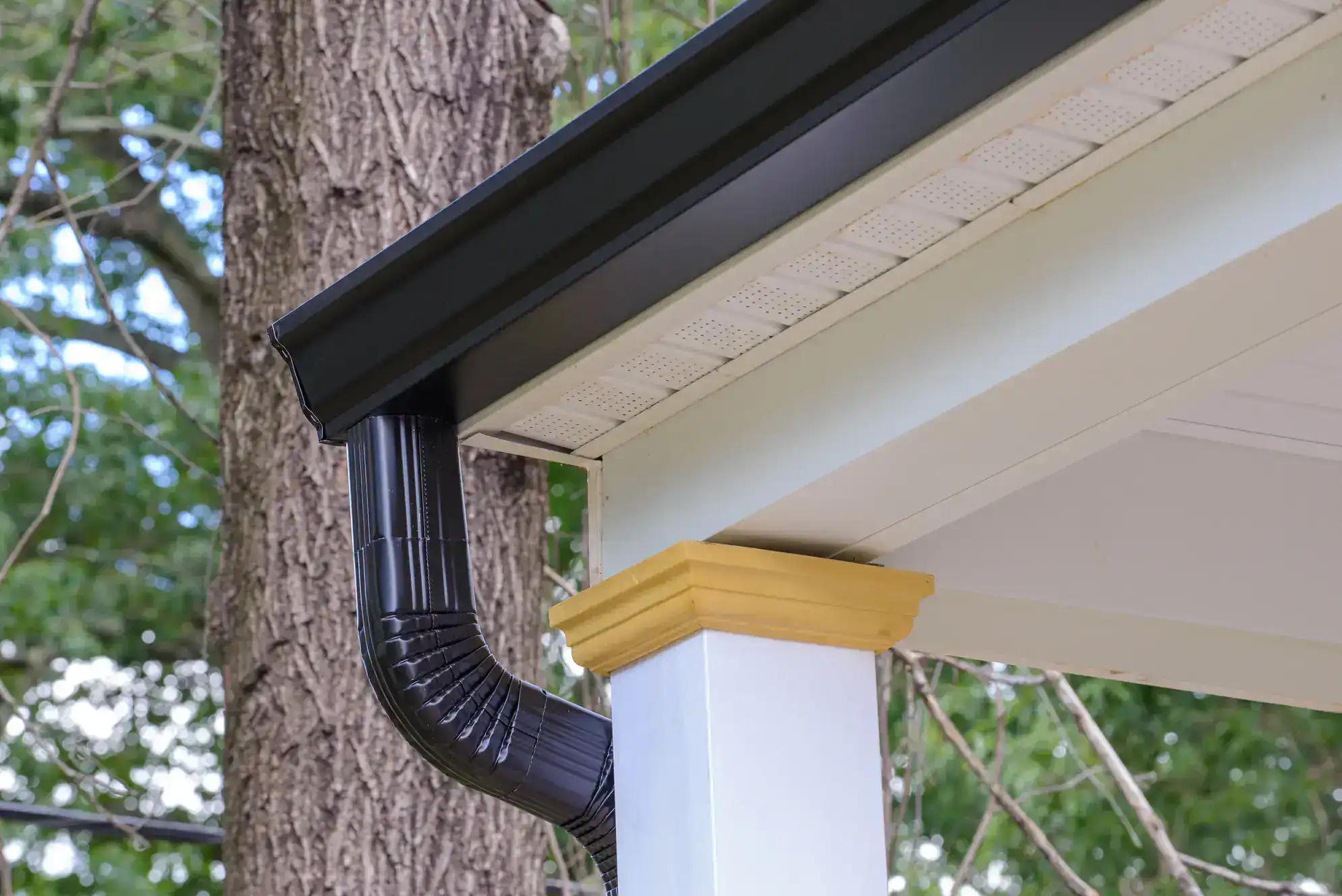
Rain Gutter Installation in Bergen County
Bergen County gets about 48 inches of rain per year — that’s 26% more than the national average. On a Rockleigh home averaging nearly 6,000 square feet, that’s an enormous volume of water moving across your roof and into your drainage system every time it storms. When that system is properly sized and correctly installed, it does its job quietly. When it’s not, you start seeing the damage in places you least expect it — rotted fascia, water in the basement, foundation erosion, and staining along your siding that doesn’t wash off.
Rockleigh’s landscape makes this more complicated than most towns. The mature oak and maple canopy that makes this borough feel like its own world also drops significant debris into gutters every fall — and again after every summer storm. Clogged or sagging gutters on a large estate home can redirect hundreds of gallons of water per storm event straight toward your foundation. The fix isn’t just cleaning them more often. It’s making sure the slope, sizing, and downspout placement were right from the start.
Then there’s winter. Bergen County averages 24 inches of snowfall annually, and the freeze-thaw cycle that follows is one of the most common causes of gutter failure on older homes. Ice dams form when water gets trapped in gutters that don’t drain properly — and once that cycle starts, it’s hard on the brackets, hard on the fascia, and hard on everything attached to it. Getting the installation right the first time is the most effective way to avoid that repair cycle entirely.
Gutter Contractors Serving Rockleigh, NJ
We’ve been working on homes across northern Bergen County for over ten years, including the large Colonial and ranch-style estates that define Rockleigh, the architecturally significant homes near the Rockleigh Historic District, and the kind of complex rooflines that require more than a standard formula to get right. This isn’t a company that applies the same approach to every job regardless of what the house actually looks like.
We’re family-run, licensed by the NJ Division of Consumer Affairs (HIC License #13VH10605800), and hold manufacturer certifications that qualify your installation for manufacturer-backed warranty coverage — not just a contractor’s word. Every estimate is free, written, and specific. You’ll know exactly what’s being recommended and why before any work begins. No vague quotes, no surprise charges after the fact.
Rockleigh is a small borough. Word travels. That’s exactly the kind of accountability we were built around.
Home Gutter Installation Process in Rockleigh
It starts with a free inspection. Before any recommendation is made, we assess the full exterior — not just the gutters you called about. That means checking the fascia boards for rot or soft spots, evaluating the current drainage slope, confirming downspout sizing relative to your roof’s actual water volume, and identifying any areas where water may already be working against you. On a large Rockleigh property with a complex roofline, this step isn’t optional — it’s where the real work begins.
From there, you get a written estimate with a clear scope and a specific price. If the fascia needs attention before new gutters can be properly mounted, that’s in the estimate. If the downspout placement needs to be adjusted to direct water away from the foundation, that’s in there too. Nothing is assumed. Nothing is added after the fact.
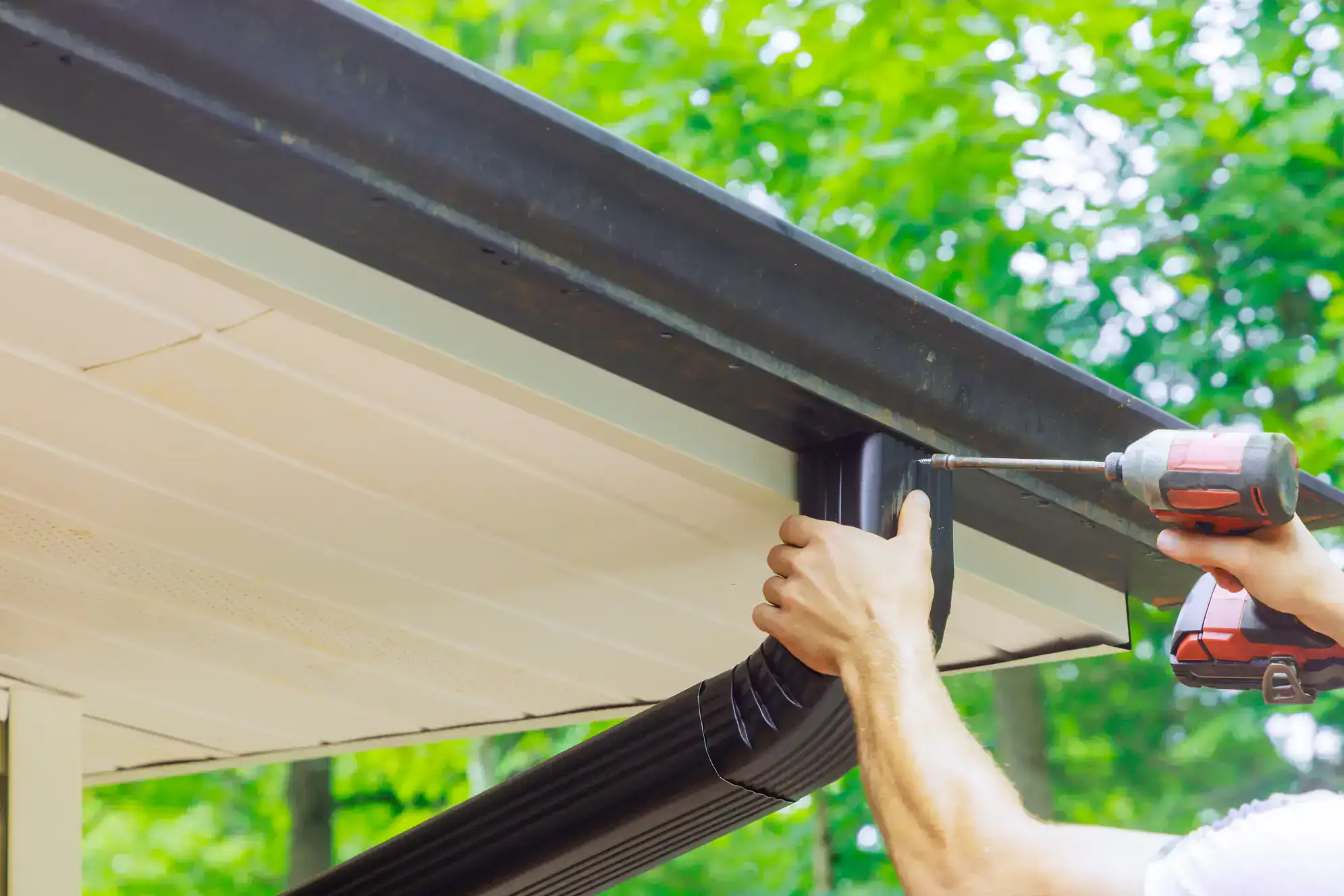
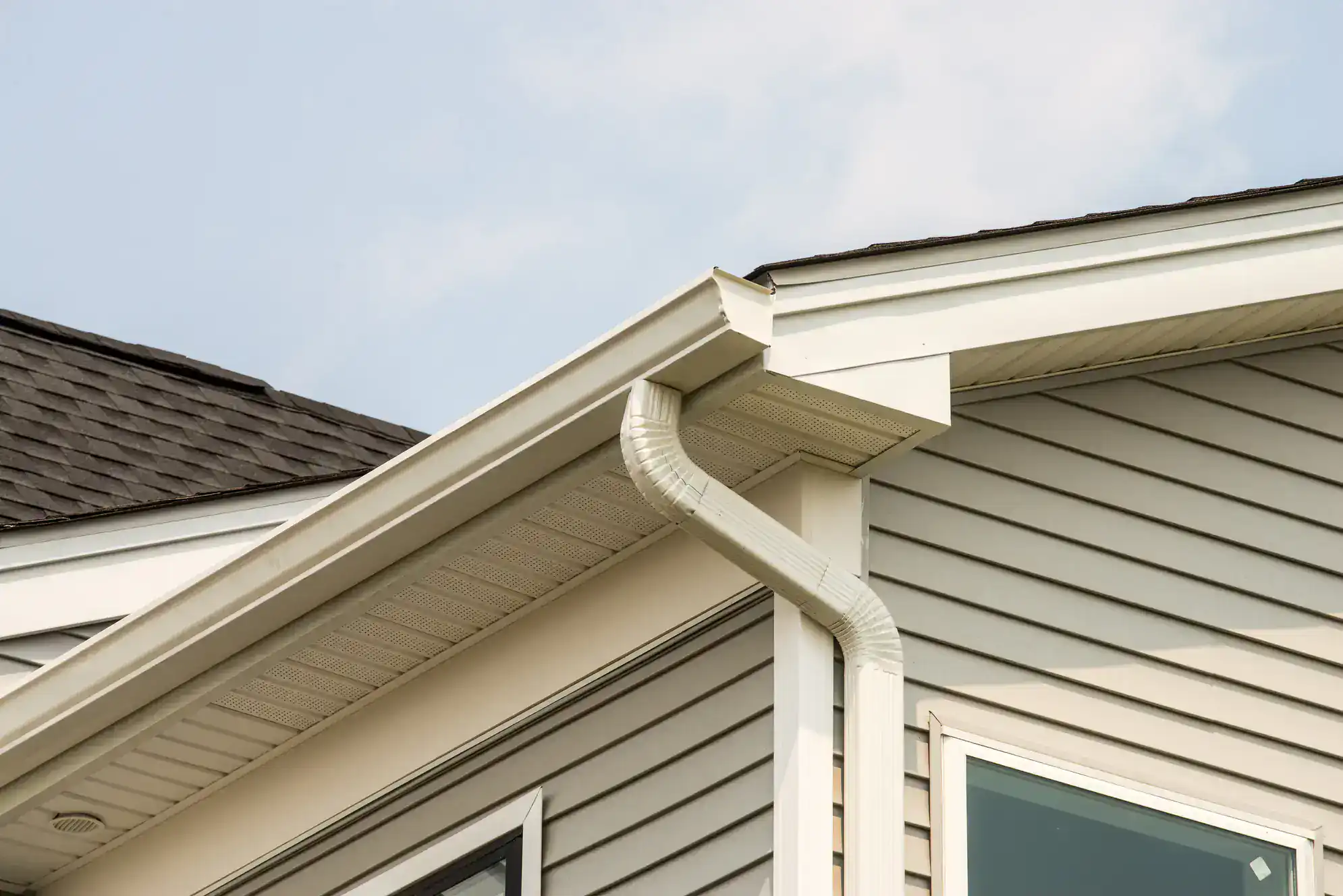
Installation uses seamless aluminum gutters fabricated on-site to your exact measurements. There are no pre-cut sections joined at seams — which is where sectional gutters almost always fail first. Slope is calculated before a single bracket goes up, so water moves efficiently toward the downspout instead of pooling and sitting. For homes near the Palisades ridge or in areas with natural drainage complexity, proper slope and downspout positioning aren’t just best practice — they’re what separates a system that lasts from one that causes problems within a few years. Once the job is done, the property is cleaned up completely and we walk you through what was installed and why.
Ready to get started?
Roof Gutter Installation Company in Rockleigh, NJ
Every gutter installation we provide includes a full exterior assessment, on-site seamless fabrication, proper slope calculation, downspout sizing based on actual roof surface area, and professional installation from a licensed NJ contractor. Manufacturer certifications mean your installation qualifies for manufacturer-backed warranty coverage — which matters significantly when you’re protecting a home valued well above $1 million.
For homes in or near the Rockleigh Historic District, we take a deliberate approach. Colonial and Dutch colonial architecture comes with wide overhangs, steep pitches, and roofline profiles that require careful bracket placement and gutter sizing. The goal is a system that protects the structure without looking out of place on a home with that kind of architectural character. If you’re unsure whether your property falls under any local design review requirements, that’s a conversation worth having before work begins — and one we can help you navigate given our familiarity with Bergen County’s regulatory environment.
Storm damage is also part of the picture here. Bergen County’s nor’easters and summer microbursts regularly damage gutters — torn sections, separated downspouts, crushed runs from fallen branches. If your damage may be covered by your homeowner’s insurance, we work directly with adjusters to document the damage and support your claim. You shouldn’t have to manage that process alone while your home sits exposed.
How much does gutter installation cost for a large home in Rockleigh, NJ?
The honest answer is that it depends on the size and complexity of your roofline, and Rockleigh homes tend to be more complex than average. Most homes in this area average close to 6,000 square feet, which typically means 150 to 200 linear feet of gutters or more, depending on the roofline configuration. At current market rates in Bergen County, seamless aluminum gutter installation generally runs between $8 and $15 per linear foot. If gutter guards are part of the plan, expect to add another $7 to $12 per linear foot on top of that.
What affects the final number most is what’s already there. If the fascia boards have softened from years of water exposure — which is common on older Rockleigh homes — those need to be addressed before new gutters can be properly secured. A free inspection will surface all of that upfront, so the written estimate you receive reflects the actual scope of the job, not a low number designed to get you to sign and add costs later.
What type of gutters work best for homes in Bergen County, NJ?
Seamless aluminum gutters are the most practical choice for the vast majority of homes in Bergen County, including Rockleigh. They’re fabricated on-site to the exact length of each run, which eliminates the seams where sectional gutters almost always fail first — especially under the freeze-thaw stress that Bergen County winters put on exterior systems. Aluminum handles the region’s rainfall well, resists corrosion, and holds up through the seasonal temperature swings without warping or cracking.
For larger estate homes with long gutter runs and complex rooflines, seamless fabrication isn’t just a preference — it’s the more durable option by a significant margin. K-style gutters are the most common profile used on Colonial and ranch-style homes in this area because they handle higher water volume than half-round profiles and sit flush against the fascia. If your home has architectural details that call for a specific profile, that’s something to discuss during the estimate so the final installation fits the home’s character as well as its drainage needs.
How do I know if my gutters need to be replaced or just repaired?
There are a few things that point clearly toward replacement rather than repair. Gutters that are pulling away from the fascia in multiple spots, showing visible cracks or splits along the run, or sagging consistently despite being re-secured are usually telling you the system has reached the end of its useful life. The same goes for gutters that overflow regularly during moderate rain — that’s often a sign of undersizing, not just clogging, and cleaning alone won’t fix an undersized system.
On older Rockleigh homes, the more telling sign is often what’s behind the gutters. If the fascia boards are soft, discolored, or visibly deteriorating, water has likely been working behind the gutter for a while. At that point, repairing the gutter without addressing the fascia just delays the same problem. A proper inspection looks at both — and gives you an honest read on whether repair makes financial sense or whether replacement is the more cost-effective path over the next several years.
Does homeowner's insurance cover storm-damaged gutters in Rockleigh, NJ?
It often does, depending on your policy and the cause of the damage. Bergen County sees its share of nor’easters, high-wind events, and intense summer thunderstorms — all of which can cause the kind of sudden, visible gutter damage that falls under most standard homeowner’s insurance policies. Damage from a fallen branch, wind-torn sections, or gutters pulled from the fascia during a storm are typically covered. Gradual deterioration from age or lack of maintenance generally is not.
The part that trips people up is the documentation. Insurance adjusters need to see clear evidence that the damage was storm-related and not pre-existing. We work directly with adjusters — documenting the damage, supporting the claim, and helping you get the coverage your policy provides. If you’ve had recent storm activity and aren’t sure whether your gutters qualify, a free inspection is the right first step. You’ll know what you’re dealing with before you file anything.
Do I need a permit for gutter installation in Rockleigh, NJ?
For standard gutter replacement or installation on a residential property in New Jersey, a permit is typically not required — it falls under routine home improvement work rather than structural construction. That said, Rockleigh is a small borough with its own municipal government, and if your home is located within or adjacent to the Rockleigh Historic District, it’s worth confirming with the Borough of Rockleigh whether any local design review applies to exterior modifications before work begins.
The Historic District covers roughly 157 acres along Willow Avenue, Rockleigh Road, and Piermont Road, and includes homes with significant architectural character. While the National Register listing itself doesn’t automatically impose local restrictions, some municipalities adopt their own overlay requirements. Working with a contractor who’s familiar with Bergen County’s regulatory environment means you’re not navigating that process alone. We can help you understand what applies to your specific property before the project moves forward.
How does Rockleigh's tree canopy affect how often gutters need maintenance?
Significantly more than most homeowners expect. Rockleigh’s dense wooded character — the mature oaks, maples, and mixed deciduous canopy that cover much of the borough — sheds an enormous amount of debris into gutters every fall. A full cleanout after leaf drop is the baseline, but summer storms can push twigs, seed pods, and organic material into gutters between seasons as well. On a large estate home with a complex roofline and multiple gutter runs, that accumulation adds up quickly.
The practical consequence of clogged gutters in this environment isn’t just overflow. Standing water and organic debris accelerate corrosion, add weight that stresses brackets, and create the exact conditions that lead to ice dams once temperatures drop. If you’re finding that you need to clean gutters more than twice a year to keep them functioning, gutter guards are worth evaluating seriously — not as a way to eliminate maintenance entirely, but as a way to extend the intervals and reduce the risk of overflow during heavy rain events between cleanings. That’s a conversation worth having during the estimate so you can weigh the long-term cost against the ongoing maintenance picture.