
Gutter Installation in Harrington Park, NJ
When Pascack Valley Seasons Hit Hard, Your Gutters Need to Be Ready
Hear from Our Customers
Rain Gutter Installation in Harrington Park
A gutter system that’s doing its job is invisible. You don’t think about it during a summer microburst. You don’t worry about it when a nor’easter rolls through the Pascack Valley in November. Water moves where it’s supposed to move — away from your foundation, away from your siding, away from the fascia boards that hold everything together. That’s the outcome. No drama, no damage, no expensive remediation calls in the spring.
For a home in Harrington Park, that matters more than it might somewhere else. The borough’s mature tree canopy — the same canopy that makes streets like Tappan Road feel like a postcard — puts a real load on gutter systems every single season. Leaves and seed pods in fall, pollen and debris through spring and summer, and then the weight of ice and snowmelt in winter. An older sectional system installed in the 1980s or 1990s wasn’t designed for that kind of sustained stress. A properly sized, correctly sloped seamless aluminum system is.
The homes here are worth protecting. With median property values near $776,900, water damage from a failing gutter isn’t a minor inconvenience — it’s a threat to a significant asset. Foundation repairs, basement water intrusion, rotted fascia — those remediation costs can run $5,000 to $30,000 or more. A new gutter system is a fraction of that, and it’s the thing that keeps the rest from happening.
Gutter Contractors in Harrington Park, NJ
USA Home Remodeling is a licensed New Jersey home improvement contractor (License #13VH10605800) with over ten years of hands-on exterior renovation experience serving homeowners throughout Bergen County, including Harrington Park. Roofing is the core of what we do, and gutters are part of that same system — not a side service handed off to a subcontractor.
That matters in a borough like Harrington Park, where the housing stock is older, the tree coverage is dense, and the homes are worth doing right. When we walk a property here, we’re looking at the full picture: the fascia condition behind the gutters, the roofline geometry, the downspout placement relative to the grade. A home built in 1963 near the Pascack Brook has different needs than a new build in a flat subdivision, and our assessment reflects that.
We run on referrals and repeat customers — not lead aggregators or national call centers. Every estimate is free, every price is written down before work begins, and the crew that shows up is the crew that knows your job.
Home Gutter Installation in Harrington Park, NJ
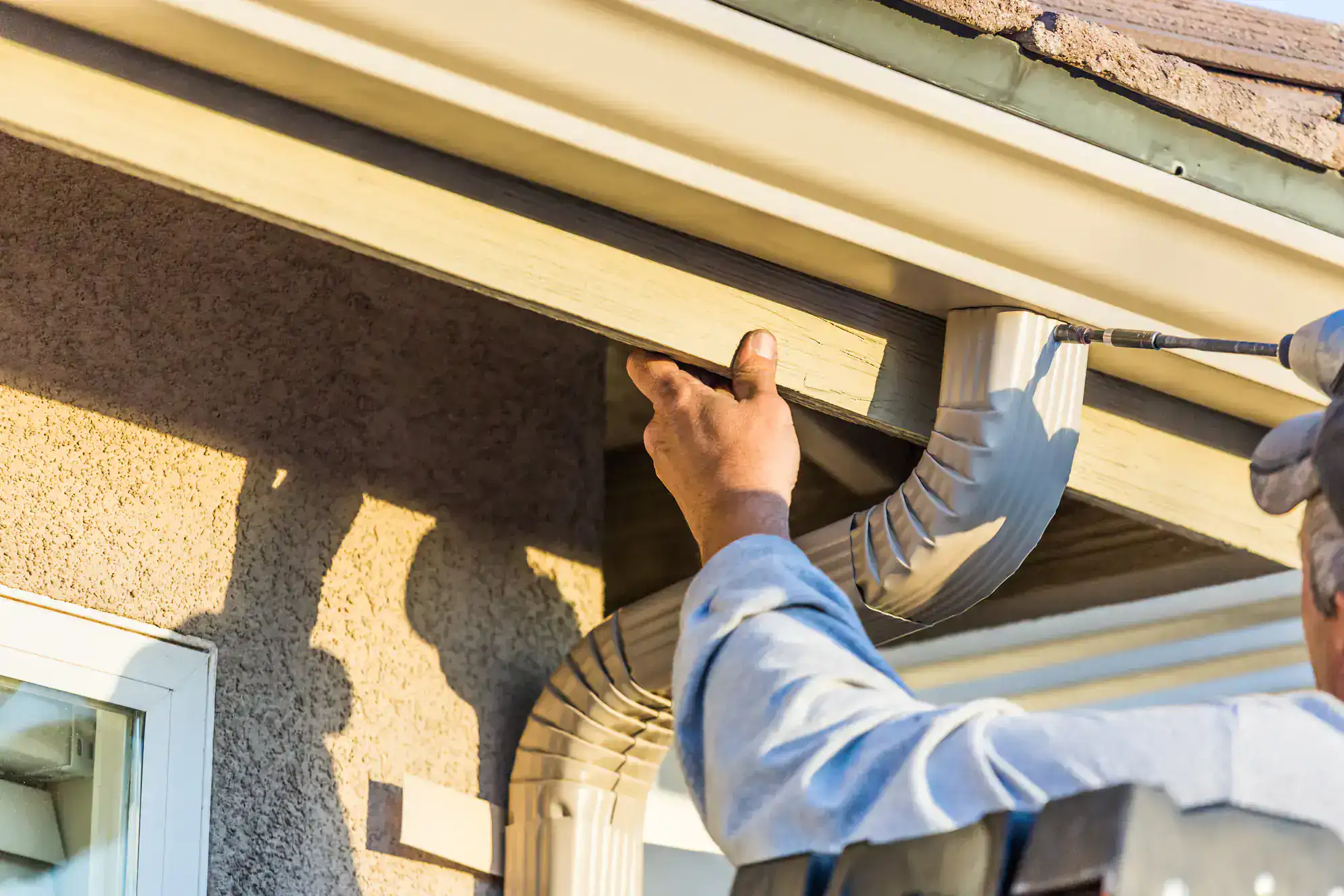
It starts with a free on-site inspection. We come to your Harrington Park home, walk the roofline, check the fascia boards, look at your current system, and give you a straight answer: repair or replace, and why. You get a written estimate before anything else happens. No pressure, no same-day-only pricing, no vague ranges.
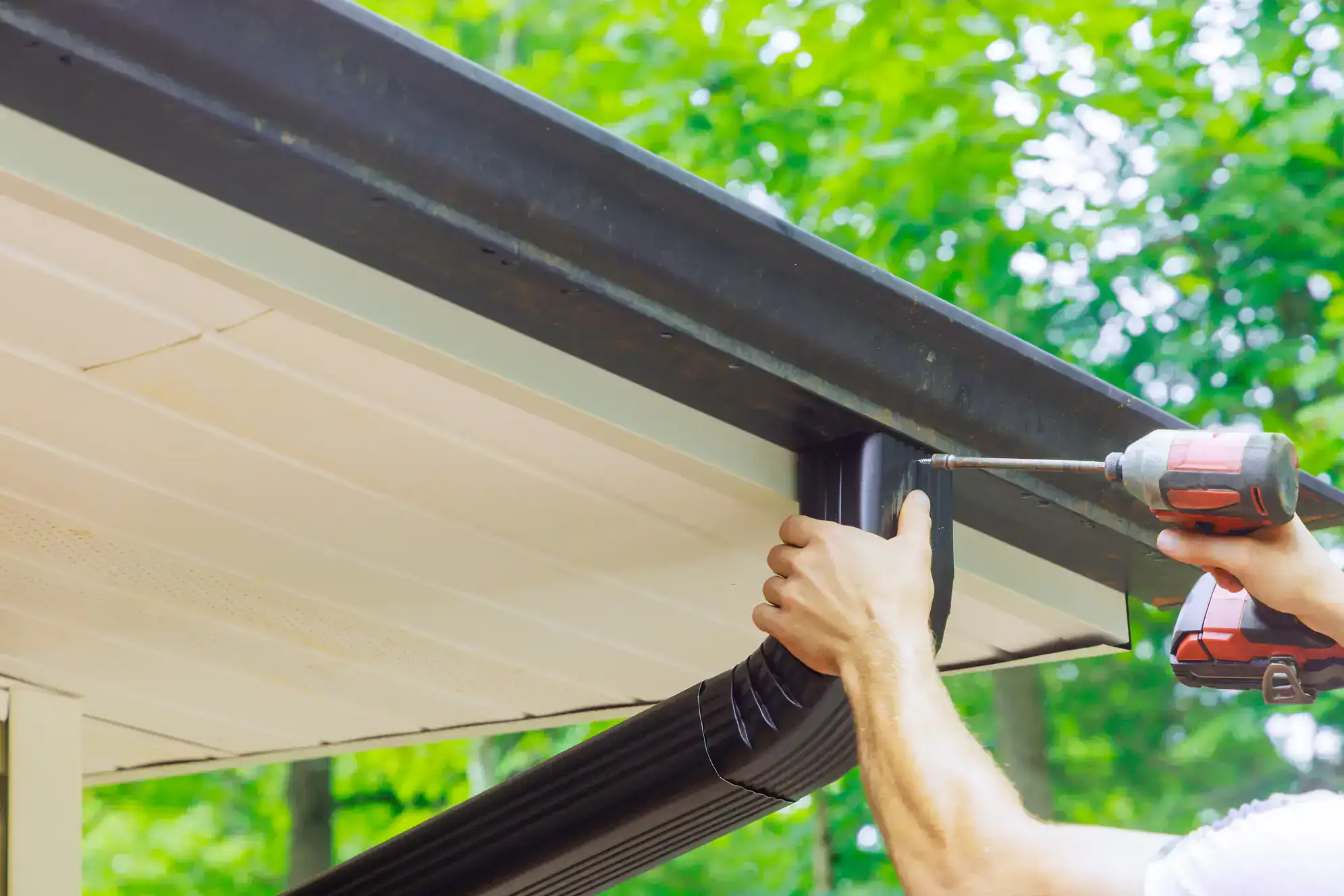
If you move forward, the gutter runs are fabricated on-site using a seamless aluminum machine. That means each section is cut to the exact length of your roofline — not pieced together from pre-cut stock that requires seams every few feet. Seams are where sectional gutters fail. Seamless systems eliminate that problem entirely. Slope is calculated before a single bracket goes into the fascia, because a gutter that doesn’t drain toward the downspout is just a trough collecting standing water and debris.
Downspout placement gets real attention from us too. Bergen County’s four-season rainfall patterns — particularly the summer microbursts that can dump two inches in under an hour — mean your downspouts need to be sized and positioned for actual drainage load, not just what looks balanced on the elevation. Discharge points are positioned to move water well away from your foundation. When the job is done, the site is cleaned up and we walk you through what was installed and why.
Ready to get started?
Roof Gutter Installation in Harrington Park, NJ
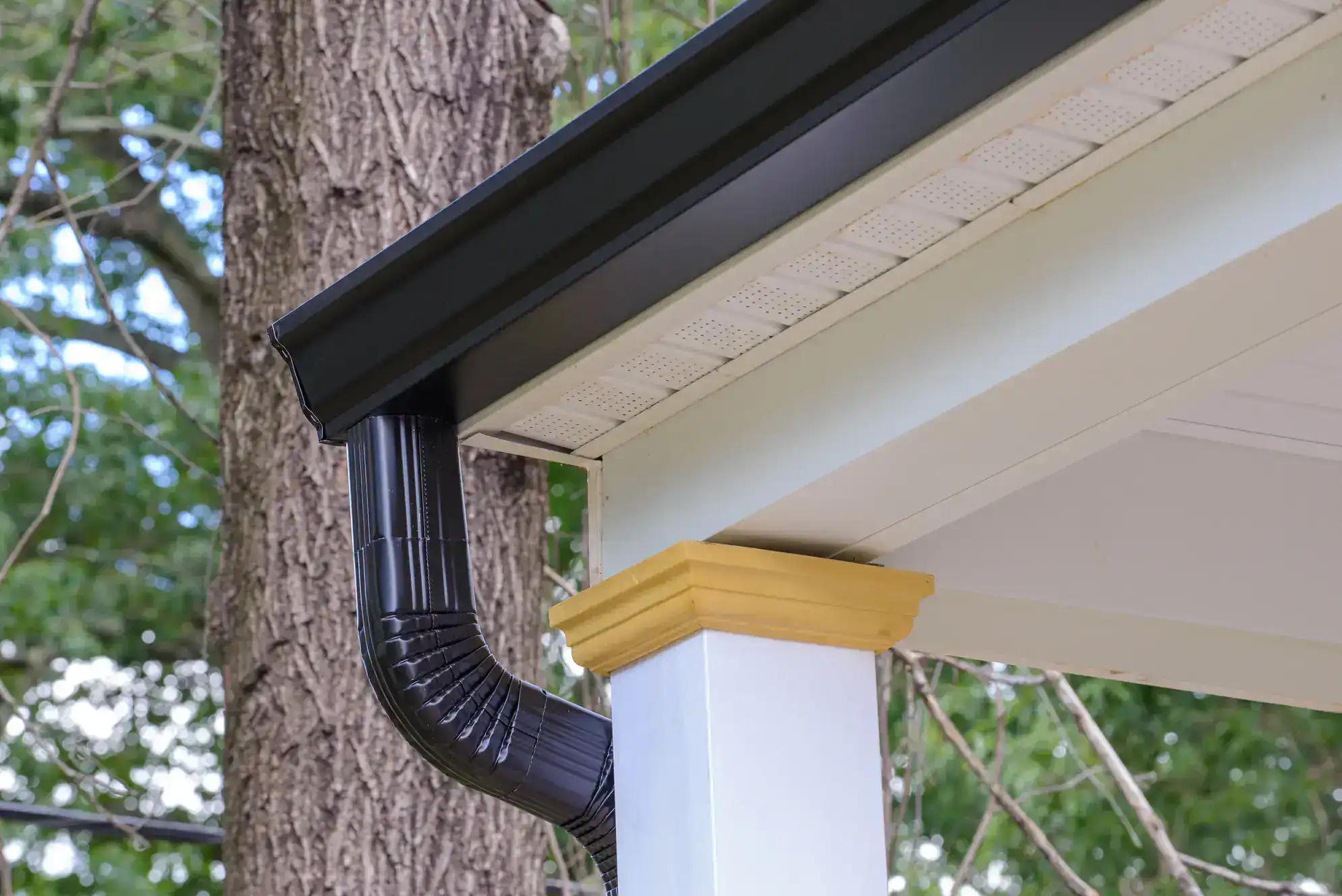
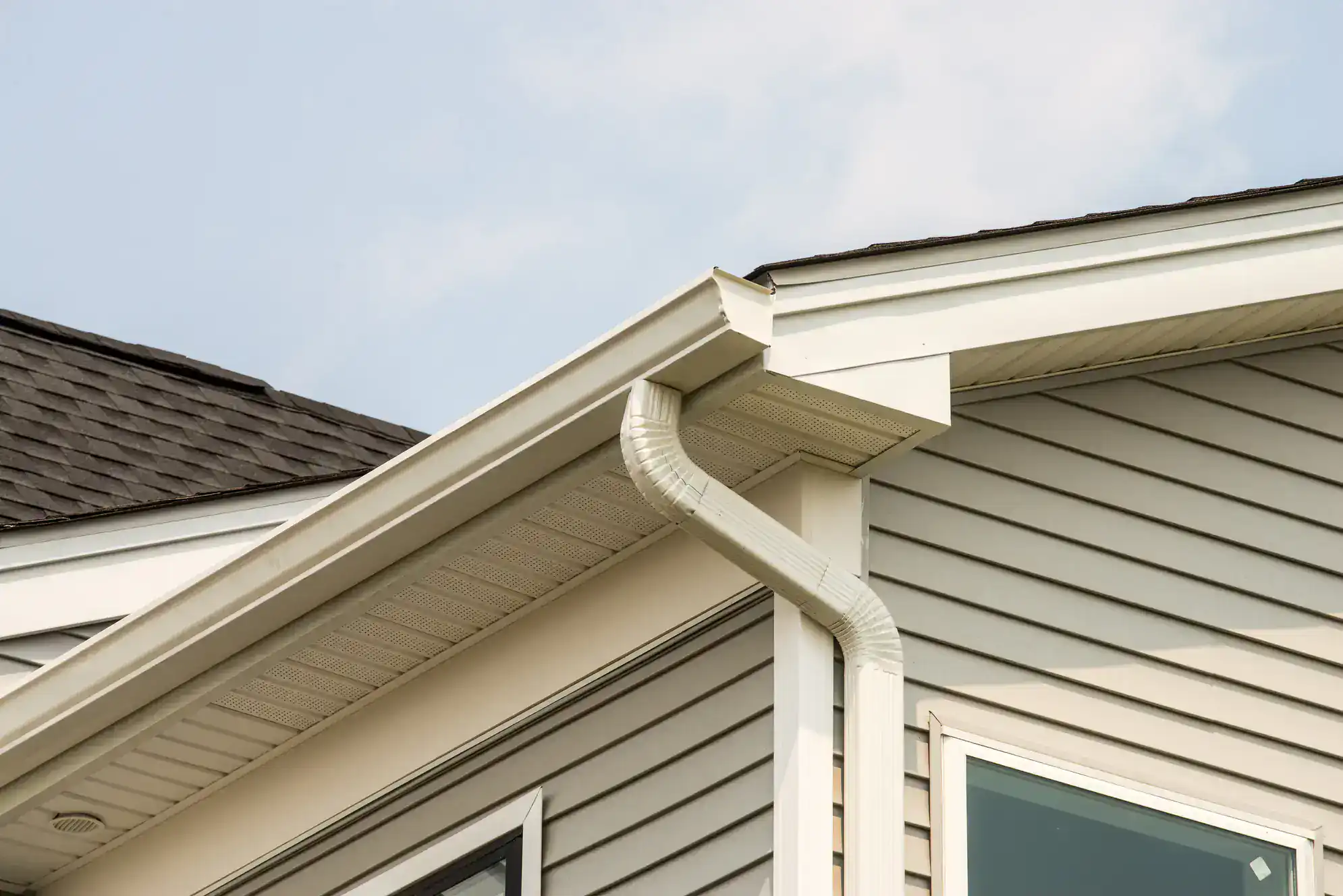
Our standard installation uses seamless aluminum gutters fabricated on-site, properly pitched, and anchored to sound fascia. Aluminum is the right material for northern Bergen County — it handles freeze-thaw cycles without cracking, doesn’t rust, and holds up to the debris load that comes with Harrington Park’s tree canopy without deforming under weight. It’s also the most cost-effective option over time, with a lifespan well beyond the sectional systems it typically replaces.
If the fascia boards behind your existing gutters are rotted — which is common on Harrington Park homes built in the 1940s through 1970s — we address that before the new system goes up. Mounting gutters to compromised wood means the new system will pull away from the house within a season. That’s a conversation that happens at the estimate stage, not after the crew is already on your roof.
For homeowners dealing with storm damage, we work directly with insurance adjusters to document the damage and support the claim. Bergen County sees its share of damaging storms — nor’easters, summer microbursts, the occasional hail event — and a lot of homeowners leave money on the table simply because they didn’t know the damage was claimable or didn’t have a contractor who could help them navigate it. That support is part of what a gutter installation company in Harrington Park should be offering.
How do I know if my Harrington Park home needs new gutters or just a cleaning?
This is one of the most common questions — and the honest answer is that it depends on what’s actually happening with the system, not just how it looks from the ground. If your gutters are overflowing during heavy rain but draining fine otherwise, they may just need a thorough cleaning and a slope adjustment. But if you’re seeing gutters that are visibly pulling away from the fascia, sections that are sagging or separating at the seams, paint peeling on the fascia boards directly behind them, or water staining on your siding and foundation, those are signs of a system that’s failing structurally — not just dirty.
In Harrington Park specifically, the tree canopy along streets like Tappan Road and throughout the Harriot Avenue neighborhood creates one of the heavier debris loads you’ll find in Bergen County. That means gutters here clog faster and carry more weight when they’re full. Older sectional systems — which are common on homes built in the 1960s and 70s — weren’t designed for that kind of sustained load. A free inspection gives you a clear answer without any obligation to move forward.
What does seamless gutter installation typically cost for a home in Bergen County?
For a typical single-family home, seamless aluminum gutter installation generally runs between $2,800 and $5,200 depending on the home’s linear footage, the number of downspouts required, and whether any fascia repair is needed before installation. On a per-linear-foot basis, seamless aluminum typically falls in the $8 to $28 range installed — more than a box-store sectional system upfront, but significantly more durable and lower-maintenance over time.
For Harrington Park homeowners, it’s worth thinking about this as a proportion of what you’re protecting. On a home valued near $776,900, the cost of a quality gutter installation is a small fraction of what foundation damage, basement water intrusion, or rotted fascia repair would run. The free estimate removes any guesswork — you’ll get a specific written number for your home before committing to anything, with no hidden fees added after the fact.
How long do seamless aluminum gutters last in New Jersey's climate?
Seamless aluminum gutters typically last 20 to 30 years when properly installed and reasonably maintained. New Jersey’s four-season climate puts more stress on gutter systems than many homeowners realize. The freeze-thaw cycles through winter expand any trapped water and can crack or deform systems that aren’t properly sloped and draining. Ice loads in a heavy winter add significant weight. Summer microbursts push high water volume through the system in short windows. And the fall leaf loads in a heavily canopied borough like Harrington Park add organic debris weight that accelerates wear on brackets and seams.
Seamless systems hold up better under all of these conditions than sectional gutters because there are no joints to separate or leak. Proper slope and correct downspout sizing extend the lifespan further by ensuring water doesn’t pool or back up. A system installed correctly and cleaned once or twice a year should comfortably reach the upper end of that 20-to-30-year range.
Does homeowner's insurance cover gutter damage from storms in New Jersey?
It depends on the cause of the damage. In New Jersey, most standard homeowner’s insurance policies cover sudden and accidental damage from storms — wind, hail, falling branches, and similar events. If a nor’easter tears gutters off your fascia or a summer microburst sends a tree limb through your downspout, that’s typically a covered claim. What’s generally not covered is damage from gradual deterioration, neglect, or normal wear and tear over time.
Bergen County sees enough storm activity — nor’easters, severe summer thunderstorms, occasional hail — that storm-related gutter damage is a real and recurring scenario for homeowners here. The challenge is documentation. Insurance adjusters need to see clear evidence that the damage was storm-caused, and many homeowners either don’t know what to photograph or don’t realize the damage is claimable at all. We work directly with adjusters to document damage properly and support the claims process — so you’re not navigating that alone while water is sitting against your foundation.
Should I add gutter guards when installing new gutters in Harrington Park?
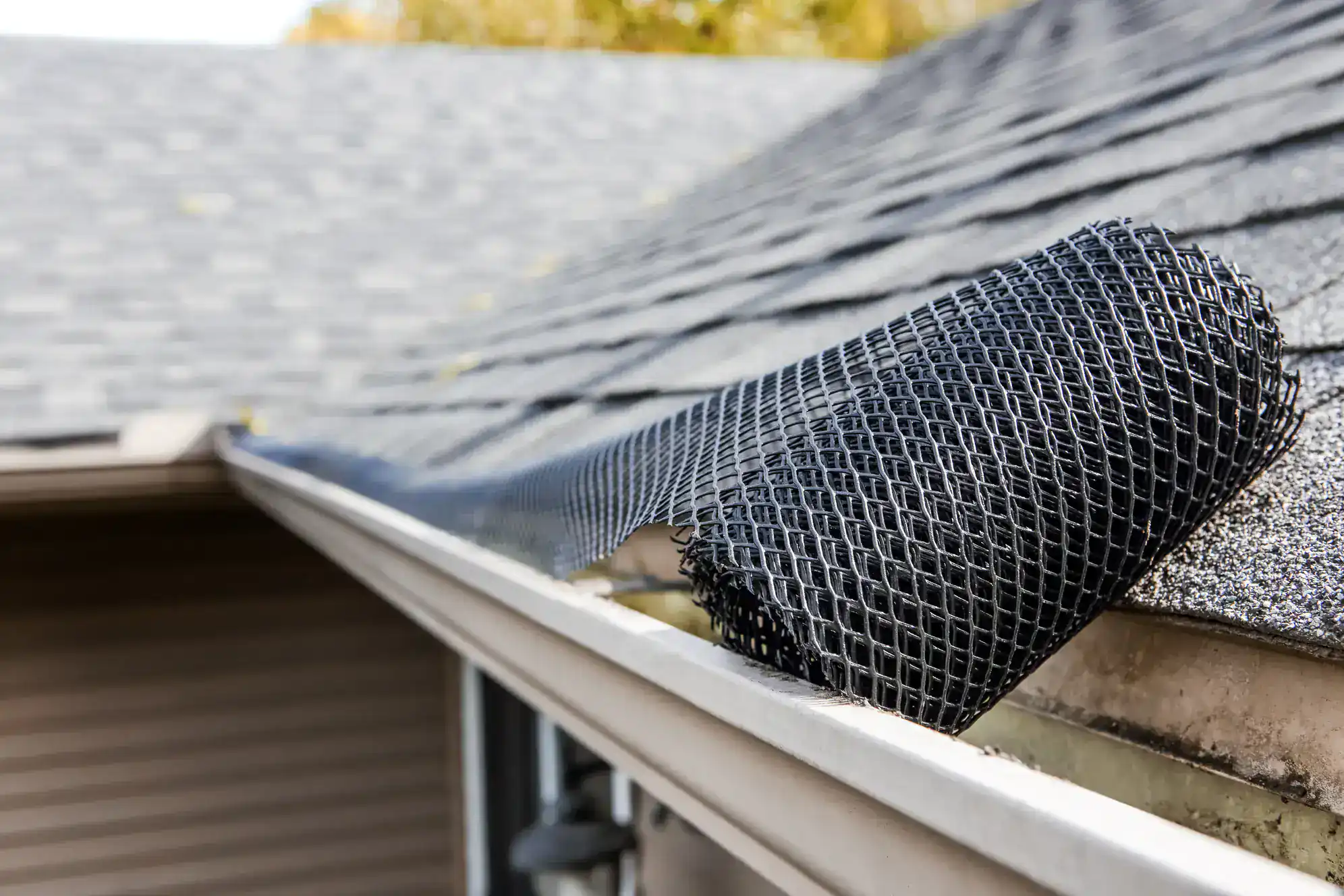
For most Harrington Park homeowners, gutter guards are worth a serious conversation — not a blanket yes or no. The borough’s tree canopy is genuinely dense. Mature oaks and maples drop significant leaf volume in fall, and seed pods and debris accumulate throughout the warmer months. Without guards, gutters in a heavily canopied yard can clog multiple times per season, which means either frequent cleanings or the risk of overflow and the water damage that follows.
Gutter guards reduce — but don’t eliminate — the need for maintenance. The right type of guard depends on the specific debris your roof is collecting and the pitch of your gutters. Some guard styles work well with heavy leaf loads but struggle with smaller debris like maple seeds, which are common throughout this area. During the installation estimate, it’s worth asking specifically about guard options that match your tree coverage and roof geometry, rather than defaulting to a generic product that may not perform well in your specific yard.
Do I need a permit for gutter installation in Harrington Park, NJ?
In most cases, a straight gutter replacement on an existing residential home in New Jersey does not require a separate building permit — it’s treated as like-for-like maintenance work rather than new construction. However, if the project involves structural changes to the fascia, soffit, or roofline, or if it’s part of a larger exterior renovation, a permit from the Harrington Park Building Department may be required depending on the scope.
What is required in every case is that the contractor performing the work holds a valid New Jersey Home Improvement Contractor registration with the NJ Division of Consumer Affairs. USA Home Remodeling holds License #13VH10605800 — a credential that’s publicly verifiable and legally required for any home improvement work in the state. Hiring an unlicensed contractor not only puts the quality of the work at risk, it can affect your homeowner’s insurance coverage and void manufacturer warranties on the materials installed. If there’s any question about permit requirements specific to your project, the Harrington Park Building Department is the right place to confirm — and a licensed contractor handles that determination as part of the job.