
Gutter Installation in Carlstadt, NJ
Carlstadt's Water Table Doesn't Forgive Bad Gutters
Hear from Our Customers
Bergen County Gutter Contractors
Most homeowners don’t think about their gutters until something goes wrong — a wet basement, water staining along the foundation, or soil washing out from under the landscaping after a hard rain. By then, the damage is already happening. Getting ahead of it means your home stays dry, your foundation stays stable, and you’re not calling a water restoration company in the middle of a storm.
For Carlstadt specifically, this matters more than it does in most towns. The borough sits within the New Jersey Meadowlands, where the water table runs high and the terrain doesn’t drain the way it does in higher-elevation parts of Bergen County. Water that pools near your foundation here has limited places to go. This isn’t theoretical — it’s why the NJDEP specifically named Carlstadt in its $150 million Rebuild by Design flood-resilience initiative alongside Little Ferry, Moonachie, and Teterboro.
A properly installed gutter system — correctly sloped, correctly sized, with downspouts positioned to move water well away from your home — is the first line of defense you actually control. Municipal infrastructure improvements take years. Your gutters can be right this season.
Licensed Gutter Installation Company Carlstadt NJ
We’ve been doing exterior work across Bergen County and the surrounding NJ communities for over ten years. We’re based in Elizabeth, connected to Carlstadt by the same NJ Turnpike corridor that Carlstadt residents use every day — not a franchise routing calls through a regional office somewhere out of state.
Our NJ Division of Consumer Affairs Home Improvement Contractor License is #13VH10605800 — look it up. We also carry manufacturer certifications from major material producers, which means your installation qualifies for warranty coverage backed by the company that made the materials, not just our word. That’s a real difference when you’re investing in a full gutter replacement.
What separates us from a gutter-only contractor is that we look at the whole exterior. If your fascia boards are soft, new gutters won’t hold. If your roof is shedding more water than your current gutter size can handle, the installation itself won’t fix the overflow. We catch those issues at the estimate stage, before they become a much bigger problem.
Roof Gutter Installation Carlstadt NJ
It starts with a free inspection. We come out, look at your existing gutters, check the fascia condition, evaluate the roofline, and assess how water is currently moving — or not moving — away from your home. For properties near Washington Avenue or Paterson Plank Road, where flood vulnerability is documented and real, we pay particular attention to downspout positioning and how far water is actually traveling from your foundation before it hits the ground.
From there, you get a written estimate with clear line items. No vague “materials and labor” total, no number that changes when the crew shows up. If we find that you only need a repair rather than a full replacement, we’ll tell you that. The estimate is what it is.
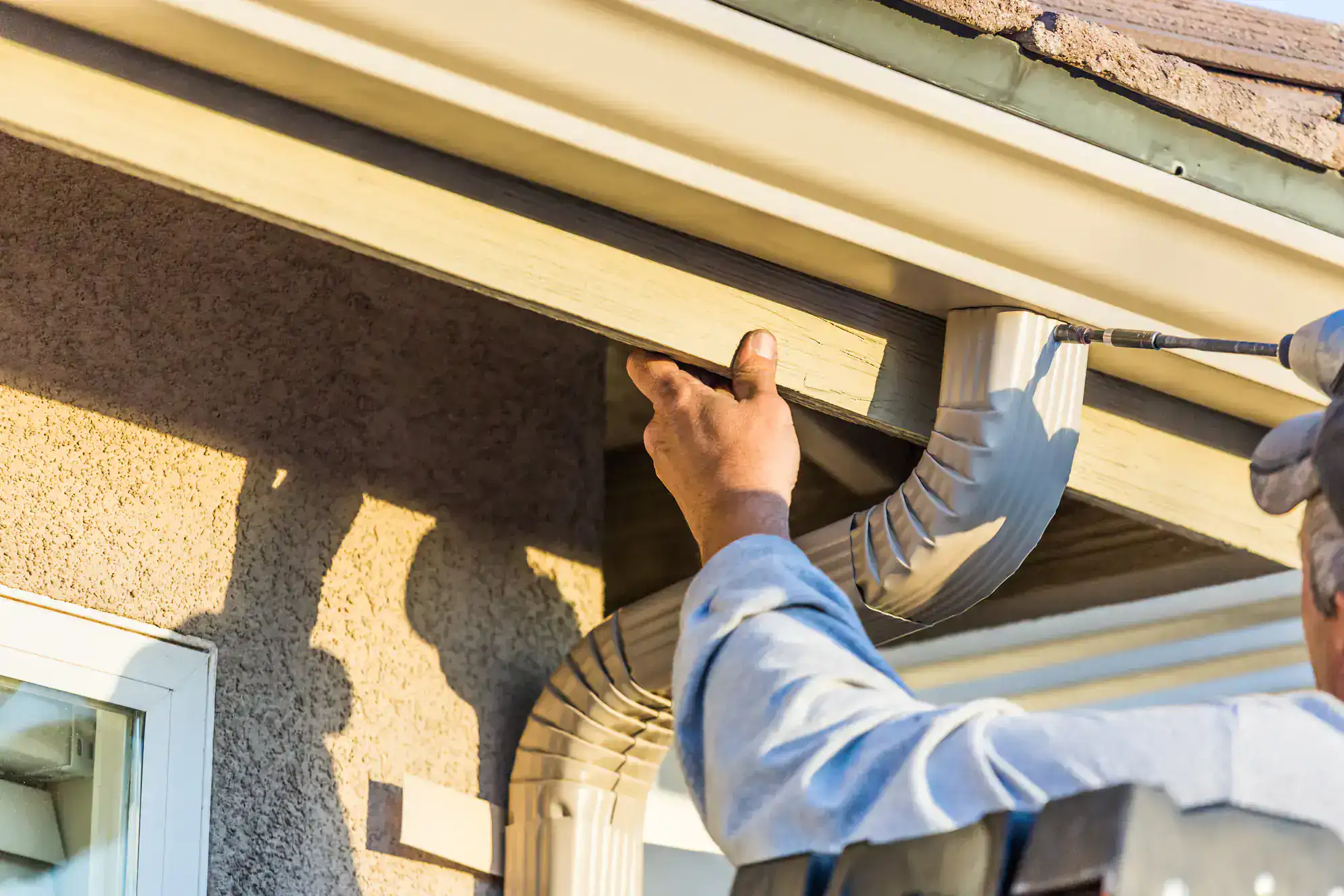
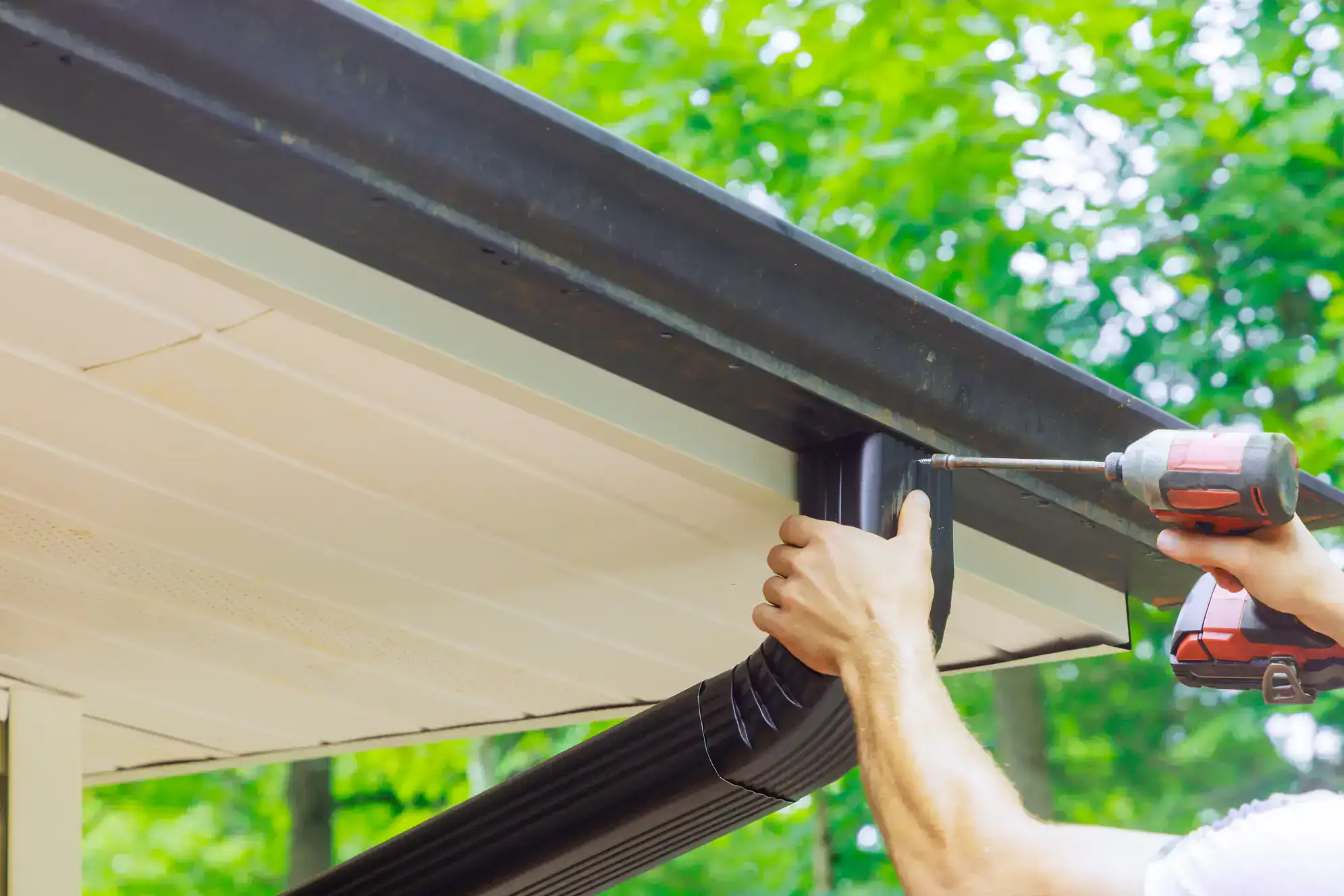
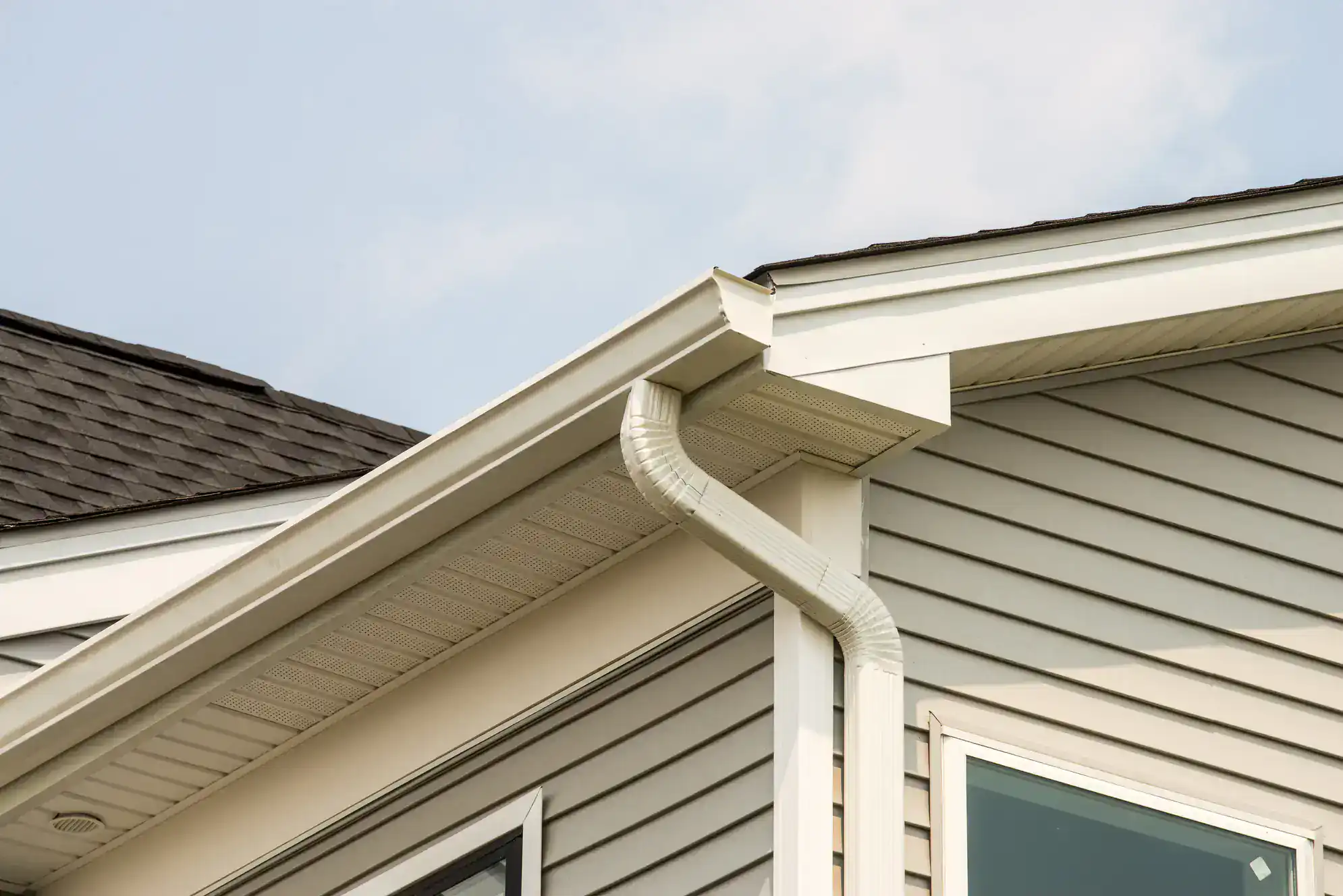
Once you approve the work, we custom-fabricate seamless aluminum gutters on-site to fit your home’s exact measurements. Every run is pitched at the correct slope before a single bracket is mounted — roughly a quarter inch of drop per ten feet toward the downspout. We size the downspouts based on your actual roof square footage, not a generic formula. When the job is done, we walk the perimeter with you. You’ll see where the water goes and why it goes there.
Ready to get started?
Home Gutter Installation Carlstadt NJ
The gutter work we do in Carlstadt covers full installation, replacement, and the diagnostic evaluation that most contractors skip. That means seamless aluminum gutters fabricated on-site, proper slope verification on every run, downspout sizing calculated against your actual roof area, and extensions positioned to move water away from your foundation — not just off your roofline.
We also handle storm damage insurance claims. Bergen County summers bring the kind of short, intense thunderstorms that can move through the Meadowlands corridor fast and hard. If wind, hail, or debris damaged your gutters, your homeowner’s insurance may cover it. Most Carlstadt homeowners don’t know that, or they don’t know how to document it properly. We work directly with adjusters and help you get the coverage you’re entitled to without fighting the process alone.
If fascia replacement is needed — and on older Cape Cods and colonials in Carlstadt’s residential neighborhoods, it often is — we handle that as part of the same project. New gutters fastened to rotted fascia won’t last a full NJ winter. We don’t install over problems we can see. Everything we do is backed by our NJ HIC license, manufacturer certifications, and a written estimate you approved before any work began.
Can bad gutters actually cause basement flooding in Carlstadt, NJ?
Yes — and in Carlstadt, the risk is higher than in most Bergen County towns. The borough sits within the New Jersey Meadowlands, where the water table is naturally elevated and the terrain doesn’t absorb runoff the way higher-elevation areas do. When gutters overflow or drain too close to the foundation, that water has limited places to go. It finds the path of least resistance, and in Carlstadt, that path often leads to the basement.
The connection isn’t always obvious because it doesn’t happen all at once. It’s a slow process — repeated saturation near the foundation over multiple storm seasons, gradually working its way through the soil and into the structure. By the time you notice moisture in the basement, the source is usually a drainage problem that’s been building for a while. Properly installed gutters with correctly positioned downspout extensions are one of the most direct ways to interrupt that cycle before it becomes a foundation repair.
How do I know if my gutters need to be fully replaced or just repaired?
The honest answer is that it depends on what’s actually wrong, and a visual inspection from the ground usually isn’t enough to tell. Gutters that are sagging, pulling away from the fascia, or visibly rusted at the seams are typically past the repair threshold. If you’re seeing water overflow in the same spot every rain, that could be a clog, a slope issue, or a capacity problem — and each one has a different fix.
What we look for during a free inspection is the condition of the gutters themselves, the fascia they’re attached to, and whether the existing system is sized correctly for your roof. A lot of older homes in Carlstadt — the Cape Cods and colonials built in the mid-20th century — are still running the original 4-inch gutters, which were standard then but often undersized for the volume of water a Bergen County summer storm generates. In those cases, repair doesn’t solve the real problem. Replacement with properly sized seamless gutters does.
What size gutters does a typical Carlstadt home actually need?
Most residential homes in Carlstadt do well with 5-inch seamless aluminum gutters, which is the current standard for single-family homes. However, homes with steeper roof pitches, larger roof surface areas, or rooflines that concentrate water from multiple planes into a single run may need 6-inch gutters to handle the volume without overflowing.
The calculation isn’t complicated, but it does require knowing your roof’s square footage and pitch — not just eyeballing the existing gutters. Bergen County gets intense, localized summer storms that can dump several inches of rain in a short window. For a Carlstadt home where the ground around the foundation already has limited drainage capacity due to the Meadowlands water table, an undersized gutter that overflows during those events is a real risk. We calculate the right size during the free inspection so you’re not guessing.
Do I need a permit for gutter installation in Carlstadt, NJ?
For a straightforward gutter replacement — same footprint, no structural changes — a permit is typically not required under New Jersey’s Uniform Construction Code. Routine maintenance and like-for-like replacement generally fall below the permit threshold. That said, if the project involves fascia replacement, changes to the drainage configuration, or any structural work at the roofline, Carlstadt’s Building Department may require a permit and inspection before the work is approved.
The more important regulatory factor is contractor licensing. Any contractor performing home improvement work in New Jersey — including gutter installation — must be registered with the NJ Division of Consumer Affairs under the Home Improvement Contractor program. Hiring an unlicensed contractor in NJ can void your homeowner’s insurance claim and your manufacturer warranty. Our license number is #13VH10605800, and it’s publicly verifiable through the state’s consumer affairs database. That’s not a formality — it’s the legal baseline for work done on your home.
How does NJ's freeze-thaw cycle affect gutters, and when should I replace them?
New Jersey winters are hard on gutters in a specific way. It’s not just the cold — it’s the repeated cycle of freezing and thawing that happens throughout the season. Water gets into small gaps at seams or around fasteners, freezes, expands, and slowly pulls the system apart. By February or March, gutters that looked fine in October are sagging, pulling away from the fascia, or leaking at joints that weren’t leaking before.
The best time to replace gutters in the Carlstadt area is late spring through early fall — after the winter damage is visible and before the next freeze season begins. If you’re seeing sagging or separation after this past winter, that’s not a coincidence and it won’t fix itself. Fall is also when leaf accumulation from residential tree coverage clogs systems before the first freeze, which turns a manageable clog into an ice dam situation. Getting ahead of that in late summer or early fall means you go into winter with a system that’s actually ready for it.
What should I look for when hiring a gutter contractor in Carlstadt, NJ?
Start with the NJ Home Improvement Contractor license. It’s a legal requirement for any contractor doing home improvement work in New Jersey, and it’s publicly verifiable through the NJ Division of Consumer Affairs website. If a contractor can’t give you a license number, that’s a hard stop — not a negotiating point. Beyond licensing, look for a contractor who carries proper insurance and can provide manufacturer certifications, which matter for warranty coverage on the materials installed.
For Carlstadt specifically, you want someone who understands the drainage challenges that come with being in the Meadowlands. A contractor who installs the same system they’d put on a house in Ridgewood without accounting for your water table, your soil absorption, and your downspout positioning relative to the foundation isn’t giving you a Carlstadt installation — they’re giving you a generic one. Ask how they calculate slope. Ask how they size downspouts. Ask whether they inspect the fascia before mounting anything. The answers tell you quickly whether you’re talking to someone who actually knows what they’re doing here.