
Gutter Installation Cost: Seamless vs Sectional
Summary:
You’re staring at water pooling against your foundation. Again. Or maybe you just watched your neighbor’s gutters overflow during last week’s storm and realized yours are probably next. Either way, you’re here because you need to know what new gutters actually cost—and whether seamless is worth the extra money everyone keeps mentioning.
The short answer: it depends on your home, your roof, and how long you plan to stay. The better answer is in the details, and that’s what this guide covers. You’ll see real numbers, understand what drives pricing up or down, and know exactly what you’re paying for when you get that estimate. Let’s start with the basics.
What Drives Gutter Installation Cost in Union County
Gutter installation cost isn’t just about the gutters themselves. You’re paying for materials, labor, the complexity of your roofline, and how much linear footage your home actually needs. Most homes in Union County need somewhere between 100 and 200 linear feet of gutters—that’s roughly one-tenth of your home’s square footage. A 2,000 square foot home typically needs about 200 feet.
Right now in 2026, you’re looking at somewhere between $10 and $25 per linear foot installed for most residential projects. That puts a typical job in the $2,000 to $5,000 range, depending on material and whether you’re going seamless or sectional. Multi-story homes cost more because of the labor and safety equipment required to reach upper levels.
The other big variable is whether you’re replacing old gutters or installing on new construction. Replacement adds removal and disposal costs, usually another dollar or two per linear foot. If your fascia boards are rotted or damaged, that’s another $5 to $12 per linear foot to repair before new gutters even go up.
Seamless Gutters Cost and Long-Term Value
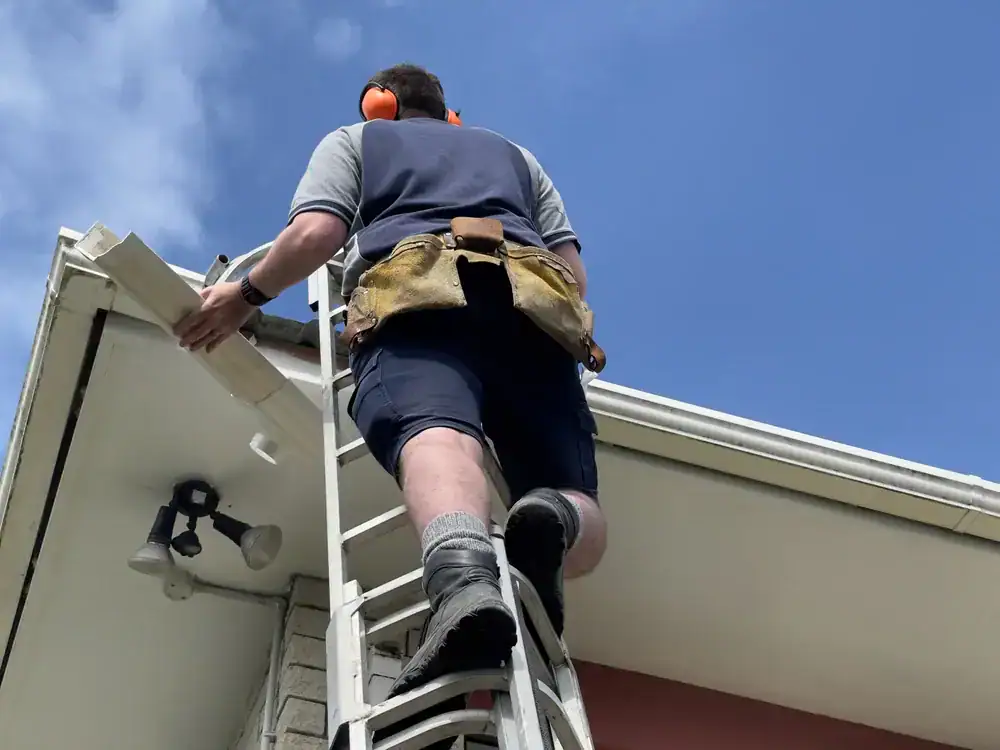
Seamless gutters run between $8 and $28 per linear foot installed, which is 30 to 50 percent more than sectional systems upfront. That difference makes some homeowners hesitate. But here’s what changes the math: seamless gutters have 70 to 80 percent fewer potential leak points because they’re custom-fabricated in one continuous piece.
Sectional gutters are joined every 10 to 20 feet with connectors and sealant. Those seams are where leaks start, especially after a few freeze-thaw cycles here in New Jersey. Seamless systems only have joints at corners and downspouts—typically four to six spots on a standard home instead of fifteen to twenty.
That translates to less maintenance, fewer repairs, and a longer lifespan. Seamless aluminum gutters last 20 to 30 years compared to 15 to 20 for sectional. Over a ten-year period, the total cost of ownership evens out because you’re not constantly resealing joints or replacing sections. You’re also not dealing with clogs at every seam where debris tends to catch.
The catch is that seamless gutters require professional installation. They’re made on-site with a specialized rolling machine, so this isn’t a DIY project. But that also means they’re custom-fit to your home’s exact measurements, which improves performance and reduces the chance of improper pitch or drainage issues. For Union County homes dealing with heavy rainfall and seasonal storms, that precision matters.
If you’re planning to stay in your home for more than a few years, seamless is usually the smarter investment. If you’re flipping a property or need the cheapest option to pass inspection, sectional might make sense. Just know you’re trading upfront savings for higher maintenance down the road.
Sectional Gutters: When Budget Wins Over Longevity
Sectional gutters cost between $3 and $20 per linear foot installed, making them the more affordable option for homeowners on a tight budget. They come in pre-cut sections—usually 10 or 15 feet long—that connect with brackets, screws, and sealant. You can pick them up at most home improvement stores, and if you’re handy with a ladder, they’re manageable as a DIY project.
The lower price tag is appealing, but it comes with trade-offs. Those seams where sections connect are weak points. Over time, temperature changes cause expansion and contraction, which weakens the sealant and fasteners. In Union County, where we get freeze-thaw cycles all winter, that wear happens faster. You’ll likely need to reseal joints every few years and replace sections more often than you would with seamless.
Maintenance is another factor. Debris catches at the seams, which means more frequent cleaning. If you’ve got trees near your house, expect to be up on that ladder multiple times a year. Clogs at the joints can also cause water to back up and overflow, which defeats the whole purpose of having gutters in the first place.
Sectional gutters work fine for smaller projects—sheds, garages, or simple rooflines without much complexity. They’re also a decent temporary solution if you’re planning a full exterior renovation down the road and don’t want to invest in a permanent system yet. But for your main home, especially in an area with the kind of weather we see here, sectional gutters are usually a short-term fix that costs more in the long run.
If you do go sectional, make sure the installation is done right. Improper pitch or poorly secured hangers will cause sagging and drainage problems almost immediately. And if you’re hiring a contractor, ask why they’re recommending sectional over seamless—sometimes it’s because they don’t have the equipment or experience to do seamless properly.
Want live answers?
Connect with a USA Home Remodeling LLC expert for fast, friendly support.
Gutter Replacement Cost vs Repair: When to Replace
Gutter replacement cost is higher than repair, but sometimes repair isn’t an option. If you’ve got a few small leaks or a loose section, patching might run you $200 to $800. But if your gutters are sagging, pulling away from the fascia, or showing rust and corrosion in multiple spots, replacement is the smarter move.
The key question is whether the damage is isolated or systemic. One leaky seam can be fixed. Ten leaky seams across your entire system means the gutters have reached the end of their useful life. Same goes for fascia damage—if the wood behind your gutters is rotted or soft, you’ll need to address that before new gutters go up, and at that point you might as well replace the whole system.
Age is another factor. If your gutters are over 20 years old and you’re starting to see issues, replacement is usually the right call. Trying to extend the life of an aging system with repeated repairs ends up costing more than just doing it once and doing it right.

Material Choices That Change Your Bottom Line
The material you choose has a bigger impact on gutter installation cost than almost anything else. Aluminum is the most common and runs $10 to $20 per linear foot installed. It doesn’t rust, it’s lightweight, and it comes in a range of colors to match your home. For most Union County homes, aluminum is the right balance of cost and performance.
Vinyl is cheaper—$8 to $12 per linear foot—but it gets brittle in cold weather. New Jersey winters will crack vinyl gutters faster than you’d expect, especially if you get heavy snow or ice buildup. It’s fine for mild climates, but not ideal here.
Steel gutters, including galvanized and stainless options, run $10 to $35 per linear foot. They’re strong and handle heavy rainfall well, but galvanized steel will rust if the protective coating wears down. Stainless holds up better but costs more. Steel makes sense if you’ve got a steep roof or a lot of runoff to manage.
Copper is the premium option at $25 to $40 per linear foot. It lasts 50 years or more, develops a nice patina over time, and never rusts. But most homeowners can’t justify the cost unless they’re matching a historic home or want gutters that outlast the mortgage. Copper also requires specialized installation, which adds to labor costs.
Zinc is another high-end choice at $35 to $45 per linear foot. It’s durable, low-maintenance, and develops a protective layer that extends its lifespan to 80 years or more. Like copper, it’s overkill for most homes, but if you’re doing a major renovation and want something that never needs replacing, zinc is worth considering.
For Union County specifically, aluminum is usually the best call. It handles our weather, it’s affordable, and it lasts long enough that you won’t be dealing with this again anytime soon. If you’re near the coast or in an area with a lot of salt exposure, stainless steel might be worth the upgrade. But for most homeowners, aluminum checks all the boxes without breaking the budget.
Gutter Guards Cost: Worth It or Waste of Money?
Gutter guards run between $7 and $20 per linear foot installed, depending on the type and quality. That’s an extra $1,400 to $4,000 on top of your gutter installation cost for a typical home. The question is whether they’re worth it, and the answer depends on your situation.
If you’ve got trees near your house—especially oaks, maples, or pines—gutter guards can save you hours of ladder time every year. They keep leaves, twigs, and debris out of your gutters, which means fewer clogs and less maintenance. In Union County, where fall foliage is heavy and spring brings seed pods and pollen, guards can make a real difference.
There are a few types to consider. Mesh screens are affordable and block most debris, but smaller particles can still get through. Micro-mesh guards are more expensive but catch almost everything, including pine needles and shingle grit. Reverse-curve guards direct water into the gutter while pushing debris over the edge, but they don’t work as well in heavy downpours.
The downside is that no gutter guard is completely maintenance-free. You’ll still need to check them occasionally and clear off any buildup on top. And if they’re installed incorrectly, they can actually make drainage worse by creating a barrier that water can’t penetrate during heavy rain.
If you’re someone who cleans gutters twice a year without complaint, guards probably aren’t necessary. But if you’re tired of the hassle, have mobility issues, or just want one less thing to worry about, they’re a solid investment. Just make sure you’re getting a quality product installed by someone who knows what they’re doing. Cheap guards that fail in the first year are worse than no guards at all.
One more thing: some contractors push guards because they add to the ticket price, not because your home actually needs them. If your roof doesn’t have trees nearby and you’re not dealing with constant debris, skip the upsell and save the money.
Making the Right Call on Gutter Installation Cost
Gutter installation cost comes down to three things: what you need, what you’re willing to pay, and how long you plan to stay in your home. Seamless gutters cost more upfront but save you money and hassle over time. Sectional gutters are cheaper now but require more maintenance and replacement sooner. Aluminum is the safe bet for most Union County homes, and guards are worth it if you’ve got trees.
The most important thing is working with a contractor who’s transparent about pricing and won’t disappear after cashing your check. Get multiple quotes, ask questions, and make sure you understand what’s included. If something feels off, trust your gut.
If you’re in Union County and ready to move forward, we offer free estimates with no hidden costs. We specialize in seamless gutter installation using heavy-gauge aluminum, and we’ve been serving local homeowners for over a decade. Reach out and get a straight answer on what your project will actually cost.