
Fall Roof Maintenance: Winter Preparation
Summary:
October hits Union County and you’re thinking about raking leaves, not your roof. But those weeks between the last warm days and the first hard freeze are exactly when your roof needs attention. Miss this window and you’re rolling the dice on ice dams, emergency leaks, and repair bills that show up at the worst possible time.
Fall roof maintenance isn’t about perfection. It’s about catching the small stuff before winter turns it into expensive problems. A clogged gutter becomes an ice dam. A loose shingle becomes a leak. A minor issue you can’t see from the ground becomes water damage in your attic.
Here’s what actually matters before winter arrives and how to time it right.
Fall Roof Inspection Timing and Benefits
The question isn’t whether you need a fall roof inspection in New Jersey. It’s when to schedule it so you’re actually ready before winter hits.
Late October through early November is your window. You want most of the leaves down but temperatures still above freezing. That gives us decent working conditions and you enough time to handle any repairs before snow season starts. Wait until December and you’re cutting it close. Schedule too early in September and you’ll be cleaning gutters twice.
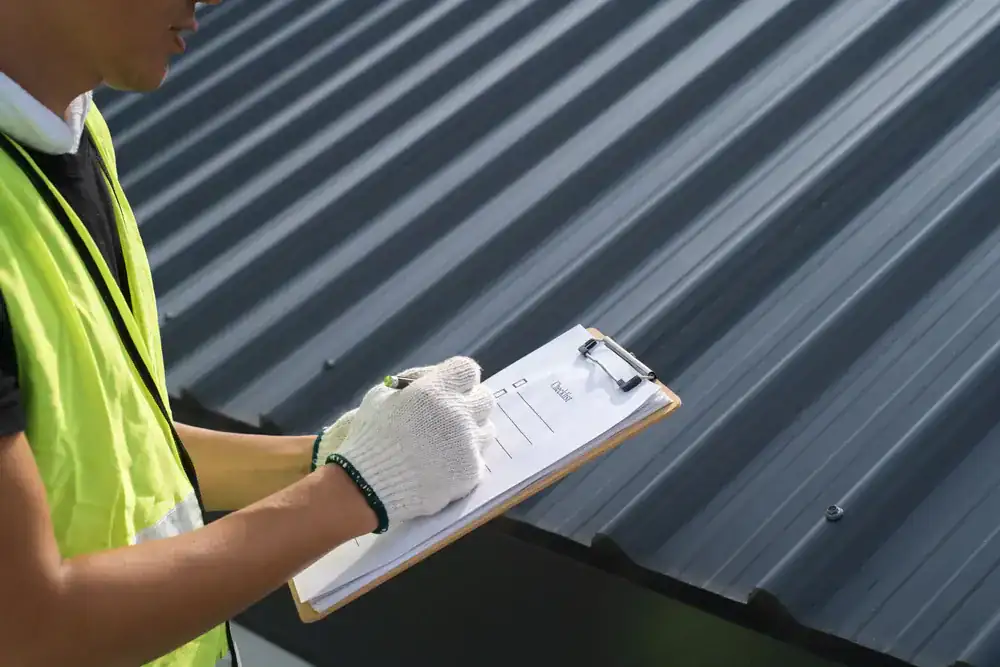
A professional inspection catches what you can’t see from the ground. Lifted shingles from summer storms. Flashing that’s starting to separate around your chimney. Granule loss that means your shingles are wearing thin. These issues don’t announce themselves until water starts showing up inside your house.

What a Professional Fall Roof Inspection Actually Covers
A real inspection isn’t someone glancing at your roof from a ladder. It’s a systematic check of every component that keeps water out of your house.
We look at shingle condition across the entire surface. Curling, cracking, or missing pieces all matter. We check valleys where two roof planes meet because that’s where water concentrates and problems start. Flashing around chimneys, vents, and skylights gets examined for rust, gaps, or deterioration. These are the most common leak points on any roof.
The inspection extends to your attic too. Water stains on the underside of your roof deck tell the story of leaks that haven’t shown up on your ceiling yet. Inadequate ventilation shows up as moisture buildup or temperature differences. These aren’t cosmetic issues. They’re the early warning system for ice dams and structural damage.
Gutters and downspouts get evaluated for proper drainage. A gutter pulling away from your fascia or a downspout dumping water against your foundation creates problems that go way beyond your roof. We document everything with photos and give you a written report that separates urgent repairs from things you can plan for next year.
Union County’s older housing stock means many roofs are dealing with original construction methods that weren’t designed for today’s weather extremes. We know what to look for in homes built between 1900 and 1970 and can spot the vulnerabilities specific to your home’s age and design.
How Fall Inspections Prevent Winter Emergency Repairs
Emergency roof repairs in winter cost 25 to 50 percent more than the same work done in fall. That’s before you factor in the interior damage from water intrusion or the hassle of finding a contractor during a nor’easter when everyone else is calling too.
Fall inspections shift the timeline in your favor. That loose shingle you fix in October for a couple hundred dollars becomes a $3,000 problem in January when ice works underneath it and water soaks your attic insulation. The minor flashing repair that takes an hour in November becomes an emergency tarp job and interior ceiling restoration in February.
The math is straightforward. Annual roof maintenance runs $300 to $600 for most Union County homes. A single emergency repair averages $2,500 to $8,000, and that doesn’t include the drywall, insulation, or electrical work needed if water gets inside. Preventive maintenance costs roughly 70 to 85 percent less than reactive emergency repairs.
Beyond the money, there’s the reality of winter repairs in New Jersey. Shingle adhesive doesn’t seal properly below 40 degrees. Roofing work in snow or ice is dangerous and limited. Temporary fixes like tarps protect your home but don’t solve the underlying problem. You’re stuck waiting for spring while hoping the patch holds.
Fall maintenance also gives you documentation for insurance claims if winter storms do cause damage. A recent inspection report showing your roof was in good condition strengthens your position when you need to file a claim. It proves you maintained your property and that the damage was sudden and storm-related, not neglect.
For homes surrounded by mature trees—common in towns like Scotch Plains, Mountainside, and Summit—fall inspections catch the accelerated wear caused by debris accumulation and moisture retention. Branches scraping shingles, leaves holding water against your roof, and shade promoting moss growth all show up during a thorough fall evaluation.
Want live answers?
Connect with a USA Home Remodeling LLC expert for fast, friendly support.
Winter Roof Preparation Essentials
Getting your roof ready for Union County’s winter means addressing the specific threats that show up between December and March. Ice dams, freeze-thaw damage, and snow load aren’t abstract concerns. They’re predictable problems with straightforward solutions if you handle them in fall.
Winter preparation starts with understanding what actually damages roofs in New Jersey. It’s not usually the snow itself. It’s the cycle of melting and refreezing that happens dozens of times each winter. Water gets into small cracks, freezes, expands, and makes those cracks bigger. By spring, minor issues have become major leaks.
The other big threat is ice dams. When heat escapes through your attic, it warms your roof deck and melts the bottom layer of snow. That water runs down to your cold eaves and refreezes, creating a dam. More water backs up behind it, and eventually it finds its way under your shingles and into your house.
Attic Insulation and Ventilation for Ice Dam Prevention
Ice dams don’t start on your roof. They start in your attic when heat that should stay in your living space escapes upward. Fixing ice dams means addressing insulation, air sealing, and ventilation together. Do one without the others and you haven’t actually solved the problem.
Proper attic insulation for New Jersey homes should hit R-38 to R-60. Most older homes in Union County fall short, sometimes significantly. Inadequate insulation lets heat rise through your ceiling, warm your attic, and create the temperature difference that melts snow on your roof while your eaves stay frozen. That’s the recipe for ice dams.
But insulation alone doesn’t cut it. Air sealing matters just as much. Warm air finds every gap around recessed lights, plumbing stacks, electrical wiring, attic hatches, and the spaces where your walls meet the attic floor. Sealing these bypasses can reduce heat loss by 30 percent or more, even before you add insulation. It’s the difference between treating symptoms and fixing the root cause.
Ventilation completes the system. Soffit vents along your eaves bring cold air in, and ridge vents at your roof peak let warm air out. This continuous airflow keeps your attic temperature close to outside temperature, which keeps your entire roof cold and prevents uneven snow melt. The general guideline calls for one square foot of ventilation per 150 square feet of attic space, split evenly between intake and exhaust.
Common mistakes undermine even good intentions. Blown insulation that blocks soffit vents cuts off intake airflow. Missing baffles let insulation compress against your roof deck and eliminate the air channel you need. Installing exhaust vents without adequate intake creates negative pressure that pulls warm air from your house into the attic. These aren’t minor details. They’re the difference between a system that works and one that fails when you need it most.
If you’re seeing ice dams year after year, the problem isn’t bad luck. It’s heat loss. A professional energy assessment with thermal imaging shows exactly where heat escapes. That data guides targeted air sealing and insulation work that actually stops ice dams instead of just managing the damage they cause.
Gutter Cleaning Fall Maintenance Schedule
Clogged gutters are one of the most common causes of winter roof damage, and fall is when the problem gets serious. Union County’s mature tree canopy drops massive amounts of leaves, and if those leaves are still sitting in your gutters when winter hits, you’re setting yourself up for ice dams and foundation problems.
The timing matters more than most homeowners realize. Clean too early in October and you’ll need to do it again after the rest of the leaves fall. Wait until December and you risk the first freeze locking debris in place. Late October through mid-November is the sweet spot for most Union County homes. You want the bulk of the leaves down but temperatures still above freezing so you can work safely.
Homes with heavy tree coverage need a different approach. Oaks, maples, and especially pine trees drop debris throughout the season. If your property has significant overhang, plan for two or even three cleanings between September and January. The investment in multiple cleanings is a fraction of what you’ll pay to fix ice dam damage or foundation issues caused by overflowing gutters.
Gutter cleaning isn’t just about removing leaves. It’s about ensuring water can flow freely from your roof to your downspouts and away from your foundation. Debris creates dams that force water to overflow. In winter, that overflow freezes, adding weight to your gutters and creating ice that works its way under your shingles. The pattern repeats with every melt-freeze cycle until you have either a collapsed gutter, a damaged fascia, or water inside your house.
While you’re clearing gutters, check the slope. Gutters should pitch slightly toward downspouts so water doesn’t pool. Sagging sections that hold standing water become ice traps in winter. Also verify that downspouts direct water at least four to six feet away from your foundation. Water dumping next to your house creates basement moisture problems and can undermine your foundation over time.
For homes in wooded areas like Westfield, Cranford, or Berkeley Heights, gutter guards are worth considering. Quality systems reduce cleaning frequency and prevent the worst debris buildup, though they don’t eliminate maintenance entirely. Even with guards, you’ll need periodic checks to ensure water flows properly and nothing’s blocking the system.
Professional gutter cleaning typically runs $150 to $250 for most Union County homes. Compare that to the cost of repairing ice dam damage ($3,000 to $8,000), foundation issues ($5,000 and up), or replacing rotted fascia ($1,500 to $3,000). The math makes the decision pretty straightforward.
Protect Your Union County Home Before Winter Arrives
Fall roof maintenance isn’t complicated, but the timing is tight. You’ve got a few weeks between when the leaves come down and when temperatures drop too low for effective repairs. Use that window to schedule a professional inspection, clean your gutters, and address any issues before winter weather makes everything harder and more expensive.
The difference between a roof that handles winter well and one that fails comes down to the small stuff you take care of now. Proactive maintenance in October and November prevents emergency calls in January and February. It’s the difference between a $400 repair and a $4,000 disaster.
If you haven’t had your roof inspected this fall, now’s the time. We provide free, no-obligation inspections for Union County homeowners. We’ll identify vulnerabilities, document current condition, and give you a clear plan for any work that needs to happen before winter. No pressure, no hidden costs, just straight answers about what your roof needs and what it’ll cost.