
Choosing a Contractor: Family vs Corporate
Summary:
You’ve got quotes sitting on your kitchen counter. Three different companies. Three different prices. And you’re supposed to just… pick one?
Choosing a contractor shouldn’t feel like a gamble, but it does when you don’t know what you’re really comparing. The truth is, not all contractors operate the same way. A family-owned local business works differently than a national corporate chain—and those differences show up in your timeline, your budget, and how much sleep you lose during the project.
This isn’t about which type is “better.” It’s about understanding what you’re actually getting so you can make the right call for your home. Let’s start with what really separates these two models.
Contractor Selection Criteria That Actually Matter
Most homeowner advice tells you to “get three quotes” and “check their license.” That’s fine. But it doesn’t tell you what to do when all three are licensed, all three seem nice, and the prices are all over the map.
Real contractor selection starts with understanding how a company operates day-to-day. Do they answer their own phone, or does it route through a call center? Is the person quoting your job the same person managing it? Will the crew tomorrow be the same crew next week?
These aren’t small details. They determine whether your project runs smooth or becomes the nightmare your neighbor warned you about. The business model—family-owned versus corporate—shapes every one of these answers. And that’s where the decision gets clearer.
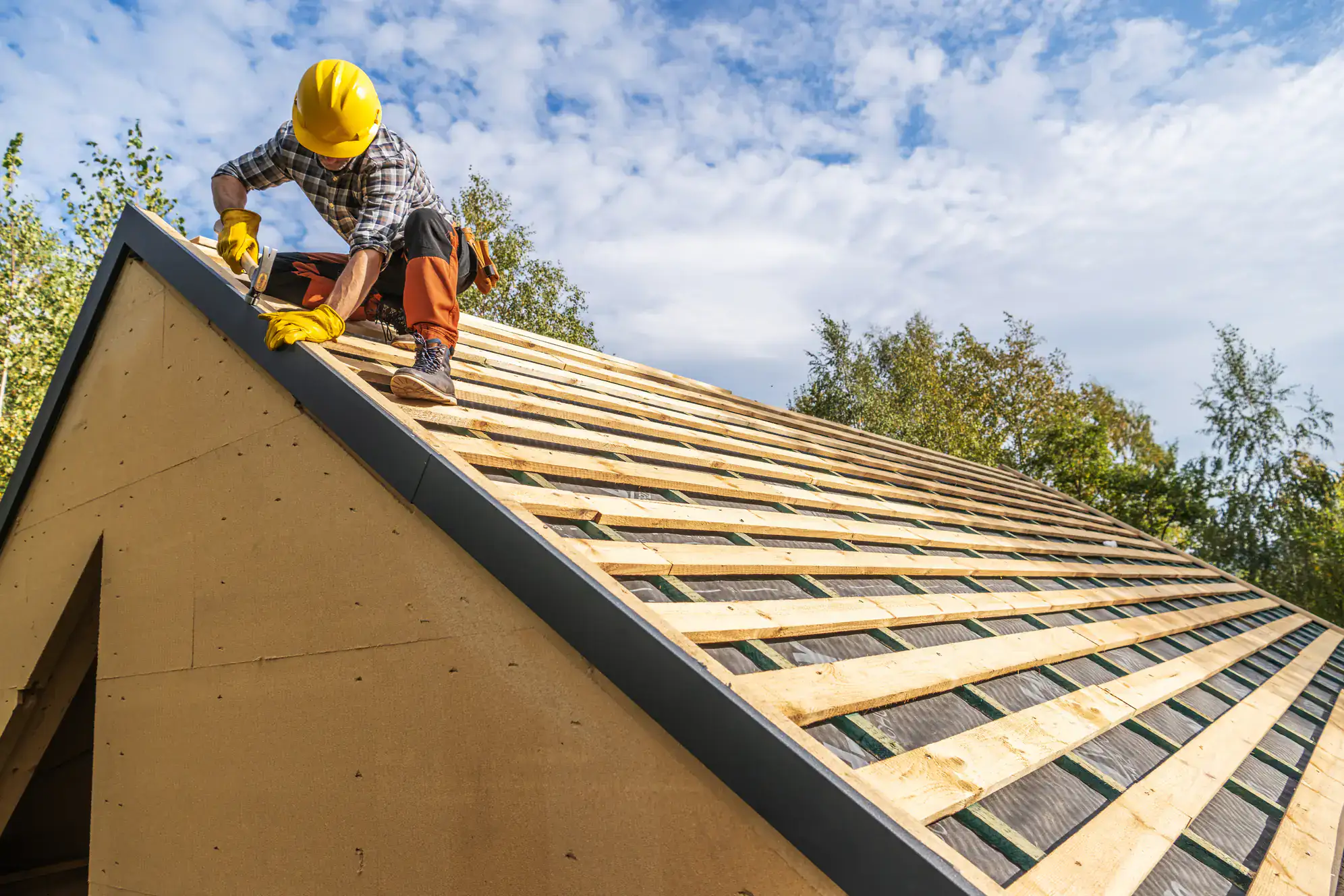
How Family-Owned Contractors Operate Differently
When you call a family-owned contractor, you’re usually talking to someone whose name is on the truck. That changes everything.
There’s no corporate playbook. No scripted sales pitch. No rotating cast of project managers who’ve never met you. The person you hire is often the person overseeing your job, and their reputation in the community rides on how it turns out.
Family businesses build their client base on word-of-mouth. Your neighbor’s referral. Your coworker’s experience. They can’t afford to ghost you mid-project or deliver sloppy work, because bad news travels fast in Union County. That accountability isn’t just good ethics—it’s survival.
You also get flexibility that larger companies can’t match. Need to adjust the timeline because of a family event? Want to swap materials mid-project? A family-owned contractor can make those calls on the spot. They’re not waiting on approvals from a regional manager three states away.
The downside? Smaller operations might juggle fewer projects at once, which can mean longer wait times during busy seasons. But when they’re on your job, you’re not competing with fifty other projects for their attention. You get the focus that comes with a business model built on relationships, not volume.
And here’s what most people don’t realize: local contractors know Union County inside and out. They understand which permits you need, how to handle the clay-rich soil, what roofing materials hold up in Jersey winters. That expertise doesn’t come from a training manual. It comes from years of working in your backyard.
What Corporate Contractors Bring to the Table
Corporate contractors operate at scale. That’s their advantage and their limitation.
When you hire a national company, you’re tapping into resources most local contractors can’t match. Bulk purchasing power means access to materials at lower costs. Standardized processes mean predictable timelines. And if they’re established, they’ve likely handled projects similar to yours hundreds of times.
The challenge is that you’re entering a system designed for efficiency, not personalization. Your project gets assigned to a local branch, which assigns it to a project manager, who coordinates with subcontractors who may or may not be employees of the company you hired. You might never speak to the same person twice.
Communication becomes a game of telephone. You call the main number. Leave a message. Wait for a callback. Get transferred. Explain your issue again. It’s not that anyone’s trying to make it difficult—it’s just how large organizations function when they’re managing dozens or hundreds of jobs simultaneously.
Pricing can also get murky. Corporate overhead is real. Marketing budgets, regional offices, franchise fees—all of that gets baked into your quote somehow. You might see a lower initial number, but change orders and “unforeseen costs” have a way of appearing as the project moves forward. The contract is often written to protect the company more than the homeowner.
That’s not to say corporate contractors can’t do good work. Many do. But the experience feels different. You’re a project number in a queue, not a neighbor they’ll run into at the hardware store. And when something goes wrong, resolving it means navigating layers of management instead of calling the owner directly.
One more thing: national companies often bring in subcontractors from outside your area. That means crews unfamiliar with local building codes, regional weather challenges, and the specific needs of Union County homes. It’s not a dealbreaker, but it’s worth knowing.
Want live answers?
Connect with a USA Home Remodeling LLC expert for fast, friendly support.
Local Contractors vs National Companies: The Real Differences
Strip away the marketing and here’s what the choice really comes down to: accountability, communication, and where your money goes.
Local contractors live in your community. Their kids go to school with your kids. They shop at the same stores. That proximity creates a level of accountability no corporate policy can replicate. If they do bad work, everyone knows. If they do great work, everyone knows that too.
National companies operate differently. They’re accountable to shareholders, franchise agreements, and quarterly targets. Your satisfaction matters, but it’s one data point among thousands. The relationship ends when the project closes and the review is submitted.
Then there’s the money. When you hire locally, more of your investment stays in Union County—supporting local suppliers, local workers, local families. With corporate contractors, a chunk of every dollar you spend leaves the area, funding operations elsewhere. That might not affect your roof, but it affects your community.

Communication and Transparency: Where the Gap Shows
Ask any homeowner what went wrong with their contractor and “communication” is usually in the first sentence.
With family-owned contractors, communication tends to be direct. You have the owner’s contact information. You reach out when you have a question. You get an answer that afternoon, not three business days later after it’s been routed through a ticketing system.
That doesn’t mean every family business is perfect at communication—some aren’t. But the structure makes it easier. There are fewer people between you and the person who can actually solve your problem. When the owner is on-site or directly managing the crew, information doesn’t get lost in translation.
Corporate contractors often rely on systems to manage communication. Project management software. Automated updates. Scheduled check-ins. When it works, it’s efficient. When it doesn’t, you’re stuck waiting for someone to return your call while your project sits unfinished.
Transparency works the same way. A family-owned contractor typically gives you a straightforward quote: here’s what it costs, here’s what’s included, here’s what’s not. If something changes, they tell you why and how it affects the price. It’s direct because their reputation depends on it.
Corporate quotes can be more complex. Line items you don’t understand. Allowances that sound flexible but aren’t. Clauses buried in the contract that shift risk onto you. It’s not always intentional—it’s just how large companies protect themselves legally. But it makes the process harder to navigate, especially if you’re not fluent in contractor-speak.
The difference becomes obvious when problems arise. With a local contractor, you call the owner. You explain the issue. They come look at it. Decision made. With a corporate contractor, you call the main line. Explain the issue. Wait for the project manager. Wait for them to escalate it. Wait for approval. Wait for scheduling. The layers slow everything down.
And here’s the uncomfortable truth: when a national company messes up, they can move on. They’ve got projects in six states. One unhappy customer in Union County doesn’t sink the ship. But for a family-owned contractor in Elizabeth? One bad project can haunt them for years. That fear keeps them honest in ways corporate policies never will.
Reliable Contractors: What the Business Model Tells You
Reliability isn’t about size. It’s about incentives.
A family-owned contractor’s incentive is clear: do good work, build a reputation, earn referrals, stay in business. Their success depends entirely on local trust. If they burn bridges, there’s nowhere to hide. The community either supports them or they fail.
Corporate contractors have different incentives. They’re optimizing for scale, efficiency, and profit margins across multiple markets. That’s not inherently bad, but it means your individual project carries less weight. They can afford to lose your business in ways a local contractor cannot.
This shows up in how they handle the details. A family contractor knows that one missed callback or one sloppy cleanup job can cost them the next three referrals. So they answer when you reach out. They show up on time. They clean up before they leave. It’s not about being nice—it’s about survival.
Corporate contractors operate on volume. They need to close deals, move crews efficiently, hit deadlines, and start the next job. Sometimes that urgency works in your favor. Other times, it means corners get cut or your concerns get deprioritized because there are ten other projects demanding attention.
Then there’s the crew itself. Family-owned contractors usually work with the same team year after year. You’re getting experienced workers who know the owner, know the standards, and know they’ll be held accountable. Corporate contractors often rely on subcontractors—independent crews hired per project. Quality can vary wildly depending on who shows up.
None of this makes corporate contractors unreliable across the board. Plenty of national companies deliver solid work. But the business model creates different pressures, and those pressures shape how reliability plays out on your job site.
If you want to gauge reliability, ask this: what happens if something goes wrong six months after the project ends? With a local contractor, you contact them directly. They come back. They fix it. Their warranty means something because their reputation is on the line. With a corporate contractor, you’re navigating customer service protocols, hoping the company still operates in your area, and praying the warranty actually covers what broke.
Reliability isn’t just about finishing the job. It’s about being there afterward when it matters.
Making the Right Choice for Your Home
Choosing a contractor comes down to what you value most.
If you want direct access, transparent pricing, and a relationship with someone who has skin in the game, a family-owned local contractor is probably your answer. If you prefer established systems, brand recognition, and the resources of a larger operation, a corporate contractor might fit better.
Neither choice is wrong. But going in blind—picking based on price alone or whoever calls you back first—that’s where regret lives.
Your home is too important for guesswork. Take the time to understand how the contractor operates, not just what they charge. Ask the hard questions. Check their reputation locally. And trust your gut when something feels off.
If you’re in Union County and you’re tired of the runaround, we’ve spent over a decade earning trust the old-fashioned way—one project, one neighbor, one referral at a time. We’re not the biggest, but we’re local, we’re licensed, and we’ll actually answer when you reach out.