
Gutter Replacement in Elizabeth, NJ
Elizabeth's Aging Homes Need More Than a Quick Fix
Hear from Our Customers
Rain Gutter Replacement in Elizabeth, NJ
Gutters that are doing their job don’t announce themselves. You just stop seeing water stains creeping down your siding, stop finding puddles pooling against your foundation after a hard rain, and stop wondering why the basement smells like it did after Tropical Storm Ida rolled through in 2021. That’s what functioning gutters look like — quiet, invisible, and doing exactly what they’re supposed to.
Elizabeth gets hit hard when storms come through. The city sits on Newark Bay, and climate data shows that the share of precipitation falling during the biggest downpours here is already high and climbing. Your gutters aren’t a decorative edge on your roofline — they’re the first line of defense between a heavy rain event and a foundation repair bill that can run well into five figures.
For homes in neighborhoods like Elizabethport and Peterstown, where the housing stock goes back generations, failing gutters don’t just mean overflow. They mean fascia boards that have been quietly rotting behind the gutter for years, soffits that have absorbed more moisture than they were ever meant to, and structural damage that gets more expensive the longer it goes unaddressed. Replacing the gutters stops that chain reaction. And doing it with a contractor who understands what’s behind the gutters — not just the gutters themselves — means you’re actually solving the problem, not just patching it.
Gutter Replacement Contractors in Elizabeth, NJ
We’ve been working on homes across Union County for over ten years, with deep roots in Elizabeth and the surrounding neighborhoods. That’s a decade of inspecting gutters on pre-war Colonials near Warinanco Park, replacing failing systems on multi-family rentals in Bayway, and telling homeowners the honest truth about what they need — even when that truth is “you don’t need replacement yet.”
This is a family-owned operation. The people who show up to your Elizabeth home are accountable to you in a way that a regional chain simply isn’t. Your review, your referral, your neighbor’s opinion — those things matter here in a way that changes how every job gets done.
Every estimate is free. Every inspection is free. And every price you’re quoted is the price you pay — no additions mid-job, no surprises on the invoice. In a city where homeowners have seen contractors come and go, that kind of consistency is what builds a reputation worth keeping.

House Gutter Replacement in Elizabeth, NJ
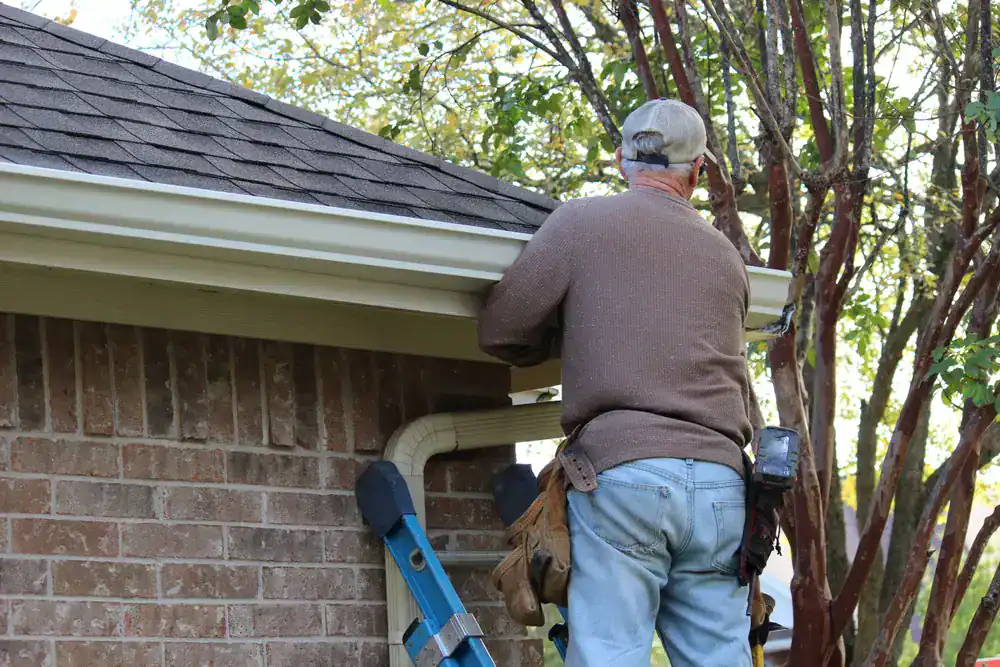
It starts with a free inspection. A licensed contractor gets on a ladder, looks at your gutters up close, and checks the fascia boards and soffits behind them. On older Elizabeth homes — especially the kind of two- and three-family structures that make up a large portion of the city’s housing stock — that behind-the-gutter inspection matters as much as the gutter itself. If there’s damage back there, you’ll know before any work begins, not after.
From there, you get a clear, itemized estimate. No vague line items, no ballpark figures. You’ll know what’s being replaced, what materials are going in, and what the total cost is before anything comes down. If your project falls under Elizabeth’s Bureau of Construction permit requirements, we handle that process — you won’t be left figuring out the New Jersey Uniform Construction Code on your own.
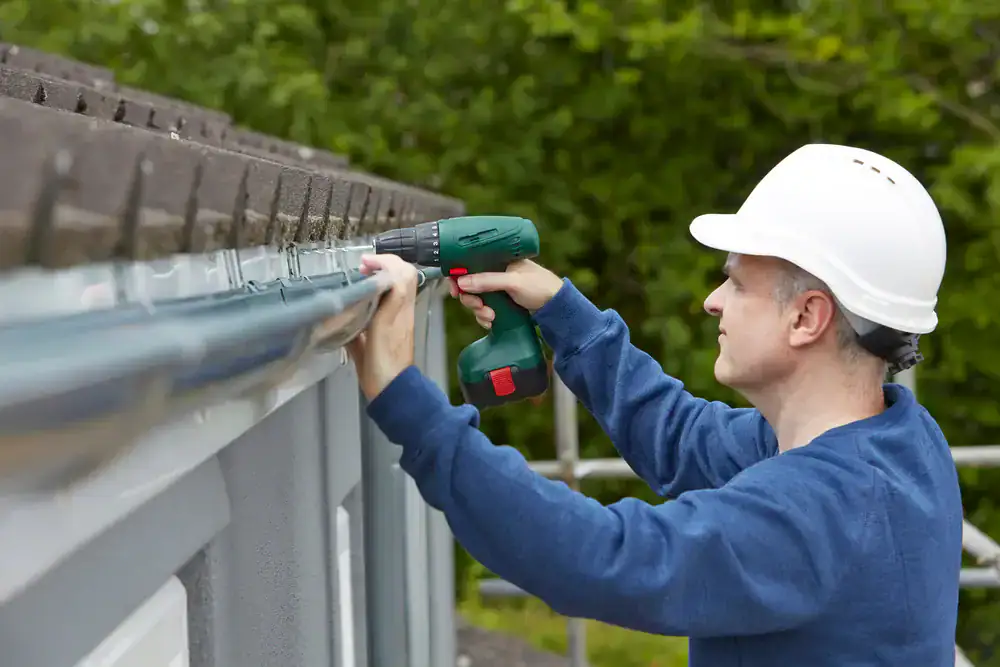
Once the work is approved and scheduled, seamless aluminum gutters are fabricated on-site to the exact dimensions of your home. That means no pre-cut sections pieced together with seam points that become leak points over time. The installation is clean, the downspouts are positioned to move water away from your foundation, and the final walkthrough confirms everything is working the way it should before the crew leaves your property.

Ready to get started?
Roof Gutter Replacement in Elizabeth, NJ
Seamless aluminum gutters are the standard here, and for good reason. Elizabeth’s documented exposure to intense storm events — the kind that overwhelmed the Elizabeth River in 2021 — demands a gutter system with no unnecessary weak points. Seamless systems eliminate the joints along the run where sectional gutters leak and fail first. They’re fabricated on-site, matched to your roofline, and installed with proper slope so water moves where it’s supposed to move.
Every replacement includes a full assessment of the fascia boards behind the gutters. On the aging Colonials and multi-family homes that define Elizabeth’s residential neighborhoods, this step isn’t optional — it’s where the real damage often hides. If fascia repair is needed before new gutters go in, that’s identified upfront and priced transparently, not discovered mid-job.
Downspout placement is part of the conversation too. In a city with Elizabeth’s density and its history of flooding, where your downspouts discharge matters. Water that empties too close to the foundation or toward a neighboring property creates problems that outlast the installation. We address the full drainage picture — gutters, downspouts, and discharge — so the system you’re paying for actually protects your home from the ground up.

Do I need a permit for gutter replacement in Elizabeth, NJ?
In most cases, a straightforward gutter replacement on an existing residential home does not require a permit in Elizabeth. However, if the scope of work expands to include structural repairs — like replacing deteriorated fascia boards or making changes to the roofline — the City of Elizabeth’s Bureau of Construction may require a permit under the New Jersey Uniform Construction Code.
The honest answer is that it depends on what’s actually being done. A licensed contractor will know where that line is and will pull the necessary permits if the job crosses it. What you don’t want is a contractor who skips that step to save time, because unpermitted work can create complications when you go to sell your home or file an insurance claim. We handle this determination as part of the process — you won’t be left navigating it on your own.
How much does gutter replacement cost for a home in Elizabeth, NJ?
For a standard single-family home in Elizabeth, gutter replacement typically runs between $1,000 and $1,500. That range can shift depending on the linear footage of your gutters, the number of downspouts, the condition of the fascia behind the gutters, and whether any structural repairs are needed before installation.
For the two- and three-family homes that are common throughout neighborhoods like Bayway and Elizabethport, the total cost will generally be higher simply because there’s more linear footage to cover. The best way to get an accurate number for your specific Elizabeth home is a free on-site inspection — that’s when you find out what’s actually there, what condition it’s in, and what the full scope of work looks like. There are no estimates given over the phone based on square footage guesses, because that’s not how accurate pricing works.
What are the signs that my gutters need replacement rather than repair?
There’s a difference between gutters that need a cleaning or a minor fix and gutters that have reached the end of their useful life. The clearest signs that replacement is the right call: gutters that are pulling away from the fascia at multiple points, visible cracks or holes that aren’t isolated to one small section, gutters that sag or hold standing water after rain, and widespread rust or corrosion along the trough.
For older homes in Elizabeth — particularly the pre-war Colonials in Elmora and the aging multi-family structures in Peterstown — gutters that were installed in the 1980s or 1990s are at or past the typical 20-year lifespan for aluminum systems. Salt air from Elizabeth’s proximity to Newark Bay and the Arthur Kill also accelerates corrosion in metal gutters compared to what you’d see on an inland home. If the gutters on your home are showing multiple failure points, repair is often a short-term fix on a system that’s already past its prime.
What type of gutters work best on older Elizabeth homes?
Seamless aluminum gutters are the most practical choice for the majority of Elizabeth’s residential housing stock. They’re durable, lightweight, resistant to rust, and fabricated on-site to fit the exact dimensions of your roofline — which matters on older homes where the lines aren’t always perfectly uniform.
For the 1920s and 1930s Colonials that are common in neighborhoods like Elmora and Elmora Hills, seamless gutters are a clean match aesthetically and structurally. They eliminate the seam points that sectional gutters rely on — and those seam points are typically the first places a gutter system starts to fail. On homes near the waterfront or in lower-lying areas of Elizabeth, the reduced corrosion risk of aluminum over steel is an additional practical advantage. If you’re working with a historic structure or have specific aesthetic requirements, there are other material options worth discussing during the inspection.
How does Elizabeth's weather affect how often gutters need to be replaced?
Elizabeth’s climate puts more stress on gutters than many homeowners realize. The city’s exposure to intense precipitation events — which are increasing in frequency according to climate projections — means your gutters are regularly handling high-volume water flow. Gutters that are undersized, improperly sloped, or already compromised fail faster under those conditions.
Freeze-thaw cycles through the winter months add another layer of wear. Water that sits in a sagging or clogged gutter freezes, expands, and puts pressure on the seams, hangers, and fascia. By spring, what looked like a minor sag in November can be a gutter that’s pulling away from the house entirely. Elizabeth’s urban heat island effect means those freeze-thaw cycles happen more frequently than in surrounding suburban areas. Regular fall inspections — before leaf accumulation from the city’s dense street tree canopy clogs the system — are the most practical way to catch problems before they become expensive ones.
Why does USA Home Remodeling offer free gutter inspections in Elizabeth, NJ?
The free inspection exists because most homeowners in Elizabeth genuinely don’t know what condition their gutters are in until something goes wrong — and by then, the damage has usually been building for a while. A professional inspection means a licensed contractor gets on a ladder, looks at the gutters and the fascia behind them, and tells you exactly what they find. No charge, no obligation.
Elizabeth’s housing stock — much of it aging, a significant portion of it multi-family rental property where maintenance gets deferred — means there’s a real gap between what gutters look like from the ground and what they look like up close. The inspection closes that gap. If the gutters are fine, you’ll know that. If there’s a problem developing, you’ll know what it is and what it will take to fix it before water intrusion turns a gutter replacement into a foundation repair. That’s the point of the inspection — information first, work second.