
Siding Installation in Connecticut Farms, NJ
Connecticut Farms Homes Deserve Siding Built to Last 40 More Years
Hear from Our Customers
Residential Siding Contractors in Connecticut Farms
When siding is installed properly on a Connecticut Farms home, you stop dealing with the problems that come with aging cladding — drafts near windows, moisture showing up in places it shouldn’t, and energy bills that creep up every winter. That’s not just a comfort issue. It’s a structural one. The freeze-thaw cycles Union County delivers from November through March are relentless, and siding that was installed in the ’80s was never designed to handle 40 more years of it.
New siding also changes what your home looks like from the street — and in a neighborhood where the Connecticut Farms Historic District sets the tone, that matters. Whether you’re planning to stay for another 20 years or thinking about listing, the exterior is the first thing anyone sees. A clean, well-installed job doesn’t just protect the home. It tells the story of an owner who actually takes care of the place.
The other thing that changes is peace of mind. You stop wondering if that soft spot near the window frame is getting worse, or if last month’s nor’easter left something behind the panels you can’t see. With the right contractor and the right materials, that mental load goes away.
Local Siding Company Serving Connecticut Farms, NJ
We’ve been working on homes across Connecticut Farms and Union County for close to a decade. Not as a franchise. Not as a call center with rotating crews. As a family-run operation where the people doing the work are accountable for what they leave behind — and where you can actually reach someone when you have a question.
Connecticut Farms is a neighborhood with real history and real homeowners who’ve dealt with enough contractors to know the difference between someone who shows up and someone who disappears after the deposit clears. We’ve built our reputation the slow way — through referrals, honest estimates, and jobs that hold up. The reviews reflect real projects, not a marketing campaign.
We handle roofing, siding, and gutters, which means when we look at your home near Stuyvesant Avenue or anywhere else in Connecticut Farms, we’re looking at the full exterior picture — not just the part we’re selling you today.

Siding Installation Process in Connecticut Farms, NJ
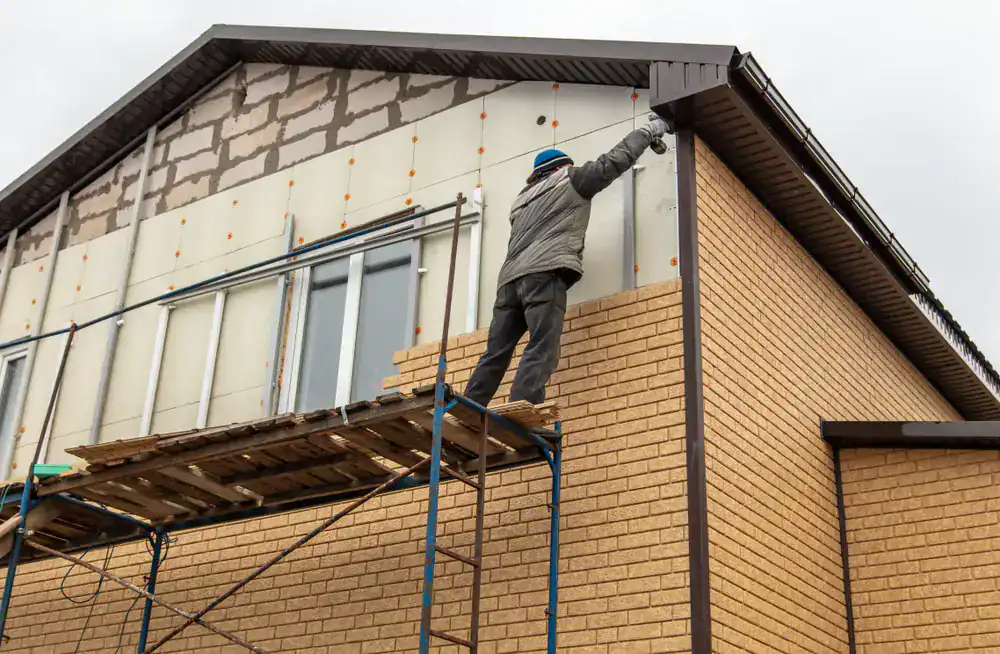
It starts with a free inspection. We come out, look at your current siding, check the substrate condition underneath, assess any flashing issues around windows and doors, and give you an honest read on what you’re actually dealing with. A lot of Connecticut Farms homes have original or first-replacement siding that’s been through decades of freeze-thaw cycles — and what’s visible on the surface doesn’t always tell the whole story. We’d rather find the problem before the project starts than after.
From there, you get a written estimate that spells out the materials, the scope, and the price. No verbal ballparks. No line items that appear later. If the project requires a construction permit through Union Township — which it will for most full replacements under New Jersey’s Uniform Construction Code — we handle that process. You don’t have to figure out the paperwork.
Once work begins, you’ll know what’s happening and when. We don’t go silent mid-project. The crew shows up when we say they will, the work gets done clean, and before we leave you do a final walkthrough with us. If something isn’t right, we address it then — not after you’ve been chasing us for a week.

Ready to get started?
Vinyl Siding Contractors in Connecticut Farms, NJ
Vinyl siding is still the most common choice for replacement projects in Union County, and for good reason — it’s cost-effective, low-maintenance, and holds up well when it’s installed correctly. But not every home in Connecticut Farms is the same candidate for the same product. A standard colonial near the Connecticut Farms Historic District might be better served by insulated vinyl, which adds a layer of thermal performance and gives the panels a more solid, substantial look. A home closer to the Garden State Parkway corridor — more exposed to wind-driven weather — benefits from heavier gauge panels and tighter installation at every seam and flashing point.
Fiber cement is worth a real conversation if you want something that lasts 50-plus years and holds paint the way wood used to. It’s a heavier investment upfront, but for homeowners who aren’t planning to replace siding again in their lifetime, it makes sense. We’ll walk you through the actual trade-offs — not just the upsell.
Every installation we do is backed by manufacturer warranties that only apply when the work is done by a certified installer. That’s not a technicality — it’s the difference between having real coverage when something goes wrong and having nothing. We’re licensed, registered with the NJ Division of Consumer Affairs as required under state law, and fully insured. You’re protected from the first nail to the final inspection.

Do I need a permit for siding installation in Connecticut Farms, NJ?
In most cases, yes. Under New Jersey’s Uniform Construction Code, you can repair or replace siding with like material on up to 25% of your exterior wall without a permit. But if you’re doing a full home re-side — which is what most Connecticut Farms homeowners end up needing once they see the full scope — a construction permit is required. The same rule applies to any installation of polypropylene siding, regardless of how much of the wall is affected.
Union Township processes construction permits through the NJ Department of Community Affairs Division of Local Code Enforcement. The permit fee for renovation work is calculated based on the estimated project cost — $40 per $1,000 for work up to $50,000, and $35 per $1,000 for the portion between $50,000 and $100,000. We handle all of this on your behalf. If someone is quoting you a siding job and hasn’t mentioned permits, that’s worth asking about directly.
How long does siding actually last on a home in Connecticut Farms?
Vinyl siding has a documented lifespan of 20 to 40 years, and that range is wide for a reason — installation quality makes an enormous difference. In Connecticut Farms and across Union County, the freeze-thaw cycles from late fall through early spring are the main accelerant of siding failure. When water gets behind panels through improperly sealed seams or flashing, it freezes, expands, and slowly forces panels loose or compromises the substrate beneath them. That process repeats dozens of times a winter, and it’s invisible until it isn’t.
Fiber cement siding, when properly installed and maintained, can last 50 years or more. It doesn’t contract and expand with temperature the way vinyl does, which makes it particularly stable in the kind of climate Connecticut Farms experiences. If your home currently has siding from the 1980s or earlier, it’s worth getting a professional inspection regardless of how it looks from the street — what’s happening behind the panels is often a different story.
What's the difference between vinyl and fiber cement siding for my home?
The honest answer is that both are solid options — the right choice depends on your priorities. Vinyl siding costs less upfront, requires almost no maintenance, and comes in a wide range of colors and profiles. Insulated vinyl adds a layer of foam backing that improves thermal performance and gives the panels a more solid feel, which matters on older Connecticut Farms homes that weren’t built with today’s energy standards in mind.
Fiber cement — James Hardie being the most recognized brand — is heavier, more impact-resistant, and holds paint for longer periods. It looks more like wood than vinyl does, which can be an important consideration in a neighborhood with the architectural character of Connecticut Farms. It costs more to install, partly because of the material cost and partly because it requires more labor. But if you’re looking at a 50-year solution and you want something that won’t fade or dent, fiber cement is worth the conversation. We’ll give you a straight comparison based on your specific home, not a pitch for whichever product has the better margin.
How do I know if my current siding needs to be replaced or just repaired?
The short answer: get an inspection before you assume either way. There are situations where targeted repairs make sense — a section of damaged panels after a storm, a few pieces that have cracked or warped while the rest of the home is in solid shape. But there are also situations where repairs are just delaying the inevitable, and a contractor who’s honest with you will tell you which one you’re looking at.
The warning signs that typically point toward replacement over repair include widespread fading or chalking, panels that are buckling or pulling away from the wall, visible gaps at seams or around window and door trim, and any soft spots in the wall sheathing that suggest moisture has been getting in. On Connecticut Farms homes built in the 1950s through 1970s, it’s common to find that the original housewrap — if there was any — has deteriorated to the point where it needs to be replaced along with the siding. A free inspection from us will tell you exactly what you’re dealing with before you make any decisions.
When is the best time of year to schedule siding installation in Connecticut Farms?
Spring and early fall are the busiest seasons for siding installation in Union County, and for good reason — the weather cooperates, and homeowners are either coming out of winter with damage to address or preparing for the next one. If you’re planning a project, reaching out in late winter or early spring gives you the best chance of getting on the schedule before the backlog builds. Quality contractors in this area typically book out four to eight weeks during peak season.
That said, siding installation isn’t strictly a warm-weather job. Fiber cement and engineered wood can be installed year-round with the right technique. Vinyl requires more care below 40°F because it becomes brittle and can crack during handling, but it’s not impossible in cooler temperatures with an experienced crew. If you’re thinking about a fall or winter project, it’s worth calling early to talk through timing and what material makes the most sense given the schedule. Waiting until spring to start the conversation usually means waiting until summer to get the work done.
How do I find a trustworthy siding contractor in Connecticut Farms, NJ?
Start with the basics that are easy to verify. New Jersey requires all home improvement contractors to register with the NJ Division of Consumer Affairs under the Home Improvement Contractor program. This isn’t optional — it’s state law, and hiring an unregistered contractor leaves you without legal recourse if the work is defective or the contractor disappears. You can verify registration through the NJ Division of Consumer Affairs website before you sign anything.
Beyond registration, ask for proof of general liability insurance and workers’ compensation coverage. Ask for a written estimate — not a verbal number — that specifies materials, scope, and price. And check reviews that come from verified local customers, not just aggregate star ratings. In the Connecticut Farms and broader Union Township market, the contractor pool ranges from fully licensed, insured professionals to operators who will skip the permit, skip the housewrap, and be unreachable six months later when problems show up. The difference between those two options is usually visible in how a contractor communicates before the job starts — and we offer free estimates so you can make that assessment with zero financial commitment.
Other Services we provide in Connecticut Farms