
Roof Inspection in Mountainside, NJ
Wooded Lots and Old Roofs Don't Mix Well
Hear from Our Customers
Certified Roof Inspector in Mountainside, NJ
Most homeowners in Mountainside don’t think about their roof until something goes wrong — a stain on the ceiling, a gutter pulling away from the fascia, or water showing up somewhere it has no business being. By that point, what could’ve been a straightforward repair has turned into something much more involved. A professional roof inspection gets ahead of that.
Homes near the Watchung Reservation sit under a heavy hardwood canopy. Oak leaves, maple seeds, and small branches accumulate in valleys and gutters year-round, holding moisture against the shingles and creating the exact conditions where moss and algae take hold. That’s not just a cosmetic issue — it breaks down granule coverage and shortens the life of your roof faster than the weather alone ever would.
The elevation matters too. Mountainside sits on the Watchung ridge, which means your home sees more wind exposure and more freeze-thaw cycles per winter than homes in valley communities nearby. Flashing loosens, sealants crack, and ice dams form at the eaves when heat escapes through an under-insulated attic. A thorough roof damage inspection in Mountainside catches all of it — before the next storm turns a small vulnerability into a real repair bill.
Roof Inspection Company in Mountainside, NJ
We’ve been working with New Jersey homeowners for close to ten years, and our work has always been focused on one thing: giving people an honest picture of what their home actually needs. Not what generates the biggest job. Not what’s easiest to sell. What’s true.
We hold contractor licenses and manufacturer certifications from major shingle brands — credentials that a small fraction of roofing contractors in the country actually carry. For homeowners in Mountainside, that matters in a practical way: only a certified contractor can offer the enhanced manufacturer-backed warranty coverage that protects a home at this value level. That’s not a sales point. It’s just how the warranty programs work.
Union County homes — especially the mid-century colonials, split-levels, and ranches that define Mountainside’s neighborhoods — have their own set of patterns and wear points. We know what to look for on these properties, and we’ll tell you what we find straight.

Licensed Roof Inspector in Mountainside, NJ
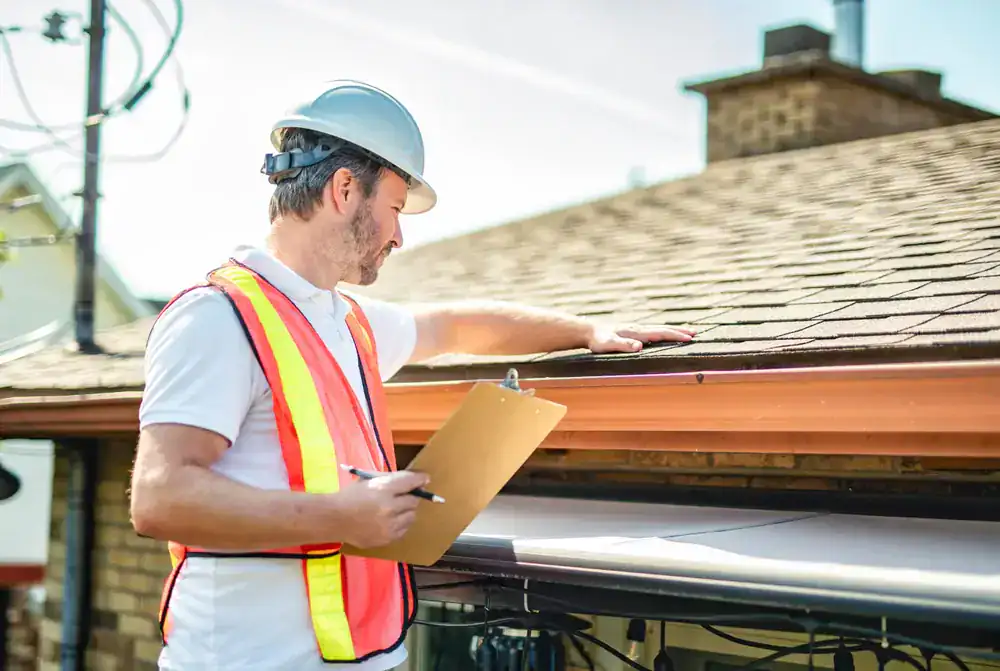
When you schedule a free roof inspection with us in Mountainside, NJ, the process is straightforward. Someone from our team comes out, gets on the roof, and does a real inspection — not a drive-by assessment from the driveway. That means checking shingles for granule loss, lifting, and cracking. It means looking at every flashing point: around the chimney, at pipe penetrations, along the valleys, and at the eaves where ice dams tend to form on ridge-line properties like yours.
Gutters get checked too, because in Mountainside the debris load from the surrounding tree canopy means gutter performance and roof drainage are directly connected. A blocked valley or a gutter pulling away from the fascia can direct water into places it shouldn’t go, and that shows up in the inspection.
After the walkthrough, you get a clear explanation of what was found — not a hard pitch, just an honest report. If the roof is in good shape, you’ll know that. If there’s something that needs attention, you’ll know what it is, why it matters, and what the options are. In cases where repair or replacement work requires a permit through Mountainside’s Building Department, we handle that process — you don’t have to figure it out on your own.
Ready to get started?
Roof Leak Inspection in Mountainside, NJ
A roof leak inspection in Mountainside, NJ through us isn’t limited to the shingles. Because we also handle gutters and siding, a single visit can assess the entire exterior system — which matters more than it might sound. Storm damage on a Mountainside home rarely hits just one component. Wind lifts shingles and damages gutters at the same time. Debris from the Watchung Reservation canopy clogs gutters and traps moisture against the roof deck simultaneously. Getting a full picture in one inspection means nothing gets missed because it fell between two separate contractor visits.
For homeowners thinking about listing their home — and in a market where Mountainside properties regularly transact above $800,000 — a pre-listing roof inspection is one of the more straightforward ways to protect your negotiating position. A documented clean bill of health, or a repair completed before the buyer’s inspector shows up, puts you in a much stronger spot than reacting to findings mid-transaction.
The inspection is free and comes with no obligation. If the roof needs work, you’ll get a clear, honest recommendation. If it doesn’t, you’ll have the documentation to prove it — which has real value whether you’re staying put or planning to sell.

How do I know if my Mountainside roof has ice dam damage?
Ice dams form when heat escapes through the roof near the ridge, melts the snow sitting up there, and that meltwater runs down and refreezes at the colder eaves. The ice builds up and starts forcing water back under the shingles. Because Mountainside sits on the Watchung ridge at a higher elevation than surrounding communities, temperatures here can stay at or below freezing when valley towns nearby are already thawing — which means more freeze-thaw cycles per winter and a higher likelihood of ice dam formation.
The damage isn’t always obvious from the ground. Inside the home, you might notice water stains near exterior walls or on ceilings close to the eaves. On the roof itself, the signs show up as lifted or cracked shingles near the lower edge, damaged or separated flashing, and sometimes visible staining on the fascia boards. A professional inspection after any significant winter storm is the most reliable way to know for sure what you’re dealing with — and to catch it before the next season compounds the problem.
What does a roof inspection actually include, and how long does it take?
A thorough roof inspection covers every major component of the roofing system — not just a visual scan of the shingles from the ground. That means getting on the roof and physically checking shingle condition, granule loss, lifting or buckling, and any signs of cracking or blistering from UV exposure. Every flashing point gets checked: the chimney, pipe boots, skylights if present, valleys, and the eave line where ice dam damage tends to concentrate on Mountainside’s hillside homes.
Gutters are part of the inspection too, because in a heavily wooded area like this one, gutter performance directly affects how well the roof drains. Debris-clogged gutters back water up against the fascia and into the roof assembly. The full inspection typically takes between 45 minutes and an hour and a half depending on the size and complexity of the home. After the walkthrough, you get a clear explanation of everything found — no jargon, no pressure, just a straight account of the roof’s condition.
My home was built in the 1960s — how do I know if the roof needs to be replaced?
A lot of homes in Mountainside were built in the 1950s, 1960s, and 1970s, which means many of them are carrying roofing systems that are either at or well past their expected lifespan. Asphalt shingles in New Jersey typically last somewhere between 20 and 30 years, and Mountainside’s specific conditions — wind exposure at ridge elevation, heavy debris from the surrounding tree canopy, and the intensity of freeze-thaw cycling — tend to push that number toward the lower end of the range.
If your home was re-roofed in the 1990s or early 2000s, you’re likely in the window where a professional assessment makes a lot of sense. Some roofs in that age range still have useful life left. Others have been quietly deteriorating in ways that aren’t visible from the ground — granule loss in the valleys, failed flashing sealants, soft spots over the decking. The only way to know which situation you’re in is to have someone who knows what they’re looking at get up there and check. That’s exactly what the free inspection is for.
Does a roof inspection in Mountainside, NJ require a permit?
The inspection itself doesn’t require a permit — that’s just an assessment. But if the inspection leads to repair or replacement work, New Jersey’s Uniform Construction Code requires that permits be pulled through Mountainside’s Building Department before that work begins. This applies to full roof replacements and to significant repairs that affect the structural integrity of the roofing system.
This is worth paying attention to, because some contractors skip the permitting step to move faster or keep costs down on their end. That creates real problems for the homeowner — unpermitted work can complicate a home sale, create issues with your insurance carrier, and leave you without the legal protections that apply when licensed, registered contractors pull proper permits. We handle the permitting process as part of the job. You don’t need to navigate Mountainside’s Building Department on your own — that’s part of what you’re getting when you work with a properly licensed contractor.
There's moss growing on my roof — is that actually a problem?
It’s a more serious issue than most homeowners realize. Moss, algae, and lichen are common on roofs in Mountainside, particularly on homes that sit under the hardwood canopy near the Watchung Reservation. The shade and moisture those trees create are ideal conditions for organic growth to take hold on shingle surfaces — and once it does, it doesn’t just sit there looking bad.
Moss holds moisture directly against the shingles. Over time, that consistent moisture exposure degrades the granule layer that protects the asphalt underneath, accelerates shingle cracking, and can work its way under shingle edges and lift them. Lichen is even more aggressive — it actually bonds to the shingle surface and can pull granules away when removed incorrectly. Left untreated, these organisms can take years off the life of an otherwise sound roof. A roof inspection will document the extent of the growth and identify whether it’s a maintenance issue that can be addressed with treatment, or whether the underlying shingles have already sustained enough damage to warrant closer attention.
Is the free roof inspection really free, or is there a catch?
It’s genuinely free — no service fee, no obligation to move forward with any work, and no pressure during or after the visit. We offer the inspection because it’s the most straightforward way for a homeowner to get real information about their roof without having to commit to anything first.
For homeowners in Mountainside, where properties carry significant value and the decision to repair or replace a roof is a meaningful financial one, having access to an honest professional assessment at no cost removes the main barrier to getting accurate information. Our business grows through referrals and reviews — not through pressuring homeowners into work they don’t need. If the inspection shows your roof is in good shape, you’ll hear that. If it shows something that needs attention, you’ll get a clear explanation of what it is and what it would take to address it. What you do with that information is entirely up to you.
Other Services we provide in Mountainside