
Roof Inspection in Elizabeth, NJ
Elizabeth's Older Homes Don't Leave Much Room for Guessing
Hear from Our Customers
Roof Damage Inspection in Elizabeth, NJ
Most Elizabeth homeowners don’t think about their roof until water shows up somewhere it shouldn’t. By then, the damage has usually been building for months — sometimes longer. A professional roof inspection gives you a clear picture of what’s actually happening up there, so you’re not reacting to a crisis. You’re making a decision.
Elizabeth’s housing stock is old. Bayway, Peterstown, Elizabethport — a lot of these homes were built in the early 1900s and have been re-roofed at least once, sometimes more. That history matters. Older structures carry older flashing, older penetration points, and decades of freeze-thaw cycling that quietly works against even a relatively new roof. The Arthur Kill waterway running along the city’s eastern and southern edge adds a layer of coastal moisture that accelerates granule loss and corrodes metal components faster than most homeowners expect.
Getting ahead of that means less money spent, fewer emergencies, and a roof that actually holds up through the next nor’easter. If you’re in Elmora Hills and your home is pushing 25 years on its last roof, or you’re in the North End and just dealt with a rough winter, an inspection is the most straightforward thing you can do right now.
Licensed Roof Inspector in Elizabeth, NJ
We’ve been doing exterior work across New Jersey for over ten years — roofing first, with gutters and siding rounding out the picture. Our business was built on referrals, not ad spend, which means every job had to earn the next one. That’s still how it works.
We hold NJ Home Improvement Contractor registration, carry full insurance, and are certified by major shingle manufacturers — certifications that give Elizabeth homeowners access to enhanced warranty coverage that most contractors simply can’t offer. When you hire someone uncertified, that coverage disappears entirely.
Union County’s housing market — especially in a city as dense and historically layered as Elizabeth — requires a contractor who understands what they’re looking at. From the multi-family two-families in Bayway to the single-family homes throughout Elmora, we’ve seen the full range of what this city’s roofs deal with. You get honest findings, plain-language explanations, and no pressure to do anything beyond what’s actually needed.

Roof Inspection Company in Elizabeth, NJ
It starts with a call or a quick form submission. From there, you’ll get a scheduled time that works around your day — not ours. Elizabeth is a working city, and we understand that most homeowners here aren’t sitting home waiting on a contractor.
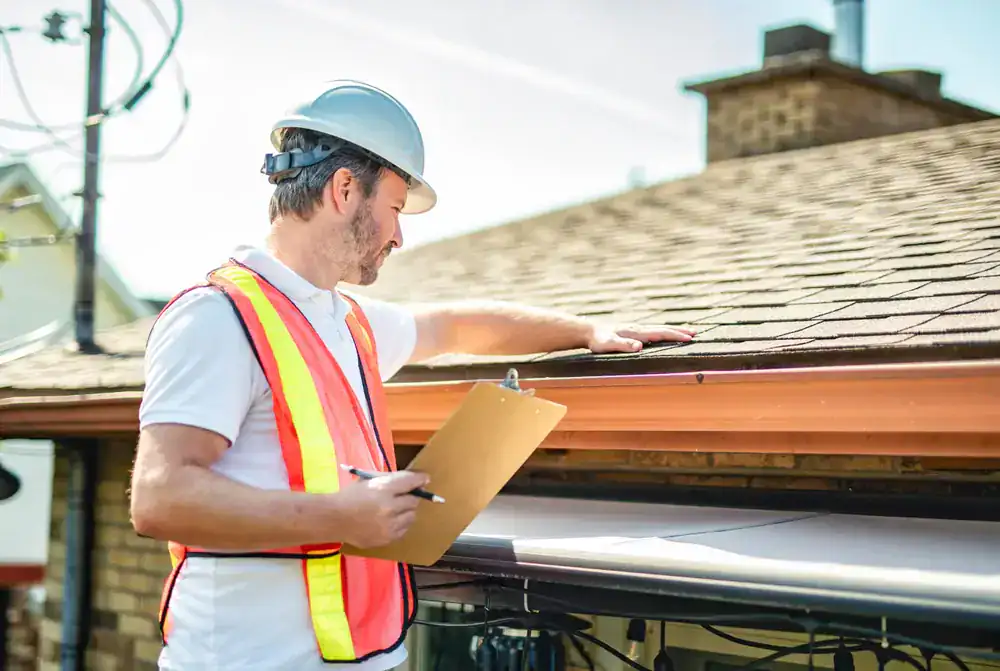
When our inspector arrives, we go through the full exterior: shingles, flashing, ridge caps, gutters, fascia, soffits, and any penetration points like vents or chimney bases. On Elizabeth’s older homes — particularly the two- and four-family structures common in Bayway and Peterstown — those penetration points are often where trouble starts. The inspection covers all of it.
After the walkthrough, you get a clear summary of what was found. If there’s damage, you’ll know what it is, where it is, and what your options are. If the roof is in solid shape, that’s what you’ll hear — no manufactured urgency, no inflated findings to justify a sale. Any repair or replacement work in Elizabeth requires permits through the city’s Bureau of Construction, and we handle that process in full compliance with New Jersey’s Uniform Construction Code. You won’t be left figuring that part out on your own.
Ready to get started?
Certified Roof Inspector in Elizabeth, NJ
Our roof inspection isn’t a five-minute drive-by. We conduct a full assessment of every component that affects how your roof performs — shingles, flashing, drip edge, gutters, fascia, soffits, and all penetration points. On Elizabeth’s multi-family housing stock, that means accounting for larger roof surfaces, additional HVAC units, and multiple vent stacks that create more potential failure points than a standard single-family home.
The inspection also addresses what’s specific to this area. Coastal moisture from the Arthur Kill, industrial particulate from the port and refinery corridors near Elizabethport, and the standard Union County freeze-thaw cycle all affect roofing materials in ways that show up during a thorough assessment. Granule loss, flashing separation, and soffit deterioration are among the most common findings on Elizabeth’s older homes — and they’re all things that are manageable when caught early.
If the inspection reveals that a replacement is warranted, our manufacturer certifications mean you’re eligible for enhanced warranty coverage — the kind that protects your investment for decades, not just a few years. Every inspection is free, no obligation attached. You get the information, and you decide what to do with it.

How often should Elizabeth homeowners schedule a professional roof inspection?
The general recommendation from roofing professionals is twice a year — once in the spring after winter weather has run its course, and once in the fall before temperatures drop again. In Elizabeth specifically, that spring inspection matters more than most homeowners realize. The city’s freeze-thaw cycle through the winter months puts consistent stress on flashing, shingles, and any areas around chimney bases or vent stacks. By March or April, a lot of that damage is sitting there undetected.
If your home is in Bayway, Elizabethport, or Peterstown — where much of the housing stock dates back to the early twentieth century — annual inspections are worth treating as a baseline, not an option. Older structures accumulate small issues faster, and a roof that was last replaced fifteen years ago in one of those neighborhoods is likely approaching or past the point where a professional eye is genuinely useful. Beyond the twice-a-year schedule, you should also call for an inspection after any significant storm event, particularly ones involving high winds or hail, which are not uncommon in Union County through the late spring and summer months.
What does a roof inspection actually cost in Elizabeth, NJ?
We offer free roof inspections — no charge, no obligation. That’s the starting point for every homeowner in Elizabeth who wants to understand their roof’s condition without committing to anything upfront. In the broader market, professional roof inspections typically run between $150 and $400 depending on the contractor and the scope of the assessment, so the free inspection is a real financial difference, not just a talking point.
What you’re getting for free here is a full exterior assessment — not a quick visual from the driveway. Our inspector goes through shingles, flashing, gutters, fascia, soffits, and penetration points. If there’s damage, you’ll get a clear explanation of what was found and what it would take to address it. If the roof is in good shape, that’s exactly what you’ll hear. There’s no incentive to manufacture findings, because our business runs on reviews and referrals from Elizabeth-area homeowners — not on one-time sales to people who didn’t need the work done.
How do I know if my roof needs repair or a full replacement?
The honest answer is that most homeowners can’t tell from the ground, and that’s not a knock on anyone — it’s just the nature of roofing. What looks like a few missing shingles from the backyard might be isolated storm damage that’s easily repaired. What looks fine from below might have compromised flashing around a chimney base that’s been letting moisture in for two seasons. A professional inspection is the only way to know for certain.
In Elizabeth, the age of the housing stock adds a layer of complexity. A roof on a Peterstown two-family that was installed in the mid-2000s is now approaching twenty years — which puts it in the range where the honest answer might be replacement rather than continued repair. Asphalt shingles have a typical lifespan of twenty to thirty years, but Union County’s weather — the freeze-thaw cycles, the nor’easters, the summer storm systems — can shorten that window on a roof that wasn’t installed or ventilated correctly. The inspection will tell you where you actually stand, and the recommendation will be based on what the roof needs, not on what’s more profitable to sell you.
Does a roof inspection in Elizabeth, NJ require a permit or any city approval?
The inspection itself does not require a permit — a contractor can assess your roof without any filings with the city. Where permits come into play is when actual work is performed. In Elizabeth, roof replacement work falls under New Jersey’s Uniform Construction Code and requires a construction permit through the city’s Bureau of Construction. That permit process exists to make sure the work is reviewed for code compliance and inspected for safety, and it’s not something that should be skipped.
This matters more than some homeowners realize. A roof replacement done without the required permit can create real problems down the road — during a home sale, when a buyer’s attorney or inspector asks for documentation, or when you file an insurance claim and the carrier asks for proof that the work was properly permitted. We handle the permitting process as part of any replacement job, so you’re not left navigating Elizabeth’s Bureau of Construction on your own. Every contractor working on your home in Elizabeth is also required to hold NJ Home Improvement Contractor registration — ask for it before anyone gets on your roof.
What are the most common roof problems found on Elizabeth's older homes?
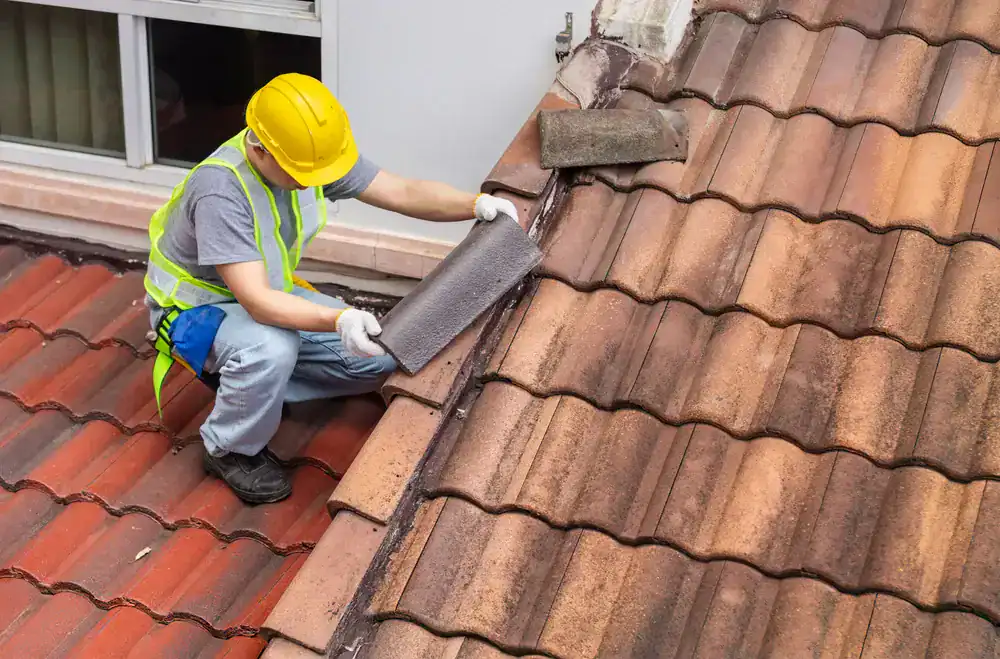
The most consistent findings on Elizabeth’s older housing stock fall into a few categories. Flashing failures are at the top of the list — specifically around chimneys, skylights, and the wall-to-roof junctions common on the two- and four-family homes throughout Bayway and Peterstown. Flashing is metal, it expands and contracts with temperature changes, and on a home that’s been through fifty or sixty New Jersey winters, it eventually separates or corrodes. When that happens, water finds its way in.
Granule loss on asphalt shingles is another common finding, and it’s accelerated in Elizabeth by the coastal moisture from the Arthur Kill and, in certain neighborhoods, the industrial particulate in the air near the port and refinery corridors. Granules protect the shingle’s core from UV degradation — once they’re gone, the shingle ages quickly. Soffit and fascia deterioration, inadequate attic ventilation, and clogged or damaged gutters that push water back under the drip edge are also frequently identified during inspections on Elizabeth’s older homes. None of these are catastrophic when caught early, but all of them become expensive if they’re left alone.
Can a roof inspection help with an insurance claim for storm damage in Elizabeth?
Yes, and it’s one of the more practical reasons to schedule one quickly after a storm. Insurance companies respond to documentation. When you file a claim for wind or hail damage in Elizabeth — and Union County sees enough summer storm activity and nor’easters that this is a real scenario for a lot of homeowners — your carrier’s adjuster will conduct their own assessment. Having an independent inspection report from a licensed, manufacturer-certified contractor gives you a credentialed second opinion that carries weight in that process.
In Elizabeth’s market, storm chasers and out-of-area contractors frequently show up after significant weather events, offering quick inspections and pushing for immediate replacement jobs. Some of that work is legitimate. Some of it isn’t. Having your own inspection from a contractor you chose — not one who knocked on your door — puts you in a much stronger position when you’re talking to your insurance company. It also gives you a clear record of your roof’s condition before and after a storm, which matters if there’s any dispute about the extent of covered damage. If you’ve recently dealt with a storm in the Elmora, North End, or Elizabethport areas and you’re not sure what your roof absorbed, a free inspection is the right first call.