
Seamless Gutter Installation Cost in Union County, NJ: 2026 Pricing Guide
Summary:
You got a quote. Maybe two. And now you’re staring at numbers that don’t quite make sense — one contractor says $1,200, another says $2,800, and neither one explained why. That gap is frustrating, and it’s exactly the kind of thing that makes people put off a project they actually need done.
This guide answers the cost question plainly. We’ll walk through what seamless gutter installation runs in Union County right now, what pushes a quote higher or lower, and what a fair, itemized estimate should actually include. No ranges so wide they’re useless. No jargon. Just the real numbers.
What Seamless Gutter Installation Costs Per Linear Foot in Union County
In Union County, seamless aluminum gutter installation runs roughly $8 to $16 per linear foot installed — materials and labor together. For the average home with around 160 linear feet of gutter, that puts the total somewhere between $1,400 and $3,200. That’s the realistic range for a standard one-story home with aluminum gutters and no major surprises along the way.
Copper is a different conversation. Seamless copper gutters run $25 to $40 per linear foot in this area — significantly more upfront, but they last 50 to 100 years with minimal maintenance. For a historic home in Summit or a property in Westfield where aesthetics matter as much as function, copper is worth at least considering.
If you’re starting from scratch with no existing gutters, expect the full project — materials, mounting hardware, labor, and downspout installation — to land between $2,000 and $5,500 depending on the home.
What's Actually Included in That Per-Linear-Foot Price
The per-linear-foot number sounds simple, but it bundles several things together that are worth understanding separately — because this is where quotes start to diverge.
Material is the obvious one. Seamless aluminum is the standard in Union County residential work, and most quotes are built around it. The gauge of aluminum matters: heavier-gauge material holds up better through freeze-thaw cycles and the kind of nor’easter load this region gets every winter, but it costs a bit more per foot. The difference between 5-inch and 6-inch K-style gutters also factors in here. Five-inch runs $8 to $13 per linear foot installed; 6-inch runs $10 to $16. For homes across Union County — where spring storms and snowmelt can overwhelm a standard system — the 6-inch upgrade is one we often recommend.
Labor is the second piece. On a straightforward single-story home, labor is relatively predictable. Add a second story and the price climbs by $1 to $3 per linear foot — not because the gutters themselves cost more, but because the setup takes longer and requires more equipment to do safely.
Then there’s removal. If you have existing gutters coming down, add $1 to $2 per linear foot to the total. That covers pulling the old system, disposing of it properly, and getting the fascia ready for the new installation.
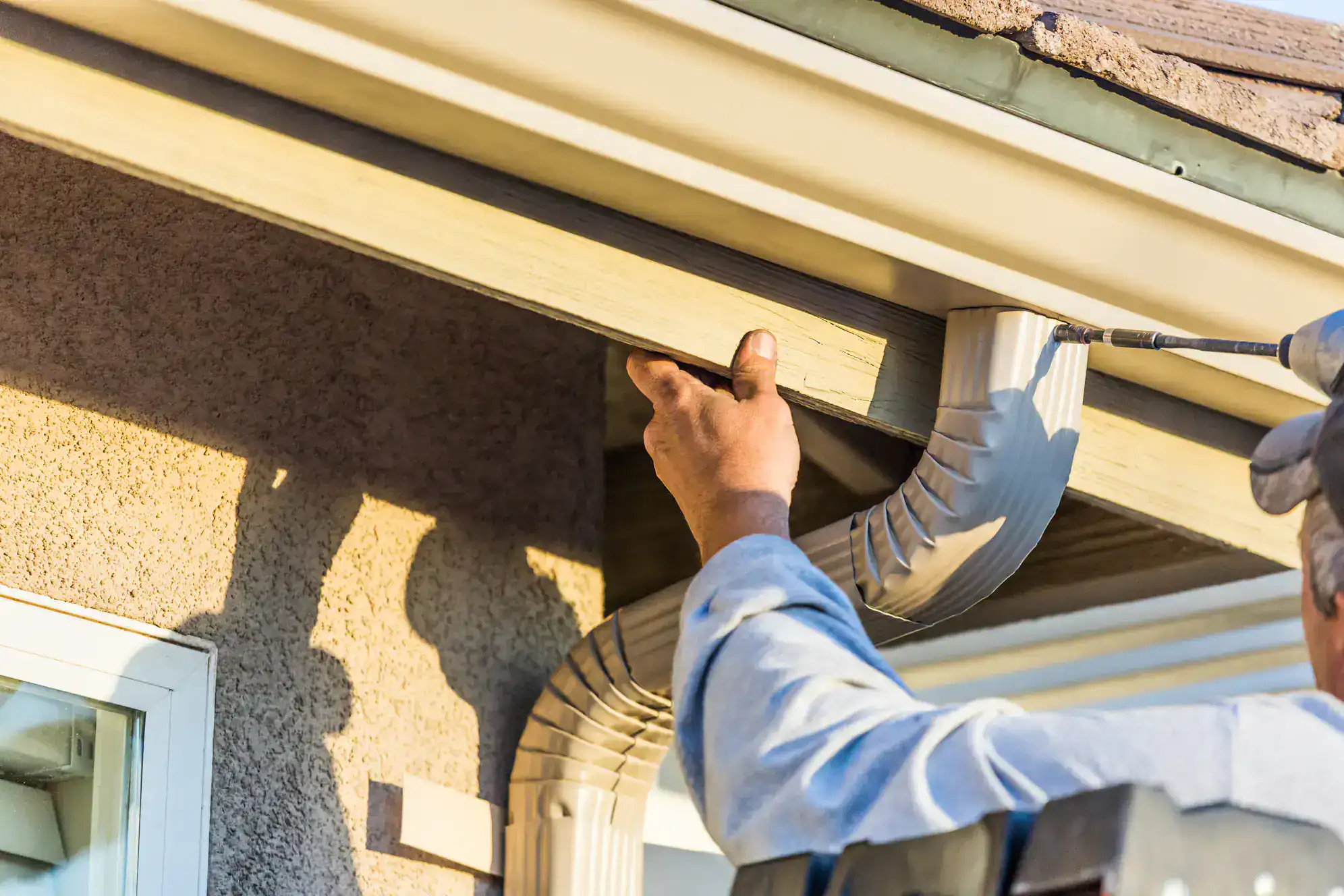
Downspouts are typically quoted separately. Hardware and installation for downspouts adds roughly $100 to $300 to the overall project, depending on how many you need and where they’re positioned. Placement matters more than most homeowners realize — a downspout that dumps water six inches from your foundation is doing more harm than good.
Finally, fascia board condition. This one surprises people. If the fascia behind the gutters is rotted or soft — which is common on older homes in Elizabeth, Linden, and Rahway — it needs to be addressed before new gutters go up. Skipping it means the new system will fail faster than it should. A contractor who doesn’t mention fascia during the estimate either didn’t look or isn’t telling you something.
Gutter Guards: Are They Worth Adding at Installation Time?
Gutter guards come up in almost every estimate conversation, and the honest answer is: it depends on your property. If you’re in a densely urban part of Elizabeth with minimal tree canopy overhead, guards are probably low priority. If you’re in Cranford, Mountainside, or Scotch Plains — where mature trees drop leaves into gutters every fall and spring — they’re a much more practical investment.
Micro-mesh gutter guards, which are the most effective type for debris filtration, add $8 to $12 per linear foot when installed alongside a new system. On a 160-linear-foot home, that’s roughly $1,280 to $1,920 on top of the base installation. That sounds like a lot until you factor in what regular gutter cleaning costs over time — and what happens when a clogged gutter in January turns into an ice dam that backs water up under your shingles.
A recent survey of more than 1,000 homeowners found that nearly 94% were satisfied with their gutter guard quality, and about 71% said they clean their gutters once a year or less after installation. That’s a meaningful reduction in maintenance for homes with heavy tree coverage.
The right time to add guards is during installation, not after. Retrofitting them onto an existing system costs more and doesn’t always fit as cleanly. If you’re already having gutters replaced, it’s worth getting a line-item number so you can decide with real figures in front of you — not a vague upsell from a contractor with a financial incentive.
Want live answers?
Connect with a USA Home Remodeling LLC expert for fast, friendly support.
What Makes a Gutter Quote Go Higher — or Lower
The factors that move a gutter quote aren’t random. Once you understand what contractors are actually pricing, the variation between estimates starts to make more sense — and you get better at spotting which quotes are realistic versus which ones are leaving something out.
Home size and linear footage are the obvious starting points. A 1,200-square-foot ranch in Roselle has a shorter roofline perimeter than a 2,500-square-foot two-story colonial in Westfield. More linear feet means more material and more labor, full stop.
Stories matter too, as mentioned earlier. Two- and three-story homes require more setup time and different equipment, which is reflected in the per-foot labor rate. It’s not padding — it’s the real cost of working safely at height.
Why the Cheapest Quote Is Often the Most Expensive Outcome
An unusually low gutter quote — say, $4 or $5 per linear foot when the Union County market runs $8 to $16 — usually signals something. It might mean undersized aluminum that won’t hold up through a Union County winter. It might mean incorrect pitch — the slope gutters need to drain properly is a quarter inch for every ten feet of run, and getting that wrong causes standing water, sagging, and overflow. It might mean no fascia inspection, no removal of the old system, or no workers’ compensation coverage, which becomes your problem if someone gets hurt on your property.
New Jersey requires every contractor doing home improvement work — including gutter installation — to register with the Division of Consumer Affairs as a Home Improvement Contractor. That registration number should appear on their estimate, their vehicle, and any paperwork they hand you. It’s publicly verifiable. Ours is #13VH10605800. If a contractor can’t produce theirs, that’s a clear signal to keep looking.
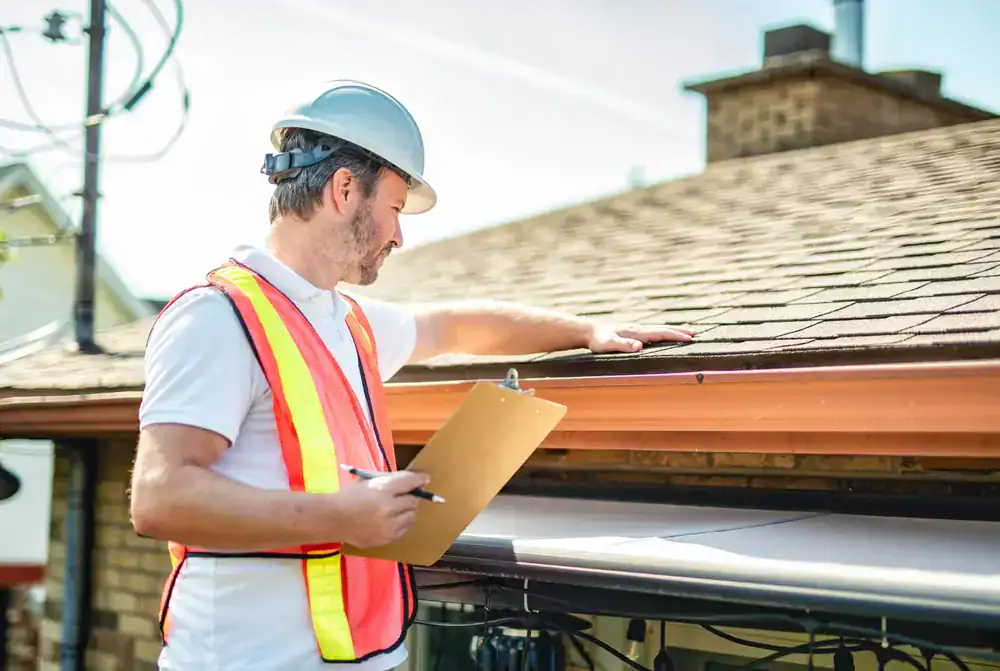
The other thing to watch for is vague estimates. A legitimate quote should break out material, labor, removal, and any fascia work as separate line items. If someone hands you a single number on a Post-it note, you don’t actually know what you’re agreeing to. A written, itemized estimate isn’t just good practice — it’s the only way to compare quotes accurately. We provide free estimates that break down every cost upfront, with no hidden fees and no surprises when the invoice arrives.
The goal isn’t to spend the most. It’s to spend on something that works correctly for 20 to 30 years — which is what properly installed seamless aluminum gutters should deliver in this climate.
Frequently Asked Questions About Gutter Installation Costs in Union County
Do I need a permit for gutter installation in New Jersey? Generally, no. Standard residential gutter installation and replacement doesn’t require a building permit in NJ. What is required is that the contractor holds an active HIC registration with the state — which is a different thing, and more important. An unregistered contractor has no accountability to the state if something goes wrong.
Does homeowner’s insurance cover gutter replacement? Sometimes. If your gutters were damaged by a storm — wind, hail, a fallen branch — there’s a reasonable chance your policy covers some or all of the replacement cost. Most homeowners in Union County don’t know how to document the damage in a way that holds up with an adjuster. We’ve helped homeowners across the county navigate that process, handling the paperwork and working directly with adjusters so the claim actually reflects the full scope of the damage. It’s worth a conversation before you assume you’re paying out of pocket.
Are seamless gutters worth the extra cost over sectional gutters? For most homes in Union County, yes. Sectional gutters — the kind sold in pre-cut lengths at home improvement stores — have seams every few feet, and seams are where leaks start. Seamless gutters are formed from a single continuous piece of aluminum, cut on-site to the exact length of your roofline. The only joints are at corners and downspout connections. In a climate with 46 to 47 inches of annual rainfall and regular freeze-thaw cycles, that matters. The upfront cost is modestly higher than sectional, but the long-term maintenance cost is lower, and the lifespan — 20 to 30 years for aluminum — is meaningfully longer.
How do I know if I need full replacement or just a repair? This is where working with an exterior specialist makes a real difference. A gutter-only company has a financial incentive to recommend replacement whether you need it or not. We look at the full picture — the gutters, the fascia, the roofline — and tell you honestly what the situation calls for. Sometimes a section just needs to be re-hung. Sometimes the fascia behind it is soft and the whole run needs to come down. We’ll tell you which one it is before any work starts.
Getting a Straight Answer on Gutter Installation Cost in Union County
If there’s one thing to take from this, it’s that gutter pricing isn’t arbitrary — it’s driven by real factors you can ask about and verify. Linear footage, material, stories, removal, fascia condition, downspout placement. Once you understand what’s in the number, a quote stops feeling like a guess and starts feeling like a conversation you can have on equal footing.
We’re based in Elizabeth and have spent over a decade working on homes across Union County — from older two-families in Linden and Rahway to larger colonials in Westfield and Cranford. We know what the weather does to gutters here, what the housing stock looks like, and what a properly installed system should cost.
If you’re ready to get a clear number for your home, reach out to USA Home Remodeling. The estimate is free, it’s written, and it breaks out every line item — no follow-up surprises.