
Winter Ice Dam Prevention Solutions
Summary:
That wall of ice building up along your roof’s edge isn’t just a winter decoration. It’s a warning sign that water is about to find its way into places it shouldn’t be—your attic, your walls, your insulation. Ice dams form when your roof becomes a patchwork of different temperatures, creating the perfect conditions for snow to melt, run down, and refreeze right where it can cause the most damage. The good news? You’re not stuck dealing with this every winter. Understanding what causes ice dams and how to address them at the source means you can actually solve the problem instead of just reacting to it year after year. Let’s start with what’s really happening on your roof.
How Ice Dams Form on Your Roof
Ice dams happen when your roof can’t stay one consistent temperature. Heat escaping from your living space rises into the attic, warming the roof deck above it. That warmth melts the bottom layer of snow sitting on your roof, creating water that runs down toward the gutters.
Here’s where the problem starts: your eaves—the part of the roof that hangs over the exterior walls—stay cold because there’s no heated space beneath them. When that melted water hits the cold eaves, it refreezes. As this cycle repeats with each temperature swing, a ridge of ice builds up along your roof’s edge, creating a dam that blocks proper drainage.
The water that keeps melting higher up on your roof now has nowhere to go. It pools behind the ice dam, and since roofs are designed to shed water, not hold it, that standing water works its way under your shingles and into your home. This is how a winter weather pattern turns into ceiling stains, soaked insulation, and expensive repairs.
Best Way to Remove Ice Dams Safely
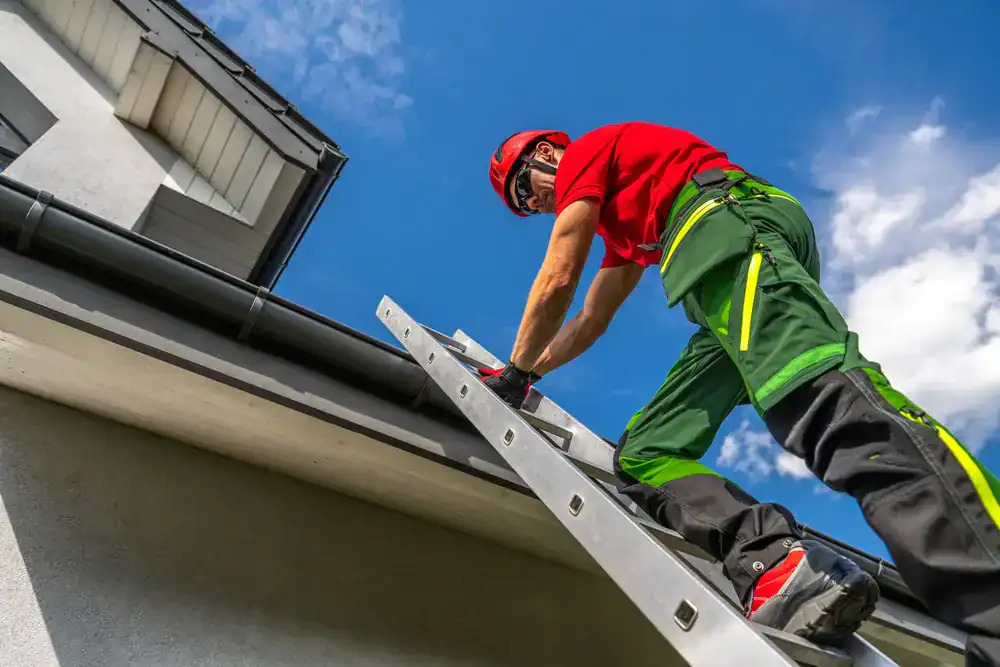
If you’re staring at an ice dam that’s already formed, your first instinct might be to grab a hammer or shovel and start chipping away. Don’t. That’s one of the fastest ways to damage your shingles, void warranties, and create leaks that didn’t exist before. The ice is bonded to your roof, and trying to break it off mechanically almost always does more harm than good.
The safest immediate action you can take from the ground is using a roof rake to pull off as much snow as possible from the lower few feet of your roof. This removes the source material feeding the ice dam and can slow down the problem. If you’re dealing with an active leak and need to create a drainage channel quickly, you can use calcium chloride—not rock salt—placed in a nylon stocking and laid vertically across the ice dam. This melts a pathway for trapped water to escape, but it’s a temporary fix at best.
For established ice dams, professional removal using low-pressure steam is the gold standard. Steam melts the ice without the force that damages roofing materials, and experienced contractors know how to work safely on icy roofs while protecting your home. The cost of professional removal is almost always less than repairing the damage from improper DIY attempts or letting the ice dam continue leaking into your home.
What doesn’t work? Salt pucks that create useless holes in the ice. Heat cables laid on top of existing dams that just make the problem worse. Pressure washers that shred shingles. Chisels and ice picks that puncture your roof. If someone suggests any of these methods, they either don’t understand ice dams or don’t care about protecting your roof. The reality is that once an ice dam has formed, your options are limited—which is exactly why prevention matters so much more than removal.
Warning Signs You Have an Ice Dam Problem
Ice dams don’t always announce themselves with obvious ceiling leaks. Often, the damage is happening long before you notice it inside your home. Knowing what to look for means you can catch the problem early and prevent thousands of dollars in repairs.
Large icicles hanging from your gutters and eaves are the most visible sign. While a few small icicles after a snowfall are normal, thick columns of ice or clusters of icicles indicate that water is repeatedly melting and refreezing at your roof’s edge. This freeze-thaw cycle is exactly how ice dams build up. If you can see a ridge of ice along your roofline, especially one that’s several inches thick, you’re looking at an active ice dam.
Inside your home, water stains on ceilings or walls near the roofline are red flags. These often appear as yellowish or brown discoloration and indicate that water has already penetrated your roof and is working its way through your structure. You might also notice a musty smell in your attic, which suggests moisture is accumulating where it shouldn’t be. Peeling paint near the roofline, both inside and outside, is another indicator that water is getting behind surfaces.
Pay attention to your roof’s snow coverage too. If you notice that snow is melting in certain areas of your roof while other sections stay covered, you’ve got uneven roof temperatures—the exact condition that creates ice dams. A roof that’s warmer in some spots than others is telling you that heat is escaping from your home inconsistently, and that’s the root cause you need to address. The sooner you recognize these signs, the faster you can take action before minor issues become major water damage.
Want live answers?
Connect with a USA Home Remodeling LLC expert for fast, friendly support.
Roof Ice Dam Prevention That Actually Works
Preventing ice dams means keeping your entire roof cold and at a consistent temperature, which sounds counterintuitive until you understand the science. When your roof stays as cold as the outdoor air, snow doesn’t melt in the first place. No melting means no water running down to refreeze at the eaves. No refreezing means no ice dams.
This comes down to three interconnected systems: attic insulation, air sealing, and ventilation. Proper attic insulation creates a thermal barrier between your heated living space and the attic, preventing warmth from radiating up through your ceiling. Air sealing closes the gaps where warm air actually leaks into the attic—around recessed lights, plumbing penetrations, chimneys, attic hatches, and anywhere else your ceiling isn’t completely airtight. Ventilation allows cold outside air to circulate through the attic, keeping the space and the roof deck above it at the same temperature as the outdoor air.
Most Union County homes built before modern building codes lack adequate insulation and air sealing. That’s not a criticism of how they were built—standards simply weren’t as stringent decades ago. But it does mean that many local homes are essentially designed to create ice dams every winter unless these systems are upgraded. The good news is that these improvements don’t just prevent ice dams; they also lower your heating bills, make your home more comfortable, and reduce the strain on your HVAC system.
The Role of Gutters in Ice Dam Solutions
There’s a common misconception that gutters cause ice dams. They don’t. Ice dams form on roofs whether gutters are present or not, because the problem is heat escaping through your attic, not your drainage system. However, gutters do play a supporting role in ice dam formation and prevention, and understanding that role helps you make smarter decisions about your home’s exterior.
Gutters extend your roof’s overhang, which means they provide additional surface area where ice can accumulate and grow. When an ice dam forms, it often fills the gutter first before building up onto the roof itself. Clogged gutters make this worse because debris traps water that then freezes, giving the ice dam a head start. This is why clearing your gutters before winter is important—not because it prevents ice dams, but because it removes one more place where ice can establish itself.
Clean, properly sloped gutters also help manage the water that does melt during winter thaws. When your roof sheds water on a warmer day, functional gutters channel that water away from your foundation instead of letting it pour over the sides and create ice hazards on your walkways. Heavy-gauge aluminum gutters with secure hangers can handle the weight of ice better than cheaper, lightweight systems that sag or pull away from the house under load.
Some homeowners consider gutter guards as an ice dam solution. The truth is that gutter guards keep debris out, which is valuable, but they don’t prevent ice dams from forming. In fact, some types of gutter guards can create a foundation for ice to build up on top of the guard itself. If you’re dealing with recurring ice dams, the answer isn’t removing your gutters or adding guards—it’s addressing the heat loss from your attic that’s causing the problem in the first place. Gutters are part of your home’s water management system, and they need to be clean and functional, but they’re not the solution to ice dams on their own.
Removing Ice Dams from Roof: Professional vs DIY
When you’re facing an ice dam emergency with water actively leaking into your home, the pressure to act fast can lead to costly mistakes. Understanding the difference between what professionals do and what’s safe for homeowners helps you make the right call for your situation and your roof.
Professional ice dam removal companies use commercial-grade low-pressure steam equipment specifically designed for this work. These machines heat water to the right temperature and deliver it at low pressure through a specialized wand, melting ice without the force that damages shingles or underlayment. Trained technicians know how to position themselves safely on icy roofs, where to direct the steam to create effective drainage channels, and how to remove ice systematically without causing collateral damage. They also carry insurance that protects you if something goes wrong during the removal process.
The DIY methods you’ll find online range from marginally helpful to outright dangerous. Roof raking from the ground is safe and effective for removing snow before it becomes an ice dam, but it won’t remove ice that’s already formed. Calcium chloride in stockings can create small drainage channels, but it’s slow, requires ladder work, and won’t eliminate a significant ice dam. Everything beyond that—hammers, chisels, heat guns, pressure washers, or climbing onto an icy roof yourself—carries serious risk of injury or roof damage that far exceeds the cost of professional help.
The average cost of professional ice dam removal in Union County runs between $650 and $2,400 depending on the size and complexity of the dam. That might seem steep until you compare it to the cost of repairing damaged shingles, replacing soaked insulation, fixing water-damaged ceilings and walls, and remediating mold growth. One botched DIY attempt can easily create $5,000 to $15,000 in additional damage. When water is actively entering your home, professional removal isn’t an expense—it’s damage control that saves you money in the long run.
The best time to think about ice dam removal is before you need it. If your home has a history of ice dams, line up a qualified contractor before winter so you have someone to call when the problem strikes. Ask about their equipment—you want to hear “low-pressure steam,” not “pressure washer.” Check their insurance coverage and their experience specifically with ice dam work. And remember that the real solution isn’t better removal—it’s prevention through proper attic insulation and air sealing so you don’t need removal services year after year.
Protecting Your Union County Home from Ice Dam Damage
Ice dams aren’t inevitable, even in Union County’s unpredictable winters. They’re a symptom of heat escaping from your home, and when you address that root cause through proper insulation, air sealing, and ventilation, you can eliminate the problem entirely. The homes that don’t get ice dams aren’t just lucky—they’re properly protected with systems that keep the roof cold and prevent the melt-refreeze cycle that creates dams in the first place.
If you’re dealing with ice dams this winter or want to prevent them next season, the right approach combines immediate action with long-term solutions. Remove snow from your roof’s edge after heavy snowfall. Address any active ice dams safely, preferably with professional help. Then invest in the attic improvements that solve the underlying problem so you’re not fighting the same battle every year.
We bring over a decade of experience helping Union County homeowners protect their homes from winter damage. With a comprehensive approach that addresses roofing, gutters, and insulation together, we offer free inspections to identify vulnerabilities before they become expensive problems. As a family-owned business based in Elizabeth and serving communities throughout Union County, we understand the specific challenges local homes face and provide transparent solutions backed by manufacturer certifications and a 5.0-star Google rating.