
Emergency Steps to Fix Your Roof Leak Fast
Summary:
Water dripping through your ceiling. A growing stain spreading across drywall. That sinking feeling when you realize your roof is leaking—right now.
If you’re reading this with a bucket under an active leak, you’re in the right place. The next few hours matter more than you think. Mold can start growing within 24 to 48 hours, and what seems like a small drip can escalate into thousands of dollars in structural damage if you wait.
This guide gives you the emergency steps you need right now to contain the damage, plus clear guidance on when to stop and call for professional help. Let’s start with what you can do immediately.
What to Do the Second You Spot a Roof Leak
The moment you spot water coming through your ceiling, your priority shifts to damage control. Don’t panic, but don’t wait either.
Start inside. Move furniture, electronics, and anything valuable away from the leak area. Grab buckets, trash cans, or any waterproof containers and place them directly under every drip point. If you see a bulge forming in your ceiling where water is pooling, carefully puncture the lowest point with a screwdriver to create a controlled drain—this prevents a larger collapse later.
Turn off electricity to any circuits near the water. Water and wiring don’t mix, and safety comes first. Then grab your phone and document everything with photos and videos—you’ll need this for insurance claims and contractor assessments.
How to Find Where Your Leaking Roof Is Actually Coming From
Here’s the frustrating truth about roof leaks: that ceiling stain is rarely directly below where water is entering your roof. Water travels along rafters, slides across roof decking, and follows the path of least resistance before finally dripping down where you see it.
If you can safely access your attic during daylight, that’s your best starting point. Look for wet insulation, dark stains on wood, or moisture trails leading upward toward the roof. Water stains, mold growth, or damp spots on the underside of your roof deck tell you where to focus.
From outside (and only if it’s safe and dry), check the roof areas above your interior leak. The most common culprits are around roof penetrations—chimneys, vent pipes, skylights, and valleys where two roof sections meet. Missing shingles, damaged flashing, or visible gaps are obvious red flags.
If you can’t pinpoint the source, don’t spend hours guessing. We have moisture detection tools and experience reading how water moves through Union County’s older homes—many built between 1900 and 1970 with unique drainage patterns. A free inspection can locate the problem in minutes versus the hours you might waste searching.
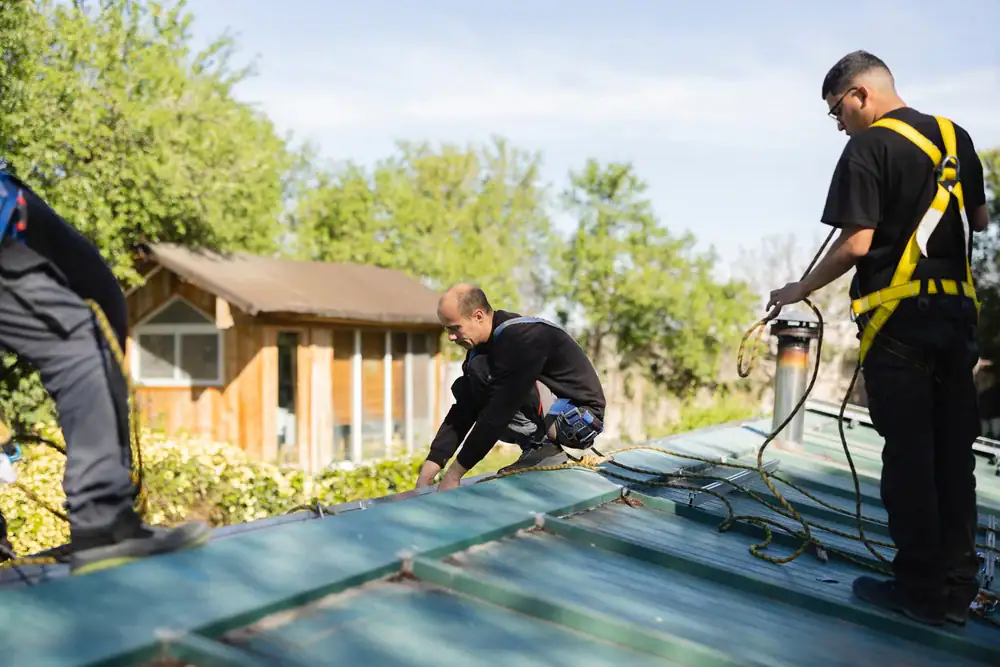
One critical point: if your roof is steep, if it’s wet, if it’s dark, or if you’re uncomfortable with heights—stay off the roof entirely. Falls cause more damage than leaks ever will.
Safe Temporary Fixes While Waiting for Professional Roof Leak Repair
Temporary fixes aren’t permanent solutions, but they can buy you time and prevent a small problem from becoming a catastrophe. The key word here is “temporary”—these methods work for days or weeks, not months or years.
If you’ve located the leak source and conditions are safe, a waterproof tarp is your most effective option. Cover the damaged area, extending the tarp at least four feet beyond the leak on all sides. Secure it with heavy objects like sandbags or bricks—never nail through your shingles if you can avoid it, as you’ll just create more penetration points. A properly installed tarp can last 60 to 90 days and typically costs $50 to $150 if you do it yourself.
For smaller leaks around flashing or vent boots, roofing cement or waterproof tape can provide a quick seal. Apply generously, but understand this is a band-aid, not a cure. These products work best on dry surfaces, so timing matters.
If the leak is active and you can’t safely access the roof, work from inside your attic if possible. Spread plastic sheeting or a tarp under the leak to divert water into a bucket. This won’t stop the leak, but it controls where the water goes until professionals arrive.
Never attempt roof work during rain, on wet surfaces, or in dangerous conditions. And remember—every temporary fix has a shelf life. Even the best tarp will degrade, especially in New Jersey’s freeze-thaw cycles and summer heat. Schedule permanent repairs as soon as possible.
Want live answers?
Connect with a USA Home Remodeling LLC expert for fast, friendly support.
What a Roof Leak Really Costs (And Why Every Hour Matters)
Let’s talk about what you’re actually facing, both in terms of cost and urgency. Understanding these numbers helps you make better decisions about when to act and what to expect.
Most professional roof leak repairs in 2026 range from $350 to $1,500, with the national average around $900 to $1,150. A simple fix—like replacing a cracked pipe boot or sealing a few shingles—might cost $150 to $500. More complex repairs involving flashing, valleys, or multiple problem areas can push toward the higher end or beyond.
Here’s the part that matters most: time is money with roof leaks. A leak caught and repaired in the first week typically stays in that $150 to $500 range. The same leak ignored for three months? You’re looking at decking replacement, insulation removal, mold remediation, and interior repairs that can multiply costs by five to ten times. A $500 repair can genuinely become a $5,000 problem—or worse.

Why Water Leak Ceiling Damage Escalates So Quickly
Water doesn’t just sit there. It spreads, it soaks, and it creates conditions for secondary damage that often costs more than fixing the original leak.
Mold is the first concern. In Union County’s humid climate—especially during summer months—mold spores can begin growing on damp surfaces within 24 to 48 hours of water exposure. Within 72 hours, you’re likely dealing with active mold colonies. Once mold takes hold, you’re not just paying for roof repair—you’re paying for mold remediation, which can run $1,100 to $3,300 or more depending on the extent.
Drywall and insulation are next. Drywall is porous and absorbs water like a sponge. Within 48 hours, saturated drywall loses structural integrity and needs replacement. Wet insulation becomes useless and often harbors mold, requiring removal and replacement.
Structural wood—your roof decking, rafters, and ceiling joists—starts degrading when exposed to prolonged moisture. What begins as surface damage can progress to rot, requiring expensive carpentry work and structural repairs. This is particularly concerning in Union County’s older homes where original framing may already show age-related wear.
Electrical systems create safety hazards when water finds its way to wiring or fixtures. This isn’t just about repair costs—it’s about fire risk and immediate danger to your family.
The takeaway: every day you wait, the damage compounds. Fast action isn’t just smart—it’s essential.
What Your Homeowners Insurance Actually Covers for Roof Leaks
Before you panic about costs, understand what your insurance might cover. The answer depends entirely on what caused the leak.
Homeowners insurance typically covers roof leaks from sudden, accidental events—storm damage, fallen tree limbs (common in Union County’s tree-lined neighborhoods), hail, wind that rips off shingles, or similar covered perils. If last night’s storm caused your leak, there’s a good chance your policy will help pay for repairs.
What insurance won’t cover: gradual deterioration, wear and tear, poor maintenance, or aging materials. If your 25-year-old roof is simply failing because it’s old, that’s on you. If you knew about a crack in your chimney flashing and ignored it for months, the resulting damage likely won’t be covered either.
The gray area is documentation. Insurance adjusters will look for evidence of sudden damage versus long-term neglect. This is why those photos and videos you took when you first discovered the leak matter so much. They establish a timeline and show the damage was new.
One more thing: if your repair cost is less than your deductible—say, a $400 repair with a $1,000 deductible—filing a claim doesn’t make financial sense. But for larger repairs, especially those involving structural damage or mold, working with your insurance company can save thousands.
We offer insurance claims assistance to help you navigate the process. We know how to document damage, communicate with adjusters, and help you get through the process without the headaches.
When DIY Ends and Professional Help Begins
You’ve contained the immediate damage. You’ve documented everything. Now comes the critical question: can you handle this yourself, or is it time to call in experts?
Here’s the honest answer: if you’re dealing with anything beyond a minor, easily accessible repair on a low-slope roof in good weather, professional help isn’t just recommended—it’s necessary. Multiple leaks, steep roofs, storm damage, or situations where you can’t locate the source all require experienced eyes and proper equipment.
We’ve spent over a decade serving homeowners throughout Edison, New Brunswick, Woodbridge, Plainfield, Piscataway, Perth Amboy, and the greater Union County, NJ area through exactly these emergency situations. Our free inspections mean you can get expert assessment without financial risk. Our local team based in Elizabeth, NJ provides rapid response to help you stop damage before it multiplies. And our transparent pricing with no hidden costs means no surprises when you’re already stressed.
Your roof protects everything else. When it fails, fast action and the right expertise make all the difference between a manageable repair and a homeowner’s nightmare.