
Roof Repair in Matawan, NJ
Matawan Roofs Take a Beating — Here's How to Fix Yours Right

Hear from Our Customers
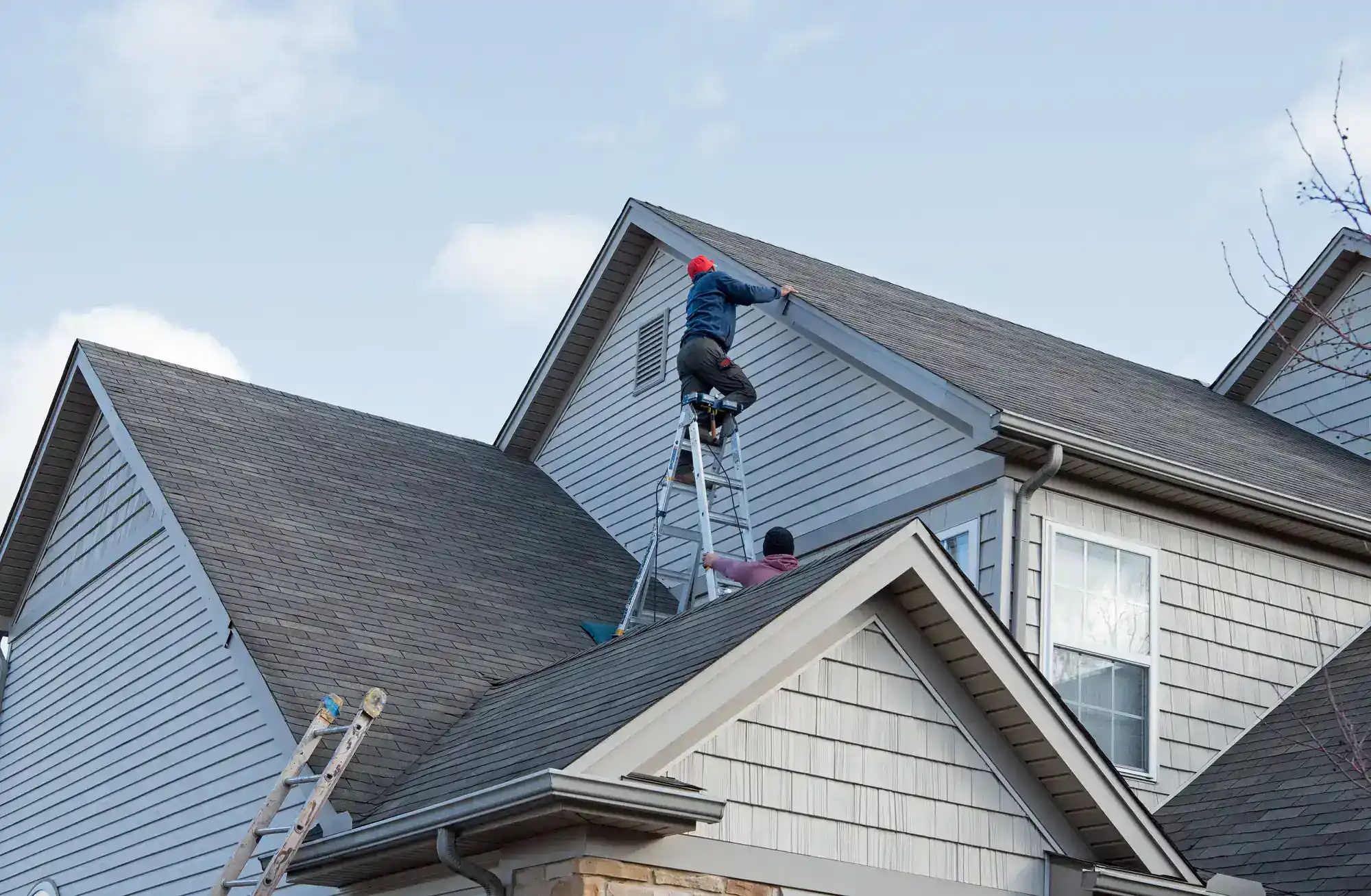
Roof Leak Repair in Matawan, NJ
The difference between a small repair and a major structural problem is usually just time. A few missing shingles or a compromised flashing joint might not look like much from the driveway — but once water finds its way in, it doesn’t stop at the surface. It works into your decking, soaks your insulation, and shows up as a stain on your ceiling weeks later. By then, what could have been a straightforward fix has turned into something significantly more involved.
For homeowners in Matawan, that risk is real and specific. The borough sits right in the Raritan Bay watershed, which means coastal storms, sustained wind events, and hard freeze-thaw cycles hit here harder than they do inland. Homes along the residential streets off Route 34 and Route 79 — many of them built decades ago — are dealing with roofing systems that were never designed to take this many seasons of that kind of weather exposure.
Getting the repair done right means the problem is actually solved, not patched over. It means your roof handles the next nor’easter the same way it handles a clear Tuesday in October. That’s the outcome worth paying for — not just a temporary fix that buys you another season.
Certified Roof Repair Contractor in Matawan, NJ
We’ve been serving homeowners across Monmouth County for over ten years, with deep roots in Matawan and the surrounding communities. That means we’ve worked through every kind of storm this area produces, on every kind of roof you’ll find in a borough like Matawan, from the older bungalows near Matawan Creek to the colonials tucked into the neighborhoods off County Route 516.
We hold contractor licenses and manufacturer certifications that a lot of local operators simply don’t have. Those certifications matter because they unlock warranty coverage that non-certified contractors can’t offer — real protection for a home that’s worth protecting. And because we’re a family-run business, the people you talk to are the same people accountable for the finished work.
There’s no subcontracting shuffle here. No salesperson handing you off to a crew you’ve never met. You get straightforward communication, a written estimate that doesn’t change without your approval, and a team that’s been in this community long enough to have a real reputation to protect.

Roof Storm Damage Repair Process in Matawan, NJ
It starts with a free inspection. Someone from our team comes out, gets on the roof, and gives you an honest read on what’s going on — not a sales pitch designed to steer you toward the most expensive option. If it’s a targeted repair, that’s what you’ll hear. If the damage is more extensive and replacement genuinely makes more sense financially, that conversation happens too, with a clear explanation of why.
Once the scope is agreed on, you get a written estimate that itemizes the work. In Matawan, permits for roofing work are processed through Aberdeen Township’s construction department — not a standalone Matawan building office — and that’s something we handle as part of the job. Most homeowners don’t know about that shared services arrangement until they try to pull a permit themselves. You won’t have to figure that out on your own.
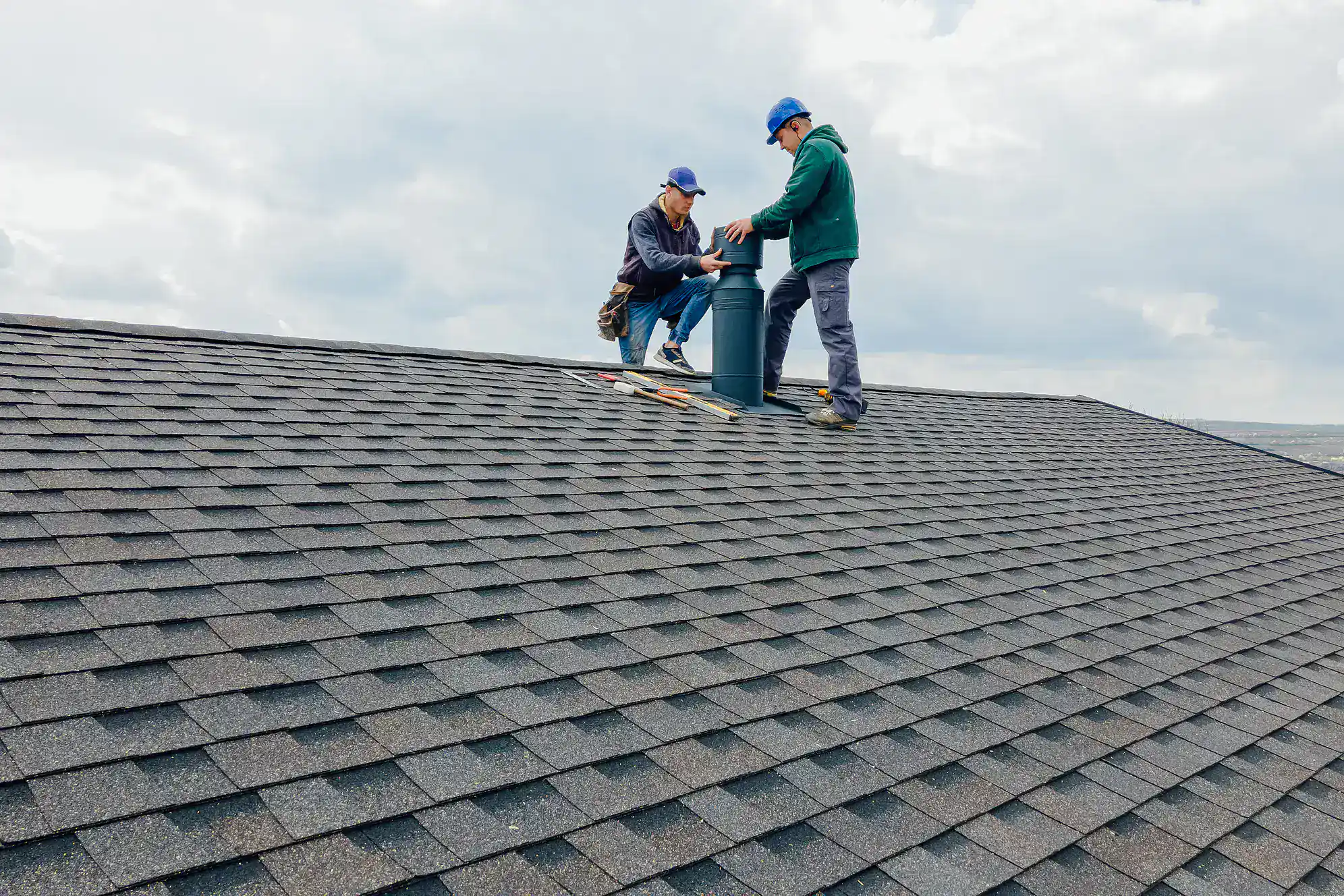
The repair itself is done with materials matched to your existing roof as closely as possible. For the older homes common in this area, that means paying attention to shingle profile, color, and texture so the repaired section doesn’t look like an obvious patch. When the work is done, the property gets a thorough cleanup — magnetic nail sweeps, full debris removal — and a final walkthrough before our crew leaves.
Ready to get started?
Shingle and Flat Roof Repair in Matawan, NJ
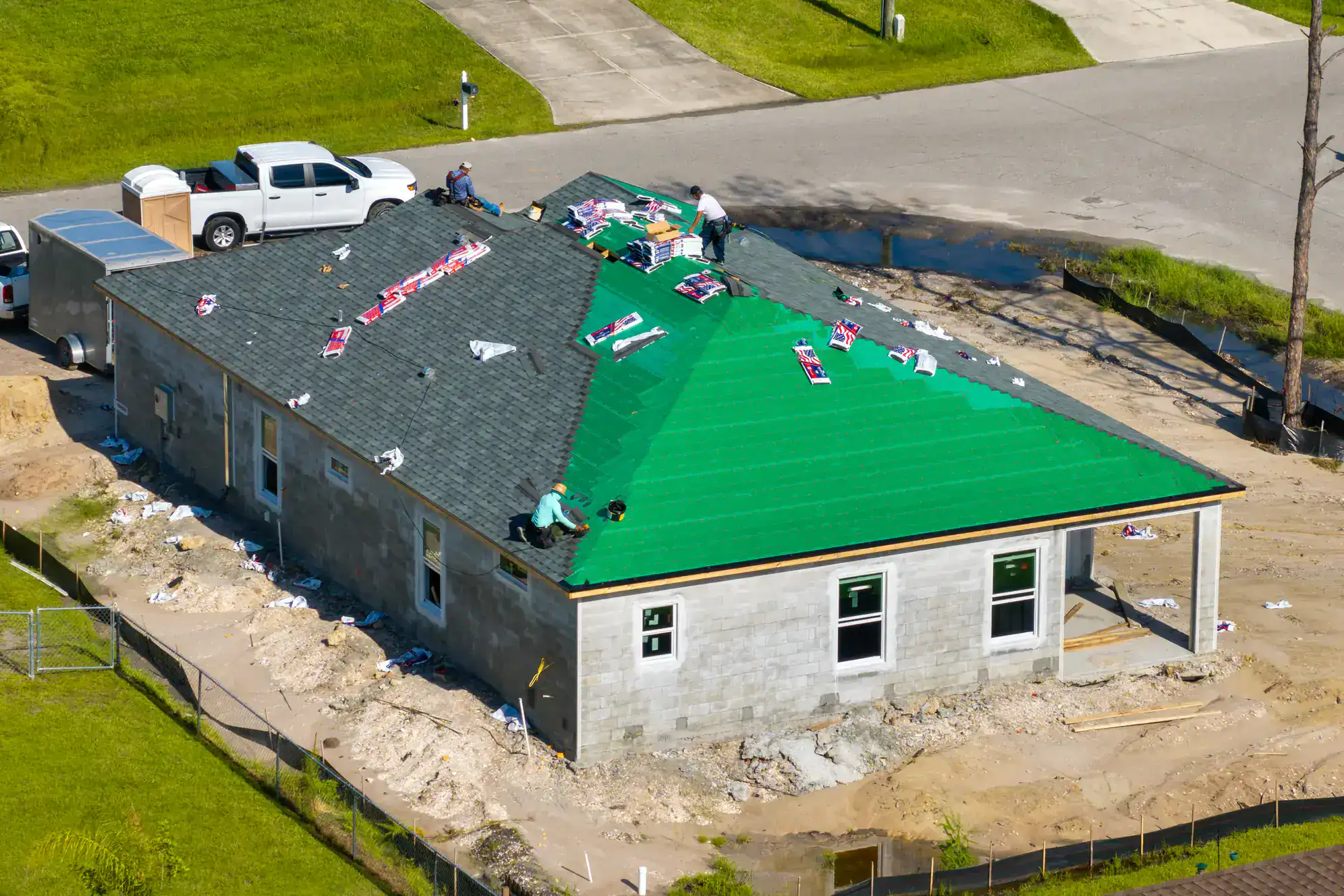
Most of the roofing work in Matawan involves asphalt shingles — the dominant material on the single-family homes that make up the majority of the borough’s housing stock. Shingle roof repair in Matawan, NJ covers everything from isolated missing shingles after a wind event to failing ridge caps, damaged flashing around chimneys and skylights, and granule loss on aging surfaces. We also handle ice dam damage, which is a specific and recurring issue in this area given the coastal freeze-thaw cycles that hit Monmouth County homes hard between November and March.
Flat roof repair in Matawan, NJ is a separate specialty, and it’s one that general contractors often get wrong. The commercial properties along Route 34 and Route 516, along with residential additions and detached garages throughout the borough, rely on membrane roofing systems — TPO, EPDM, or modified bitumen — that fail differently than shingles and require a different approach to diagnose and repair correctly. Ponding water, seam separation, and membrane cracking from freeze-thaw stress are the most common failure points, and they need to be addressed at the source, not just sealed over.
We also offer emergency roof repair in Matawan, NJ for situations that can’t wait — active leaks during a storm, sudden structural damage, or anything where the clock is running. Temporary protective measures go up fast while a permanent repair is planned, so the damage stops before it compounds.
How do I know if my Matawan home needs roof repair or full replacement?
This is the question most homeowners are actually trying to answer when they call. The honest answer is that it depends on the age of the roof, the extent of the damage, and whether the underlying structure — the decking — is still sound. A roof that’s 10 to 15 years old with isolated storm damage is almost always a repair candidate. A roof that’s 25 to 30 years old with widespread granule loss, multiple failing areas, and compromised decking is usually past the point where repair makes financial sense.
In Matawan specifically, a lot of the housing stock was built between the 1950s and the 1980s. If you’re in one of those homes and you don’t know the age of your current roof, that’s actually the first thing a good inspection should tell you. Our free inspection is designed to give you that honest answer — not to push you toward the more expensive option. If repair is the right call, that’s what you’ll hear.
What does a roof repair typically cost in Matawan, NJ?
Roof repair costs vary based on the type of damage, the size of the affected area, and the materials involved. Minor repairs — replacing a handful of shingles, resealing flashing, or patching a small section — typically run in the $300 to $800 range. Mid-range repairs involving larger sections of shingles, ridge cap replacement, or more involved flashing work can run $800 to $2,500. More significant repairs that include decking replacement or extensive structural work can go higher.
What affects cost in Matawan specifically is the age and condition of the existing roof. Older homes with original flashing or non-standard shingle profiles sometimes require more labor-intensive material sourcing and installation to get the repair right. The free estimate from USA Home Remodeling gives you an itemized breakdown before any work starts — so there are no surprises on the final invoice, and you can make an informed decision about how to move forward.
Does homeowners insurance cover roof repair after a storm in New Jersey?
In most cases, yes — if the damage was caused by a sudden event like a nor’easter, high winds, or hail, your homeowners insurance policy should cover the repair minus your deductible. What gets tricky is the documentation. Insurance companies require clear evidence that the damage was storm-related and not the result of deferred maintenance or normal wear. That distinction matters, and it’s one adjusters look for closely.
We’ve helped Monmouth County homeowners navigate this process many times. That means arriving with thorough photo documentation, a written damage assessment that clearly identifies storm-related failure points, and a repair scope that aligns with what the insurance company approves. If you’ve never filed a roof damage claim before, having a contractor who understands how the process works on your side makes a real difference — especially in a coastal market like Matawan where storm claims after major weather events are common.
Do I need a permit for roof repair in Matawan, NJ?
It depends on the scope of the work. Minor repairs — patching a small section, replacing a few shingles, resealing flashing — typically don’t require a permit. A full tear-off and re-roofing does. The line between what requires a permit and what doesn’t is defined by New Jersey’s Uniform Construction Code, and local interpretation applies.
Here’s something most homeowners in Matawan don’t know until they run into it: permits for roofing work in Matawan Borough are processed through Aberdeen Township’s construction department, not a standalone Matawan building office. The two municipalities share administrative services under a formal agreement, which means the permit application process runs differently here than it does in most other towns. We’re familiar with this arrangement and handle the permitting process as part of the job — so you’re not left trying to figure out which office to call or what forms to file.
What causes ice dams, and is my Matawan home at risk?
Ice dams form when heat escaping through your roof melts snow near the ridge, and that water refreezes when it reaches the cold eaves. As the ice builds up, it creates a barrier that forces water back up under your shingles — and that’s when it starts getting into your home. The leaks that result often show up as ceiling stains or wet insulation, and homeowners sometimes don’t connect them to the roof until the damage is already significant.
Matawan’s position in the coastal transition zone makes this a real and recurring issue. The borough experiences repeated freeze-thaw cycles through the winter months — temperatures that swing above and below freezing multiple times in a week — which is exactly the pattern that creates ice dam conditions. Homes with older or inadequate attic insulation and ventilation are the most vulnerable, and that describes a meaningful portion of Matawan’s housing stock. If you’ve noticed ceiling stains after a cold stretch, an ice dam is a likely culprit and worth having inspected before the next winter season.
How do I spot a storm chaser versus a legitimate roof repair contractor in Matawan?
After any significant nor’easter or coastal storm moves through Monmouth County, out-of-town contractors show up fast — going door to door, offering quick assessments, and sometimes collecting deposits before disappearing. It’s a documented pattern in coastal New Jersey communities, and Matawan has seen its share of it.
A few things separate a legitimate contractor from a storm chaser. First, verify their New Jersey Home Improvement Contractor registration — it’s a state-required license, and the number should be readily available. Second, look for a verifiable local presence: a real address, a trackable history of reviews, and years of operation in this specific region. Third, get everything in writing before any money changes hands — scope, materials, timeline, and total cost. A contractor who pressures you to sign immediately or won’t provide a written estimate is a contractor worth walking away from. We’ve been operating in Monmouth County for over a decade, hold the required state licenses and manufacturer certifications, and provide written estimates on every job — because that’s how legitimate work gets done.