
Gutter Installation in Washington, NJ
Warren County Weather Doesn't Wait — Neither Should Your Gutters
Hear from Our Customers
Rain Gutter Installation in Washington, NJ
The most common gutter problems don’t announce themselves loudly. Water stains creeping down your siding, soil washing away from the foundation, a basement that’s damp every spring — these are the quiet signs that your drainage system is failing. By the time you notice them, the damage is usually already underway.
Washington’s older housing stock makes this especially relevant. A lot of the homes in the borough — particularly the Victorian-era houses along the residential streets near downtown — are working with original or first-replacement gutter systems that are decades past their useful life. Complex rooflines with multiple pitches and long eave runs put more demand on a gutter system than a simple ranch ever would. When those systems start to fail, water doesn’t just drip off the edge — it migrates toward the foundation, and in homes built before modern waterproofing standards, that’s a real problem.
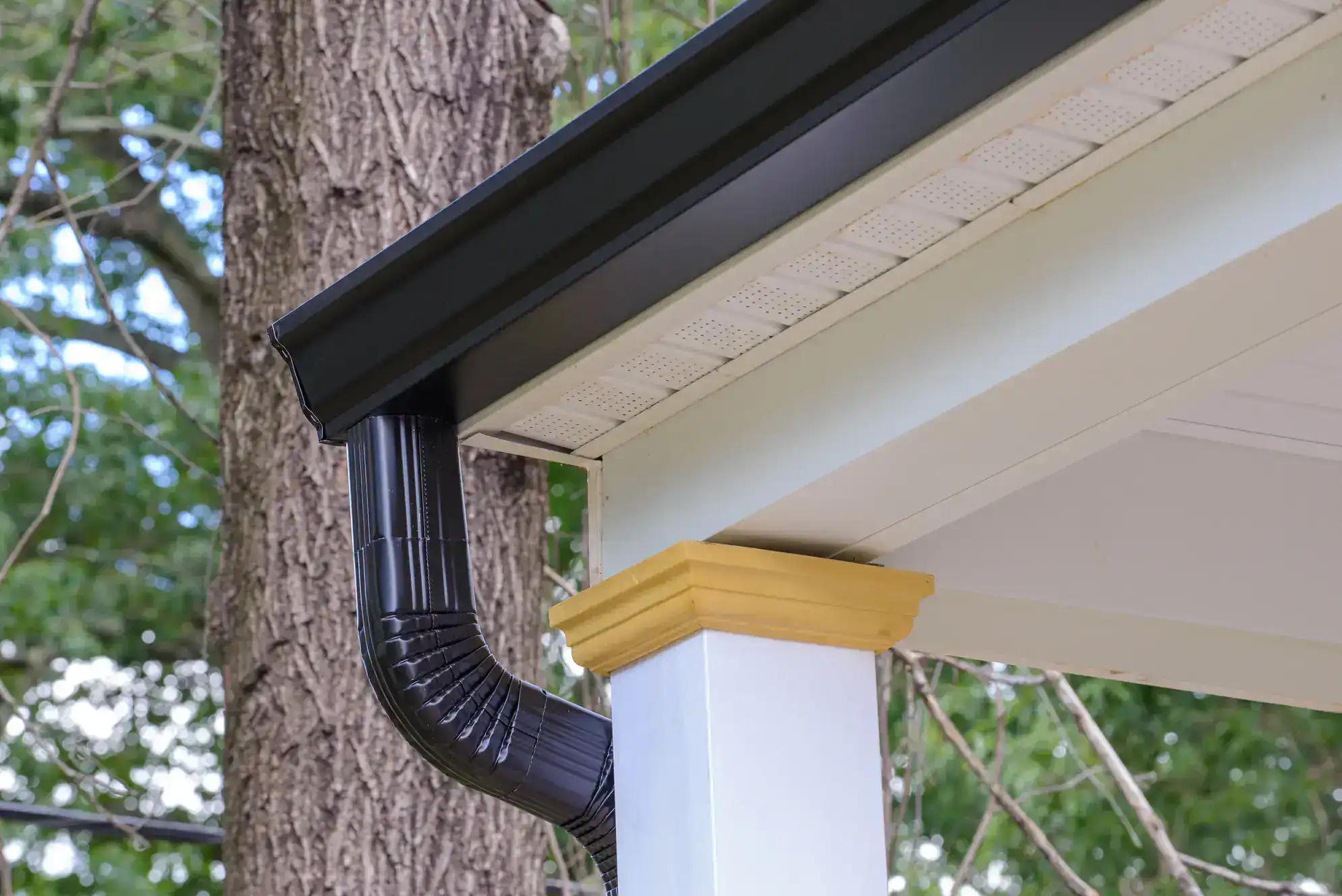
Proper gutter installation changes that. Correct slope means water actually moves toward the downspout instead of pooling. Downspouts sized for your roof’s actual drainage load mean no overflow during the heavy convective storms Warren County sees every summer. And gutters mounted securely to sound fascia mean you’re not doing this again in three years. The result is a home that handles rain and snowmelt the way it should — quietly, completely, without you thinking about it.
Gutter Contractors in Washington, NJ
We’ve been doing exterior work on New Jersey homes for over ten years. That means Victorian-era houses with ornate fascia and steep-pitched rooflines throughout Washington and the surrounding area. Mid-century ranches where the original gutters have been patched so many times they’re more repair than gutter. Older homes throughout Warren County where the fascia looks fine from the driveway but tells a different story up close.
We’re a licensed NJ home improvement contractor — License #13VH10605800, verifiable through the NJ Division of Consumer Affairs — and we hold manufacturer certifications that back our installations with real warranty coverage. We grew through referrals, not paid leads. That means every job we do carries our reputation, and we don’t get to cut corners and disappear. If something comes up after the install, we’re reachable, and we come back.
Washington homeowners dealing with older homes and real weather deserve a contractor who’s seen both before. That’s what we bring.
Home Gutter Installation in Washington, NJ
It starts with a free inspection, and that inspection is more than a glance at the gutters. We check the fascia boards before anything else — because in Washington’s older housing stock, rotted or moisture-damaged fascia is common, especially on homes where gutters have been pulling away or overflowing for a season or two. If the fascia isn’t sound, new gutters won’t stay put. We tell you what we find before we start, not after.
Once the scope is clear, we fabricate your gutters on-site. Every run is cut to your roofline’s exact measurements — no pre-cut sections pieced together with connectors. We calculate the slope before we mount a single bracket, because a gutter that doesn’t pitch correctly toward the downspout will pool water, rust faster, and overflow in a storm. For the Victorian homes around Washington’s downtown core, where eave runs are long and rooflines are anything but simple, that calculation matters more than most homeowners realize.
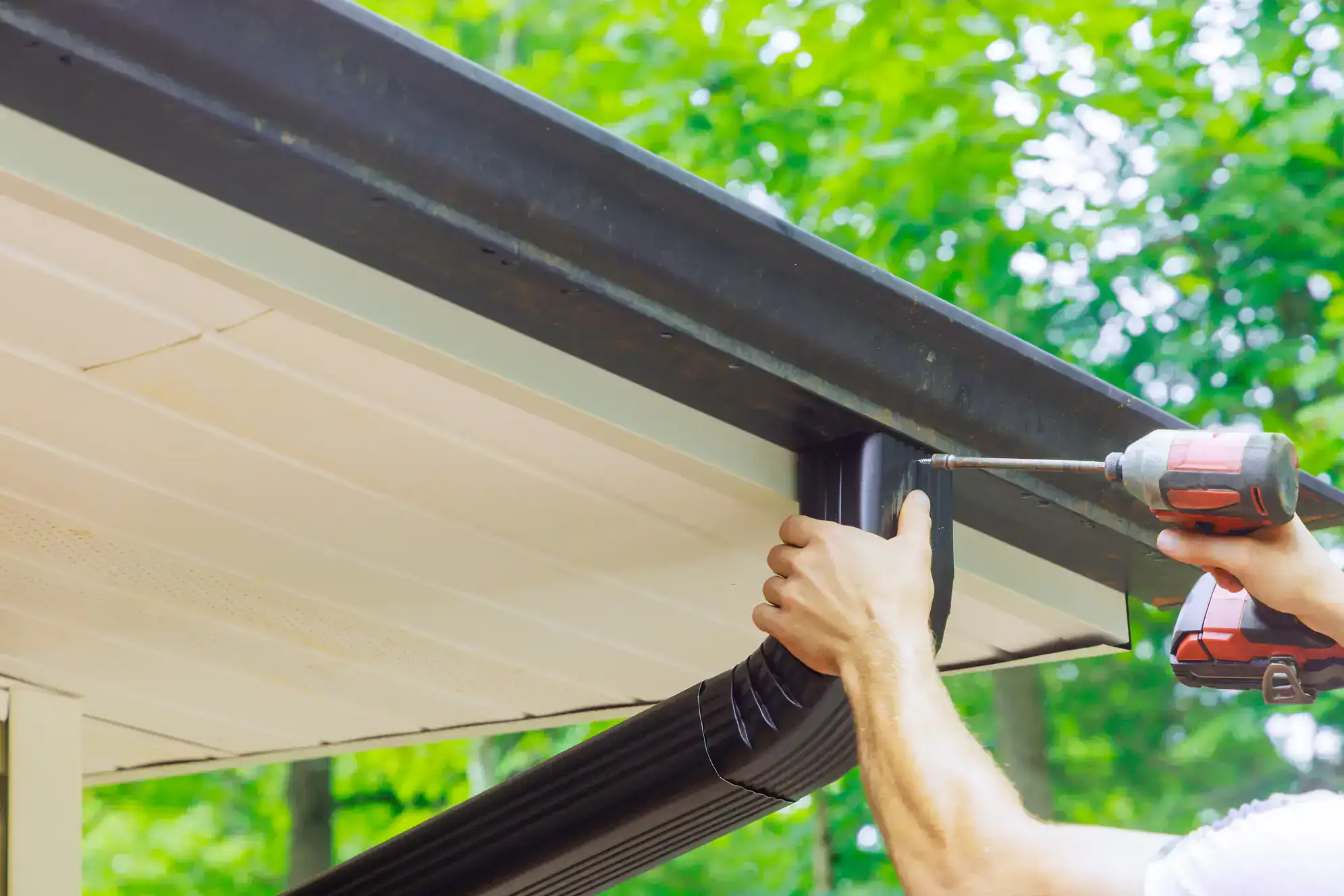
Downspout placement and sizing get the same attention. We position extensions to carry water well away from your foundation — critical on properties near the rolling terrain around Pohatcong Mountain, where runoff moves fast and doesn’t give you much margin. When the job is done, we walk you through what was installed and why, and we leave the property clean.
Ready to get started?
Roof Gutter Installation Company in Washington, NJ
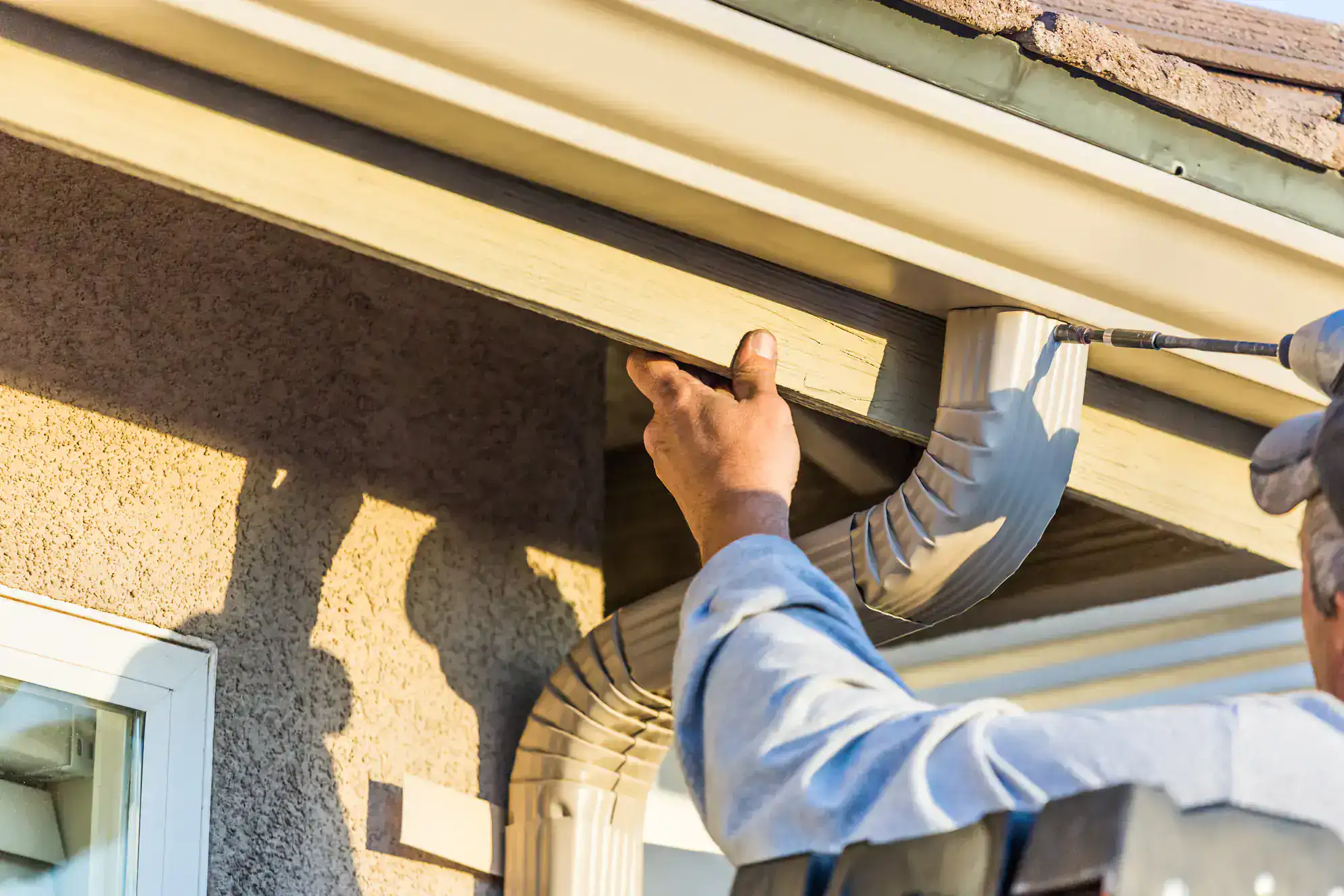
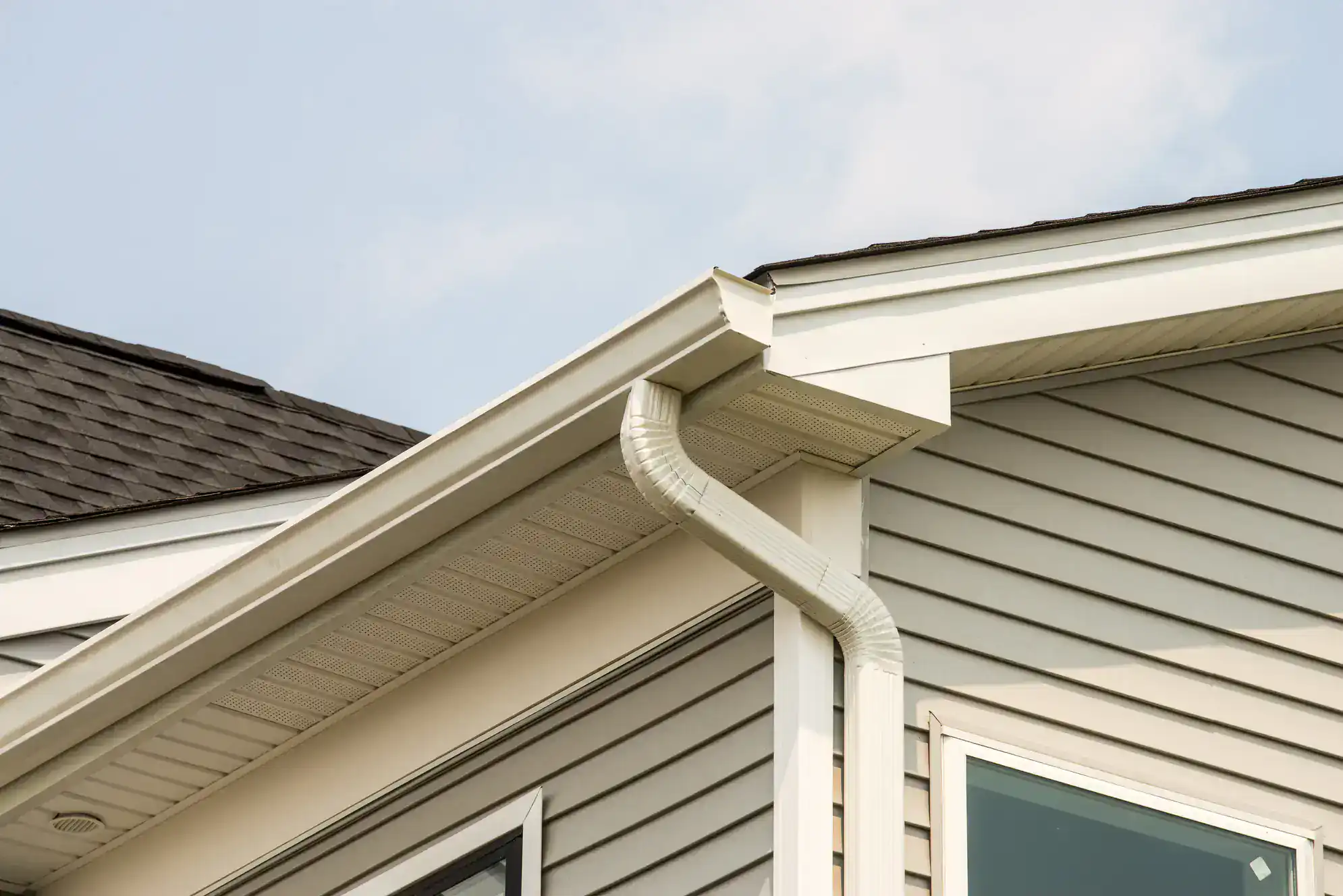
Every gutter system we install is seamless aluminum, fabricated on-site to your home’s exact dimensions. Seamless construction means no joints along the run — joints are where sectional gutters split, leak, and fail first. The only connections are at corners and downspout outlets, which keeps the system tight and significantly reduces long-term maintenance.
For Washington homeowners, that matters year-round. In summer, Warren County’s heavy rain events can dump a lot of water in a short window — a system with compromised joints won’t keep up. In winter, the freeze-thaw cycling that defines northwestern NJ winters puts stress on every bracket, seam, and mounting point. Ice dam formation at the eave line is a real seasonal issue here, and gutters that have pulled even slightly away from the fascia accelerate that damage. We install with bracket systems and fastening that hold through a Warren County winter, not just through the first warm season.
If your gutters were damaged in a storm, your homeowner’s insurance may cover more than you think. We work directly with insurance companies to document storm damage, submit claims, and help you get the coverage you’re entitled to — so you’re not navigating that process alone. Whether you’re looking at a full replacement on a pre-war Victorian or a straightforward upgrade on a mid-century ranch, your free estimate includes a written, itemized breakdown with no hidden fees and no pressure to commit on the spot.
How do I know if I need gutter repair or full replacement in Washington, NJ?
The honest answer is that it depends on what the inspection finds, and a good contractor will tell you the truth either way. Repair makes sense when the damage is isolated — a separated joint, a single section that’s pulling away from the fascia, a downspout that’s come loose. If the rest of the system is structurally sound and draining correctly, there’s no reason to replace it.
Full replacement becomes the right call when the gutters are sagging along multiple runs, when the fascia beneath them is rotted or compromised, when the slope is wrong throughout the system, or when the gutters are simply too old and too patched to function reliably. In Washington’s older housing stock — particularly the Victorian-era homes near the borough’s downtown — it’s common to find systems that have been repaired repeatedly over decades and are past the point where another fix makes sense. Our inspection will tell you clearly which situation you’re in, and we won’t recommend replacement if repair is the honest answer.
What size gutters does a home in Washington, NJ actually need?
Most residential homes use either 5-inch or 6-inch gutters, and the right choice depends on your roof’s square footage and the pitch of the roof — not just the size of the house. A steeper roof sheds water faster, which means it can overwhelm a 5-inch system during a heavy rain event even if the house itself isn’t particularly large. Warren County receives close to 49 inches of rain per year, and summer convective storms here can deliver intense rainfall in a short window. Undersized gutters overflow in those conditions regardless of how well they’re installed.
Washington’s Victorian homes tend to have larger roof surfaces with multiple pitches and dormers, which increases the drainage load significantly. In many cases, these homes are better served by 6-inch gutters and larger downspouts than what was originally installed. We calculate the right sizing based on your specific roof geometry and local rainfall intensity — not a one-size-fits-all spec.
Do I need a permit for gutter installation or replacement in Washington Borough?
For a straightforward like-for-like gutter replacement on a residential property, a separate building permit is generally not required in New Jersey. Gutter installation falls under the state’s home improvement contractor framework, which is why working with a licensed NJ HIC — like us, License #13VH10605800 — is the relevant compliance requirement rather than a project-specific permit.
That said, if the scope of work includes fascia board replacement or any structural repair beyond the gutter system itself, Washington Borough’s construction office may require a permit for that component. It’s a determination that depends on the specific project, and it’s worth confirming with the borough directly if your job involves more than the gutters alone. We assess this as part of your free estimate and will advise you on any permit requirements before work begins — so there are no surprises mid-project.
Can ice dams in Washington's winters damage my gutters, and what can I do about it?
Yes — and it’s one of the more common issues we see on Warren County homes after a hard winter. Ice dams form when heat escaping from the upper levels of your home melts snow on the roof, and that meltwater refreezes at the eave line where the gutter sits. The ice backs up under the shingles and puts significant weight and lateral pressure on the gutter system. Gutters that are already slightly loose or improperly fastened are the most vulnerable — the ice essentially pries them away from the fascia.
The best defense is a gutter system that’s properly mounted to sound fascia with adequate fastening, combined with good attic insulation to reduce the heat transfer that creates the melt-refreeze cycle in the first place. We evaluate fascia condition and bracket integrity as part of every inspection, and we install with fastening systems designed to hold through the freeze-thaw cycling that northwestern NJ winters deliver regularly. If your gutters pulled away last winter, that’s worth addressing before the next one.
How long do seamless aluminum gutters typically last in Warren County's climate?
Properly installed seamless aluminum gutters typically last 20 years or more — but that range assumes correct installation from the start and basic maintenance along the way. Warren County’s climate puts real stress on gutter systems: close to 49 inches of annual rainfall, 32 inches of snow, and the freeze-thaw cycling that comes with northwestern NJ winters. Systems that were installed with incorrect slope, undersized downspouts, or poor fascia attachment tend to fail well before that 20-year mark, regardless of the material.
The most common accelerators of early failure are pooled water that sits in a gutter with inadequate pitch, joints that weren’t sealed properly, and fascia rot that allows the mounting system to work loose over time. Seamless construction eliminates the joint failures that shorten sectional gutter lifespans, but the installation quality still determines how long the system holds up. Annual cleaning to keep debris from holding moisture against the gutter is the most impactful maintenance step Washington homeowners can take to protect their investment.
Does homeowner's insurance cover gutter damage from storms in New Jersey?
It can, and more often than homeowners realize. In New Jersey, standard homeowner’s insurance policies typically cover sudden storm damage — wind, hail, falling branches, and ice events that cause structural damage to gutters, fascia, or the roof edge. Warren County sees its share of nor’easters, severe summer thunderstorms, and winter ice events, and any of these can cause damage that qualifies for a claim.
What insurance generally does not cover is gradual deterioration — gutters that have sagged or separated over time due to age and deferred maintenance. The distinction matters, and it’s one reason proper documentation after a storm event is important. We work directly with insurance companies on behalf of our clients — documenting the damage, communicating with adjusters, and helping you understand what your policy covers before you decide how to proceed. If you’ve had a recent storm event and you’re not sure whether your damage qualifies, the free inspection is a reasonable first step. You’ll know what you’re dealing with before you make any decisions.