
Gutter Installation in Kings Woods, NJ
When Your Trees Give More Than Your Gutters Can Handle
Hear from Our Customers
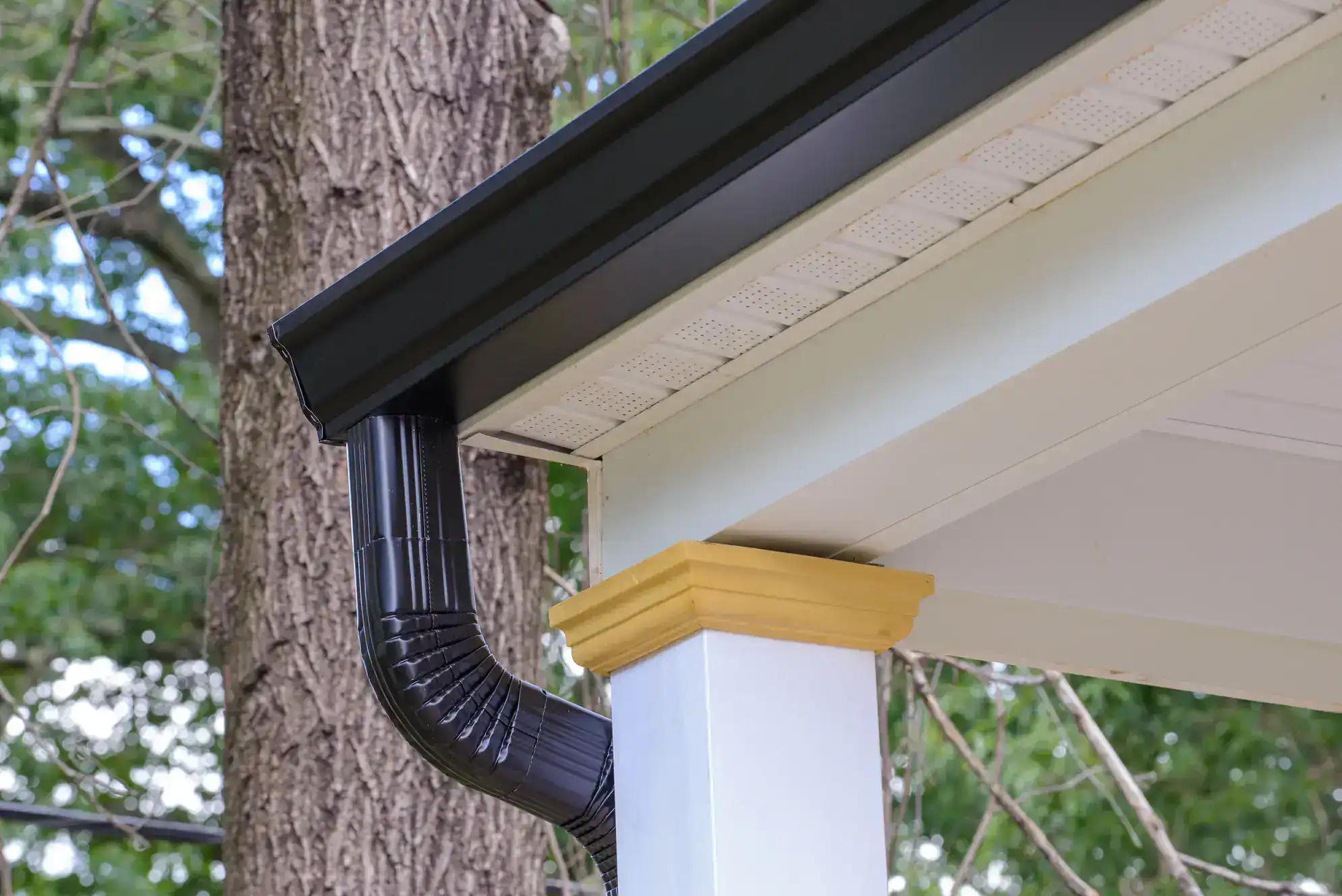
Rain Gutter Installation Kings Woods NJ
Most homeowners don’t think about their gutters until something goes wrong — a flooded basement, a rotted fascia board, or a landscape that looks like it took a direct hit. By that point, the damage is already done and the repair bill is bigger than the installation would have been. Getting ahead of it is the smarter move, and in Kings Woods, the window to do that is shorter than most people realize.
The Eastern Deciduous Forest that runs through Alpine doesn’t take a season off. Oak leaves, maple seed pods, and catkins load your gutters in waves from spring through late fall. A system that’s undersized, improperly sloped, or mounted to compromised fascia boards won’t just clog — it’ll overflow, pull away from the roofline, and send water exactly where you don’t want it: toward your foundation, your landscaping, and your siding. On the Palisades plateau where Kings Woods sits, the soil doesn’t absorb runoff the way flat suburban ground does. Water moves fast here, and where it ends up matters.
When your gutter system is sized and installed correctly for your specific home, you stop reacting and start protecting. That means your foundation stays dry, your landscaping investment holds up, and you’re not calling someone out every fall to deal with overflow damage. For an estate-scale property in Kings Woods, that’s not a small thing.
Gutter Contractors Kings Woods NJ
We’ve been doing exterior work across New Jersey for over a decade. We hold NJ Division of Consumer Affairs Home Improvement Contractor License #13VH10605800, along with certifications from major manufacturers — which means the work we do qualifies for real warranty coverage, not just a verbal guarantee. That matters when you’re investing in a property at the level most Kings Woods homeowners are.
We’ve worked on large, architecturally complex homes throughout Bergen County, and we understand what that means in practice. Big rooflines, significant tree canopy, Palisades terrain drainage patterns — these aren’t things you figure out on the job. We evaluate all of it before we recommend anything.
Our reputation was built through referrals, not advertising. That tells you something about how we operate. You get a free inspection, a written estimate with no hidden costs, and a clear scope of work before anything starts. No pressure, no surprises.
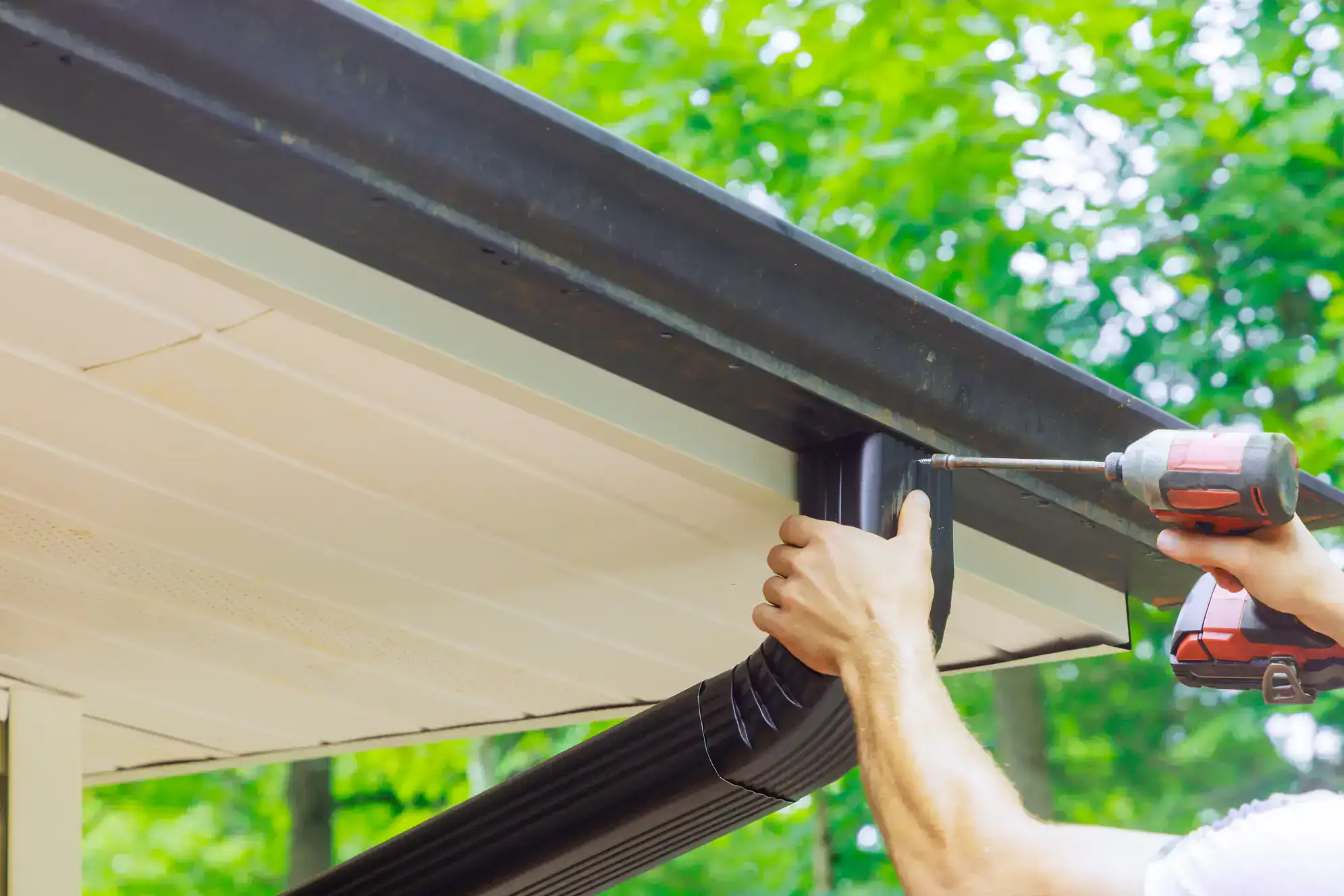
Home Gutter Installation Kings Woods NJ
It starts with a free on-site inspection. We look at your existing gutters, your fascia boards, your roofline geometry, and how water currently moves off your roof. On estate homes in Kings Woods, this step is more involved than a quick visual scan — large, multi-story homes with complex rooflines require actual drainage load calculations to determine the right gutter width and downspout count. Skipping this is how systems get undersized and fail.
Once we have a clear picture, we put together a written estimate that covers materials, labor, and scope. No line items that appear after the fact. If we find rotted fascia or structural issues behind where the gutters mount — which happens on older Alpine estates — we tell you before we start, not after. From there, we custom-fabricate your seamless aluminum gutters on-site, cut to your exact roofline measurements. There are no mid-run seams, no pre-cut sections, and no joints where water can work through over time.
Installation includes proper slope calibration so water moves toward the downspouts efficiently, correct downspout placement based on your site’s drainage patterns, and a final walkthrough so you know exactly what we did and why. Bergen County’s storm frequency means your system will be tested — we make sure it’s ready when that happens.
Ready to get started?
Roof Gutter Installation Kings Woods NJ
Standard gutter installations are designed around standard homes. Kings Woods isn’t that. The homes here are larger, the rooflines are more complex, the tree canopy is heavier, and the terrain creates drainage dynamics that a one-size-fits-all approach simply doesn’t account for. Every installation we do in Kings Woods is scoped specifically for the property in front of us.
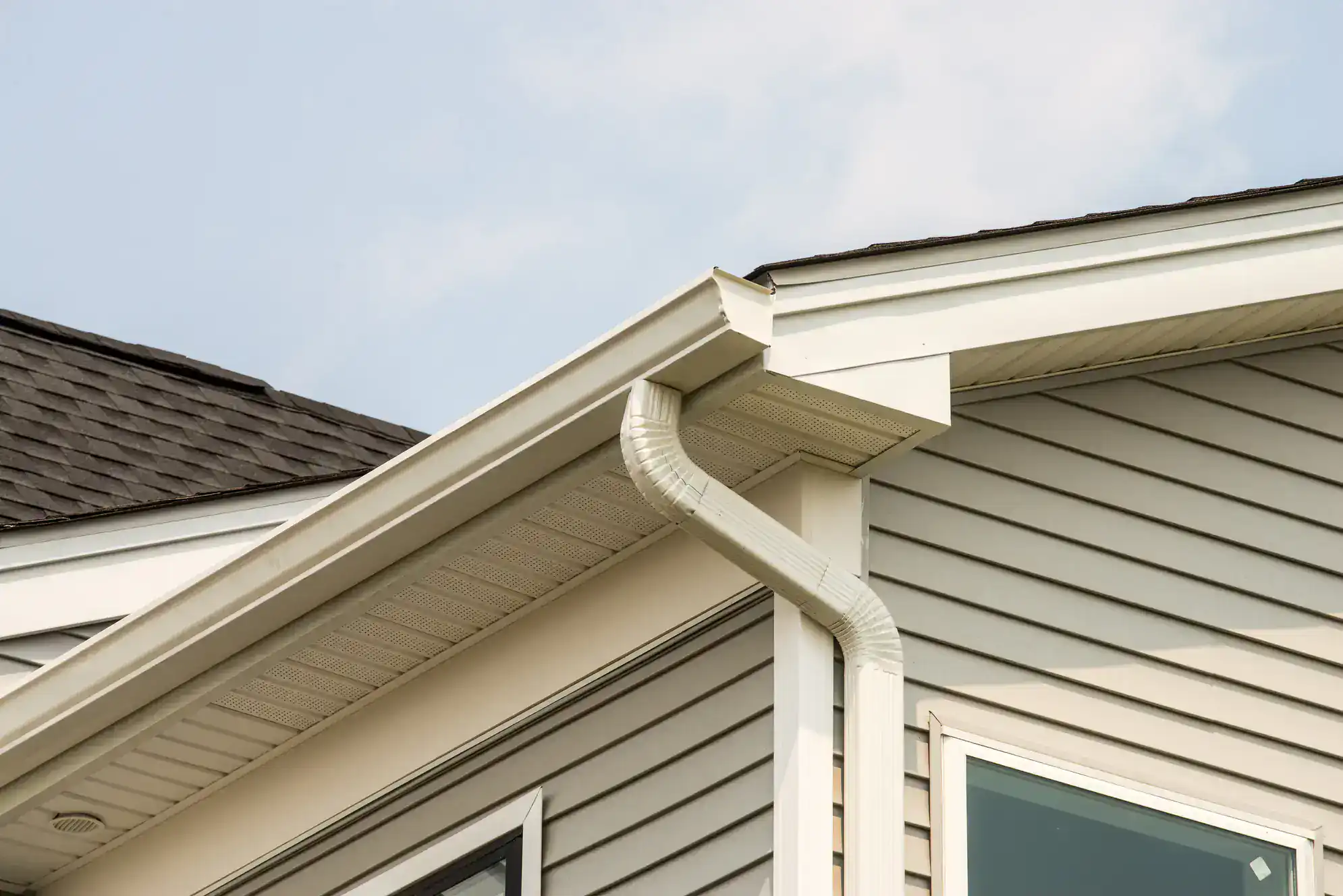
That means seamless aluminum gutters fabricated on-site to your exact measurements, hidden hanger systems instead of visible spike-and-ferrule fasteners, proper slope set before the first bracket goes in, and downspout sizing and placement calculated based on your actual roof surface area and site conditions. We also evaluate your fascia before mounting anything — because new gutters on rotted fascia boards is money wasted. If there’s an issue, you’ll know about it upfront.
We also assist with insurance claims when storm damage is involved. Bergen County has recorded significantly more natural disaster events than the national average, and many homeowners don’t realize their existing damage may be covered. If that’s your situation, we can help you document and navigate the process. And because we handle roofing and siding alongside gutters, we can flag any exterior issues we spot during the job — so nothing gets missed that could cause problems down the road.
How do I know if my Kings Woods home needs gutter replacement or just repairs?
The honest answer is that it depends on what’s actually failing and why. If you’re dealing with isolated leaks at joints or a single sagging section, repair is often the right call. But if your gutters are pulling away from the fascia in multiple spots, overflowing consistently during rain events, or showing visible rust and separation, you’re likely looking at a system that’s past its useful life — and patching it is just delaying the replacement.
On older estate homes in Kings Woods, there’s another layer to consider: the fascia boards behind the gutters. If those are rotted or compromised, even a brand-new gutter installation won’t hold properly without addressing them first. That’s why we always inspect the full mounting area before making a recommendation. A free on-site inspection gives you a clear answer based on what’s actually there — not a guess over the phone.
What gutter size is right for a large estate home in Kings Woods, NJ?
Most standard residential installations use 5-inch gutters, but for the larger homes in Kings Woods and Alpine, 6-inch gutters are often the more appropriate choice. The reason comes down to water volume. A large estate home with a complex, multi-pitch roofline generates significantly more runoff during a heavy storm than a standard 1,500-square-foot house — and a 5-inch system that might work fine on a smaller home can overflow under that load.
Downspout sizing matters just as much as gutter width. More roof surface area means you need more downspouts, positioned correctly to move water away from the foundation efficiently. On Palisades terrain, where soil absorption is limited and drainage gradients run toward the cliffs, getting this right isn’t optional — it directly affects whether water ends up in your yard or in your basement. We calculate all of this during the inspection before recommending anything.
Do I need a permit for gutter installation in Alpine Borough, NJ?
In most cases, a straight gutter replacement in New Jersey does not require a separate building permit. However, Alpine Borough has its own building and zoning ordinances, and if the work involves structural repairs to the fascia, changes to drainage routing, or modifications to the exterior of the home, it’s worth confirming directly with the Alpine Borough Building Department before work begins. Their office is at 100 Church Street, Alpine, NJ 07620, and they can tell you exactly what applies to your specific project.
What is required statewide — regardless of permit status — is that any contractor performing home improvement work valued over $500 must hold a valid NJ Home Improvement Contractor registration. We hold NJ HIC License #13VH10605800, which you can verify directly through the NJ Division of Consumer Affairs. That’s a basic protection you should confirm with any contractor you hire, not just us.
How does Bergen County's storm history affect how gutters should be installed?
Bergen County has recorded 32 natural disaster events — well above the national average of 19. That includes nor’easters, tropical storm remnants, and summer convective storms that can drop several inches of rain in under an hour. For Kings Woods homeowners, that’s not an abstract statistic — it’s the reality your gutter system has to perform in when it matters most.
A system that’s marginally functional under normal rainfall will fail during those events, and the consequences on a Palisades-area property are real: foundation exposure, basement water intrusion, and landscape damage from uncontrolled overflow. Proper installation — correct sizing, slope, downspout count, and secure fastening — is what separates a system that holds up under pressure from one that becomes a problem the next time a storm rolls through. We also help homeowners navigate insurance claims when storm damage is involved, which is more common in Bergen County than most people expect.
Are gutter guards worth it for homes surrounded by trees in Kings Woods?
For most Kings Woods properties, the answer is yes — and the reasoning is straightforward. The Eastern Deciduous Forest that defines this area doesn’t just drop leaves in October. You’re dealing with catkins in spring, seed pods through summer, and heavy leaf fall from October into December. That’s multiple seasons of debris loading, and if you’re not cleaning your gutters three or four times a year, you’re running a real risk of overflow and the damage that follows.
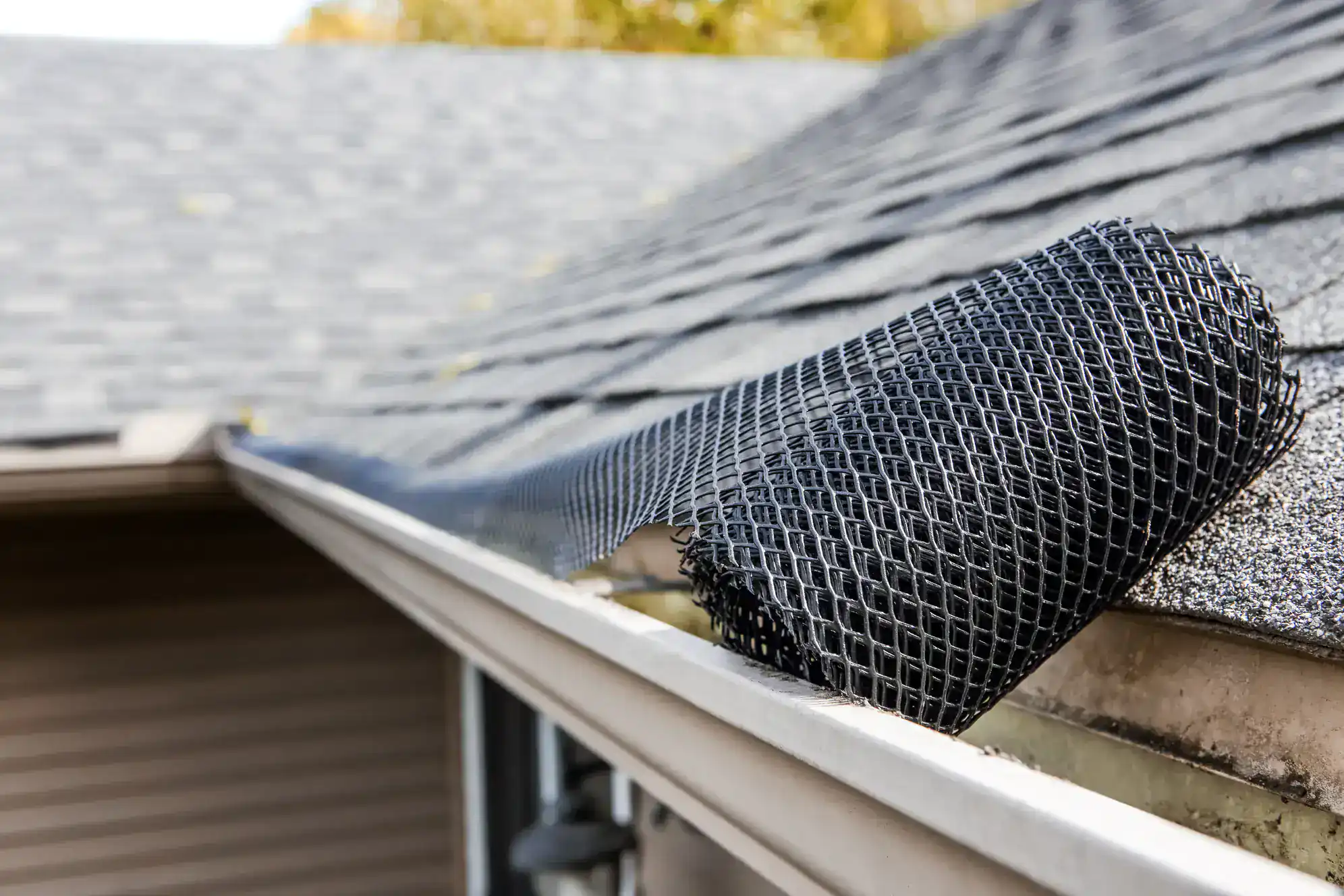
Gutter guards don’t eliminate maintenance entirely, but they significantly reduce how often debris accumulates to the point of blocking water flow. For a large estate home in Kings Woods where cleaning every roofline section means either hiring someone repeatedly or leaving it to chance, a quality guard system pays for itself over time in avoided maintenance costs and reduced overflow risk. We can evaluate whether guards make sense for your specific tree canopy and roofline configuration during the inspection.
Can my homeowner's insurance cover gutter damage from a storm in Alpine, NJ?
It depends on the cause and your specific policy, but storm-related gutter damage is often covered — and a lot of Alpine homeowners don’t realize it or don’t know how to document it properly to file a claim. If a nor’easter, ice storm, or summer microburst caused your gutters to pull away, crack, or collapse, that’s typically the kind of sudden, weather-related damage that falls within standard homeowner’s policy coverage. Gradual wear and deferred maintenance are different — insurers draw a clear line between storm damage and neglect.
What matters is documentation. You need clear evidence of what the damage is, when it happened, and what it will cost to repair or replace. We work directly with adjusters to help Bergen County homeowners build that case. We’ve seen how often storm damage goes unclaimed simply because the homeowner didn’t know the process — and on a large estate property where a full gutter replacement can be a significant investment, it’s worth finding out whether your policy covers it before you pay out of pocket.