
Gutter Installation in Ackermans Mills, NJ
Estate Homes in Ackermans Mills Don't Forgive Gutter Failures
Hear from Our Customers
Rain Gutter Installation in Bergen County
Water finds the path of least resistance. If your gutters are undersized, improperly pitched, or failing at the joints, that path leads straight to your foundation, your fascia boards, and eventually your basement. On a large estate property in Ackermans Mills, that’s not a minor repair — it’s a significant one.
The homes in this part of south Mahwah sit at around 318 feet elevation near the Ramapo Mountains. That means more snowfall than most of Bergen County, more pronounced freeze-thaw cycling through winter, and a real risk of ice dam formation when gutters aren’t pitched correctly to drain completely. When meltwater pools at the gutter edge and refreezes, it backs up under your shingles. That’s interior water damage, and it starts from the outside.
Summer here brings its own pressure. Bergen County flash flood warnings are common, and intense convective storms can dump several inches of rain in a short window. Gutters sized for an average suburban home won’t cut it on a property with extended eave runs and a complex roofline. After we install your new system, water moves the way it should — away from your home, away from your landscaping, and away from your foundation.
Gutter Contractors in Ackermans Mills, NJ
We’ve been doing exterior renovation work across Bergen County for over ten years — roofing, gutters, and siding as a connected system, not isolated jobs. We hold NJ Division of Consumer Affairs Home Improvement Contractor License #13VH10605800, which is publicly verifiable before you ever pick up the phone. Manufacturer certifications back our installations, meaning your new gutters qualify for warranty coverage that goes beyond a verbal promise.
Ackermans Mills isn’t a neighborhood that shows up on a generic service area map — it’s a specific pocket of south Mahwah with a specific type of housing stock and a specific set of drainage challenges. The homes here are different from what you’d find in Lodi or Hackensack, and our work reflects that. We serve communities throughout northern Bergen County, including the towns that border Mahwah Township directly — Wyckoff, Franklin Lakes, Oakland, Allendale, Ramsey, and Upper Saddle River. This area isn’t a stretch. It’s home turf.
Home Gutter Installation in Mahwah Township
It starts with a free on-site inspection. Before any numbers are discussed, someone comes out to your property, walks the roofline, and looks at what’s actually going on — not just the gutters themselves, but the fascia boards underneath them, the soffit condition, and how your current system is or isn’t managing water. On a large estate home in Ackermans Mills, that evaluation matters more than it would on a standard suburban ranch. More roofline means more complexity, and complexity that gets skipped at the estimate stage tends to show up as a problem after installation.
Once the inspection is done, you get a written estimate. No vague verbal quotes, no pressure to commit on the spot. The estimate outlines exactly what’s being replaced or installed, what materials are being used, and what the total cost is. If there’s fascia damage underneath the old gutters — which is common on homes where sectional gutters have been leaking at the joints for years — that gets flagged and addressed before new gutters go up, not after.
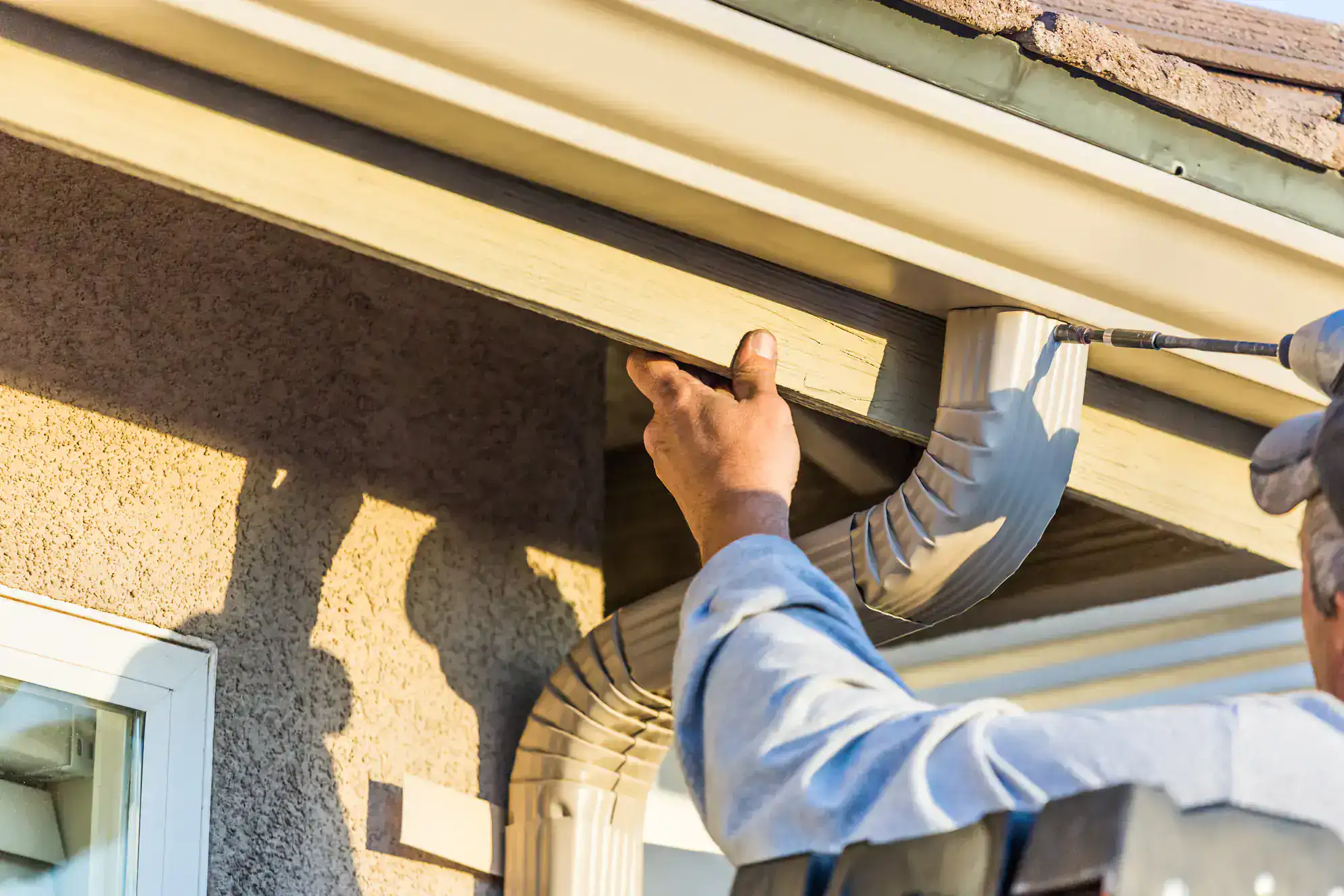
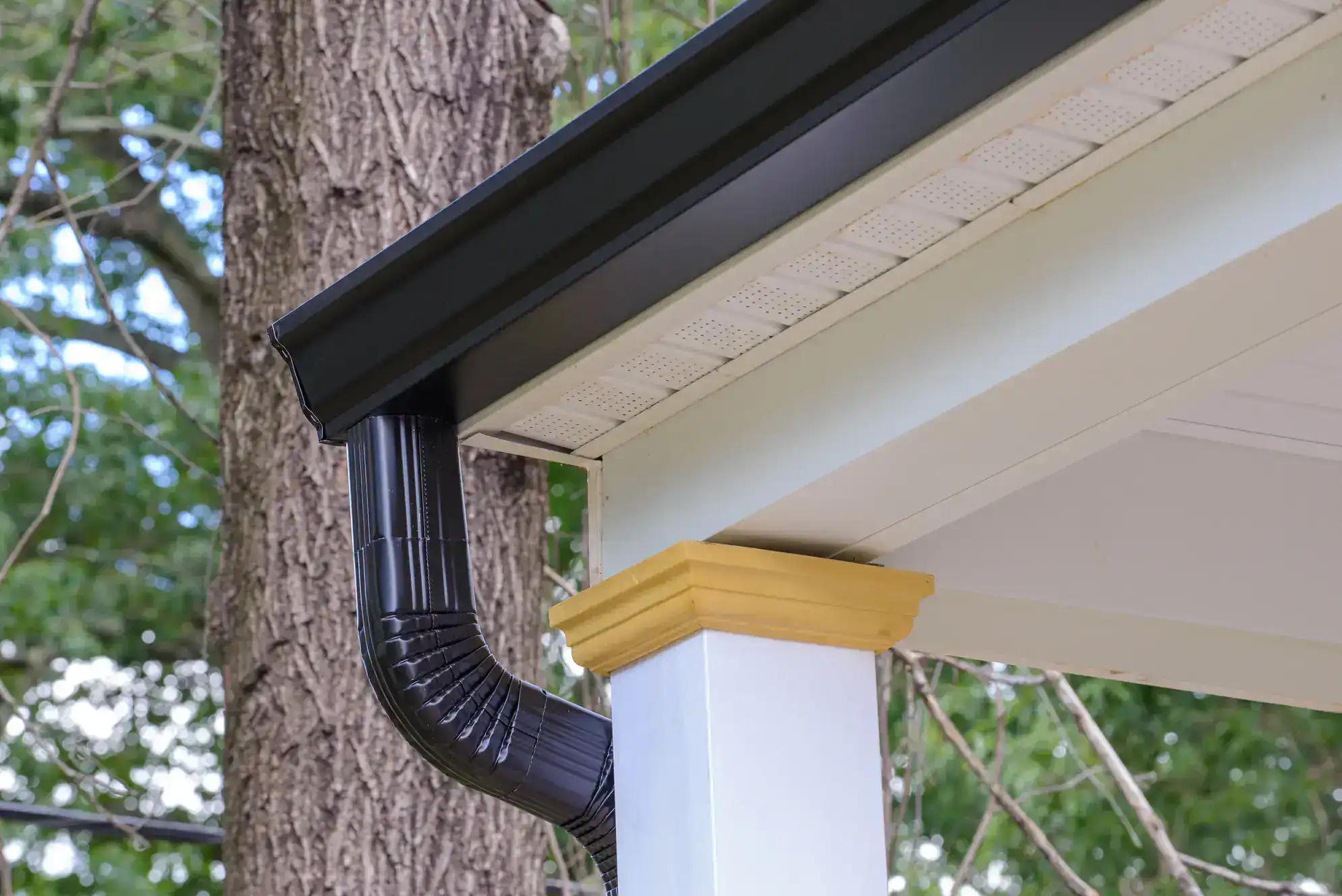
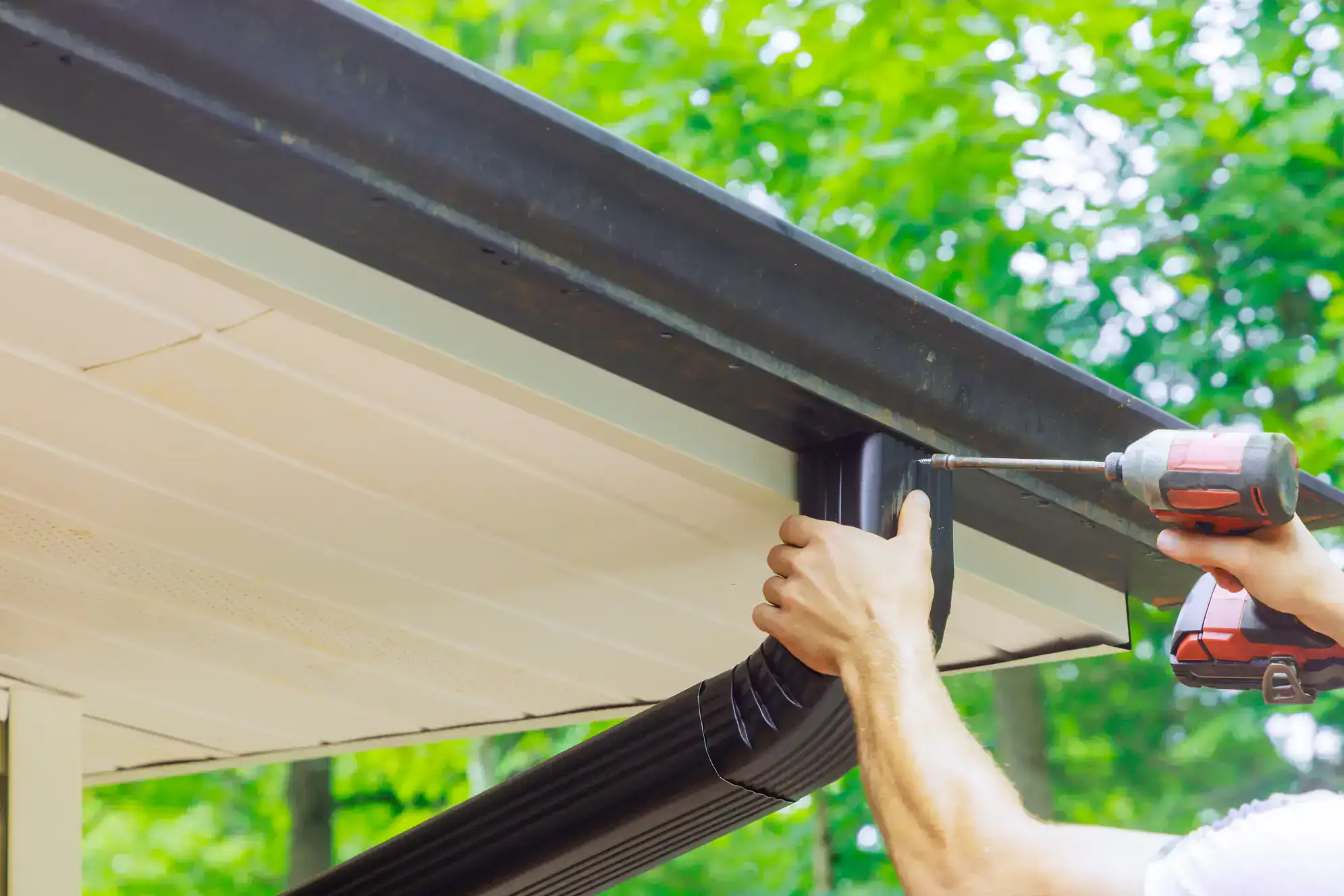
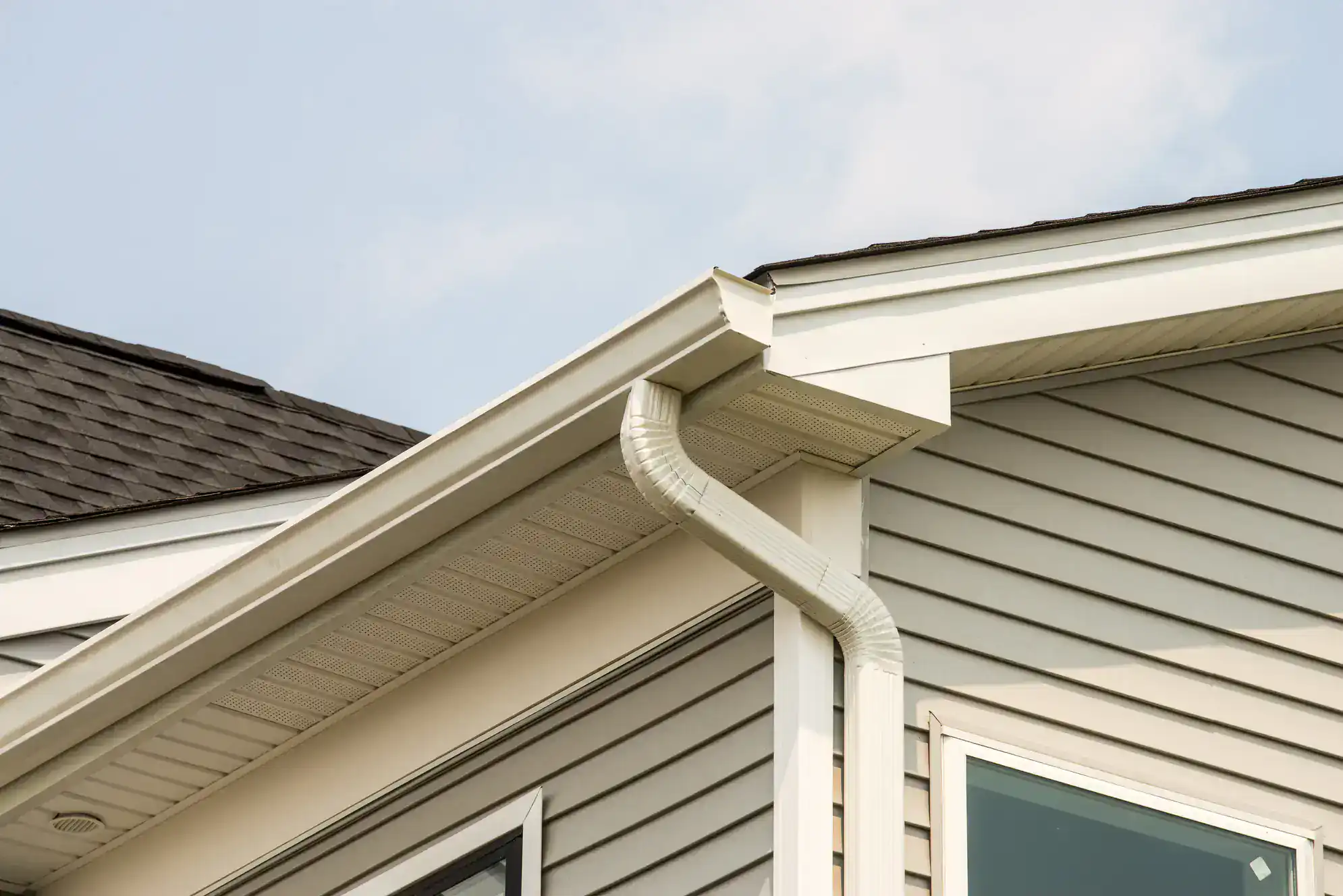
Installation uses seamless aluminum gutters fabricated on-site to the exact dimensions of your roofline. Each run is cut as a single continuous piece, which eliminates the joint seams where sectional systems typically fail first. Downspouts are sized and positioned based on your roof’s actual water volume and your property’s drainage layout — including how your lot sits relative to the surrounding terrain. In Mahwah Township, gutter replacement generally doesn’t require a separate construction permit, but any structural fascia work connected to the installation may. We handle that guidance as part of the process.
Ready to get started?
Roof Gutter Installation in Ackermans Mills, NJ
A gutter installation from us isn’t just swapping out the old aluminum for new aluminum. It starts with a full exterior drainage assessment — because gutters that go up over rotted fascia or without accounting for your roof’s actual pitch and water volume are going to fail on the same timeline as the ones they replaced.
For homes in Ackermans Mills, that assessment includes evaluating how your downspouts are positioned relative to your property’s drainage slope. Properties in south Mahwah near the Hohokus Brook sit in a drainage-sensitive area. Where your downspouts discharge matters — both for your foundation and for how water moves across your lot during a heavy storm. That’s a detail that gets addressed specifically for your property, not applied from a generic template.
The gutters themselves are seamless aluminum, fabricated on-site and installed with correct slope to ensure complete drainage after every rain event. No joints means no leak points. If your home has experienced storm damage — from a Nor’easter, from a summer microburst, from the weight of ice — we can help document that damage and work through the insurance claim process with you. Bergen County homeowners deal with real weather events, and having a contractor who understands the insurance side of storm damage is a practical advantage, not a bonus feature.
Do I need a permit for gutter installation in Mahwah Township, NJ?
For a standard gutter replacement — removing old gutters and installing new ones in the same location — Mahwah Township generally does not require a separate construction permit. It falls under routine home improvement work rather than structural construction. That said, if the installation involves repairs to your fascia boards, soffit, or any structural roof edge components, those repairs may trigger a permit requirement under Mahwah Township’s Construction Office guidelines.
The township’s own guidance is clear on this point: don’t assume a project doesn’t need a permit just because a neighbor or contractor says it doesn’t. The safest approach is to confirm with Mahwah Township’s Construction Office at 475 Corporate Drive before work begins. What’s non-negotiable regardless of permit status is contractor registration — all home improvement contractors working in Mahwah Township must hold a valid NJ Home Improvement Contractor license. Our license number is #13VH10605800, verifiable through the NJ Division of Consumer Affairs.
How do I know what gutter size is right for my home in Ackermans Mills?
Gutter sizing is determined by the square footage of your roof’s drainage area and the pitch of your roof — not by the size of your home’s footprint. The larger the roof surface and the steeper the pitch, the more water volume your gutters need to handle during peak rainfall. For homes in Ackermans Mills, which sit at higher elevation near the Ramapo Mountains and consistently receive more snowfall than lower Bergen County areas, this calculation matters significantly.
Most estate homes in Ackermans Mills need 5-inch or 6-inch K-style gutters rather than the 4-inch systems common on smaller homes. Downspout sizing and placement are equally important — a single undersized downspout on an extended eave run creates a bottleneck that causes overflow during the kind of intense summer storms Bergen County sees regularly. During your free inspection, we calculate the drainage load for each section of your roofline based on your actual roof geometry, not an estimate based on square footage alone.
What causes ice dams, and how does proper gutter installation help prevent them?
Ice dams form when heat escaping through your roof melts snow near the ridge, and that meltwater runs down to the cold gutter edge where it refreezes. As ice builds up at the gutter, subsequent meltwater has nowhere to go — it backs up under your shingles and forces its way into the home. The result is interior water damage that originates from the outside.
Gutters don’t cause ice dams on their own — poor attic insulation and ventilation are the root issue — but gutters that are improperly pitched make the problem significantly worse. When water doesn’t drain completely after each melt cycle, it pools at the low points of the gutter and freezes there, building up the ice dam faster. At 318 feet elevation near the Ramapo Mountains, Ackermans Mills gets more consistent snowfall and more pronounced freeze-thaw cycling than lower Bergen County communities. Gutters installed with correct slope and proper pitch drain completely, which reduces the standing water that accelerates ice dam formation. It won’t eliminate the problem if your attic insulation is inadequate, but it removes one of the contributing factors.
How long should gutters last on a home in northern Bergen County?
Aluminum gutters — the standard for residential installation — typically last 20 years or more when they’re properly installed and maintained. The variables that shorten that lifespan are joint failures in sectional systems, improper pitch that allows standing water to accelerate corrosion, and physical damage from ice, fallen branches, or the weight of snow and debris.
In Ackermans Mills specifically, the heavy tree canopy that comes with large estate lots means significant leaf and debris load through fall. Gutters that aren’t cleared regularly develop standing water and organic buildup that corrodes the metal faster than normal weather exposure would. Seamless gutters don’t eliminate the need for cleaning, but they do eliminate the joint seams where sectional systems fail first — which is typically the earliest point of failure in a sectional installation. If your current gutters are 15 or more years old, showing visible sagging, pulling away from the fascia, or developing rust staining on your siding, that’s a reliable indicator that replacement is the more cost-effective path compared to ongoing repairs.
Can storm damage to my gutters be covered by homeowner's insurance in NJ?
Yes, in many cases — but it depends on what caused the damage. Homeowner’s insurance in New Jersey typically covers sudden, accidental damage caused by a covered peril: wind, hail, falling tree limbs, or the weight of ice and snow. Damage from gradual deterioration, lack of maintenance, or age is generally excluded. The distinction matters because insurance adjusters will look for evidence of pre-existing wear when evaluating a claim.
Bergen County experiences real storm events — Nor’easters, summer microbursts, and ice storms that cause documented damage to gutters, fascia, and roof edges. If your gutters were damaged in a storm, the key is documenting the damage promptly and accurately before any repairs are made. We can assist with that documentation and work alongside your adjuster to make sure the scope of damage is properly represented. Homeowners who try to navigate that process alone often find that the initial adjuster assessment underestimates what actually needs to be replaced. Having a licensed contractor involved from the start tends to produce a more accurate outcome.
How do I find a legitimate, licensed gutter installation company in Ackermans Mills, NJ?
The most direct way is to verify the contractor’s NJ Home Improvement Contractor registration through the NJ Division of Consumer Affairs website before you agree to anything. Every legitimate home improvement contractor working in Mahwah Township is required by law to hold this registration — it’s not optional, and it’s publicly searchable. If a contractor can’t provide a license number or discourages you from looking it up, that’s a clear signal to move on.
Beyond the license, look for a contractor who can provide a written estimate rather than a verbal quote, who carries liability insurance, and who has a verifiable review history — not just a handful of testimonials on their own website. In a community like Ackermans Mills, where homes are significant investments and the work is visible, reputation travels through the neighborhood. We hold NJ HIC License #13VH10605800, carry full insurance, and have built our Bergen County presence through referrals from homeowners in Ackermans Mills and surrounding areas who were satisfied enough to recommend our work to neighbors. That’s the kind of track record worth checking before you hire anyone.