
Gutter Replacement in Westwood, NJ
Westwood Homes Deserve Gutters That Handle What the Pascack Valley Throws at Them
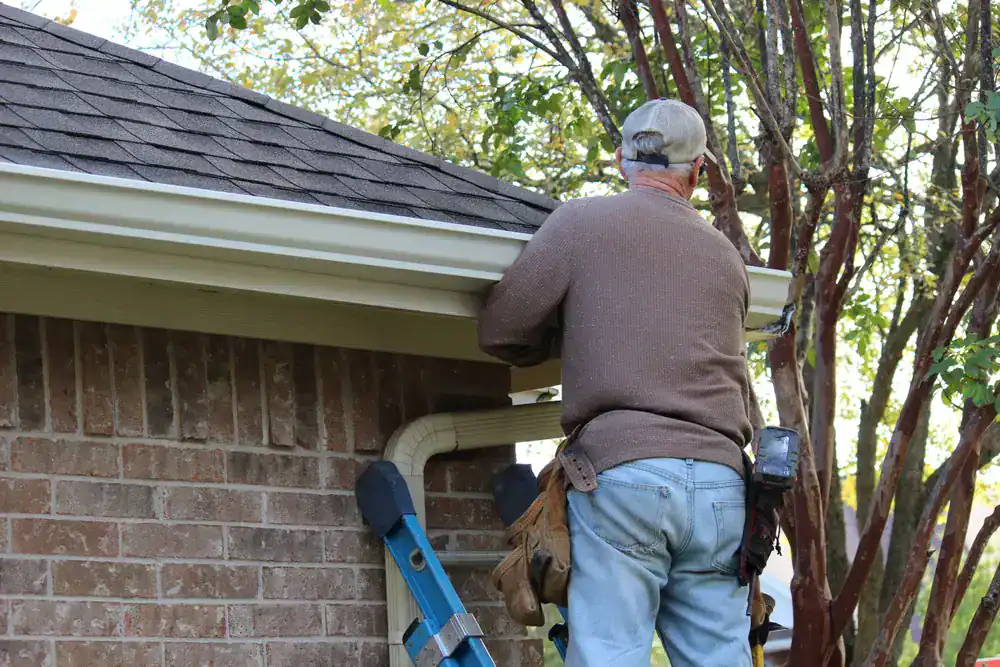
Hear from Our Customers
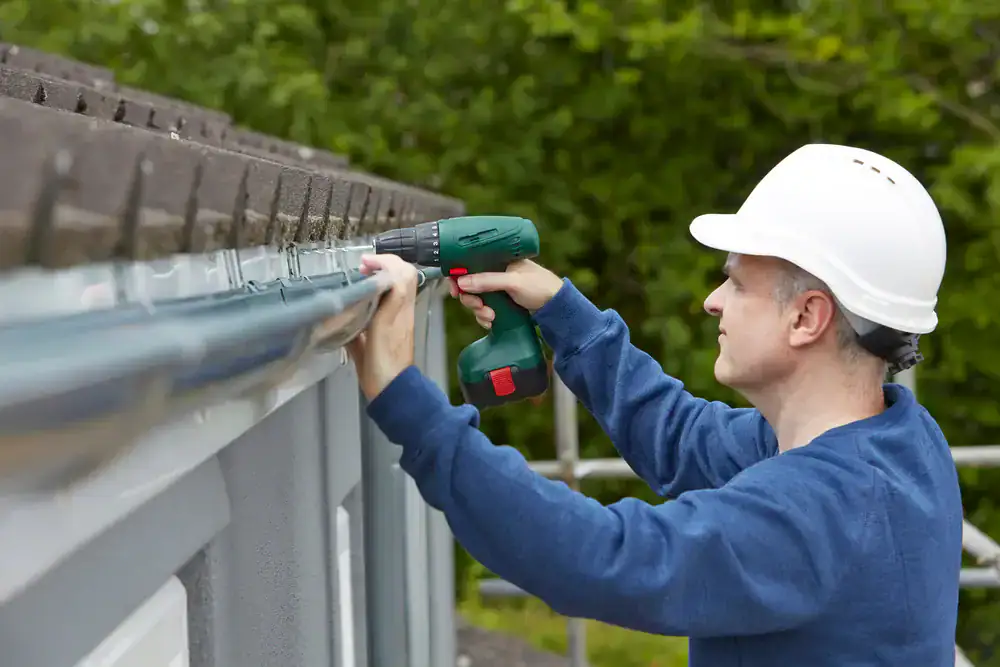
Rain Gutter Replacement in Bergen County
Westwood gets roughly 46 to 50 inches of rain a year, spread across every season. That’s not a Florida summer situation where you brace for a few months — it’s a year-round demand on a system most homeowners don’t think about until something goes wrong. When your gutters are doing their job, water moves away from your home the way it’s supposed to. When they’re not, it finds somewhere else to go — and that somewhere is usually your fascia, your foundation, or your basement.
For homes near Pascack Brook or Musquapsink Brook, that risk isn’t abstract. The borough actively monitors brook levels and has a documented flood history going back decades. A gutter that’s pulling away from the roofline or pitching the wrong direction isn’t just an eyesore — it’s a liability when the next heavy rain event hits and the ground is already saturated.
Most Westwood homes were built between the 1940s and 1980s, and aluminum gutters have a lifespan of roughly 20 years. If your gutters haven’t been replaced in a while, the odds are good they’re working against you, not for you. New seamless gutters, properly pitched and anchored, mean water goes where it’s supposed to go — away from your home, every time.
Gutter Replacement Contractors in Westwood, NJ
We’ve been working on Westwood and Bergen County homes for over ten years. That’s not a number thrown out to sound impressive — it’s the kind of track record that only holds up if the work is actually good. In a market like Westwood, where neighbors talk and reviews travel fast, a company that cuts corners doesn’t last a decade.
We’re family-owned, which means the people making decisions about your home are the same people whose name is behind every job. Roofing is our primary specialty, and that matters for gutter work — because understanding how a roof sheds water tells us exactly how the gutter system beneath it needs to be configured. It’s not two separate conversations; it’s one complete picture.
From homes near the Westwood Train Station to older colonials closer to downtown, we’ve worked across the borough and throughout the Pascack Valley. Contractor licenses, manufacturer certifications, transparent estimates, and free inspections — that’s what you get before a single piece of old gutter comes down.

House Gutter Replacement Process in Westwood
It starts with a free inspection. Not a sales visit — an actual assessment of what’s happening with your current gutters, the fascia behind them, and how water is moving off your roof. For homes in Westwood, that inspection also accounts for your specific drainage context: lot size, proximity to the brook corridors, and how your downspouts are currently terminating relative to the foundation. You’ll know what needs to be replaced, what can stay, and why.
From there, you get a clear, itemized estimate. No vague line items, no surprises mid-job. The materials, the labor, any fascia repair that’s needed — it’s all laid out before anything starts. Standard gutter replacement in New Jersey typically doesn’t require a building permit, but if your project involves structural fascia work or a configuration change, that gets flagged upfront so nothing catches you off guard with the Westwood Building Department.
Installation day is straightforward. We fabricate seamless aluminum gutters on-site to your home’s exact measurements, which means no pre-cut sections that almost fit. Hangers are set at the right intervals, pitch is dialed in toward each downspout, and end caps are sealed properly. When we leave, the site is clean and the system is ready to handle whatever Bergen County’s weather brings next.

Ready to get started?
Roof Gutter Replacement Company in Westwood, NJ
The gutters we install on Westwood homes aren’t pulled from a warehouse shelf. Seamless aluminum gutters are fabricated on-site to the exact linear footage and profile of your home — which matters especially for the older colonials, cape cods, and split-levels throughout the borough that have rooflines and fascia configurations that don’t conform to standard pre-cut sections. Seamless systems eliminate the joints where sectional gutters leak, and they hold up significantly better over time under Bergen County’s consistent rainfall load.
Every installation we complete includes properly spaced hidden hangers, downspouts positioned and sized for your roof’s drainage volume, and sealed end caps that don’t rely on caulk alone to stay watertight. For homes near the Pascack Brook flood corridor, downspout termination is treated as a critical detail — not an afterthought. Water that exits a downspout too close to the foundation in already-saturated soil is a problem waiting to happen, and it’s one that proper installation prevents.
If your fascia boards have absorbed moisture from years of gutter overflow, we address that before new gutters go up — because anchoring new gutters to compromised wood defeats the purpose. The goal is a system that performs correctly from day one and keeps performing, whether it’s a spring downpour or a slow October rain that lasts three days.

How do I know if my Westwood home actually needs full gutter replacement?
The honest answer is that you may not know until someone gets up there and looks — and that’s exactly what our free inspection is for. That said, there are signs worth paying attention to. If you’re seeing gutters that have visibly pulled away from the fascia, sections that sag or hold standing water after rain, paint peeling along the roofline, or water staining on your siding below the gutter line, those are indicators that something has broken down in the system.
For Westwood homes built in the 1960s and 1970s — which describes a large portion of the borough’s housing stock — the original gutter system is almost certainly past its functional lifespan. Aluminum gutters typically last around 20 years under normal conditions. Bergen County’s year-round precipitation puts consistent stress on that system, and if your gutters haven’t been replaced in two decades or more, a professional inspection will tell you exactly where things stand. Sometimes it’s a full replacement. Sometimes it’s a section and a downspout. The inspection tells you which — honestly.
What does gutter replacement typically cost for a home in Westwood, NJ?
The range most homeowners encounter nationally is somewhere between $1,000 and $2,400 for a full gutter replacement, with the average sitting around $1,000 to $1,500. In Bergen County, where labor costs are higher and many homes have more complex rooflines or require fascia work before new gutters can go up, it’s realistic to expect costs toward the upper end of that range — especially on older Westwood homes near downtown where decades of overflow may have affected the wood behind the gutters.
What you should expect from any legitimate contractor is an itemized estimate that breaks down materials, labor, downspout work, and any additional repairs separately. A single bottom-line number with no breakdown is a red flag in this market. Westwood homeowners are investing in homes valued at $600,000 to $700,000 or more — you deserve to know exactly what you’re paying for and why before any work begins.
Do I need a permit for gutter replacement in Westwood, NJ?
In most cases, no. Standard gutter replacement — removing old gutters and installing new ones in the same configuration — is generally treated as routine maintenance under the New Jersey Uniform Construction Code and does not require a building permit from the Westwood Building Department. It falls below the threshold of work that triggers the permit process.
Where it gets more complicated is if the project involves structural repairs to the fascia or soffit, changes to the drainage configuration, or if the gutter work is part of a larger exterior renovation. In those situations, permit requirements may apply, and it’s worth verifying with the Westwood Building Department before work starts. We flag this for you upfront — rather than leaving you to figure it out after the fact. What’s non-negotiable in New Jersey regardless of permit status is that any contractor performing home improvement work must be registered under the NJ Home Improvement Contractor program. That’s a state-level requirement, and you should ask for it before signing anything.
How does Westwood's flooding history affect what kind of gutters I should install?
It’s a fair question, and it’s one that not every contractor thinks to ask. Westwood has a documented flood history along Pascack Brook and Musquapsink Brook — the borough maintains an active Flood Archive and an Office of Emergency Management that monitors brook levels in real time during storm events. The April 2007 flood was recorded as a 45-year recurrence interval event at the USGS gauge on Pascack Brook at Westwood. That context matters when you’re thinking about how your gutter system is configured.
For homes in or near the brook corridors, the priority isn’t just replacing old gutters with new ones — it’s making sure the new system is sized correctly for your roof’s drainage volume, pitched properly toward each downspout, and that downspouts terminate far enough from the foundation to move water away from the structure even when the surrounding soil is already saturated from a storm event. Seamless aluminum gutters with correctly positioned downspouts and proper slope are the right answer for most Westwood homes — and for homes with documented water intrusion history, that installation detail is worth getting exactly right.
How long will new gutters last on a Bergen County home?
Aluminum gutters — which are the most common residential choice and what we use in most quality installations — have an average lifespan of 20 years under normal conditions. In Bergen County, where you’re dealing with roughly 46 to 50 inches of annual precipitation across all four seasons, leaf accumulation from the area’s significant tree canopy, and freeze-thaw cycles in winter, that lifespan holds up well as long as the gutters were installed correctly and maintained reasonably well.
The biggest factors that shorten gutter lifespan aren’t the weather — they’re installation quality and maintenance gaps. Gutters that were installed with insufficient hanger spacing, poor pitch, or weak end cap seals will fail faster regardless of the material. Gutters that go years without being cleared of debris develop standing water conditions that accelerate corrosion and joint failure. A properly installed seamless system on a Westwood home, cleaned out each fall before the leaves finish dropping, should give you a solid 20-plus years of reliable performance.
Why does USA Home Remodeling offer free inspections in Westwood, NJ?
Because a lot of Westwood homeowners genuinely don’t know whether they need a repair or a full replacement — and they shouldn’t have to pay to find out. The free inspection removes that barrier. You get a professional assessment of your gutters, the fascia behind them, and how your current system is handling water before you commit to anything. No obligation, no pressure, just an honest look at what’s actually going on.
It also reflects how we operate. We’ve grown in this market through referrals and reviews — not through high-pressure sales tactics or upselling work that isn’t needed. In a community like Westwood, the only sustainable way to build a business is to give people honest information and let the work speak for itself. The inspection is where that starts. You’ll know exactly what your gutters need, what it will cost, and why — before a single decision is made.
Other Services we provide in Westwood