
Gutter Replacement in Washington, NJ
Warren County Rainfall Has No Room for Failing Gutters
Hear from Our Customers
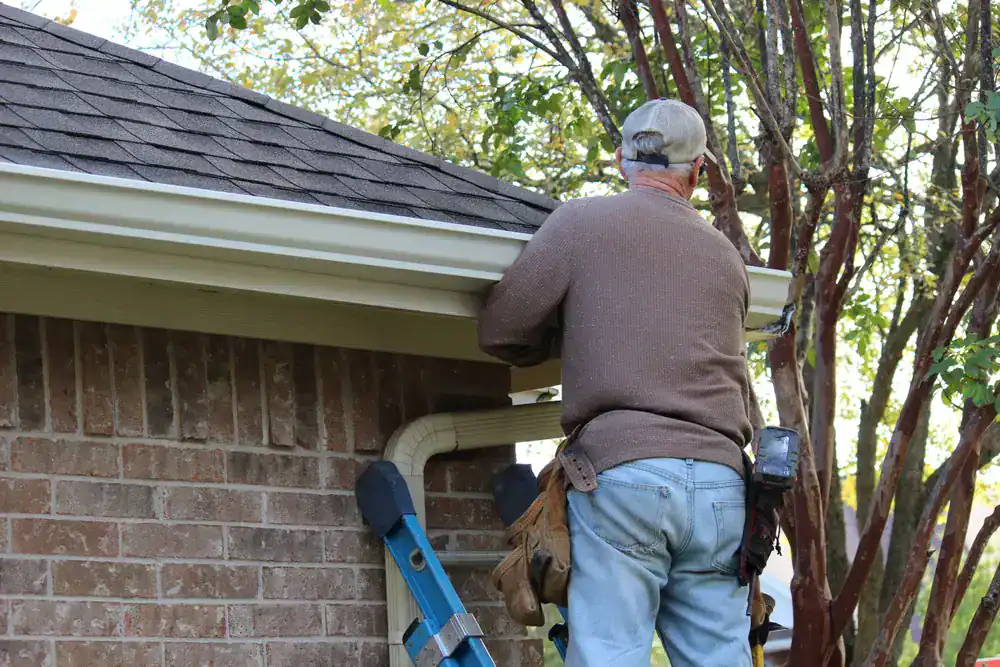
Rain Gutter Replacement in Washington, NJ
Water damage doesn’t announce itself. It shows up slowly — in a damp basement corner, a soft spot along the fascia, soil that’s pulling away from your foundation. By the time it’s obvious, the repair bill is already climbing. Replacing gutters that are no longer doing their job stops that chain before it starts.
Washington, NJ sits in Warren County, where annual rainfall averages close to 49 inches — well above the national average — and winter brings roughly 32 inches of snow on top of that. The rolling terrain around Pohatcong Mountain doesn’t help. When water runs downhill fast and your gutters can’t keep up, it doesn’t just overflow — it follows the slope straight toward your home. Properly installed gutters with correct pitch and downspout placement change that equation entirely.
For the older homes throughout Washington Borough — many of them built in the late 1800s and early 1900s when the town was a manufacturing and transportation hub — this matters even more. Aging fascia boards, original rooflines, and decades of deferred maintenance mean the gutters on these homes are often working against the house rather than for it. Getting that fixed isn’t a cosmetic upgrade. It’s structural protection.
Gutter Replacement Contractors in Washington, NJ
We’re a family-owned exterior renovation company with ten years of hands-on experience serving homeowners across Washington and the surrounding Warren County region. Roofing is the core of what we do, and that expertise carries directly into every gutter replacement we take on — because understanding how a roof sheds water tells you exactly what the gutters below it need to handle.
What that means for you is a team that doesn’t just swap out gutters and leave. We look at the full picture: the fascia condition, the roofline, the drainage path, the downspout placement. In a borough like Washington — where housing stock ranges from century-old Victorians near downtown to mid-century homes and newer builds from the 1990s population boom — that kind of assessment matters. Not every home has the same needs, and a company with real roofing depth knows the difference.
Transparent pricing, free inspections, and a reputation built on actual customer reviews — not ad spend — are the foundation of how we operate. You’ll know what the job costs before anyone picks up a tool.

House Gutter Replacement in Washington, NJ
It starts with a free inspection. A member of our team comes out, gets eyes on your existing gutters, checks the fascia boards behind them, and assesses how the full drainage system is functioning. A lot of what’s wrong with gutters isn’t visible from the ground — improper pitch, loosened fasteners pulling away from aging wood, standing water pooling in sections that should be draining. The inspection surfaces all of it, at no cost to you and with no obligation attached.
From there, you get a clear, itemized estimate. No vague ranges, no “we’ll figure it out as we go.” Washington homeowners deserve to know exactly what they’re paying for before the job starts, and that’s how every project here is handled. If the fascia behind your gutters has taken water damage — something common in older homes throughout the borough — that gets identified upfront, not discovered mid-installation.
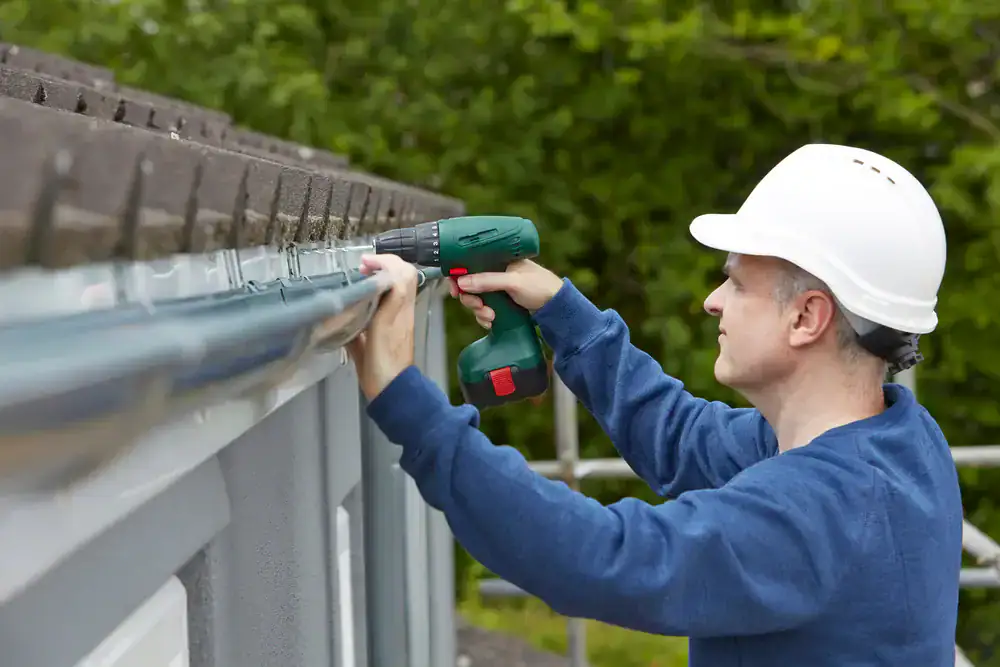
Installation uses seamless aluminum gutters fabricated on-site to the exact dimensions of your home. Seamless systems eliminate the weak points where sectional gutters fail, and custom fabrication means the fit is precise regardless of your roofline. In Warren County, where fall leaf drop from the surrounding hardwood forest loads gutters fast and winter ice can stress fasteners, the quality of the installation isn’t a minor detail — it’s the whole point. Standard gutter replacement in New Jersey doesn’t require a separate permit for like-for-like work, but any structural fascia repairs will be handled in full compliance with the NJ Uniform Construction Code.

Ready to get started?
Roof Gutter Replacement Company in Washington, NJ
Every gutter replacement we complete includes a full assessment of your existing system before anything is removed. That means checking the pitch, the fastener condition, the fascia integrity, and the downspout routing — not just pulling off what’s there and putting up something new. In Washington Borough, where a meaningful portion of the housing stock is 50 to 100-plus years old, that pre-installation evaluation regularly uncovers issues that would compromise a new gutter system if left unaddressed.
The gutters themselves are seamless aluminum, formed on-site to match your home’s measurements. Hidden hanger fasteners are spaced to provide real structural support — not the spike-and-ferrule systems common in older installations that loosen over time and cause gutters to sag and pull away from the fascia. Downspouts are positioned to move water a minimum of four to six feet from your foundation, which is especially important on the sloped lots common throughout Warren County’s hilly terrain.
This is also where the roofing background earns its keep. Because we understand how ice dam formation at the roofline connects to gutter performance, our installations are assessed with winter in mind — not just the next rainstorm. With 32 inches of average annual snowfall in this area, that’s not a secondary consideration. It’s part of getting the job right the first time.

How do I know if my gutters need replacing or just repairing in Washington, NJ?
The honest answer is that it depends on what’s actually failing — and that’s exactly why a professional inspection matters before you commit to anything. Gutters that are sagging, pulling away from the fascia, or showing visible cracks or holes along the seams are often past the point where repairs make financial sense. If you’re patching the same sections repeatedly, replacement is usually the smarter investment.
In Washington Borough specifically, a lot of homes have older spike-and-ferrule fastener systems that were standard installation decades ago. Those spikes work themselves loose over time — especially in freeze-thaw cycles, which Warren County gets plenty of — and once the fascia board behind them starts to soften from water exposure, no amount of resealing fixes the underlying problem. A professional inspection will tell you whether you’re dealing with isolated damage or a system that’s structurally at the end of its life. We offer that inspection at no charge, so you’re not spending money just to find out what you need.
What does gutter replacement typically cost for a home in Washington, NJ?
For most residential homes in Washington and the surrounding area, gutter replacement runs somewhere between $1,000 and $2,400 depending on the linear footage, the gutter profile, the number of downspouts, and whether any fascia repair is needed before installation. Homes with more complex rooflines or significant fascia damage will land toward the higher end of that range.
What’s worth keeping in mind is the comparison cost. Foundation waterproofing in New Jersey starts around $5,000 and climbs quickly from there. Fascia board replacement, basement remediation, and landscape re-grading after prolonged water intrusion all cost more than a gutter replacement by a significant margin. In a county that sees close to 49 inches of rain annually, the gutters on your home are doing real work every year. Getting a clear, itemized estimate before committing to anything is the right first step — and that’s exactly what our free inspection and estimate process is designed to give you.
Do I need a permit to replace gutters in Washington Borough, NJ?
For standard like-for-like gutter replacement — removing what’s there and installing new gutters in the same configuration — a separate construction permit is generally not required under New Jersey’s Uniform Construction Code. It falls under routine home maintenance, and Washington Borough follows the statewide NJ UCC framework for this classification.
Where permits can come into play is when the work involves structural changes: modifying the roofline connection, replacing deteriorated fascia boards, or altering the drainage configuration in a meaningful way. If the inspection turns up fascia damage that needs to be addressed before gutters go up — which is common in older homes throughout the borough — that work will be handled in full compliance with applicable code requirements. Any contractor you hire in New Jersey should also hold active Home Improvement Contractor (HIC) registration with the NJ Division of Consumer Affairs. That’s a statewide requirement, and it’s worth confirming before signing anything.
How does Warren County's weather affect how long gutters last?
Warren County’s climate is harder on gutters than most homeowners realize. The combination of nearly 49 inches of annual rainfall, freeze-thaw cycles that come with northwestern New Jersey winters, and 32 inches of average snowfall puts real stress on gutter systems year after year. Aluminum gutters — the industry standard — typically last around 20 years under normal conditions. In a high-precipitation environment like this one, that lifespan can shorten if the system wasn’t installed correctly to begin with.
The biggest accelerants are improper pitch, inadequate fastener spacing, and debris loading from fall leaf drop. Washington Borough sits in terrain surrounded by hardwood forest, and gutters that fill with leaves from the oaks and maples in the area stop draining, hold standing water, and create the exact conditions that lead to premature failure. Ice buildup in clogged gutters during winter adds weight stress that fasteners weren’t designed to handle. A properly installed seamless system with the right pitch and downspout placement will outlast a poorly installed one by years — sometimes by a decade or more.
What is the best time of year to replace gutters in Washington, NJ?
Late summer through early fall is generally the best window for gutter replacement in Washington, NJ — before the heavy leaf season loads up the gutters and before winter weather creates scheduling and installation complications. Getting new gutters in place before October means they’re ready to handle fall rain events and the first freeze-thaw cycles of winter without stress on a compromised system.
That said, spring is the second most common replacement season in this area, and for good reason. Warren County’s wettest months are April and May, and spring rain events have a way of exposing gutter failures that went unnoticed through winter. If you noticed overflow, ice buildup, or water staining along your fascia last season, spring is a natural point to address it before the next heavy rain cycle. We work year-round, and a free inspection can be scheduled any time — you don’t have to wait for a specific season to find out what your gutters actually need.
Why does it matter that USA Home Remodeling does roofing and gutters together?
Most gutter companies see the gutter. A company with real roofing depth sees the system — how the roof pitch affects drainage volume, how ice dam formation at the roofline connects to gutter performance, how the fascia and soffit condition behind the gutters determines whether a new installation will hold up or fail within a few years.
In Washington, NJ, where a significant portion of the housing stock was built before modern installation standards were established, that systems-level perspective makes a real difference. An older home with a steep roofline, original fascia boards, and a drainage layout that was never updated to current standards needs more than a straight gutter swap. It needs someone who understands what’s happening above the gutters, not just at them. That’s the practical advantage of working with us — the gutter replacement comes with a level of diagnostic context that a gutter-only specialist simply doesn’t bring to the job.