
Gutter Replacement in Maywood, NJ
Maywood's Older Homes Deserve More Than a Quick Fix
Hear from Our Customers
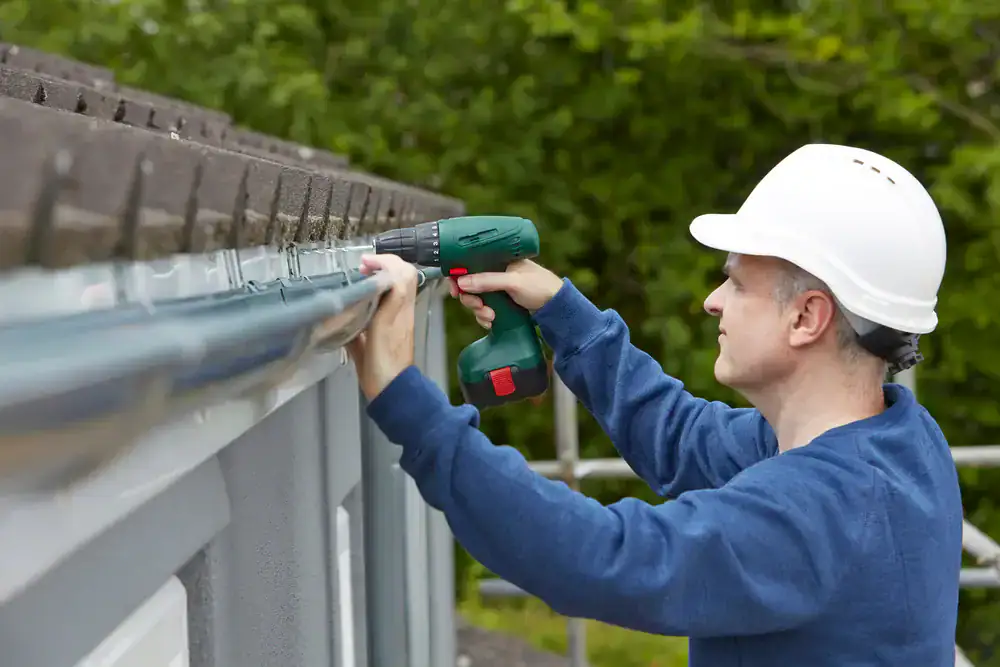
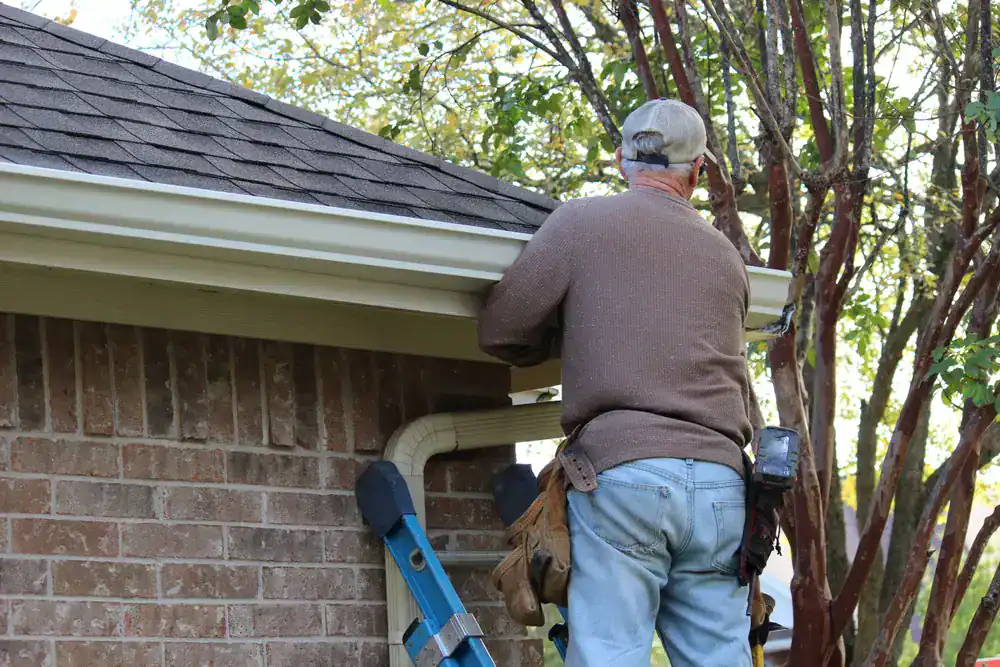
Rain Gutter Replacement in Maywood, NJ
Most homeowners in Maywood don’t think about their gutters until something goes wrong — a waterfall pouring over the edge during a storm, a basement that’s suddenly damp, or paint peeling off the fascia boards they can’t quite see from the ground. By the time those signs show up, the damage is usually already happening. Replacing your gutters stops that chain before it gets expensive.
Maywood gets hit with about 48 inches of rain every year, well above the national average, and that’s before you factor in the 24 inches of snow and the freeze-thaw cycles that run from November through March. For a borough where more than half the homes were built between 1940 and 1969, that’s decades of seasonal stress on systems that were never designed to last forever. When your gutters are doing their job, water moves away from your foundation, your fascia stays dry, and your basement stays the way it should be.
The tree-lined streets that make Maywood feel like Maywood also mean heavy leaf accumulation every fall — and clogged gutters in a high-rainfall environment aren’t a cosmetic issue, they’re a structural one. New seamless gutters, properly pitched and securely fastened, give your home the drainage capacity it needs to handle whatever Bergen County throws at it. That’s not a small thing when your home is worth close to $700,000.
Gutter Replacement Contractors in Maywood, NJ
We’ve spent ten years doing exterior work on North Jersey homes — roofing, gutters, siding — and that experience adds up fast when you’re working on a pre-1960s home in Maywood or the surrounding Bergen County communities. We’re a family-owned operation, which means the people who show up to your home are the same people whose reputation is on the line every time we leave a driveway in Maywood, Paramus, Hackensack, or Lodi.
Our primary focus is roofing, and that matters more than it sounds when it comes to gutters. We understand how your roof slope, fascia condition, and downspout placement all connect — so when we replace your gutters, we’re not just swapping out the trough. We’re looking at the full picture.
We hold contractor licenses and manufacturer certifications, carry full liability insurance and workers’ comp, and we offer free inspections and free estimates — no charge, no pressure. Our growth has come almost entirely from customer reviews, and we’d like to keep it that way.

House Gutter Replacement Process in Maywood, NJ
It starts with a free inspection. We come out, get eyes on your gutters, and look at what’s actually going on — not just the visible trough, but the fascia behind it, the pitch, the hanger condition, and the downspout placement. On a lot of Maywood homes, especially in the Borough Center where pre-1939 construction is common, what’s behind the gutter line tells a different story than what you can see from the curb. We’ll tell you exactly what we find, what needs to be addressed, and what doesn’t.
From there, you get a clear, itemized estimate. No vague numbers, no line items that appear later. If your fascia boards need replacement before new gutters go up — which happens more often than not on older homes — that gets discussed upfront, not after the job starts. We also walk through material options, sizing, and downspout placement based on your home’s specific drainage needs and the volume of rainfall your property has to manage each year.
On installation day, we fabricate seamless gutters on-site to the exact measurements of your home. That means no pieced-together sections with multiple sealed joints — just one continuous run per side, properly pitched, and securely fastened. Cleanup is part of the job. When we’re done, your property looks the way it did before we arrived, except the gutters actually work now.

Ready to get started?
Roof Gutter Replacement Services in Maywood, NJ
Gutter replacement in Maywood isn’t one-size-fits-all — and we don’t treat it that way. The homes here vary from pre-war construction in the Borough Center to mid-century builds throughout Maywood North, and each one comes with its own set of conditions. Fascia board integrity, roof pitch, downspout count, and gutter sizing all get evaluated based on your specific home, not a generic checklist.
We install seamless aluminum gutters fabricated on-site, which eliminates the seam points where most sectional systems eventually fail. For a home managing 48 inches of annual rainfall, that matters. We also assess downspout placement and extension routing to make sure water is directed away from your foundation — not pooling against it. If your home has mature trees overhead (and most Maywood properties do), we can walk you through gutter guard options that reduce maintenance without compromising flow.
Every project includes a full inspection of the fascia and soffit before installation begins. If there’s rot or structural damage behind your old gutters — which Bergen County’s freeze-thaw winters and heavy rainfall make more common than most homeowners expect — we identify it before we start, not after. All work is performed by licensed, insured contractors in full compliance with New Jersey’s Home Improvement Contractor registration requirements. Permits for any associated structural work are handled as part of the process.

How do I know if my gutters actually need full replacement in Maywood, NJ?
There’s a difference between gutters that need cleaning and gutters that have reached the end of their life. If you’re seeing sections that have pulled away from the fascia, joints that leak even after resealing, visible sagging along the run, or water consistently overflowing at the same spots during rain — those are signs that repair isn’t going to cut it anymore. On a lot of Maywood homes built in the 1950s and 1960s, the original spike-and-ferrule hangers have simply worked loose over decades of expansion, contraction, and ice load. Once that happens, the system can’t be reliably re-secured.
The most honest answer is that a free inspection will tell you more than any checklist can. We’ll get eyes on the fascia behind your gutters, check the pitch, evaluate the hanger condition, and give you a straight read on whether replacement makes sense or whether there’s a repair that actually holds. You won’t be pushed toward a full replacement if it isn’t warranted.
What does gutter replacement typically cost for a home in Maywood, NJ?
For a standard single-family home in Maywood, gutter replacement generally runs between $1,000 and $2,500, depending on the linear footage, the number of downspouts, whether fascia board replacement is needed, and the material and profile you choose. Seamless aluminum — which is what we install — is the most practical option for most Maywood homes given the rainfall volume this area handles every year. It performs well, it lasts, and it doesn’t require the ongoing maintenance that sectional systems do.
Where costs can shift is when the fascia boards behind your old gutters have rotted — which is more common than most homeowners expect on pre-1970 homes that haven’t had gutters professionally assessed in years. If that’s the case, we identify it during the inspection and include it in your estimate before anything starts. There are no line items that appear mid-project. You’ll know the full scope and cost before we schedule installation.
How do Bergen County winters affect gutters, and when should I replace them?
Bergen County’s winters are hard on gutters in a specific way. It’s not just the snow load — it’s the freeze-thaw cycle that runs from November through March, where temperatures oscillate above and below freezing repeatedly throughout the season. Every time water in your gutters freezes and expands, it puts mechanical stress on the joints, the hangers, and the connection to the fascia. Over multiple winters, that stress adds up, and what starts as a small separation becomes a system that’s pulling away from the house.
Ice dams are the other winter concern. When heat escapes from the roof and melts snow that then refreezes at the gutter line, it creates a dam that forces water back under the shingles and into the fascia — a process that’s particularly damaging on older homes that predate modern insulation standards. The best time to replace gutters is before winter sets in, ideally in late summer or early fall. If you’re replacing in spring, you’re also catching the window before Bergen County’s heaviest rainfall months.
Do I need a permit for gutter replacement in Maywood, NJ?
For a straight gutter replacement — removing old gutters and installing new ones in the same configuration — a permit is generally not required in Maywood. The Borough of Maywood operates under New Jersey’s Uniform Construction Code, and gutter replacement on its own typically falls under routine home improvement work that doesn’t trigger a building permit requirement.
Where permits can become relevant is if the scope of work expands to include structural repairs — for example, if the fascia boards need to be replaced because they’ve rotted behind the old gutters. In that case, depending on the extent of the repair, a permit may be required. We assess all of this during the inspection phase and walk you through what’s needed before any work begins. All contractors performing home improvement work in Maywood are required to hold valid NJ Home Improvement Contractor registration — something we carry as a standard part of operating in this state.
Are seamless gutters worth it compared to standard sectional gutters for older homes?
For most homes in Maywood, yes — and the reasoning is pretty straightforward. Sectional gutters are assembled from pre-cut pieces that get joined together with sealant at each connection point. Every one of those seams is a potential failure point, and in a climate that cycles between heavy rainfall, freezing temperatures, and thaw repeatedly throughout the year, those seams degrade faster than they would in a milder environment. Once a joint starts leaking, you’re either re-sealing it repeatedly or dealing with water damage along the fascia line.
Seamless gutters are fabricated on-site as one continuous piece per run, custom-sized to your home’s exact measurements. The only joints are at the corners and downspout connections — a fraction of the seam points in a sectional system. On a home in Maywood’s Borough Center that’s been standing since the 1940s, that reduction in failure points translates directly to a longer service life and less maintenance. The upfront cost is modestly higher than sectional, but the performance difference over a decade is significant.
How do Maywood's tree-lined streets affect gutter maintenance and replacement decisions?
It’s one of the more practical questions homeowners in Maywood should be asking. The tree canopy that makes the borough’s residential streets look the way they do also means gutters here deal with a heavier organic debris load than gutters in more open suburban neighborhoods. Leaves, seeds, and small branches accumulate quickly in the fall, and in a community that gets close to 50 inches of rain annually, a clogged gutter isn’t just inconvenient — it’s actively directing water toward your fascia, your foundation, and your basement instead of away from them.
If your existing gutters are already at or past their useful life, heavy debris accumulation accelerates the damage. Water that can’t flow sits in the trough, adds weight, and speeds up the corrosion and joint failure that leads to replacement anyway. When we replace gutters on Maywood homes with significant tree coverage, we discuss gutter guard options as part of the conversation — not as an upsell, but because it’s genuinely relevant to how long your new system will perform before needing attention. The right guard for your specific tree coverage and roof pitch makes a real difference in maintenance frequency.