
Roof Inspection in Garfield, NJ
Garfield's Older Homes Deserve an Honest Set of Eyes
Hear from Our Customers
Certified Roof Inspector in Garfield, NJ
A roof problem rarely announces itself. It starts small — a lifted piece of flashing around a chimney, a hairline crack in a vent pipe boot, a section of ridge cap that shifted after a nor’easter came through. By the time you notice a water stain on your ceiling, the damage underneath has usually been building for months. That’s the part most homeowners in Garfield never see coming, and it’s the part a professional inspection is specifically designed to catch early.
Living along the Passaic River adds a layer of wear that inland towns don’t deal with the same way. The ambient moisture in this corridor accelerates algae growth on shingles, pushes granule loss faster than normal UV exposure alone would, and puts consistent pressure on flashing joints where metal meets roofing material. If your home is in the Belmont or Bogart Heights areas — or anywhere near River Drive — that moisture environment is working on your roof year-round, whether you can see it or not.
Garfield’s winters compound the issue. When temperatures swing above and below freezing repeatedly through the season, older homes with original ventilation systems are especially vulnerable to ice dams. Heat escapes through the attic, melts snow at the roof surface, and that water refreezes at the eaves — backing up under the shingles and causing damage that won’t show up as an interior leak until it’s already done real structural harm. A thorough roof damage inspection in Garfield looks at the full picture: shingle condition, flashing integrity, ventilation adequacy, and the specific wear patterns that Bergen County’s climate leaves behind.
Licensed Roof Inspector in Garfield, NJ
We’ve been working on roofs across New Jersey for over ten years, with deep roots in Bergen County communities like Garfield. We’re licensed as a New Jersey Home Improvement Contractor and hold certifications from major shingle manufacturers — credentials that fewer than 3% of roofing contractors in the country earn. Those certifications aren’t just a resume item. They’re what allow us to offer manufacturer-backed warranty coverage that an uncertified contractor structurally cannot provide.
Our business grew through customer reviews, not advertising. That distinction matters in a community like Garfield, where word-of-mouth still carries real weight. Every review reflects an actual homeowner’s experience — someone in Bergen County who needed an honest assessment and got one.
When we say the inspection is free and there’s no obligation, that’s not a hook. It’s how we earn the next call.

Roof Inspection Company in Garfield, NJ
It starts with a call or a form submission. From there, a licensed inspector schedules a time that works for you and shows up at your Garfield home — no subcontractors, no crews you’ve never met. The inspection itself covers every part of the exterior roofing system: shingles, flashing, ridge caps, gutters, fascia, soffits, and any penetrations like vents, skylights, or chimneys. Nothing gets a pass because it looks okay from the driveway.
Given Garfield’s housing stock — most of it built between 1940 and 1969 — we pay particular attention to signs of deferred wear and ventilation issues that are common in homes of that era. Ice dam damage, moisture infiltration at older flashing points, and granule loss patterns that indicate an aging shingle system are all specifically evaluated. If the inspection turns up something that warrants a repair permit through Garfield’s Building Department, that process is explained clearly before any work is discussed.
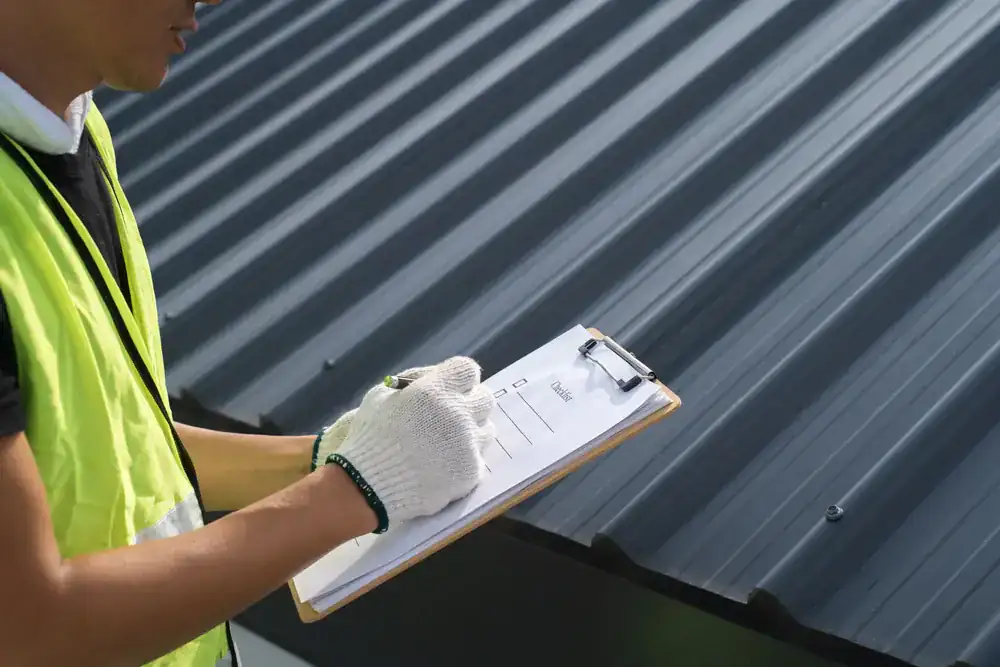
After the inspection, you get a straightforward report with photographs and a plain-language summary of what was found. If the roof is in good shape, you’ll hear that. If there’s a problem, you’ll understand exactly what it is, where it is, and what your options are — with no pressure to make a decision on the spot.
Ready to get started?
Roof Leak Inspection in Garfield, NJ
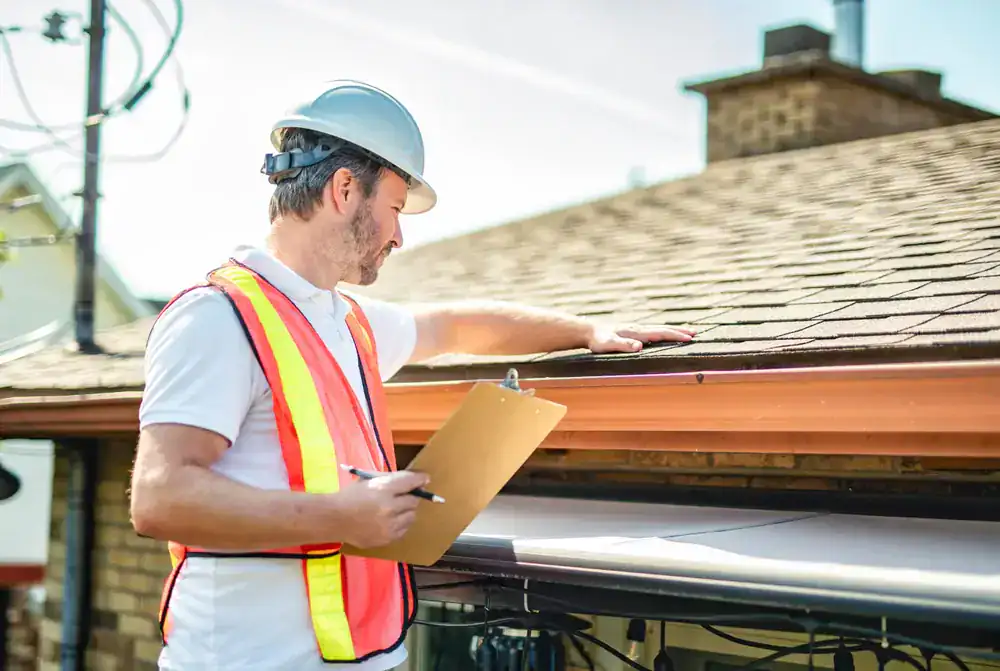
A roof inspection from us is not a five-minute visual scan from the ground. It’s a documented, top-to-bottom assessment of your entire roofing system. Our inspector physically accesses the roof and evaluates shingle condition, flashing at every transition point, the integrity of all penetrations, gutter attachment and drainage, and the condition of the fascia and soffit boards that frame the roofline. For Garfield homes near the Passaic River, that means a specific look at moisture-driven deterioration patterns that show up differently here than they do in drier, inland parts of Bergen County.
If you’re dealing with an active leak — or you suspect one after a nor’easter, a heavy rain event, or a winter ice dam — the roof leak inspection goes deeper. Our inspector traces the source of the moisture intrusion, which is rarely directly above where the interior stain appears. Water travels. Finding where it’s actually getting in requires methodical evaluation of every potential entry point, not just the most obvious one.
For homeowners filing an insurance claim, the inspection produces photographic documentation and a written assessment that represents your interests — not the insurance company’s. And because we also handle gutters and siding, a single inspection can cover the full exterior system. You get one complete picture of what your home needs, from one company that knows Garfield roofs.

How do I know if my Garfield home needs a roof inspection or a full replacement?
This is the question most homeowners are really asking when they search for a roof inspection in Garfield — and the honest answer is that you probably can’t tell from the ground. Shingles can look intact from the driveway while the flashing around your chimney has been leaking for two seasons. Granule loss, which signals that a shingle system is approaching the end of its service life, isn’t visible without getting on the roof and looking closely.
Given that most Garfield homes were built between 1940 and 1969, there’s a real chance the roof on your home is working with a shingle system that’s 20 to 35 years old — right at or past the expected lifespan for standard asphalt shingles. A professional inspection gives you a documented baseline: here’s what’s intact, here’s what’s deteriorating, and here’s the realistic timeline you’re working with. That information lets you plan, budget, and make a decision on your terms — not in the middle of an emergency.
What does a roof inspection cost, and is the free inspection actually free?
The roof inspection from us is genuinely free — no fee, no obligation, and no pressure to commit to anything at the end of it. If the inspector finds nothing wrong, you hear that and move on with your day. If there’s a problem, you get a clear explanation of what it is and what it would take to fix it. The decision of what to do next is entirely yours.
The reason the inspection is free is straightforward: our business model is built on earning work through honest assessments, not charging for access to information. In a market like Garfield — where homeowners are rightly skeptical of contractors who show up after storms with a ready-made sales pitch — that model is a deliberate choice. A company confident enough in the quality of its work to give away the first step isn’t worried about losing you after the inspection.
How do ice dams form, and how does a roof inspection help prevent them?
Ice dams are a recurring issue for older homes in Garfield, and they’re almost always a ventilation problem before they’re a roofing problem. Here’s what happens: heat escapes from the living space through an inadequately ventilated attic, warms the roof surface, and melts the snow sitting on it. That meltwater runs down toward the eaves — which are cold because they’re not above the heated attic space — and refreezes. The ice builds up at the edge of the roof, and water backs up behind it, working its way under the shingles and into the roof decking.
By the time you see the interior damage, the water has usually been infiltrating for a while. A professional roof inspection specifically evaluates attic ventilation as part of the assessment — not just the shingles. For Garfield homes built in the 1940s through 1960s, original ventilation systems often don’t meet the standards that modern roofing science recommends. Identifying that gap before the next winter gives you the ability to address it proactively, rather than dealing with the leak it causes.
Does Garfield, NJ require a permit for roof work, and does USA Home Remodeling handle that?
Garfield’s Building Department requires a permit for roofing replacement work — this is standard under New Jersey’s Uniform Construction Code, which governs construction standards statewide and is enforced locally by the city’s Construction Official. The permit process involves submitting an application, paying the applicable fees, and scheduling inspections through the building department’s online portal before and after the work is completed. A roof inspection itself does not require a permit — it’s an assessment, not construction work.
When we identify repair or replacement work that needs to be done, pulling the required permits is handled as a standard part of the project. You don’t need to navigate the Garfield permit process on your own. This matters beyond just compliance — work performed without the required permits can create complications when you sell the home, and in some cases can affect your homeowner’s insurance coverage. As a licensed New Jersey Home Improvement Contractor, we handle this correctly from the start.
Can a roof inspection help with my homeowner's insurance claim after a storm in Garfield?
Yes — and this is one of the most practical reasons to schedule a professional roof damage inspection after a significant weather event in Garfield. Bergen County gets hit with nor’easters that regularly produce wind gusts in the 50 to 74 mph range, and summer thunderstorms with hail are not uncommon. After those events, what an insurance adjuster documents and what actually exists on your roof are not always the same thing. An adjuster works within the terms of your policy — their job is not to find every piece of damage, it’s to assess what’s covered.
An independent inspection from a licensed, certified roofing contractor produces documentation that represents your interests. That means photographs of every affected area, a written assessment of the damage found, and a professional evaluation of what caused it. This documentation gives you a clear, independent record to submit alongside the insurance company’s assessment — and in cases where a claim is initially underpaid or denied, it gives you something concrete to work with. The inspection is free, and the documentation it produces can be the difference between a partial settlement and full coverage of what the storm actually did.
How often should homeowners in Garfield schedule a professional roof inspection?
The general industry recommendation is twice a year — once in the spring to assess what winter left behind, and once in the fall before the cold season starts. For Garfield homeowners specifically, that cadence makes practical sense. Spring inspections catch ice dam damage, freeze-thaw deterioration, and anything a nor’easter may have shifted or lifted during the winter months. Fall inspections give you the window to address problems before temperatures drop and make repair work difficult or impossible to schedule safely.
That said, any significant weather event is a reasonable trigger for an unscheduled inspection — a major windstorm, a hail event, or a heavy snow load that sat on the roof for an extended period. For homes in Garfield’s older neighborhoods where the housing stock is already working with aging roofing systems, the risk of an undetected problem compounding between annual inspections is real. Given that the inspection is free and takes less than an hour, there’s no practical reason to wait for a visible problem before scheduling one. The value of catching something early is almost always greater than the cost of the repair it prevents from becoming something larger.