
Siding Installation in Ridgefield, NJ
Ridgefield Homes Deserve More Than a Coat of Paint
Hear from Our Customers
Residential Siding Contractors in Ridgefield, NJ
Ridgefield isn’t the easiest environment for exterior cladding. You’ve got freeze-thaw cycles hitting every winter, humidity creeping in from the Meadowlands corridor, and nor’easters that push wind-driven rain into every gap and seam an aging panel leaves behind. When siding starts to fail in this kind of climate, it doesn’t just look bad — it lets moisture behind the wall, and that’s where the real damage begins.
Most of the homes along Bergen Boulevard and throughout the borough were built in the 1940s through the 1960s. That means a lot of the siding you see on Ridgefield streets right now is either original to the structure or was replaced during the 1980s and 1990s renovation wave — which puts it well past its useful life. New siding isn’t just a cosmetic upgrade at that point. It’s the difference between a home that’s protected and one that’s quietly deteriorating behind a surface that looks okay from the curb.
Done right, a full siding replacement improves your home’s insulation, reduces air infiltration, and gives you a clean, finished exterior that holds up for decades. For homeowners in Ridgefield who’ve watched their property values climb, it’s also one of the smartest investments you can make in protecting that equity.
Local Siding Company Serving Ridgefield, NJ
We’ve been working on the exteriors of Bergen County homes for close to ten years. That includes the kind of post-war two-family homes and mid-century ranches that make up a big chunk of Ridgefield’s residential stock — the ones near Slocum-Skewes, off Shaler Boulevard, and throughout the central neighborhoods that were built when this borough was still growing into itself.
We’re family-operated, licensed, and certified by major manufacturers. That combination matters because it means the people responsible for your project are the same ones whose reputation is on the line when the job is done. You get transparent pricing, a written estimate that accounts for everything, and a crew that shows up when we say we will.
Free estimates and free inspections are standard. If you’re not sure whether your siding needs a repair or a full replacement, that’s exactly what the inspection is for — no cost, no pressure, just a straight answer about what your Ridgefield home actually needs.

Vinyl Siding Contractors in Ridgefield, NJ
It starts with a free inspection. We walk your home’s exterior, look at what’s behind the surface where possible, and give you an honest read on what you’re dealing with. If it’s isolated damage, that’s what you’ll hear. If the moisture barrier has been compromised or the substrate is showing rot, you’ll know that too — before any work starts, not after.
From there, you get a written estimate that breaks everything down: material selection, removal of the existing siding, housewrap installation, trim, accessories, and permit fees. Speaking of permits — siding replacement in Ridgefield requires a building permit from the Borough’s Building Department on Edison Street. That’s not optional under New Jersey’s Uniform Construction Code, and it’s not something you should have to figure out on your own. We handle the permit process as part of the job.
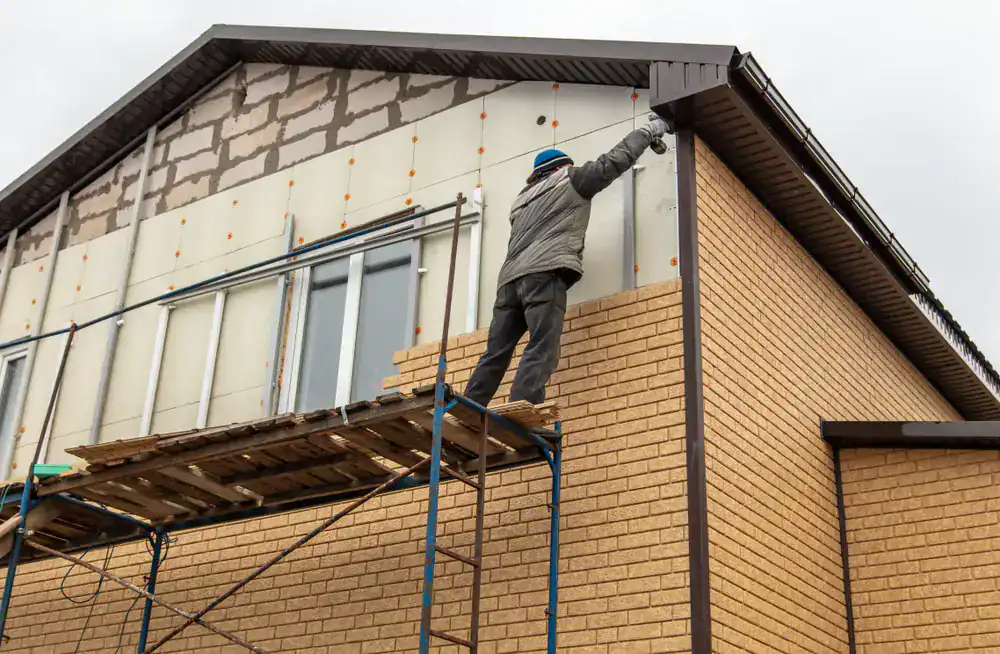
Installation follows a sequenced process — old material comes off, the substrate gets inspected and addressed, housewrap goes down properly, and new panels are installed with correct fastening for thermal expansion. Bergen County’s temperature swings are real, and siding that isn’t fastened with that in mind will buckle and gap over time. When the job is done, the site is cleaned and you do a walkthrough before anyone leaves.

Ready to get started?
Siding Contractors in Ridgefield, NJ
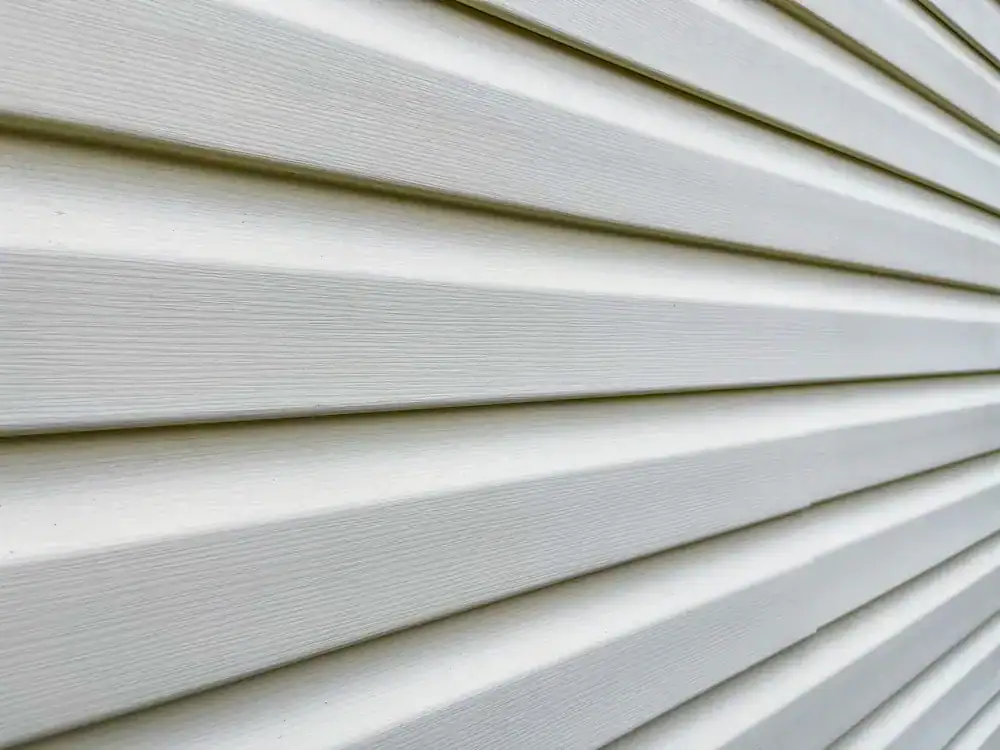
Vinyl siding is the most common choice in Ridgefield — and for good reason. It’s durable, low-maintenance, and performs well in the Northeast climate when it’s installed correctly. Insulated vinyl, which includes a foam backer, adds a layer of thermal performance that makes a noticeable difference in homes that weren’t built with modern energy standards in mind. For a 1950s or 1960s home in Ridgefield, that’s not a small thing.
Fiber cement siding — James Hardie being the most recognized name — is the right call for homeowners who want something harder, more impact-resistant, and built to hold paint longer. It handles moisture well, which matters in a borough that sits within the Meadowlands District and deals with the kind of ambient humidity that accelerates the wear on softer materials. It’s a higher upfront investment than vinyl, but it’s also a longer-lasting one.
Whatever material fits your home and your budget, we start the conversation with what your specific structure actually needs — not what’s easiest to install or most profitable to sell. Ridgefield has a lot of two-family homes, and those properties have their own set of considerations around material selection, scope, and investment return. That’s a conversation worth having before any decisions get made, and we’re ready to have it with you at no cost.

Do I need a permit for siding replacement in Ridgefield, NJ?
Yes — siding replacement in Ridgefield requires a building permit under New Jersey’s Uniform Construction Code. This applies to full replacements and, in many cases, significant repairs. The permit process involves plan review, inspection, and sign-off from the Borough’s Construction Official through the Building Department on Edison Street.
This isn’t a formality to skip. Unpermitted siding work can create real problems when you go to sell your home — buyers’ attorneys and home inspectors look for this, and you may be required to remediate or disclose the issue at closing. We handle the permit process on your behalf as part of the project. If a contractor tells you a permit isn’t necessary for a full replacement in Ridgefield, that’s a red flag worth paying attention to.
How do I know if my Ridgefield home needs siding repair or full replacement?
The honest answer is that it depends on what’s actually going on beneath the surface — and you can’t always tell from the outside. Cracked or faded panels might be a cosmetic issue, or they might be the visible sign of a moisture problem that’s been building for years behind the wall. In Ridgefield’s climate, where freeze-thaw cycles work on every small gap every winter, what starts as a hairline crack in an aging vinyl panel can become a pathway for water infiltration before you realize it.
A professional inspection is the only way to know for sure. If the damage is isolated to a few panels and the housewrap underneath is intact, repair is often the right call. If you’re seeing widespread warping, buckling, soft spots on the substrate, or interior moisture issues that track back to exterior walls, replacement is almost always the more cost-effective answer in the long run. We offer free inspections — there’s no reason to guess.
What siding material works best for older homes in Bergen County, NJ?
For most of the post-war homes that make up Ridgefield’s housing stock, the choice comes down to insulated vinyl or fiber cement — and the right answer depends on your priorities. Insulated vinyl is the more budget-friendly option and performs well in Bergen County’s climate. The foam backer helps compensate for the lack of modern insulation in older wall assemblies, which is a real benefit in homes built before energy codes existed.
Fiber cement, particularly James Hardie products, is the stronger material. It doesn’t dent, it holds paint significantly longer than vinyl, and it handles moisture exposure better — which matters in a borough that sits within the Meadowlands District and sees more ambient humidity than inland communities. If you’re planning to stay in your home for the long term or you want the highest-durability option, fiber cement is worth the additional investment. Both materials are solid choices when installed correctly — the installation quality matters just as much as the product.
How long does new siding installation typically take in Ridgefield, NJ?
For a standard single-family home in Ridgefield, a full siding replacement typically takes two to four days of active installation once materials are on site and the permit is in hand. Two-family homes, which are common throughout the borough, generally run three to five days depending on the size of the structure and the complexity of the trim work.
A few things can affect the timeline. Permit processing through Ridgefield’s Building Department adds lead time before work can begin — this is normal and expected, and a contractor who accounts for it upfront is one who’s done this before. Weather is also a factor, particularly in spring and fall when nor’easters can interrupt exterior work on short notice. We communicate proactively about any schedule adjustments rather than leaving you to follow up. The overall timeline from initial estimate to completed installation, including permitting, typically runs two to four weeks depending on the season and current project volume.
What should I watch out for when hiring a siding contractor in Ridgefield, NJ?
The most important thing to verify is NJ Home Improvement Contractor registration. Under New Jersey law, any contractor performing home improvement work — including siding installation — must be registered with the NJ Division of Consumer Affairs. This is a legal requirement, not a suggestion, and hiring an unregistered contractor leaves you with limited recourse under the Consumer Fraud Act if the work fails or a dispute arises. You can verify registration on the Division of Consumer Affairs website before signing anything.
Beyond licensing, ask for proof of general liability insurance and workers’ compensation coverage. A contractor working on your Ridgefield home without proper insurance transfers financial risk to you in the event of an on-site injury or property damage. Get a written, itemized estimate — not a single-line number — that clearly states what’s included: material type and grade, removal of existing siding, housewrap, trim, permit fees, and labor. If a contractor is reluctant to put the details in writing, that tells you something. Multiple quotes are worth the time, and the lowest number isn’t always the right answer when you’re making a long-term investment in your home’s exterior.
Is fall a good time to schedule siding installation in Ridgefield, NJ?
Fall is actually one of the better windows for siding installation in Ridgefield — and it books up faster than most homeowners expect. The temperatures are moderate, which is ideal for vinyl installation in particular. Vinyl panels become more brittle as temperatures drop below 40 degrees, so getting the work done in September or October means the crew isn’t working against the material. Fiber cement and engineered wood products are more forgiving in cooler temperatures, but fall still offers better working conditions than mid-winter.
The practical reason to schedule in fall is what comes after it. Bergen County winters are hard on exterior cladding, and every season you wait is another round of freeze-thaw cycles working on whatever gaps or cracks already exist in your current siding. Homes near Overpeck Creek or in the western neighborhoods closer to the Meadowlands corridor tend to see accelerated moisture damage because of the higher ambient humidity in those areas — waiting until spring to address it means giving winter another full season to do its work. If your siding is already showing signs of wear, fall is the right time to act.