
Siding Installation in Old Tappan, NJ
Old Tappan Homes Deserve More Than a Surface Fix
Hear from Our Customers
Residential Siding Contractors in Old Tappan, NJ
Old Tappan’s housing stock tells a specific story. A lot of homes here were built in the 1960s, which means the siding on many of them — original or first-replacement — is now 55 to 60 years old. That’s decades of freeze-thaw cycles cracking seams, nor’easters driving rain behind panels, and humid summers pushing moisture through gaps that were never properly sealed. By the time you can see the damage from the street, there’s usually more going on behind the wall.
New siding done right changes the entire equation. You stop the moisture intrusion that quietly rots sheathing and framing. You cut down on drafts and energy loss that aging cladding allows. And in a real estate market where homes in Old Tappan are trading at close to $951,000, a clean, well-installed exterior isn’t just maintenance — it’s a direct investment in what your property is worth.
The other thing that changes is peace of mind. You’re not watching the next storm roll in and wondering whether that warped section near the garage is going to let water in again. When the installation is done correctly — right materials, right moisture barrier, right flashing at every penetration — your home’s exterior works the way it’s supposed to.
Local Siding Company Serving Old Tappan, NJ
We’ve been working on homes across Bergen County for close to ten years, with a significant portion of that work right here in Old Tappan. That’s not a long time if you’re talking about a national chain — but for a family-operated exterior contractor, it means hundreds of completed projects, real relationships with local homeowners, and a reputation built entirely on whether the work holds up.
Old Tappan is the kind of community where reputation matters. It’s a small borough — roughly 6,000 residents, a 94% homeownership rate, and a place where neighbors notice the quality of work on homes throughout the neighborhood. When we complete a project on Old Tappan Road or near Lake Tappan, the results speak for themselves. That accountability keeps us focused on doing the work right every single time.
We’re licensed, certified, and we handle the full permit process through the Old Tappan Building Department as a standard part of every project — not an add-on, not an afterthought. You get a written estimate upfront, a crew that treats your property with care, and a finished job that’s documented correctly for your home’s record.

Siding Installation Process for Old Tappan, NJ Homes
It starts with a free inspection. We come out, look at what you’re dealing with — whether that’s visible cracking and warping, moisture staining, or siding that’s simply reached the end of its service life — and give you an honest read on whether you need targeted repairs or a full replacement. A lot of homeowners in Old Tappan aren’t sure which one applies to them. That’s exactly what the inspection is for.
From there, you get a written estimate that breaks down materials, labor, removal of the existing siding, housewrap or moisture barrier installation, trim work, and permit fees. Before any work starts, we file for the required building permit through the Old Tappan Building Department at Borough Hall on Old Tappan Road. The borough requires this for siding replacement — and handling it correctly from the start protects your permit record when it comes time to sell.
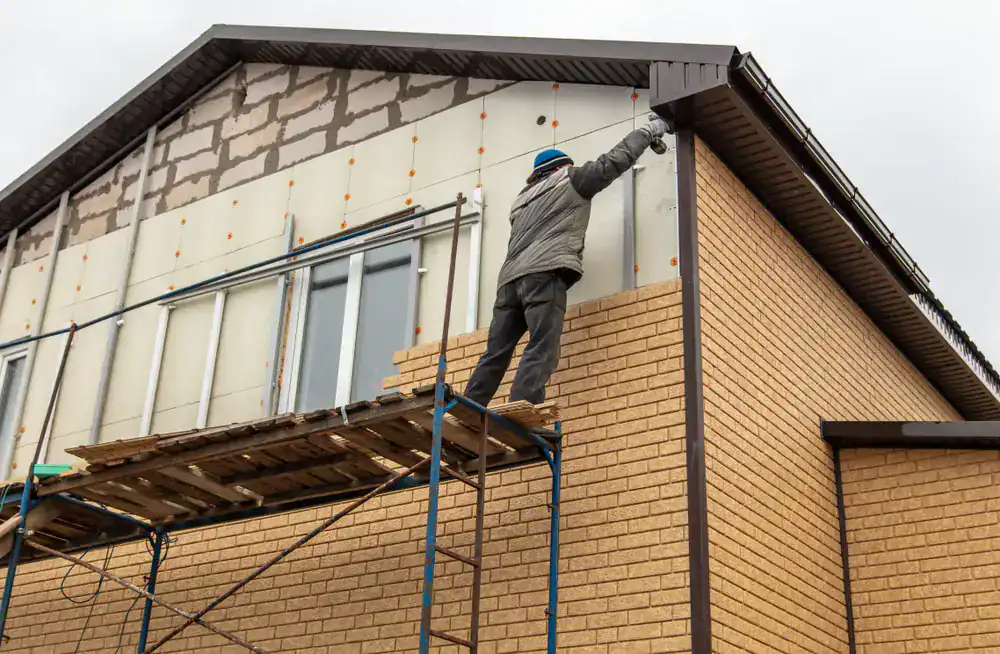
Once the permit is in place, the installation follows a set sequence: old siding comes off, the sheathing gets inspected for any damage that needs to be addressed before new material goes on, the moisture barrier is installed, and then the new siding is installed panel by panel with proper flashing at every window, door, and roof-wall intersection. We clean up fully when we’re done. Final inspection closes the permit. You’re left with a finished exterior and documentation to match.

Ready to get started?
Vinyl Siding Contractors in Old Tappan, NJ
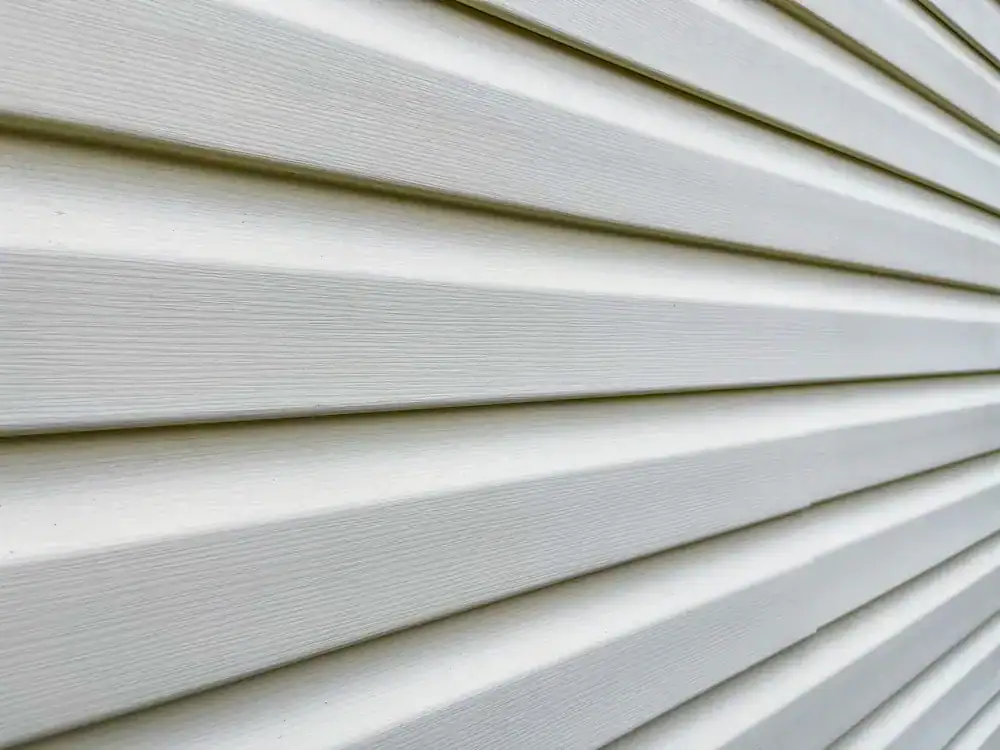
Not every siding material makes sense for every home in Old Tappan — and we’ll tell you that upfront. Vinyl siding remains the most common choice in this area: it handles Bergen County’s freeze-thaw cycles well, holds color without painting, and fits the budget range most homeowners are working with. Insulated vinyl adds a layer of thermal performance that matters in a home where heating costs are real and the winters are long.
Fiber cement — James Hardie being the most recognized name — is the stronger choice for homeowners who want the look of painted wood without the maintenance liability. It’s dimensionally stable in temperature swings, fire-resistant, and holds up exceptionally well on the Colonial Revival and farmhouse-style colonials that are common throughout Old Tappan’s neighborhoods. The tradeoff is higher upfront cost and a more involved installation process, but for a home at this price point, the long-term performance usually justifies it.
Engineered wood is a third option worth knowing about — it sits between vinyl and fiber cement in both cost and performance, and it works well on the midcentury ranch and split-level homes you see throughout the borough. Whatever direction makes sense for your home, we walk you through the options with real numbers, not a sales pitch. The goal is a material that performs in this climate, fits your home’s architectural character, and makes sense for what you’re trying to protect.

Does siding replacement in Old Tappan, NJ require a building permit?
Yes — and this is one of the details that separates a contractor who knows this area from one who doesn’t. The Borough of Old Tappan explicitly requires a building permit before any siding installation or replacement work begins. The application goes through the Building Department at Borough Hall on Old Tappan Road, and work cannot legally start until the permit is issued.
This matters beyond just following the rules. Old Tappan homes are selling at close to $951,000 — and when a home at that price point goes to contract, the buyer’s attorney and title company will look at the permit history for recent improvements. Unpermitted siding work can stall a closing or require remediation before the sale can proceed. We handle the permit process as a standard part of every project, so your paperwork is clean from day one.
How do I know if my siding needs repair or full replacement?
This is the most common question homeowners ask before scheduling anything — and it’s the right one to start with. The honest answer is that surface-level damage doesn’t always tell the full story. Cracked or warped panels might be isolated issues that a targeted repair can address. But in a home built in the 1960s — which describes a significant share of Old Tappan’s housing stock — the more important question is what’s happening behind the panels.
Freeze-thaw cycling over decades works moisture into every small gap and seam. By the time you see staining, bubbling paint on interior walls, or soft spots near windows, the sheathing behind the siding may already be compromised. A free inspection gives you a real answer based on what’s actually there — not a guess from the street. If repair is genuinely the right call, that’s what we’ll tell you. If the siding has reached the point where replacement is the smarter investment, we’ll explain exactly why.
What siding material holds up best in Bergen County's winters?
For most Old Tappan homeowners, the deciding factors come down to freeze-thaw performance, moisture resistance, and how much maintenance you’re willing to do over the next 20 to 30 years. Vinyl handles cold temperatures well and doesn’t require painting, but standard vinyl can become brittle in extreme cold — which is why insulated vinyl is worth the upgrade in a climate like northern Bergen County’s, where temperatures regularly dip below freezing for extended stretches.
Fiber cement is the most dimensionally stable option in temperature swings. It doesn’t expand and contract the way standard vinyl does, which means fewer gaps opening at seams over time — and fewer entry points for the wind-driven rain that comes with nor’easters. It’s also the best choice for homes with complex rooflines, multiple dormers, or intersecting wall planes, because it holds its shape and finish at every transition point. The higher upfront cost reflects genuine performance differences, not just a premium label.
How long does siding installation take on a typical Old Tappan home?
For a standard single-family colonial or split-level — the most common home types in Old Tappan — full siding replacement typically runs three to five days of active installation time once materials are on-site and the permit is in hand. Larger homes, homes with complex architectural features like multiple dormers or steep gable ends, or projects where sheathing damage is discovered during removal can extend that timeline.
The permit process through the Old Tappan Building Department adds time on the front end — plan for this when you’re scheduling. Spring is the busiest season for exterior contractors in Bergen County, and booking lead times with established companies can run four to eight weeks during peak months. If you’re seeing freeze-thaw damage from winter and want the project done before the following season, getting your inspection and estimate scheduled in early spring gives you the best shot at a summer installation window.
What does siding installation in Old Tappan, NJ typically cost?
For a typical single-family home in Old Tappan, full siding replacement generally runs between $10,000 and $20,000 depending on the size of the home, the material selected, and what’s found during removal. Vinyl siding sits at the lower end of that range. Fiber cement — which is the more common choice for higher-value homes in this area — runs higher, typically $15,000 to $25,000 or more on larger colonials with complex rooflines and detailed trim work.
What that range doesn’t capture is the cost of getting it wrong. A contractor who cuts corners on moisture barrier installation or skips proper flashing at roof-wall intersections can produce water intrusion damage that costs significantly more to remediate than the siding project itself. On a home worth close to a million dollars, the difference between a $12,000 and a $15,000 estimate matters — but not as much as knowing exactly what’s included in each one. We provide written, itemized estimates so you can compare scopes, not just numbers.
Can new siding be installed over existing siding on an older Bergen County home?
Technically yes — but on most older homes in Old Tappan, it’s not the approach we’d recommend, and here’s why. Homes built in the 1960s were often clad in original materials that can include asbestos-containing products, particularly in certain types of shingle siding common to that era. Installing over existing siding without removal means you don’t know what’s underneath — and you lose the opportunity to inspect the sheathing for moisture damage, rot, or deteriorated housewrap that needs to be addressed before new material goes on.
In a home that’s 55 to 60 years old, that inspection step is often where the most important work happens. Sheathing that looks fine from the outside can be significantly compromised behind aging siding that has been letting moisture in for years. Removing the existing siding, addressing what’s found, installing a proper moisture barrier, and then installing new siding is the sequence that actually protects the home — not just the surface. It adds cost upfront, but it’s the difference between a real renovation and a cosmetic one.