
Siding Installation in Bogota, NJ
Bogota Homes Deserve More Than a Quick Re-Side
Hear from Our Customers
Siding Contractors in Bergen County
Bogota’s housing stock is mostly early 20th-century construction — Colonial Revivals, Cape Cods, American Four Squares — built long before modern moisture barriers and insulated cladding existed. When that original siding starts to go, it doesn’t just look bad. Water finds its way into wall cavities, freeze-thaw cycles widen every small crack, and what started as a cosmetic issue becomes a structural one quietly, behind the walls.
When the siding is done right, that cycle stops. Your walls stay dry. Your heating and cooling bills stop leaking out through uninsulated cladding. And a home that’s already appreciated dramatically in value — Bogota’s median home value has nearly tripled since 2000 — stays protected as the asset it’s become.
There’s also something immediate: in a borough this dense, with homes this close together, curb appeal matters. A clean, solid exterior changes how your home reads on the block. It signals that the property is cared for, and in a community as tight-knit as Bogota, that’s something neighbors notice.
Local Siding Company Serving Bogota, NJ
We’ve been handling exterior renovations across Bergen County for close to ten years. Our work covers roofing, siding, and gutters — the full exterior envelope — which matters when you’re working on older Bogota homes where pulling off bad siding sometimes reveals problems underneath that a siding-only crew would either ignore or walk away from.
We’re family-operated, which means the people doing the work are accountable for it in a way that a large franchise operation simply isn’t. Estimates are written, transparent, and honored. If something unexpected comes up mid-project, it gets discussed before anyone touches it — not added to the final invoice.
Bogota is a community where neighbors talk. That’s not a pressure we shy away from — it’s actually how we’ve built most of our business. No paid lead generation, no advertising shortcuts. Just consistent work and the reviews that follow it.

Residential Siding Contractors in Bogota, NJ
It starts with a free inspection. We come out, look at what you’re actually dealing with — the condition of your current siding, what’s underneath it, whether there are moisture issues or substrate problems that need to be addressed before new material goes on. You get a clear, written estimate that covers everything: material, removal, disposal, moisture barrier, trim, and labor. No line items that appear later.
Once you move forward, the permitting side gets handled by us. Bogota’s Building Department requires permits for exterior construction work, and we manage that process as part of the project — not handed back to you to figure out. It’s one less thing to deal with, and it means the work is inspected and on record, which matters when it comes time to sell.
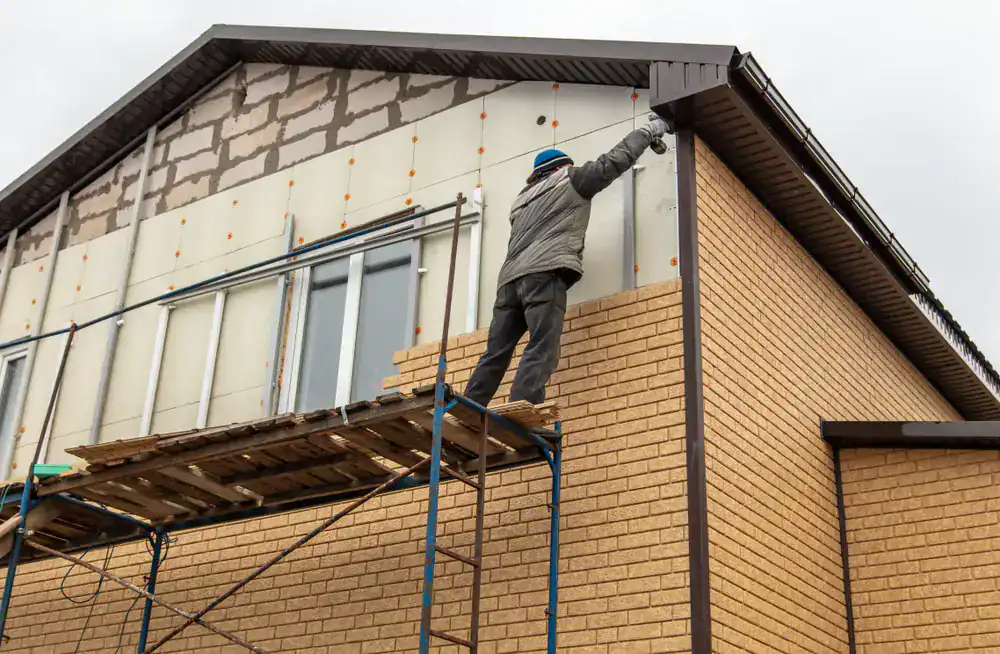
Installation is done by our experienced crew that knows how Bergen County winters behave. Vinyl panels get installed with proper allowance for thermal expansion — a step that gets skipped on rushed jobs and causes warping and popping within a few seasons. Flashing gets done correctly at every window and door opening. When the job is finished, the site gets cleaned up, and you do a final walkthrough together before anyone considers it done.

Ready to get started?
Vinyl Siding Contractors in Bogota, NJ
Siding installation here isn’t a panel-swap. The process starts with full removal of your existing siding and a real look at what’s behind it. If the housewrap is compromised or the sheathing has taken on moisture — common in Bogota homes that sit close to the Hackensack River corridor — that gets addressed before anything new goes on. New moisture barrier installation is standard, not an upsell.
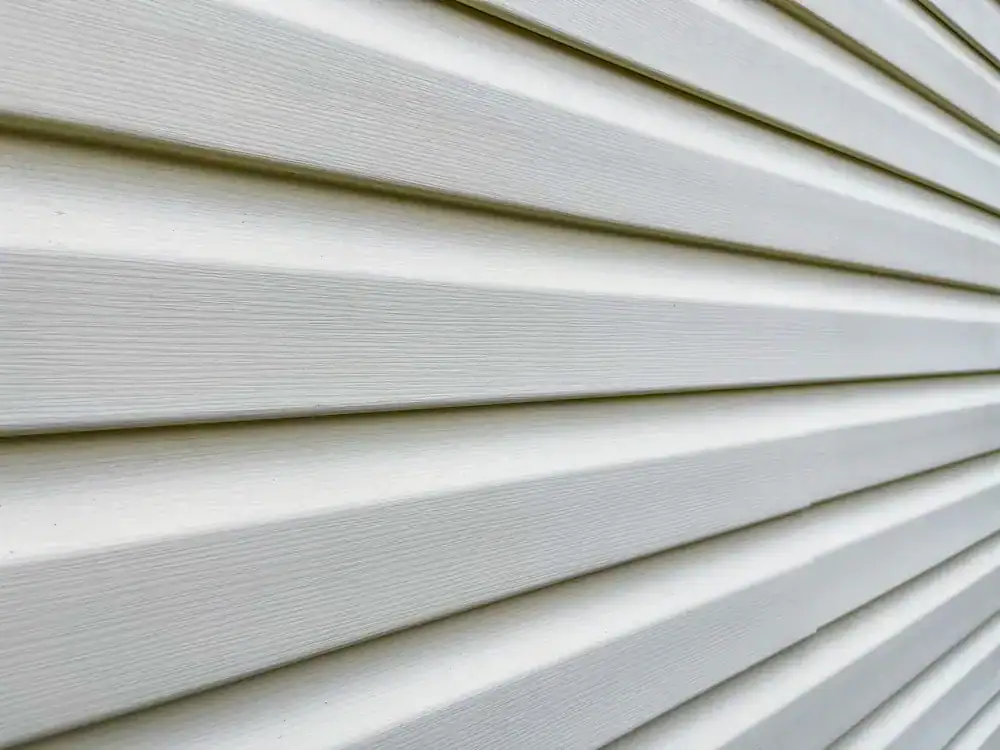
Material options include vinyl siding, fiber cement siding, and composite options depending on your home’s needs and your budget. Vinyl remains the most practical choice for most Bogota homeowners — it’s cost-effective, low-maintenance, and when properly installed, holds up well through the freeze-thaw cycles this area sees every winter. Fiber cement, including James Hardie products, is available for homeowners who want greater impact resistance and a more substantial look on older, larger homes.
All installations are done to manufacturer specifications, which is the only way to activate the full warranty coverage on the material. Trim, corner boards, window and door surrounds, and soffit work are included in the scope — not treated as separate line items. And because we also handle roofing and gutters, if the inspection turns up related issues at the roofline or fascia, those can be addressed under the same project rather than left for a second contractor.

Do I need a permit for siding installation in Bogota, NJ?
In most cases, yes. Bogota’s Building Department requires permits for exterior construction work, including siding replacement. It’s not a bureaucratic formality — permitted work gets inspected, which protects you legally and financially. If unpermitted work is discovered during a future sale, it can delay or derail the transaction entirely.
The permit process in Bogota is handled through the borough’s Building Department at bogotaonline.org. We manage the permitting side as part of the project. You don’t need to navigate the application yourself or coordinate inspections — that’s built into how we do the job. It also means the work is on record as completed to code, which is worth something when Bogota home values are where they are right now.
How much does siding installation cost for a home in Bogota, NJ?
For a whole-home siding replacement in Bogota, most projects fall somewhere between $10,000 and $20,000 depending on the size of the home, the material chosen, and what’s found underneath the existing siding. Bogota’s Colonial Revivals and American Four Squares tend to have more exterior surface area and more architectural detail than a typical ranch or cape, which can push the number toward the higher end of that range.
The honest answer is that no one should quote you a firm number without looking at the house. What drives cost variation is usually what’s behind the current siding — deteriorated sheathing, compromised flashing, or moisture damage that needs to be corrected before new material goes on. A written estimate from us will break all of that down clearly before any work starts, so you know exactly what you’re agreeing to and why.
How do I know if my siding needs full replacement or just repairs?
The honest answer is that it depends on how far the damage has spread. Isolated cracks, a few warped panels, or minor fading in one area are often repairable. But if you’re seeing widespread warping, panels that have pulled away from the wall, visible moisture staining, or siding that’s been in place since the 1970s or 1980s, the repair-versus-replace math usually tips toward replacement — especially in a climate like Bergen County’s, where freeze-thaw cycles accelerate deterioration every winter.
The best way to know for certain is a professional inspection, which we provide at no cost. A real look at the siding — and more importantly, at what’s behind it — will tell you whether you’re dealing with a surface issue or something that’s already gotten into the wall cavity. In Bogota, where a portion of the housing stock sits near the Hackensack River and moisture exposure is elevated, catching that early makes a real difference.
What siding material works best for older homes in Bergen County?
For most older Bergen County homes — the kind that make up the majority of Bogota’s residential streets — vinyl siding is the most practical choice. It handles freeze-thaw cycles well when installed correctly, requires minimal maintenance, and comes in enough profiles and colors to work with the architectural character of a Colonial Revival or Cape Cod without looking out of place. Insulated vinyl is worth considering if energy efficiency is a priority, since it reduces thermal bridging through the wall studs in homes that were built long before modern energy codes existed.
Fiber cement siding, including James Hardie products, is the better call for homeowners who want maximum durability or a more substantial look. It’s heavier, requires more skill to install, and costs more — but it resists impact, moisture, and temperature swings at a level vinyl can’t match. For a larger American Four Square or a home in a more exposed location near the river corridor, that extra durability can be worth the investment. The right answer depends on your specific home and what you’re trying to accomplish.
How long does siding installation take from start to finish?
For a standard whole-home siding replacement on a single-family home in Bogota, the installation itself typically takes two to five days depending on the size of the home, the complexity of the roofline and trim details, and what’s found underneath the existing siding. Larger homes with more architectural detail — like the Colonial Revivals common in Bogota’s western residential neighborhoods — tend to run closer to the longer end of that range.
The full timeline from signed contract to completed job includes the permit approval process through Bogota’s Building Department, which can add a week or two depending on current workload. Material lead times are generally short for standard vinyl profiles but can extend for certain fiber cement products or custom colors. You’ll get a clear project timeline before work starts, and if anything changes that timeline — weather delays, inspection scheduling — you’ll hear about it directly, not find out when no one shows up.
Why does USA Home Remodeling offer free siding inspections in Bogota?
Bogota has a lot of older homes where the real condition of the exterior isn’t visible from the street. Siding that looks marginal from the curb might be concealing active moisture intrusion behind it — or it might be structurally fine with another decade of life in it. There’s no way to know without actually looking, and a homeowner shouldn’t have to pay for that assessment before they’ve decided to do anything.
We offer the free inspection because it’s the only honest way to start the conversation. It gives you real information about what your home needs — not a sales pitch built on assumptions. For homeowners near the Hackensack River corridor or in the older sections of the borough where moisture exposure is higher, that inspection can also surface issues that are worth knowing about regardless of whether you move forward with a full re-side. It’s a useful service on its own, and it costs you nothing to find out where you actually stand.