
Roofer in Ridgefield, NJ
Ridgefield Roofs Take a Beating — Here's What Actually Holds Up
Hear from Our Customers
Local Roofing Company in Ridgefield, NJ
A roof that’s been properly installed or replaced doesn’t just stop leaks — it stops the chain reaction that follows. Water getting under shingles in January doesn’t stay contained. It works into the decking, the insulation, the framing, and by the time you see a stain on your ceiling, the damage has already been spreading for weeks. Getting ahead of that is the whole point.
For homes near Ridgefield’s waterways — the Hackensack River, Overpeck Creek, Mill Creek — ambient moisture levels are higher year-round than they are even a few miles inland. That kind of persistent exposure accelerates granule loss, promotes algae growth along the eaves, and creates the exact conditions that cause ice dams to form during freeze-thaw cycles in winter. A roof that was installed correctly, with proper ice and water shield in the vulnerable zones, handles that differently than one that wasn’t.
And if your home is in the older housing stock that makes up a large portion of Ridgefield — built somewhere between the 1940s and 1970s — the roof you’re looking at may be well past the point where inspection alone is enough. A free, no-obligation assessment tells you exactly where things stand before a problem forces the decision for you.
Roofing Company in Ridgefield, NJ
We’re a family-owned exterior renovation contractor based in NJ, serving Bergen County homeowners — including Ridgefield — for over a decade. We hold NJ Home Improvement Contractor License #13VH10605800, which you can verify directly through the NJ Division of Consumer Affairs. That’s not a small thing in a market where unlicensed operators show up after every nor’easter.
The certifications from major shingle manufacturers aren’t just credentials on a wall — they’re what allow us to offer enhanced system warranties that most roofing contractors in this area simply cannot access. That matters when you’re protecting a home in Ridgefield, where median property values are pushing $650,000.
From Morsemere to Grantwood, we’ve worked on Ridgefield homes and understand what this borough’s conditions actually demand. Our work is permitted, inspected, and backed by warranties that hold up — and if you speak Spanish, that’s not a problem. Se habla español.
Emergency Roof Repair in Ridgefield, NJ
It starts with a free inspection — no charge, no commitment. A licensed contractor walks your roof, checks the attic for moisture intrusion and ventilation issues, evaluates your gutters and drainage, and puts together a detailed photo report you keep regardless of what you decide next. For Ridgefield homeowners who’ve been putting off that call because they don’t want to be pressured into a $15,000 replacement, this is how you find out what you actually need.
If work is needed, you get a complete, itemized estimate before anything moves forward. The price you approve is the price on the invoice — no surprise line items for decking, disposal, or flashing that somehow weren’t in the original quote. Ridgefield’s Borough Building Department requires permits for roof replacements, and we pull those permits and coordinate the required inspections. That’s not optional — it’s what protects you at resale and keeps your homeowner’s insurance valid.
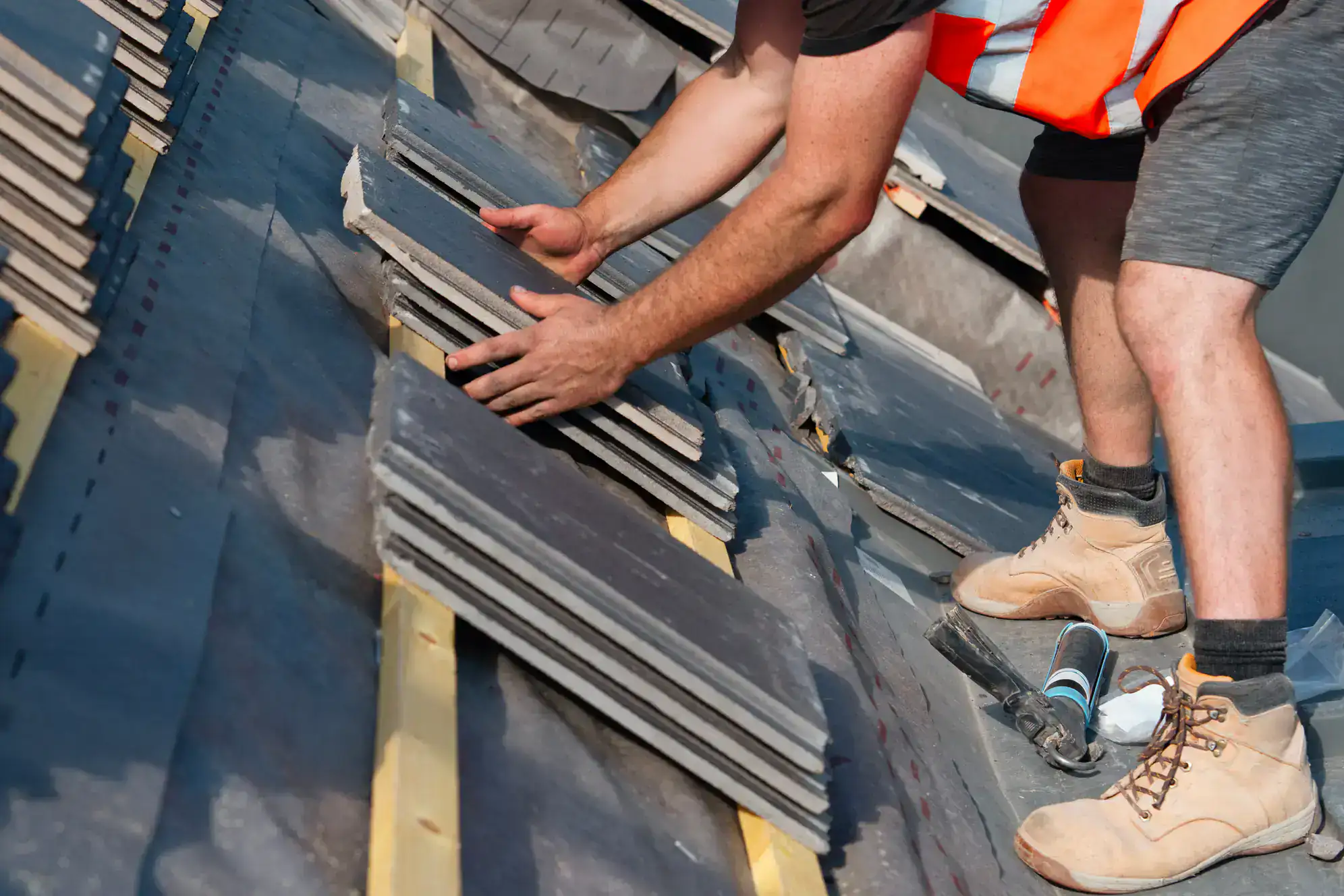
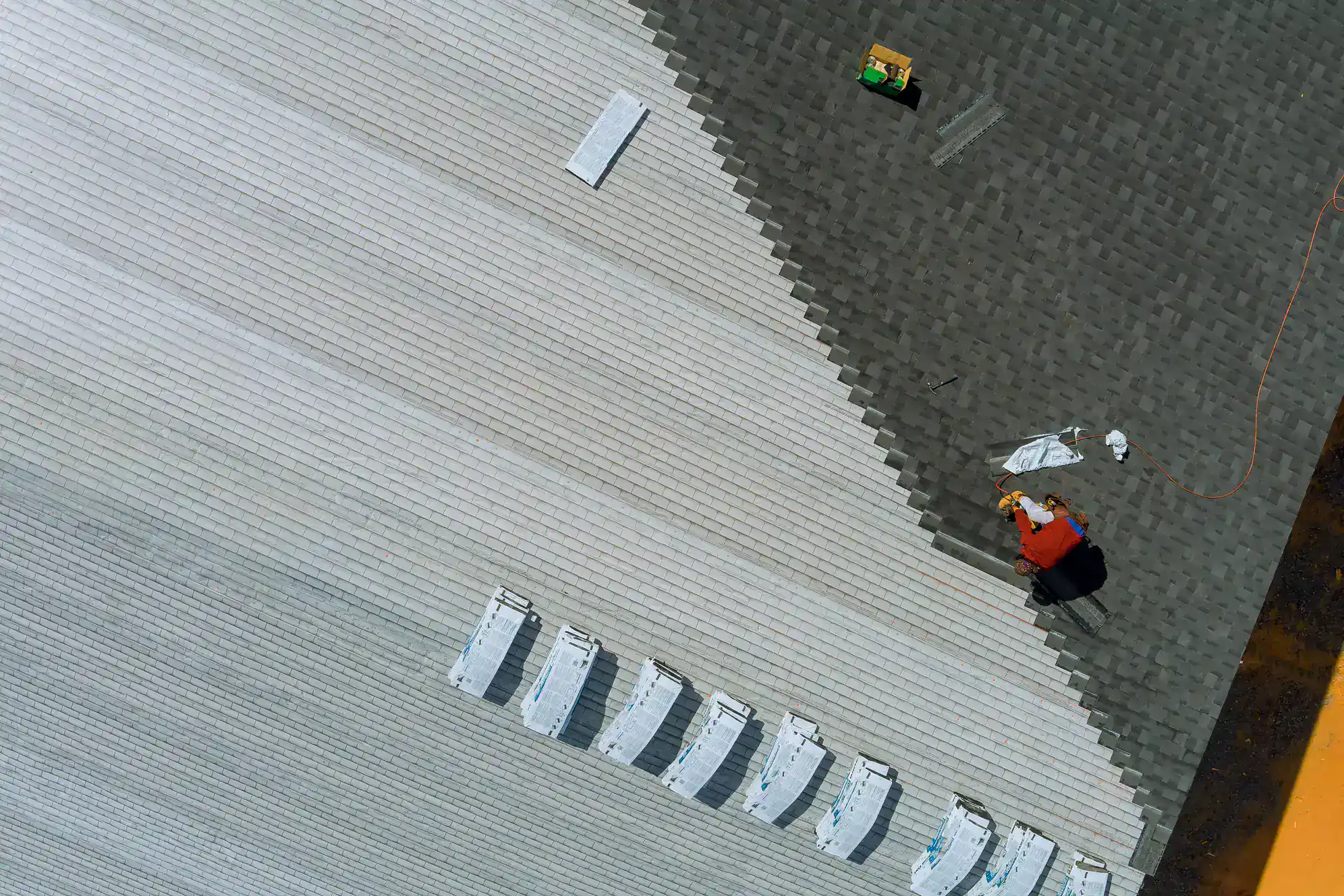
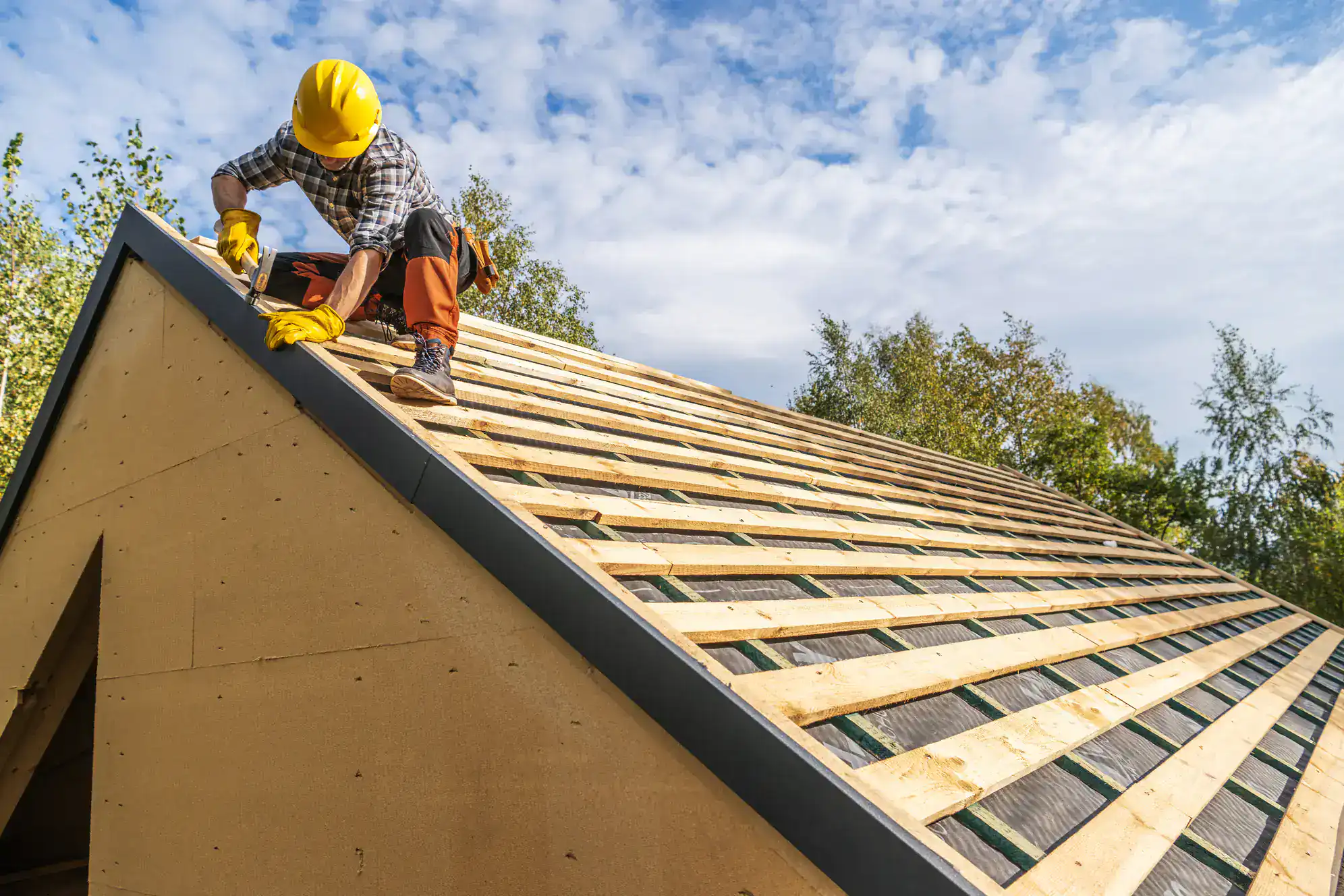
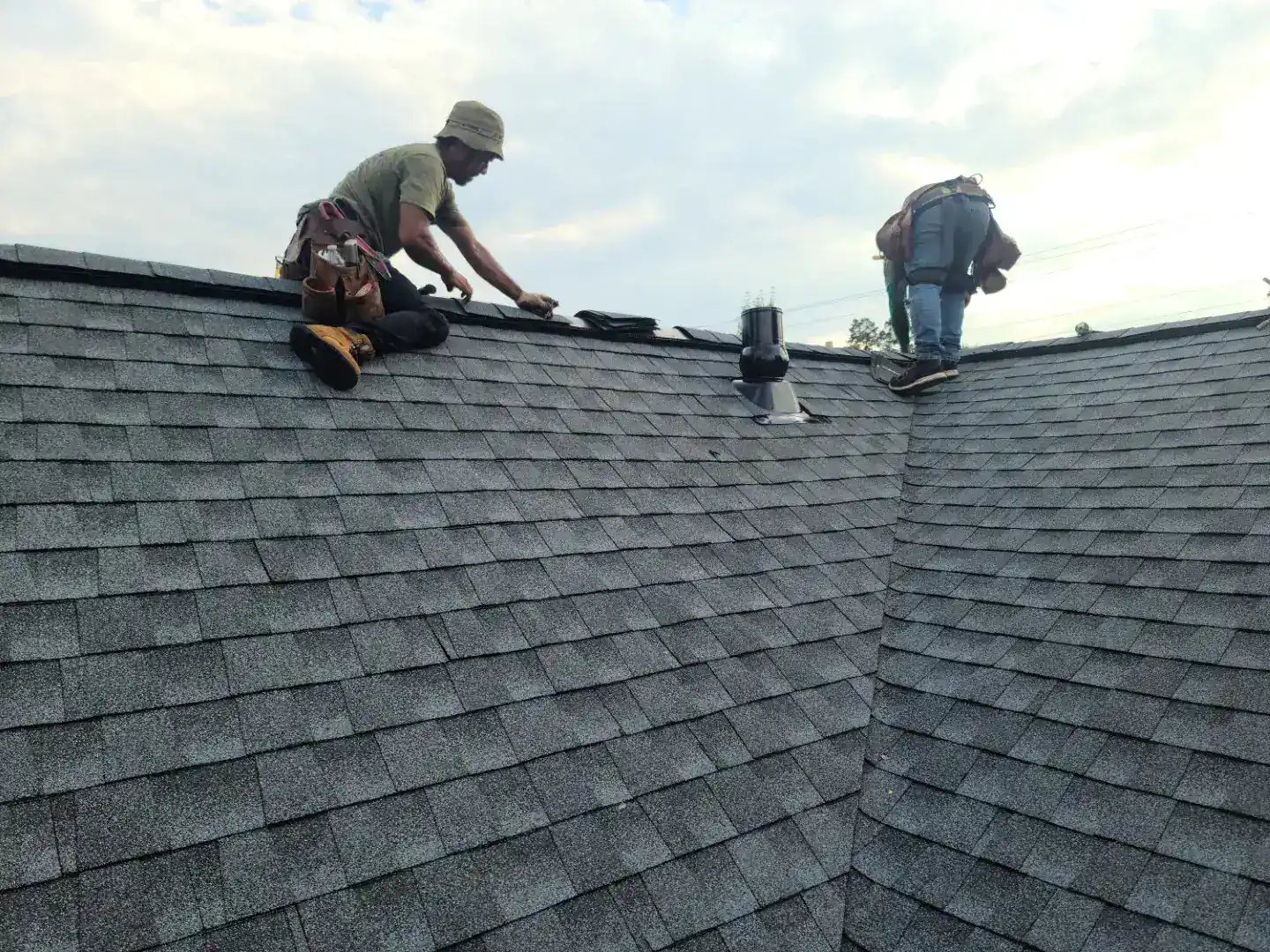
The work itself follows manufacturer-certified installation protocols: full tear-off, ice and water shield in the areas that need it most (especially relevant for homes near the Turnpike corridor and the waterway-adjacent neighborhoods), correct flashing at every penetration, and drip edge installation. When our crew leaves, the site is clean. That’s not a bonus — that’s the baseline.
Ready to get started?
Affordable Roofers in Ridgefield, NJ
The roofing work we deliver in Ridgefield covers the full scope — inspection, repair, full replacement, flat roofing systems including TPO and EPDM, and maintenance. Siding and gutter services are available alongside roofing when the exterior needs more than one thing addressed. The free estimate covers all of it, and the price is locked before work begins.
What separates our service here from a lot of what you’ll find in Bergen County is the manufacturer certification. Most contractors — including some of the local names you’ll come across when you search for roofers in Ridgefield — are not certified at the level that unlocks enhanced system warranties. We are. That means the homeowner gets a warranty backed by the manufacturer, not just a contractor’s handshake. On a home in this market, that’s a transferable asset worth having in writing.
For homeowners in Ridgefield’s older neighborhoods, where mid-century construction is common and roofs may not have been touched in 20-plus years, our scope also includes an honest conversation about what the structure actually needs — not an upsell. If repair is the right answer, that’s what gets quoted. If replacement makes more financial sense given the age and condition, you’ll hear why with photos to back it up. We offer emergency roof repair 24/7 for active storm damage situations.
Do I need a permit to replace my roof in Ridgefield, NJ?
Yes — Ridgefield’s Borough Building Department requires a permit for full roof replacements under the NJ Uniform Construction Code. This isn’t just a formality. A permitted replacement means the work gets inspected by the municipality, which protects you legally and keeps your homeowner’s insurance coverage intact. If you ever sell your home, unpermitted roofing work can surface during the buyer’s inspection and create real problems at closing.
The threshold that typically triggers the permit requirement is replacing more than 25% of the total roof area within a 12-month period. A full tear-off and replacement always requires a permit. We handle the permit application and coordinate the required inspection as part of the job — it’s built into the process, not an add-on. If a contractor quotes you a roof replacement in Ridgefield and doesn’t mention pulling a permit, that’s worth asking about directly before you sign anything.
How much does a roof replacement typically cost in Ridgefield, NJ?
For an average-sized single-family home in Ridgefield, a full roof replacement generally runs between $9,000 and $14,000, depending on the size of the roof, the pitch, the materials selected, and the condition of the decking underneath. NJ labor and permitting costs push replacement prices above the national average, so quotes that come in significantly below that range are worth scrutinizing carefully.
The specific conditions in Ridgefield can affect cost in a few ways. Homes near the waterways — along Overpeck Creek or the Hackensack River corridor — may have more moisture-related decking damage that isn’t visible until the old shingles are off. Homes in Grantwood, which sits on elevated terrain with steeper pitches, typically require more labor than a standard ranch-style roof. We provide a free, itemized estimate that accounts for your specific home — and the price you’re quoted is the price you pay.
What are the signs that my Ridgefield home's roof needs to be replaced?
The most obvious signs are visible — missing shingles, granules collecting in your gutters, shingles that are curling at the edges or cracking across the surface. But some of the most important signs aren’t visible from the ground at all. Moisture stains on attic sheathing, soft spots in the decking, and inadequate ventilation are things that only show up during an actual inspection.
For homes in Ridgefield built between the 1940s and 1970s — which accounts for a large portion of the borough’s housing stock — age alone is a meaningful factor. Standard asphalt shingles are rated for 20 to 30 years. A roof that’s been through multiple NJ winters, nor’easters, and the freeze-thaw cycles that come with living near the Hudson River corridor has accumulated real stress over time. If you don’t know when the roof was last replaced, a free inspection is the fastest way to get an honest answer about where things actually stand.
How does ice dam damage happen, and can it be prevented on my roof?
Ice dams form when heat escaping through the roof melts snow near the ridge, and that water refreezes when it reaches the colder eave overhang. The ice backs up behind the dam and forces water under the shingles, where it gets into the decking and eventually into the interior of the home. By the time you see a leak on your ceiling, the water has usually been sitting in the structure for a while.
Ridgefield’s location in the southeastern corner of Bergen County, close to the Hudson River corridor, puts it directly in the path of the coastal nor’easters and winter storms that create the conditions for ice dam formation. The fix isn’t just a roofing product — it’s a combination of proper attic insulation, adequate ventilation to keep the roof deck temperature consistent, and ice and water shield installed in the vulnerable zones along the eaves. A correctly installed roof addresses all three. If your current roof wasn’t installed with those details in mind, a free inspection will tell you where the gaps are.
How do I know if a roofing contractor in Ridgefield is actually licensed?
In New Jersey, home improvement contractors are required to register with the NJ Division of Consumer Affairs and hold a valid Home Improvement Contractor (HIC) license. You can search any contractor’s license number directly on the Division of Consumer Affairs website — it’s a public database and takes about 30 seconds to check. Our NJ HIC license number is #13VH10605800, and you’re welcome to look it up before you call.
Bergen County — and Ridgefield in particular — sees a regular influx of unlicensed contractors after major storm events. Following nor’easters and the kind of flooding that came with Superstorm Sandy and Hurricane Ida’s remnants, door-to-door solicitation from out-of-area operators is common. An unlicensed contractor can’t legally pull a permit in Ridgefield, which means any work they do leaves you exposed at resale and potentially unprotected under your homeowner’s insurance policy. Checking the license takes less than a minute and eliminates a significant category of risk.
Does USA Home Remodeling serve Spanish-speaking homeowners in Ridgefield?
Yes — Spanish-language service is a standard part of how we operate, not something offered on request. For the roughly 35% of Ridgefield residents who identify as Hispanic or Latino, being able to have a real conversation about scope, pricing, and warranty coverage in Spanish makes a meaningful difference. Understanding exactly what you’re agreeing to before work begins matters, and that’s harder to do when you’re working through a language barrier.
This applies to the full process — the initial inspection, the estimate walkthrough, questions during the job, and the final review when the work is complete. If you’ve had experiences with contractors where the communication broke down somewhere in the middle of a project, that’s a specific problem this addresses. The goal is that you know what’s happening with your home at every step, in the language that’s clearest for you.